

Hospitality Software Demo Scorecard: Test the Whole Shift Before You Buy
· Yiannis Yiasemis

A system can score eighty-two out of one hundred and still fail the one task your venue cannot operate without. A weighted average can hide a missing payment handover, unusable staff access or an archive your manager cannot interpret. Your hospitality software demo scorecard should keep critical acceptance separate from a useful commercial ranking.
Jasmine Apps combines products for several hospitality workflows, making a joined demonstration more valuable than a tour of separate screens. Bring realistic fictional scenarios, name the people who will use them and define what completion means. You can then compare what each proposal actually demonstrates, with unresolved work visible before a subscription decision becomes an installation dependency.
Key Takeaways
- Set critical pass conditions before assigning scores.
- Test complete tasks across role handovers.
- Include corrections and interruptions, not only ideal cases.
- Record demonstrated evidence and proposed future work separately.
- Connect the result with a matching written quotation.
Build your hospitality software demo scorecard from the shift
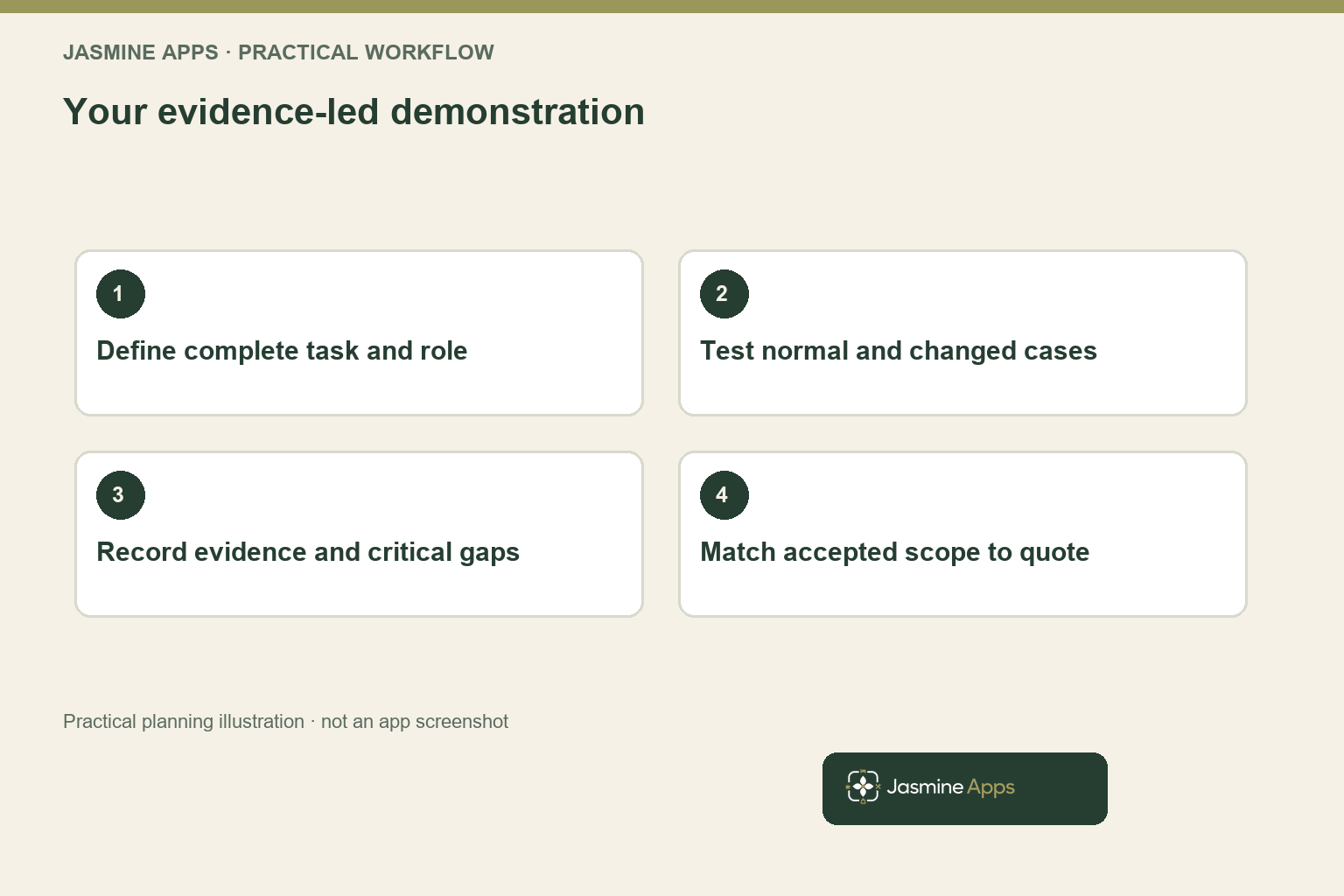
List the tasks that determine whether your venue can run the intended service. Your priorities might include a completed sale, a changed reservation, an approved attendance exception and a signed event document the next colleague can retrieve. Choose the workflows relevant to your actual buying scope, rather than ask every supplier to demonstrate every product simply because it appears in a catalogue.
Give each task a start, an actor and a completion condition. A completed sale might need the correct charge, relevant receipt and available record for the authorised reviewer. A booking task might need a changed party reflected in the host's current view. Those conditions make the demonstration testable without telling the operator which button to press or rewarding a screen that merely looks familiar.
The GOV.UK moderated-usability testing guidance supports realistic tasks with clear goals rather than instructions that reveal the route. Apply that principle to your buying session with fictional information and appropriate safeguards. Your purpose is to see whether the relevant user can complete the work, not test their ability to follow a supplier's narrated click sequence.
Choose a manageable set of representative cases. Include the normal service and the exceptions that create the most work or risk in your venue. Your existing EPOS demonstration checklist gives the till-specific context; this scorecard extends the method across product boundaries and the roles that need the result after the first operator finishes.
Write the cases before the session and share the intended scope with the supplier. They can prepare a suitable approved environment without substituting a different problem that is easier to show. Your manager then has a consistent basis for comparing proposals, with the operational outcome defined independently of each provider's preferred presentation order, sales vocabulary or most polished opening screen.
Separate critical gates in your hospitality software demo scorecard
Identify the conditions that must be satisfied for the proposed installation to be suitable. These may involve an essential service task, appropriate access, a required record or another non-negotiable requirement for your venue. Give each condition a clear acceptance test and responsible reviewer, with professional input where the question concerns legal, security or specialist suitability.
Keep critical results outside the weighted average. A proposal that cannot support an essential task is not made operationally ready by attractive design or a low price elsewhere. Mark the gap as unresolved, failed or outside scope according to what was shown, then decide whether an agreed further test or different configuration can address it before commitment.
For a hypothetical scorecard, a product might earn eighty-two out of one hundred across weighted preferences while one critical archive requirement remains unproven. The appropriate conclusion is not automatically approved at eighty-two. Your manager should see the useful strengths and the specific condition still preventing acceptance, with a named action and evidence needed to resolve it.
Define how promises are treated. A supplier's statement that a feature is planned, configurable or available through another product is not the same as demonstrating it in the quoted scope. Record the distinction without assuming bad intent: you may need a follow-up session, written delivery condition or a different buying decision depending on the importance and current availability of the capability.
Use your data exit-plan framework where record portability is critical. Your gate should test the actual receiving need, not only a download label. The result is a decision structure that can acknowledge a promising proposal while preventing a numerical score from concealing a gap the venue would otherwise discover only after relying on the system.
Weight your hospitality software demo scorecard around actual importance
Once the critical conditions are separate, choose a small set of weighted preferences that reflect the venue's priorities. You might compare task usability, handover clarity, reporting usefulness and implementation fit. Agree the weights before seeing the demonstrations so the criteria do not move towards whichever presentation the team happened to enjoy most.
Use an understandable scoring scale with evidence definitions. For example, zero could mean not demonstrated, one a major supported-workflow gap, two completion with a relevant limitation and three completion under the agreed conditions. Your own scale should be documented and consistently applied, with outside-scope or untested cases visible rather than silently treated as equivalent to a technical failure.
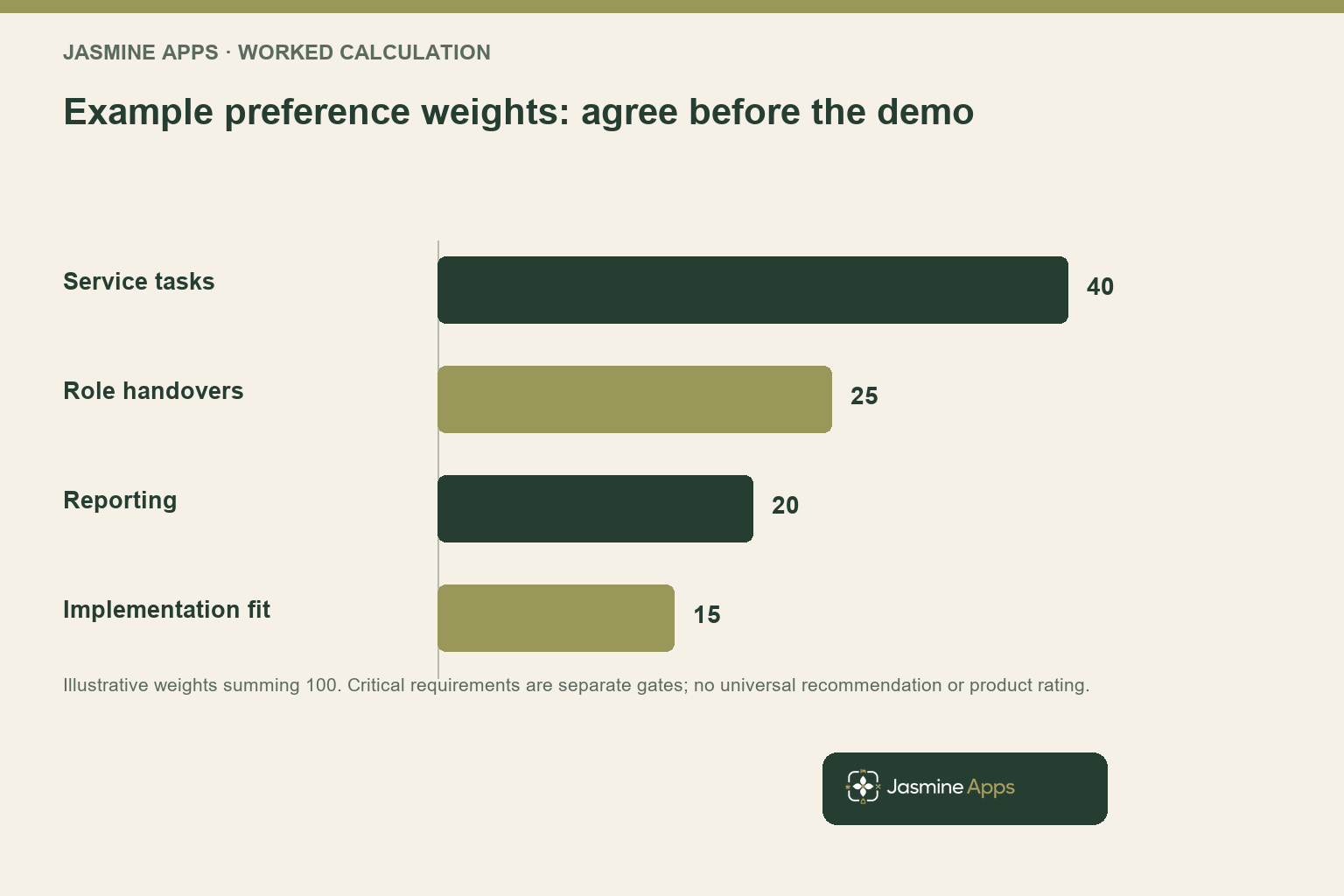
For an illustrative weighting, assign forty points to service tasks, twenty-five to role handovers, twenty to reporting and fifteen to implementation fit. Those weights total one hundred but are not a universal recommendation. A small hotel, restaurant group and venue buying only document signing may reasonably prioritise different work, so choose the basis that fits the decision you are actually making.
If you use the example zero-to-three scale, divide the achieved score by three before applying the criterion's weight. A two out of three on a twenty-five-point criterion contributes about sixteen point seven. Keep the arithmetic available and the supporting observation beside it, because a precise total should not imply that subjective judgement has disappeared or the sample establishes future performance under every condition.
Use your software quote comparison for the separate commercial assessment. You can compare suitable scope, evidence and full cost together without forcing every consideration into one opaque number. The manager should understand which preference produced the ranking and whether a small score difference reflects a meaningful operating advantage or simply limited observation in the session.
Test the handover between products and the exception route
Start with a scenario that crosses a real role boundary. A guest request may begin with reception, become a restaurant booking and later require the server to identify the current arrangement. Your demonstration should show what each authorised person sees and how the information moves, including any manual handover that remains. A shared login does not establish every connection.
For a Till Jasmine and Loyalty example, follow a fictional member attachment, qualifying purchase and reward route in the supported configuration. The public EPOS description includes looking up a member, awarding points and redeeming rewards. Confirm the reporting and correction steps your venue requires separately, so an operational feature is not mistaken for every possible analytical or exception-handling capability.
Include one changed instruction after the first user has finished. Amend the fictional party size, correct an attendance event or replace a draft document through the approved route. Ask the next colleague to explain the current position without a private verbal briefing from the supplier. That exposes whether the handover is usable and whether the record makes the latest decision sufficiently clear.
Test an interruption through an approved demonstration. Ask what happens when a device, connection or required response is unavailable, what the operator sees and how the team returns to normal. Do not create a live outage or real transaction merely to obtain evidence; use an authorised environment and confirm which behaviours have actually been demonstrated for the proposed setup.
Record the difference between a workaround that fits your operation and one that shifts substantial work to staff. Both may complete the task, but their training, capacity and error implications differ. Your scorecard should describe those effects plainly, giving the manager a useful basis for deciding whether the connection streamlines the service or simply moves the administrative burden to another colleague.
Use realistic users and preserve an evidence record
Invite the people who perform the work and the people who receive the result. A manager may navigate a screen comfortably while a new server struggles to find the relevant action under the intended role. Your session should include suitable operational users and any relevant accessibility needs, with the supplier's help available but the amount of prompting kept visible in the observation.
Use fictional names, bookings and records in the approved demonstration wherever practical. Avoid exposing live guest, payroll or private staff information simply to make the example look convincing. The scenario can still be realistic through its timing, quantities, exceptions and role handovers, giving your team a useful test without an unnecessary disclosure or operational side effect.
Keep a concise evidence record: scenario, setup, role, result, prompts, limitation and next action. A screenshot can support an observation where appropriate, but it should not replace the explanation of what was completed. Confirm the right to retain or share any demonstration recording and keep private information out of material intended for a broad buying team.
The NCSC identity and access guidance is relevant when considering appropriate access. Demonstrate the roles your venue intends to use rather than show every task under an unrestricted administrator account. Your reviewer needs to know that the legitimate operator can complete the work and that the next role can obtain the information appropriate to its responsibility.
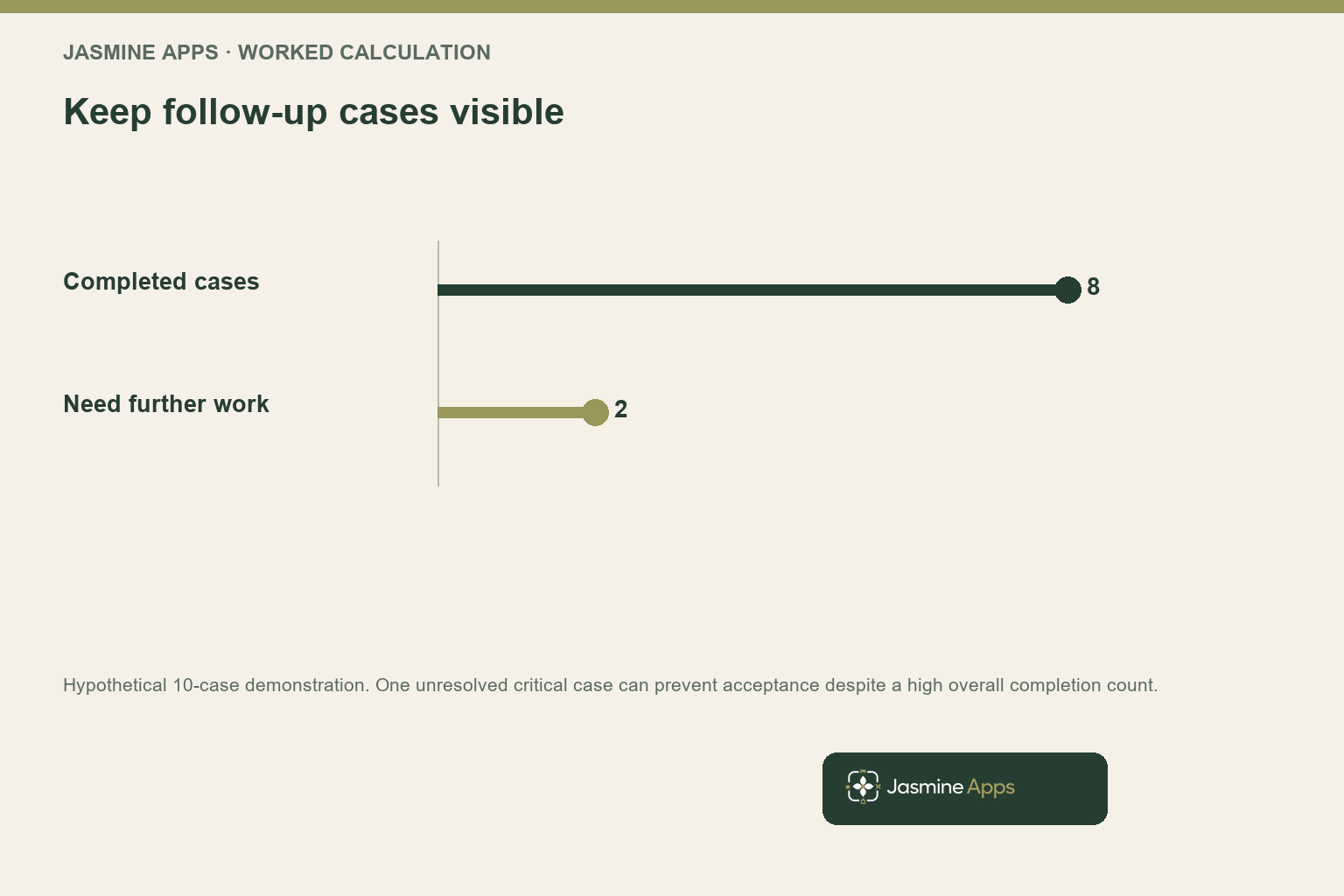
For a hypothetical ten-case session, eight cases may complete under the agreed conditions and two require further work. Record the two individually, including whether either is critical, rather than reduce the session to an eighty per cent pass headline. Your evidence should make the next decision easier: accept the demonstrated scope, arrange a targeted follow-up or revise a requirement the proposal does not currently meet.
Turn the demonstration result into a reviewable buying decision
Review the results while the observations are fresh. Separate demonstrated completion, completion with an accepted limitation, unresolved questions and out-of-scope requirements. Give each important gap an owner and the evidence needed to close it. Your team should leave understanding which working conditions were established, beyond a general impression of the product.
Ask the supplier to align the written proposal with the tested configuration. Include the products, units, limits, devices, implementation, support and relevant delivery conditions required by the accepted scenarios. A demonstration using a broader licence or additional hardware should not be compared with an entry quotation that omits those components, even if the product names are identical on both documents.
For Jasmine Apps, confirm the current release and availability of each required product. The public directory identifies several products as alpha testing and Maintenance as coming soon, so delivery scope matters alongside the feature description. A strong buying case can explain the current supported workflow and agreed conditions without presenting future capability as already proven across every installation.
Compare the complete cost and benefits after critical acceptance is addressed. Time released should be described as capacity unless you can show an expense reduction, and an easier guest journey should not become a precise sales uplift without suitable evidence. Your hospitality ROI article provides the wider calculation discipline for turning the demonstrated process into a credible commercial recommendation.
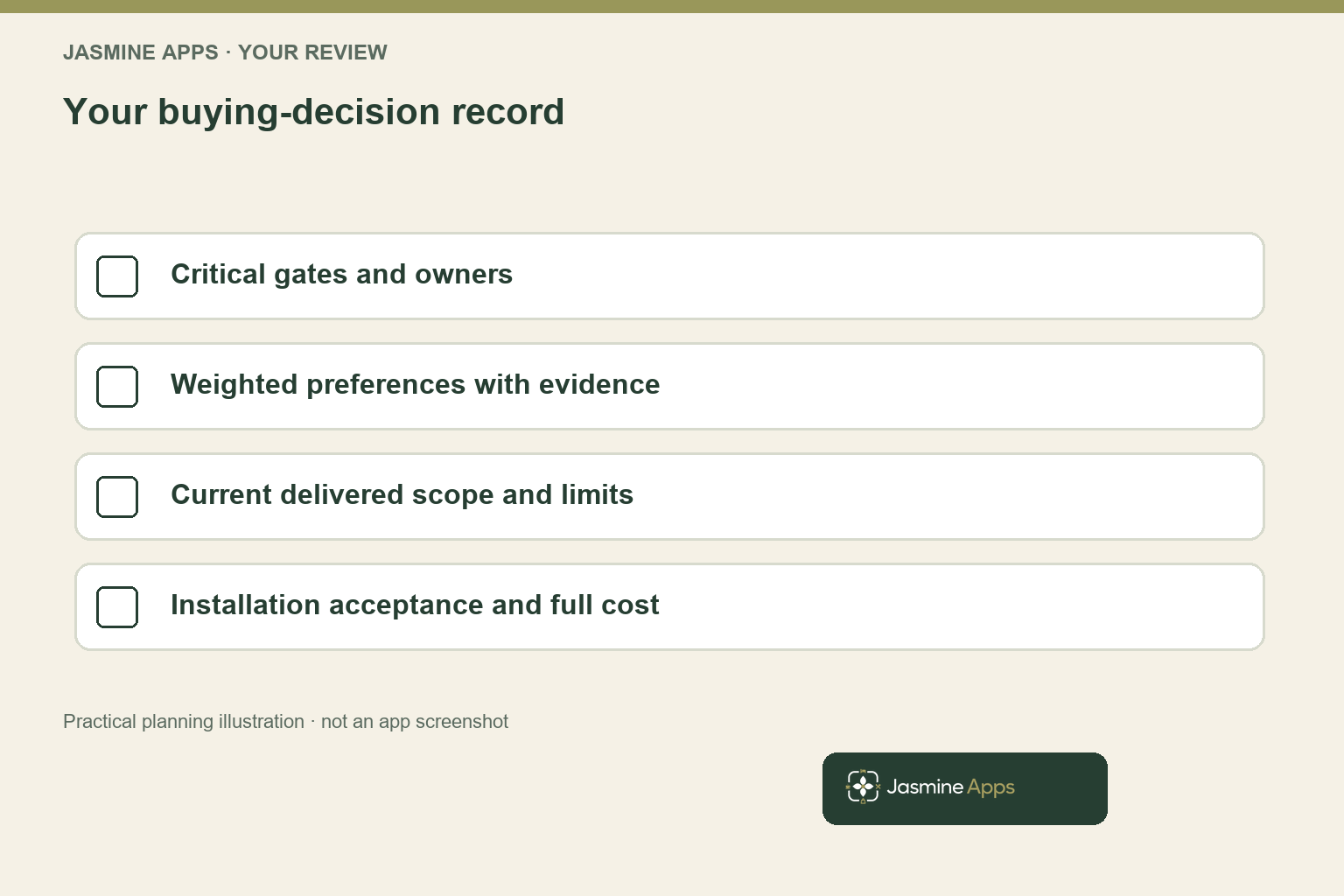
Your final scorecard should explain why the proposal fits, what remains dependent on an agreed action and how the venue will verify the installation before relying on it. Keep the acceptance scenarios for rollout and later changes. You can then buy with a clearer understanding of the whole shift, making the demonstration a practical test of service rather than a persuasive tour that ends before the difficult handover begins.
Pro Tips
Score the prompt level. Record whether the operator completed the task independently, with a hint or through supplier intervention. All three can reach the final screen while implying different training and usability needs.
Keep gates separate. Identify the essential acceptance condition outside the weighted total. An attractive overall score should not hide the missing task that would prevent normal operation.
Retain the scenarios. Use the accepted demo cases again during installation and relevant system changes. Your team can verify the delivered configuration against the same operational outcome.
Common Mistakes
Letting the supplier define every test. You may see only the easiest route. Bring your own realistic tasks and completion conditions.
Treating a roadmap answer as demonstrated. You can commit before an essential function exists in scope. Record current evidence and future delivery separately.
Comparing the demo with a smaller quote. You omit the equipment or licence that made the test work. Align the proposal with the demonstrated configuration.
Frequently Asked Questions
What should a hospitality software demonstration test?
You should test representative complete tasks from the venue's actual service, including the role that receives the result. Add changes, corrections and a plausible interruption in an approved environment. Define the start, user and completion condition before the session, and keep prompting visible. Your demonstration should establish what the quoted configuration supports rather than simply show attractive screens or confirm that a similar feature name appears somewhere in the product catalogue.
How do you score a hotel or restaurant software demo?
You should separate critical pass conditions from weighted preferences, agree the criteria in advance and use a documented scoring scale. Keep an observation beside each score so the manager understands the evidence and limitations. A weighted total can compare suitable proposals, but it should not override an unresolved essential task. Align the result with the complete written quotation and relevant implementation conditions, rather than treat a precise number as proof of universal future performance.
Who should attend a hospitality software buying demonstration?
You should include suitable people who perform the work, receive its output and own the buying or implementation decision. A server, host, payroll reviewer or operations colleague may identify a handover that a supplier-led administrator tour misses. Consider relevant accessibility and support needs, and use fictional information where practical. Your session should show the intended roles and record how much help was needed, giving the manager evidence about real use rather than confidence from a single expert operator.
Should you reject software if a demo needs a workaround?
You should assess whether the workaround is supported, reliable and appropriate for your operating conditions, including its staff capacity and training effects. Some manual handovers can be acceptable; others may undermine an essential requirement or create substantial hidden work. Record the limitation and test it with the relevant users before deciding. Your scorecard should distinguish an accepted process from an unresolved critical gap, with the full scope and any required assistance included in the proposal.
What should you bring to a Jasmine Apps demonstration?
You should bring a few realistic fictional scenarios, your venues and volumes, intended staff roles and the critical completion conditions. Include a cross-product handover, a correction and the reporting or archive record the next colleague needs. Ask for the current delivered configuration and product availability, then align the quotation with what was tested. Your final acceptance should explain the demonstrated outcome, any limitation and the specific evidence still needed before the venue relies on the installation.
Hospitality software demo scorecard: your next step
Your hospitality software demo scorecard should show how the proposed system supports the whole shift. Book a scoped Jasmine Apps demonstration with three essential scenarios and one awkward exception. You can test the handovers, compare the complete proposal and make a buying decision supported by evidence your team can review.