

Hospitality Software ROI: Why Time Saved Is Not Always Money Saved
· Jasmine Apps
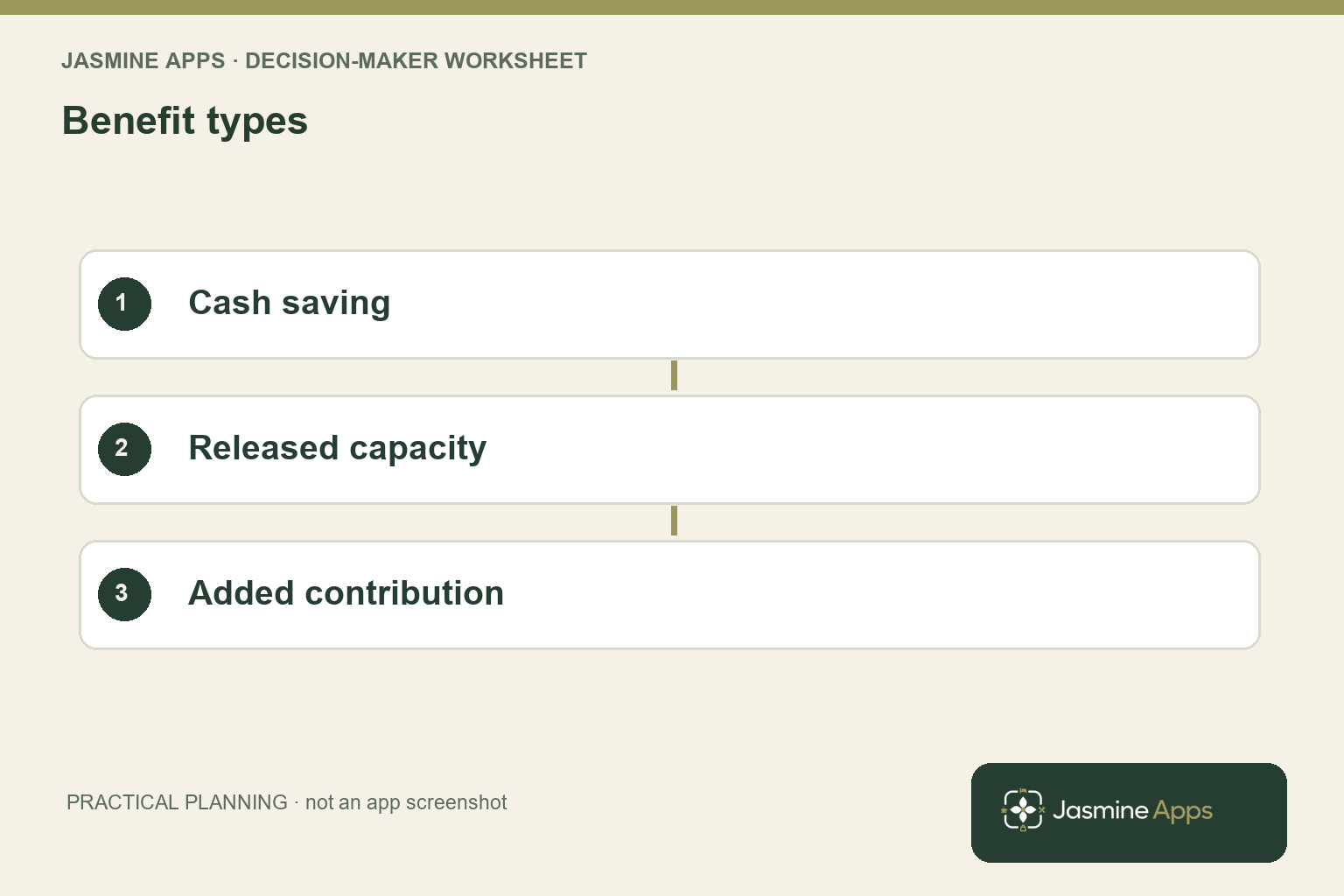
You can save an hour every day and still see no reduction in your wage bill. That is the first distinction your hospitality software ROI calculation needs to make: extra capacity, lower cash costs and higher profit are different outcomes. If you put all three into one savings figure, your investment can look convincing while your budget stays unchanged.
Your decision should connect a specific operational problem with evidence of improvement and the full cost of achieving it. You can build that case without invented industry benchmarks or a supplier’s guaranteed payback claim.
Key Takeaways
- Separate cash savings from time released for other work.
- Measure your starting workflow before choosing a target.
- Compare benefits and costs across the same period.
- Count additional contribution rather than treating all new sales as profit.
- Use a pilot and sensitivity checks before a wider rollout.
Define hospitality software ROI around a real decision
Begin with the task you want to improve. Your manager might repeatedly correct menu prices, chase missing clock records or copy guest information between documents. Describe the frequency, the people involved and the consequence when the task is late or wrong. “Improve efficiency” becomes useful when you can connect it to an observable workflow and a person responsible for changing it.
Collect a baseline under ordinary conditions. Record active working time separately from waiting time, and note whether the work displaces another useful task. If a colleague spends less time correcting a catalogue, your immediate benefit may be more time on the floor rather than a smaller payroll. Keep that distinction visible so you can make an honest commercial case for the improvement.
Choose a cost period that suits your purchasing decision. Include software, setup, equipment, migration, training and ongoing internal administration. Your initial project and your steady monthly operation have different costs, so show them separately before combining them. The HM Treasury Green Book offers a broader framework for appraising options and their costs and benefits; your venue calculation should remain proportionate to its own decision.
Write down the alternative to purchasing. You might improve the existing procedure, change the layout or train another shift without replacing the system. Your investment case becomes stronger when it explains why the chosen option addresses the problem better than those realistic alternatives. It also becomes easier to stop a project that adds software without changing the task responsible for the original frustration.
Calculate hospitality software ROI without double counting
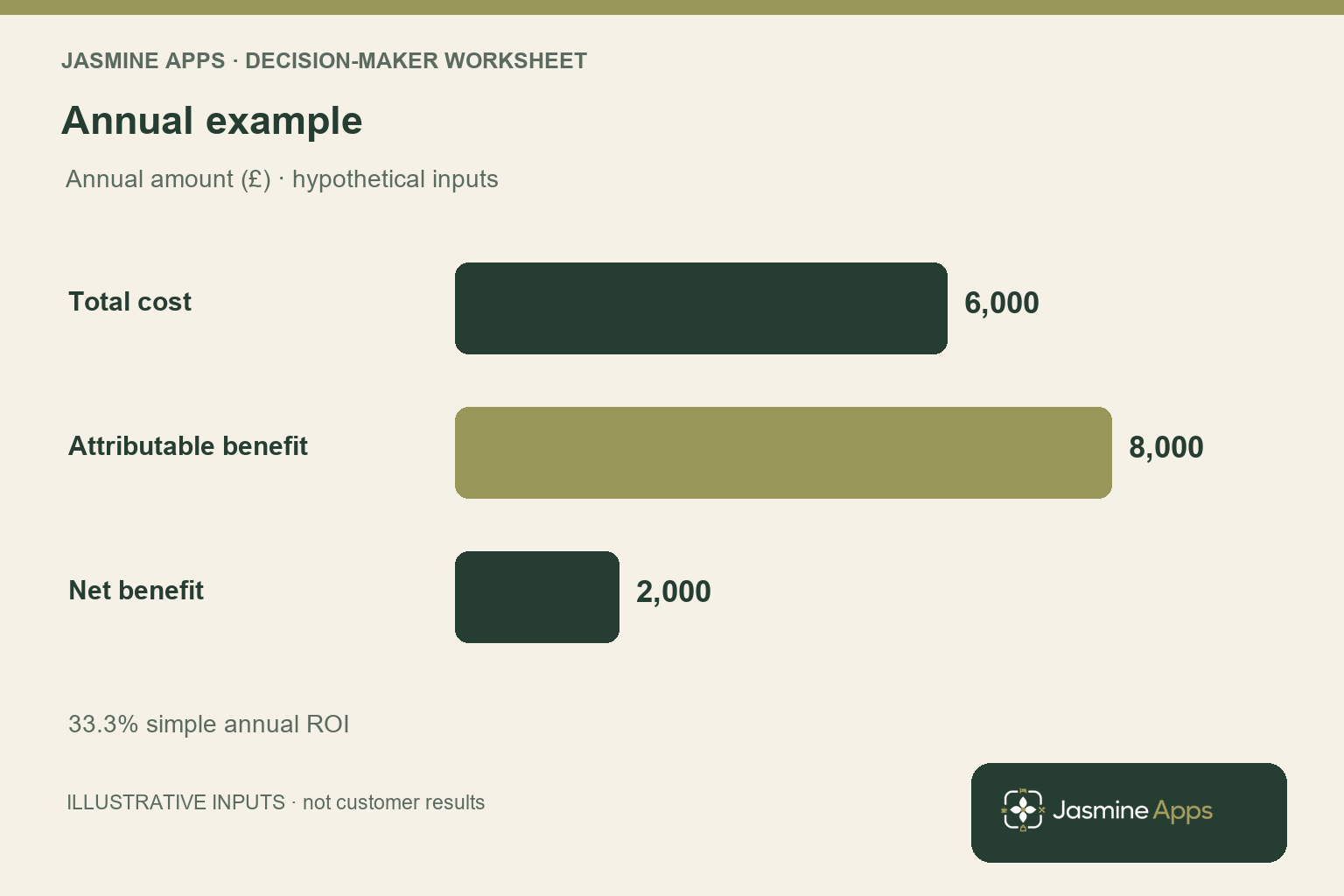
Use the same period for your benefits and costs. A simple planning formula is net benefit divided by total cost, multiplied by 100, where net benefit is the attributable benefit after the relevant costs. Your finance lead should approve which items belong in the calculation. Keep your cash-flow and payback view alongside the percentage because each answers a different purchasing question.
Consider an explicitly hypothetical annual example. Your installation costs £6,000 across software, equipment, setup and training, and you can substantiate £8,000 of attributable benefit during that year. Your net benefit is £2,000 and the simple ROI is approximately 33.3%. Those figures are invented inputs for explaining arithmetic, not a Till Jasmine customer result or an estimate of its pricing.
If some benefit is time released, label it as capacity and explain how you intend to use it. You might turn shorter administrative work into a more reliable pre-service briefing. Do not also claim a wage saving unless paid hours or another cash cost actually changes. Similarly, if your workflow generates additional sales, deduct the associated variable costs before calling the result additional contribution.
Keep a benefit register with the source, owner and verification date for each line. A reduction in corrections should come from comparable records; a lower external fee should come from the actual agreement or invoice. Use the hotel EPOS cost guide when building the purchasing scope. A complete cost list gives your calculation a more useful denominator than the subscription figure on its own.
Show the source and timing of each benefit beside its value so an annual projection is not mistaken for cash already received.
Validate hospitality software ROI with a controlled pilot
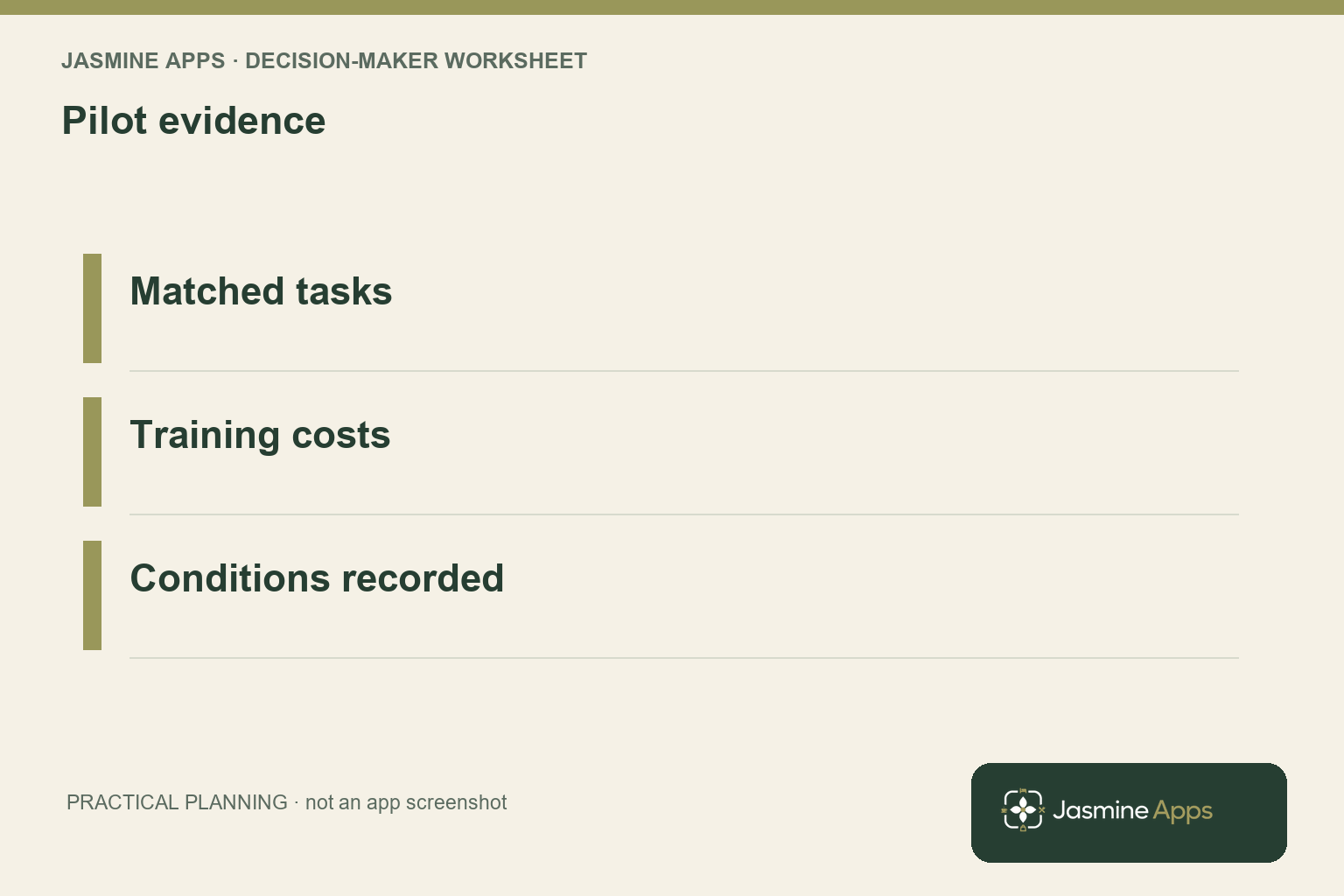
Pilot the workflow in a manageable part of your operation. Choose a service area that includes the problem you are trying to solve, not only the easiest place to install equipment. Record what changes and keep other major changes visible. A new menu, different staffing level or seasonal event can alter your results even when the software stays exactly the same.
In Till Jasmine, your real catalogue and layout controls give you a practical example. Products & Categories shows whether an item is On till, while the designer separates selling pages from the Payment page. You can test whether your colleague finds the correct item and completes the intended handover. You should measure any service improvement yourself rather than infer it from the presence of those controls.
Compare like with like after staff have had appropriate practice. Use similar order types and record the assistance needed, corrections made and manager interruptions. Your first training session is not a fair estimate of mature operation, but neither should you hide its cost. Keep implementation time in your investment record and operational results in your pilot record.
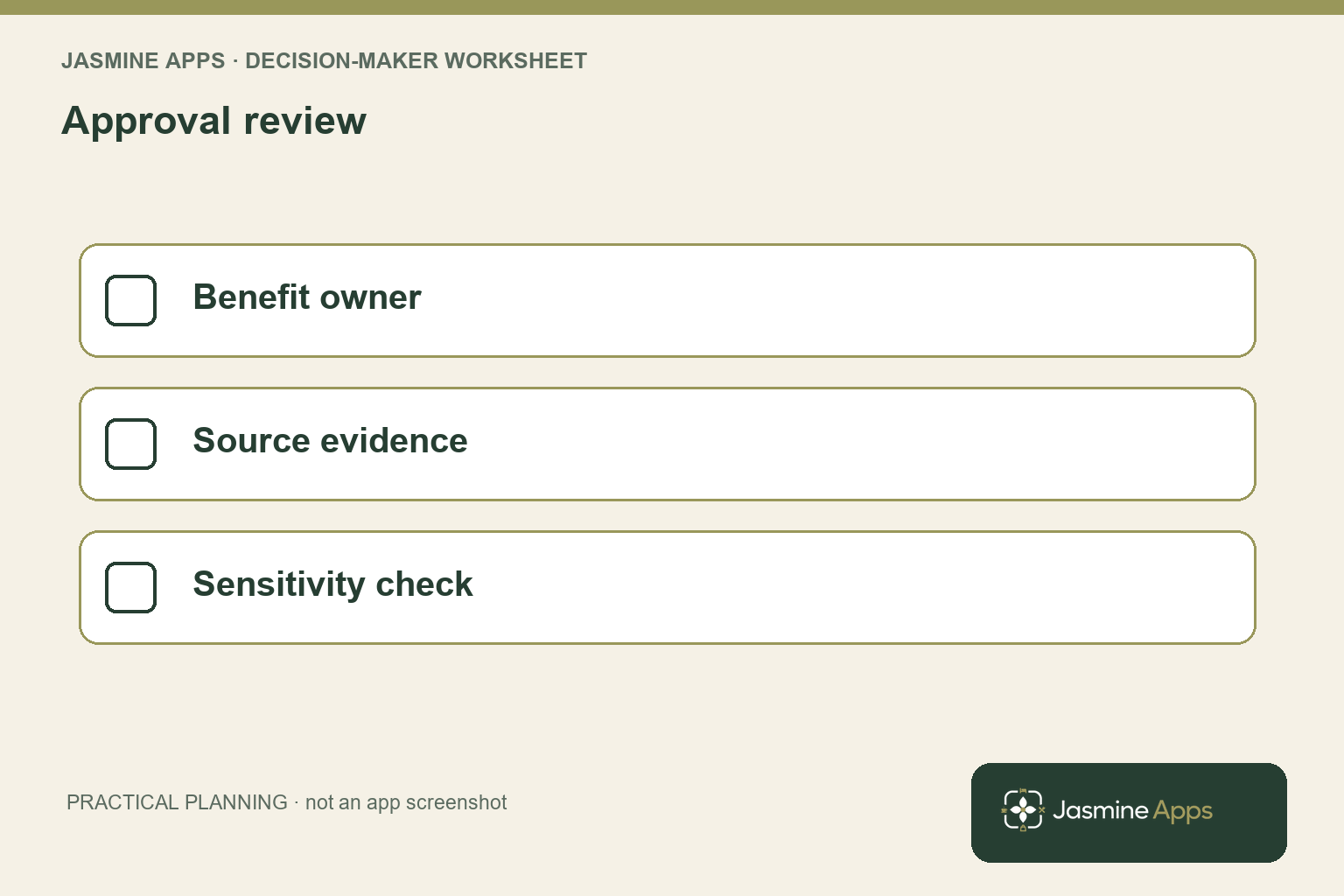
Test your decision against less favourable assumptions. Ask whether the purchase still makes sense if the improvement is smaller, training takes longer or a required connection costs more. You can adapt the practical readiness sequence in the till-pairing guide, for your installation. Set your approval criteria before reviewing the results so a disappointing pilot does not quietly acquire a new definition of success.
Record which colleagues needed additional practice and include that work in the pilot review before estimating the effort of a wider rollout.
Pro Tips and Common Mistakes
Pro Tips
Keep a cash column and a capacity column. You can explain an operational benefit without forcing it into a fictional wage saving. Let your manager identify the work that will use the released capacity and review whether that change actually happens.
Assign a benefit owner. Your installation lead can deliver a working system, but your service manager must deliver the changed routine. Give each expected benefit a person who can collect evidence and explain shortfalls.
Use a break-even question. Instead of asking only whether a forecast looks attractive, ask how much improvement is necessary to cover the cost. You can then compare that requirement with your baseline and the pilot’s observed range.
Common Mistakes
Counting the same hour twice fails when you claim both lower payroll and extra service capacity from one unchanged paid shift. Explain the actual cash consequence and the separate operational benefit.
Treating additional revenue as profit fails because supplying those sales still costs money. Use the additional contribution after relevant variable costs, reviewed by your finance lead.
Comparing a quiet baseline with a busy pilot fails because trading conditions alter workloads and outcomes. Match the periods where practical and disclose material differences before attributing results to the software.
Keep your working assumptions alongside the final recommendation. Your decision makers need to see which benefits are measured, which are forecasts and which remain uncertain, so they can judge the investment without relying on an impressive headline percentage.
Keep your original forecast beside the observed result and explain each material change in assumptions, including benefits that have not yet occurred. Your finance lead can then distinguish an improving operational process from a revised spreadsheet model and decide whether the next investment stage remains justified by the evidence available.
Frequently asked questions
How do you calculate ROI for hospitality software?
Define a common period, total the relevant implementation and operating costs, and estimate the attributable benefits for that period. Calculate net benefit after costs, then divide it by total cost and multiply by 100 for a simple ROI percentage. Have your finance lead approve the treatment of each item. Keep the assumptions and evidence visible, especially where you value released staff time or forecast additional contribution rather than measure an immediate reduction in expenditure.
Does saving staff time reduce your wage bill?
Only when your paid hours or another cash expense changes. If your existing team remains on the same shifts, time saved creates capacity for other work rather than an automatic payroll reduction. You can still make a valuable case for fewer interruptions, better guest service or more reliable administration. Identify who will use that capacity and how you will verify the change.
Avoid presenting a useful operational improvement as a cash saving that your accounts cannot show.
What costs belong in a software business case?
Include the subscription and the costs required to make the intended workflow usable: equipment, setup, migration, training, connections and internal project time. Review ongoing administration and support responsibilities as well. Separate initial implementation costs from recurring operation so you can explain the timing of the commitment. Your comparison should use equivalent scope across suppliers.
A cheaper subscription can still produce a more expensive installation if important requirements appear later as additional charges.
How long should your software pilot run?
Choose a period that includes ordinary operation, relevant exceptions and enough repetition for staff to become familiar with the workflow. Your restaurant’s weekly service pattern may differ from a hotel’s event cycle. Set the evidence requirements first, then choose a duration that can meet them. Do not use a universal number of days as proof of reliability.
Extend or stop the pilot when material questions remain unresolved, rather than declaring success because the calendar reached its end.
Can a supplier guarantee your software return?
Treat a guarantee cautiously because your outcome depends on configuration, adoption, trading conditions and the process you change. Ask the supplier to demonstrate the required functionality and provide a complete commercial scope. Your own baseline and pilot should establish the operational benefit. Where a formal guarantee exists, examine its exact conditions with your appropriate advisers.
You should not substitute a general sales promise for evidence that your team can achieve the improvement used in your business case.
Build a hospitality software ROI case you can defend
Your hospitality software ROI case should show what changes, who owns the benefit and which evidence supports the calculation. Bring your current task, equipment list and baseline to Contact Us. Ask for a Till Jasmine demonstration tied to that problem, so you can build a realistic installation scope and decide whether the improvement justifies your investment.