

Hospitality Quiet-week Campaign: What Should You Promote Next?
· Yiannis Yiasemis

A quiet diary is not a reason to discount everything. Your venue may have one profitable service with spare capacity, while another department is already stretched or a popular date needs no incentive. Your hospitality quiet-week campaign should begin with what you can usefully sell next week.
Jasmine Marketing Hub’s content calendar and connected social-profile workflow give you a place to plan that message. The commercial work comes before the post: selecting the available service, the audience, the margin and a booking route your team can fulfil. You can then promote a specific opportunity with a useful deadline and a clear measure of success.
Key Takeaways
- Start with real spare capacity and the service owner.
- Choose an offer with useful contribution after costs.
- Give the audience a reason to act within the window.
- Join the post, booking route and fulfilment information.
- Measure completed business and stop outdated messages.
Plan your hospitality quiet-week campaign from the diary
Review next week with the colleagues who control reservations, staffing and fulfilment. Identify the dates and services with useful spare capacity, then check whether the kitchen, housekeeping or event team can support additional business. An apparently empty booking slot may still need preparation or coverage that changes the commercial opportunity.
Describe the capacity precisely. You might have twenty dinner covers available on Wednesday, a private-dining space on Thursday or suitable room inventory for a particular stay pattern. Keep the audience and eligibility tied to that capacity so your campaign does not attract requests the venue cannot accommodate or move demand from an already strong service.
Choose the buying reason before the incentive. A clear menu, convenient service time or relevant event may be enough to interest the audience without lowering the price. If you use an offer, explain what it includes and why the chosen date matters, with the operational facts confirmed by the person who will deliver it.
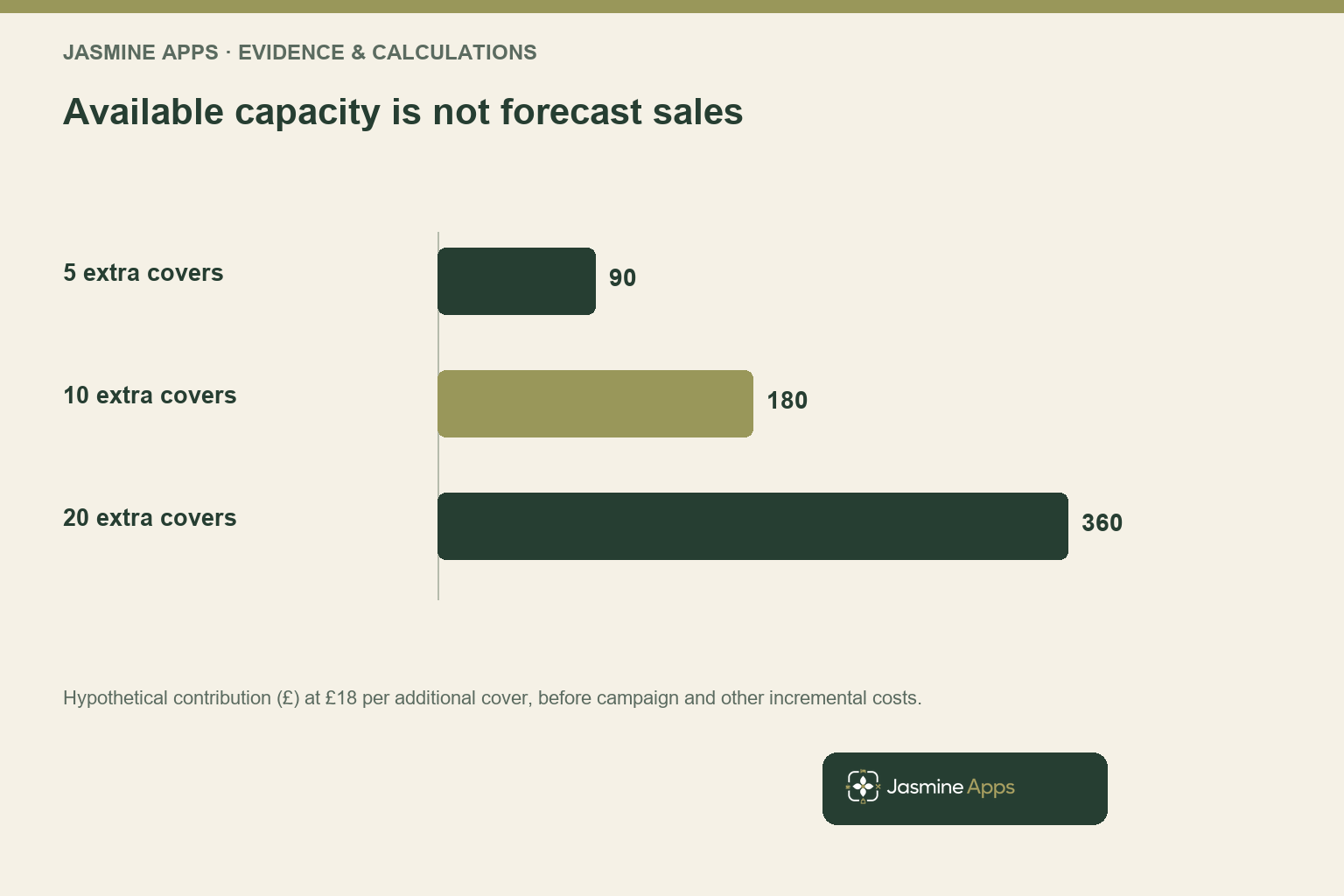
For a hypothetical service with twenty available covers and £18 contribution per additional cover, your maximum contribution opportunity is £360 before campaign and other incremental costs. That is capacity, not a sales forecast. You still need suitable demand, completed bookings and a service process that can turn the enquiry into a fulfilled visit.
Your restaurant midweek bookings guide develops the demand question for those services. This campaign starts with a dated capacity decision across the venue, making the commercial brief specific enough for your marketer to write. You can then create a message that promises what the operating team is ready to provide.
Price your hospitality quiet-week campaign before publishing
Calculate the offer’s contribution using a consistent tax basis and the relevant variable costs. Include any extra staffing, preparation or transaction expense triggered by additional business. A promotion that fills the service can still underperform if the incentive reduces contribution from guests who would have booked at the usual price.
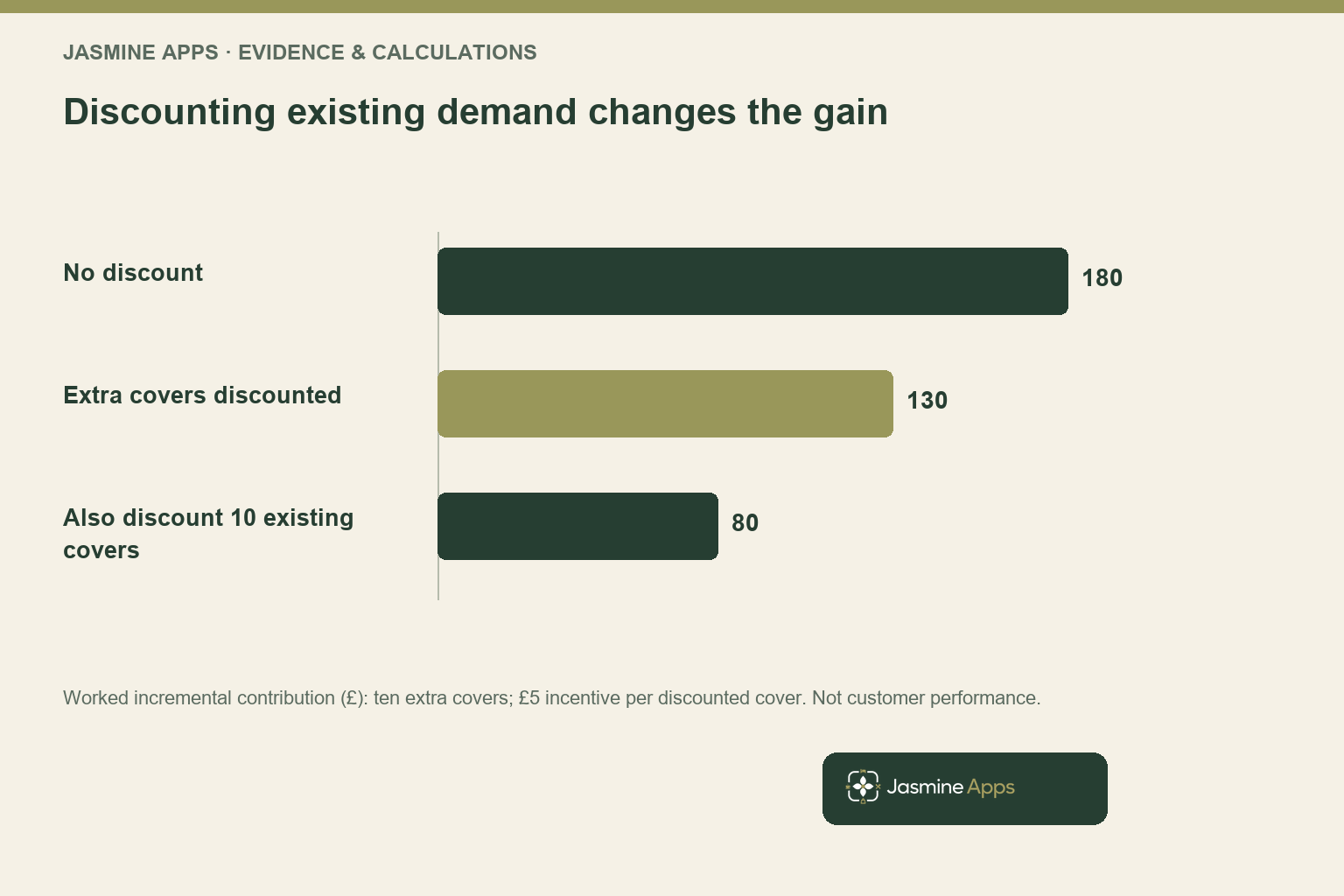
Suppose your hypothetical campaign brings ten genuinely additional covers at £18 contribution each, creating £180 before campaign costs. If a £5 discount applies to those ten covers, their contribution falls to £130. If ten existing-demand covers also receive the discount, another £50 is given away, leaving £80 of incremental contribution before campaign work and other costs.
That comparison does not mean discounts never help. It shows the hurdle your offer needs to overcome and the importance of the eligible audience. A value-added service, clearer availability or a relevant package may fit the capacity better, depending on fulfilment cost and what the guest needs to make the decision.
Give the campaign one primary outcome. Completed covers, realised room contribution or a qualified event enquiry each require a different measurement window. A click can help diagnose the journey, but it is not the same as fulfilled business. Keep your success measure close to the operational opportunity you selected at the start.
Use your hospitality marketing ROI guide for the wider cost framework. Jasmine Apps currently lists Marketing Hub at £19 per venue monthly or £190 annually, with a 10,000-email monthly description. Confirm the supported channels and email delivery scope in your quote, alongside setup, taxes and the recurring work of planning and maintaining campaigns.
Make your hospitality quiet-week campaign easy to book
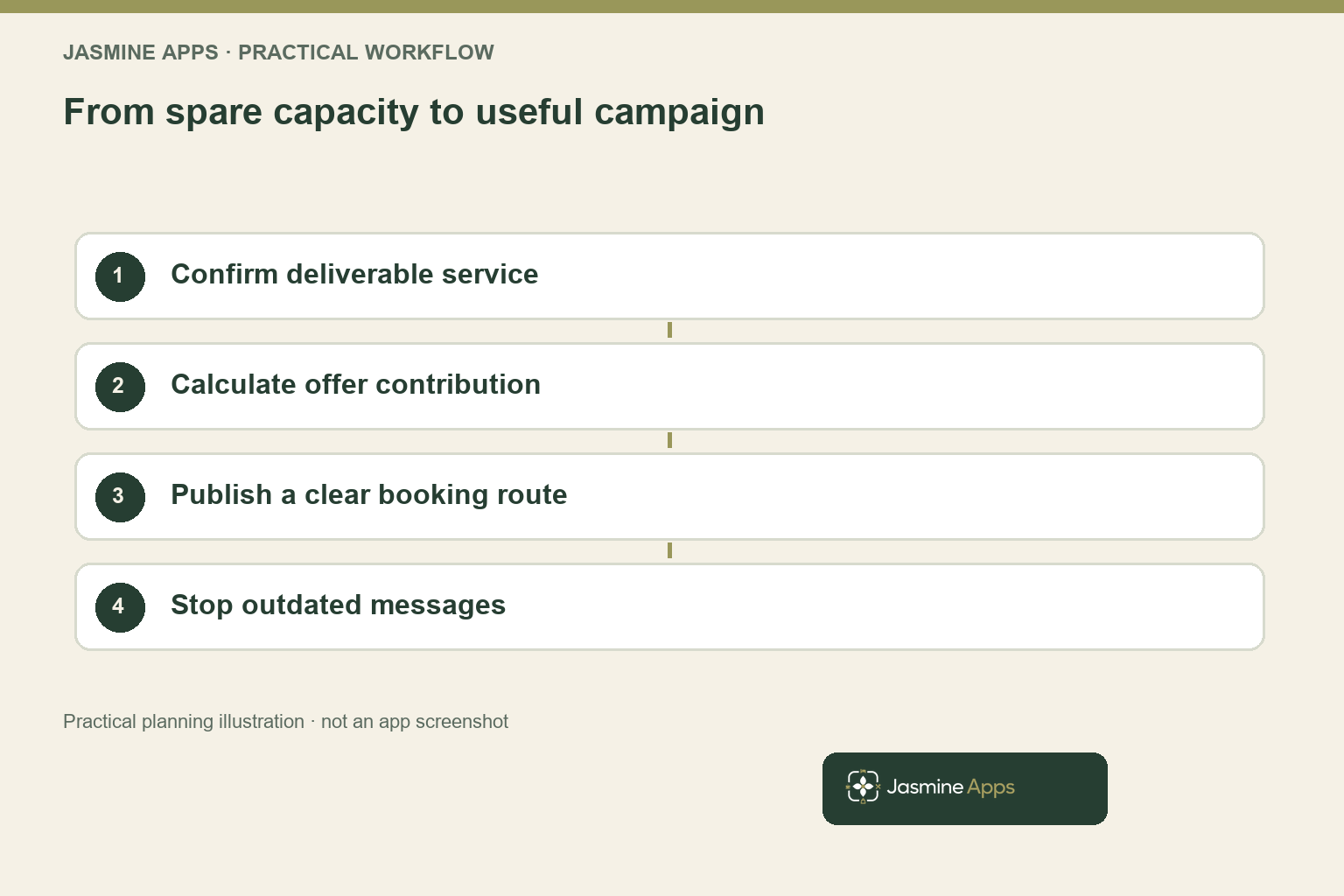
Your post should answer what the guest can buy, when it is available, what the relevant price includes and how to enquire or book. Keep the landing or booking information consistent with the message. A specific offer becomes less persuasive when the guest reaches a generic page and has to reconstruct the details before acting.
Jasmine Marketing Hub’s content workflow includes media, copy, campaign planning and connected social profiles. Demonstrate the channel and calendar route you intend to use, with a fictional campaign and appropriate permissions. Confirm publishing behaviour and any approval responsibilities rather than assuming every channel or email automation is included in the same workflow.
If your campaign uses electronic mail, the ICO’s guidance explains consent and the applicable soft-opt-in conditions. Use your approved audience and opt-out process. A booking email address is not automatically permission for every marketing message, so agree the appropriate route before the campaign list is selected.
Give reception or the host team the same offer brief. Include eligibility, available dates, any capacity limit and the contact route for exceptions. Your marketer may publish a clear post, but the enquiry can still stall if the person answering the telephone does not know what the guest is asking to book.
Set the final useful booking time and the person responsible for stopping outdated messages. Your Christmas campaign deadline guide explains that timing for seasonal work. Apply the same discipline to next week’s offer so the campaign remains relevant while your venue can still fulfil the promise.
Review the campaign at the booking and fulfilment stages
Check the campaign while there is still time to act on a useful signal. A high number of questions about the same condition may call for clearer wording, while a broken or confusing route needs attention before another post sends people into it. Keep changes focused so you can understand which part of the journey improved.
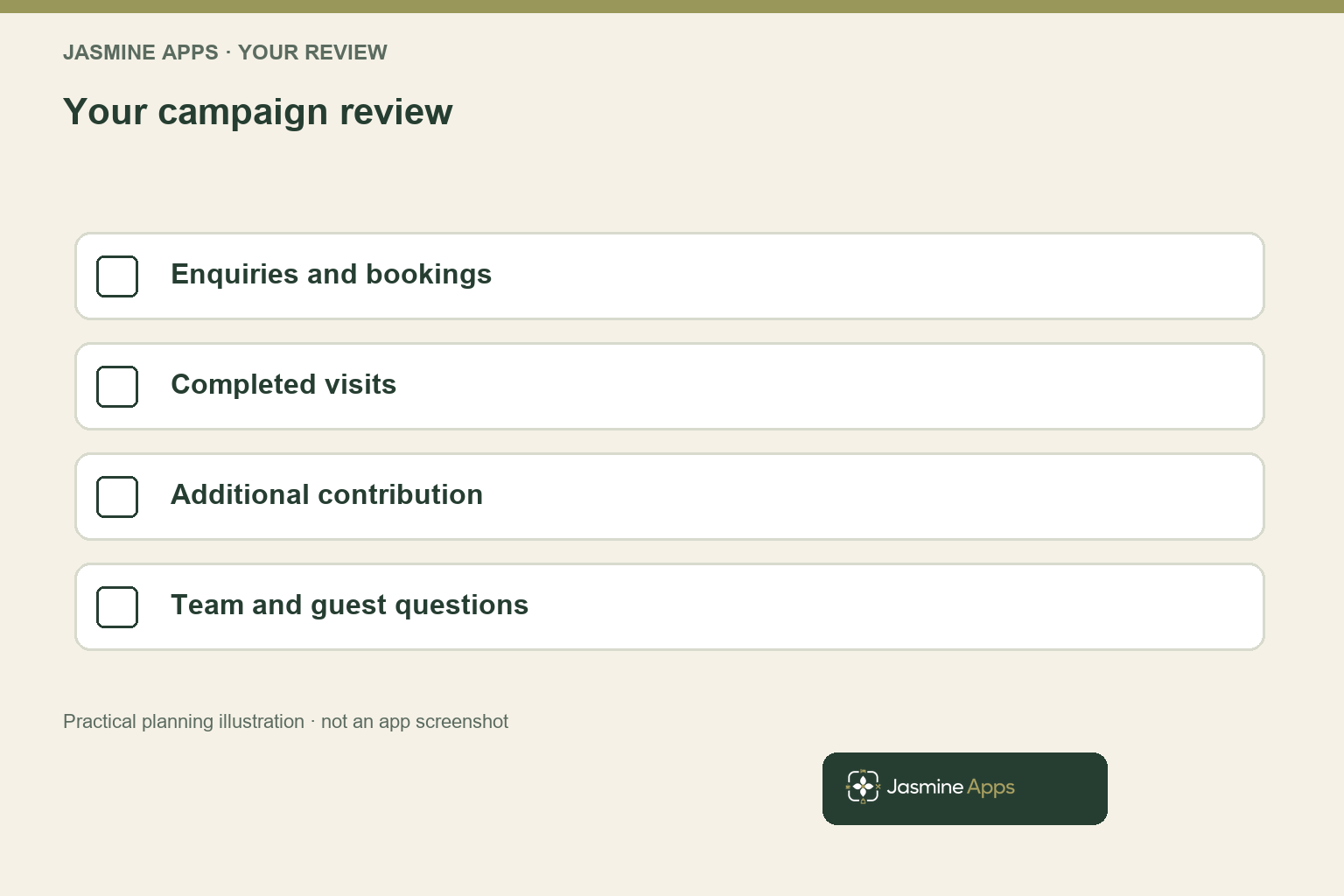
Record enquiries, bookings, cancellations and completed visits with the relevant campaign reference where your setup supports it. Confirm the reporting and export route in the demonstration, and use an agreed supporting record where necessary. Your attribution method should match the data you can reliably obtain rather than assume an automatic booking-to-campaign connection.
After the service, calculate contribution from genuinely additional business and deduct the offer and campaign costs. Note existing demand that received the incentive and any requests you could not fulfil. A full diary can be a useful operating result, but your commercial review needs the completed visits and the costs of delivering them.
Discuss the result with the service owner and the colleague handling enquiries. Ask whether the audience understood the offer, whether booking information stayed accurate and whether extra demand fit the staffing and preparation plan. Those observations can improve the next brief even when the first campaign produces a modest financial sample.
Keep the message structure, channel and operating handover that worked for the chosen opportunity. The next quiet week may need a different offer or audience, so reuse the process rather than repeating the same promotion. Your venue can then respond to spare capacity with a focused commercial plan and information the whole team is ready to deliver.
Pro Tips
Write a capacity brief. State the service, dates, spare capacity, contribution and fulfilment owner before creating the post. Your marketer can then build the message around a real opportunity.
Test the enquiry route. Ask someone unfamiliar with the offer to reach the booking or contact step from the published message. Include a normal question so the reception handover is tested too.
Set a stop owner. Agree who removes or updates the message when capacity is used or the deadline passes. A campaign should remain useful while the service can still be delivered.
Common Mistakes
Discounting the entire venue. You can reduce contribution from strong services and existing demand. Target the dated capacity and calculate the full incentive cost.
Judging the campaign by clicks alone. You miss cancellation and fulfilment outcomes. Follow the journey to completed business and realised contribution.
Leaving the service team without the brief. You create different explanations across channels. Give the enquiry and fulfilment colleagues the same approved offer facts.
Frequently Asked Questions
What should you promote when your restaurant is quiet next week?
You should begin with the service that has useful spare capacity and an operating team able to fulfil extra demand. Choose a relevant audience and buying reason, then calculate contribution after any incentive and additional costs. Give the message a clear date, price scope and booking route. Your campaign should address one practical opportunity rather than discount every service simply because part of the diary currently looks quiet for your venue.
Do you need a discount to fill a quiet hospitality service?
You may be able to improve demand with clearer availability, a relevant menu or a convenient service explanation before reducing price. If a discount is appropriate, calculate its effect on additional and existing-demand purchases together. Compare the contribution with fulfilment and campaign costs. Your pilot should show whether the offer changes completed business, so the incentive is chosen for its economics and guest relevance rather than used as an automatic response to spare capacity.
How do you measure a last-minute hospitality campaign?
You can track enquiries, completed bookings, cancellations and fulfilled visits within the dated offer window, using a supported campaign reference or agreed record. Calculate contribution from additional business after incentives and campaign costs, with a comparable baseline where practical. Keep clicks as a journey signal rather than the final outcome. Review enquiries you could not fulfil and questions caused by unclear terms, so the next campaign improves both commercial performance and the booking experience.
Can Marketing Hub automatically stop an offer when bookings fill?
You should demonstrate the exact behaviour required in your proposed scope. The Marketing Hub workflow supports content planning and connected social profiles; automatic campaign stopping based on live booking capacity needs separate confirmation. Assign a colleague to review availability and remove or update outdated messages where that handover remains manual. Your guest-facing offer should stay accurate throughout the useful booking window, regardless of whether the update is automated or handled by the team.
How much does Jasmine Marketing Hub cost?
Jasmine Apps currently lists £19 per venue monthly or £190 annually and describes a 10,000-email monthly allowance. Confirm the supported publishing channels, email delivery scope, setup and taxes in your quotation. Demonstrate the actual calendar and approval route your team intends to use. Include the recurring work of writing, updating and reviewing campaigns when comparing costs, so the subscription supports the complete marketing process rather than only a headline sending allowance.
Hospitality quiet-week campaign: your next step
Your hospitality quiet-week campaign should connect spare capacity with a useful guest decision and a service your team can deliver. Request a Marketing Hub demonstration with next week’s opportunity, offer economics and booking route. You can build a focused campaign brief and a review that shows what additional business your promotion actually supports.