

Hospitality Marketing Software ROI: What a £19 Plan Must Generate
· Jasmine Apps

Two additional orders contributing £10 each can cover a £19 software subscription. They cannot cover an advertising campaign, a day of content production and a discount simply because you leave those costs out. Your hospitality marketing software ROI needs to follow the complete journey from an offer to the money you keep.
Jasmine Marketing Hub gives you a place to plan marketing activity and work with connected social profiles. Here is how you can judge the listed £19 monthly plan against a specific commercial purpose.
Key Takeaways
- The CRM lists £19 per venue per month, or £190 annually.
- Its pricing description includes 10,000 emails monthly; confirm the email workflow in your demo.
- The demonstrated calendar supports planning posts for connected profiles.
- Ad spend, content work and discounts belong in your return calculation.
- Use bookings or attributable contribution, not engagement alone, to judge the result.
Hospitality marketing software ROI begins with a bookable offer
Your marketing calendar should answer a commercial question before it fills your social feed. What do you want a guest to buy, why would they choose it, and where can they complete the booking? A beautiful image with no clear route to an available offer can generate attention without improving your sales.
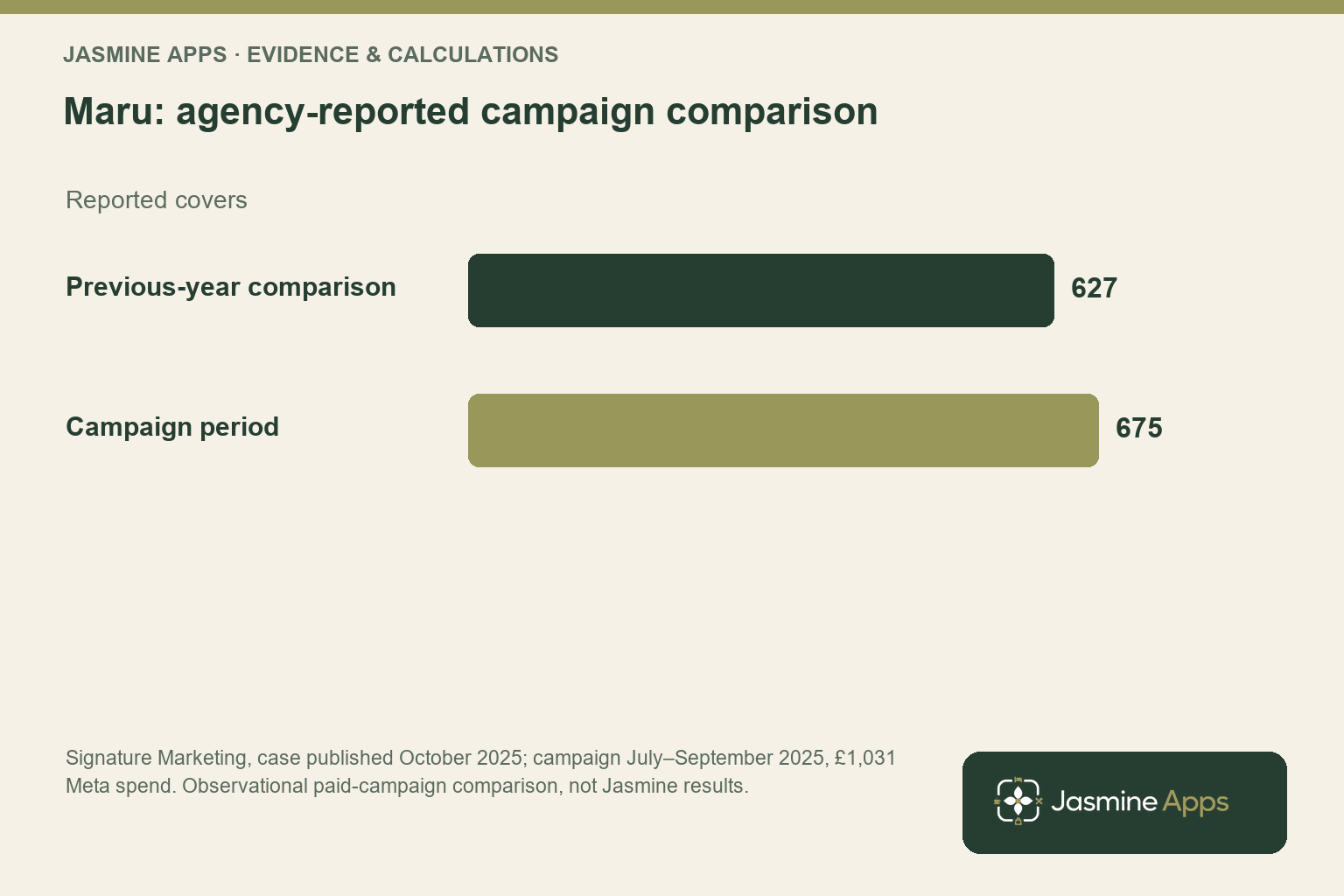
Published cases can illustrate a mechanism while still needing careful interpretation. In an October 2025 Maru case study, Signature Marketing reported 675 covers versus 627 in the previous-year comparison during a July-to-September Meta campaign with £1,031 ad spend. That is an agency-reported comparison, not a controlled experiment, an organic-posting result or a Jasmine Marketing Hub outcome.
You should therefore examine the offer, targeting and conversion route rather than copy a claimed return. Paid campaigns, organic posts and email each have different costs and attribution limits. A shared calendar can support coordination, but it does not give every channel the same buying intent or prove that a customer purchased because they saw one post.
Start with an offer you can deliver, such as a defined afternoon tea sitting or an event with a clear booking window. Include the price, available times and the next action a guest needs to take. Confirm the landing page and booking route before you spend time producing content that sends people to a confusing destination.
Your commercial baseline might be completed bookings for that offer, not your venue’s entire monthly sales. Keep capacity and margin visible: filling a discounted service can increase covers while reducing the contribution you wanted to grow. Your software earns its place when it helps your team plan a relevant message and follow its effect on a useful business outcome.
Calculate hospitality marketing software ROI beyond the £19 plan
The current CRM price for Jasmine Marketing Hub is £19 per venue per month, or £190 annually. Its pricing description includes 10,000 emails per month. The public feature page and demonstrated calendar focus on social planning and connected-profile publishing, so you should confirm email creation, sending, reporting and any extra charges in a demo before buying specifically for email campaigns.
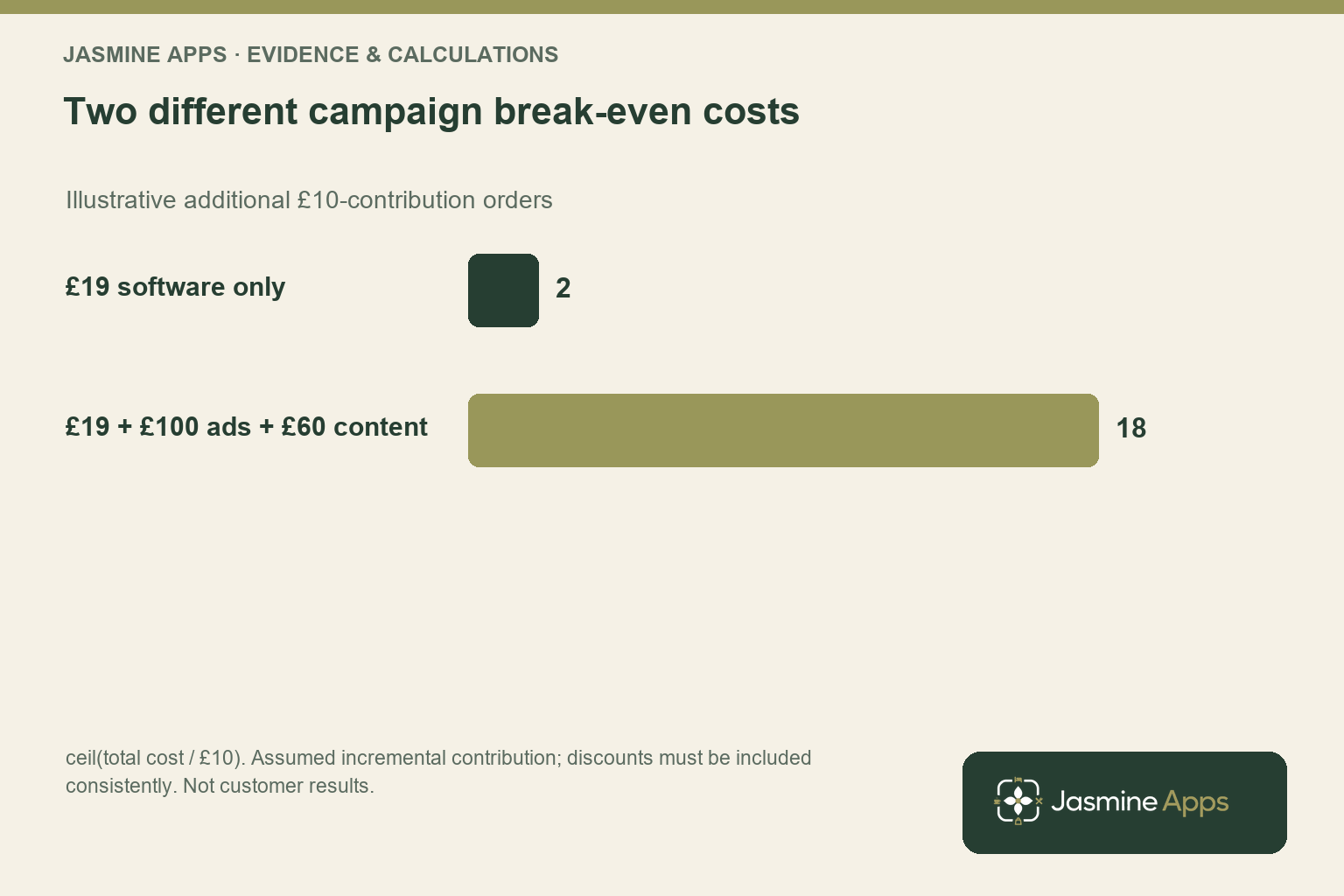
For a software-only illustration, suppose an extra completed order contributes £10 after variable fulfilment costs. Two such orders contribute £20 and cover the £19 subscription by £1. That threshold is useful, but it excludes the work of creating the offer, producing assets and operating the campaign.
Now add an illustrative £100 advertising budget and £60 of content-production cost. Your £179 total requires eighteen additional £10-contribution orders to exceed it. If the campaign also gives a discount that is not already included in the £10 contribution assumption, you need to subtract that cost as well.
An example with £300 attributable contribution and £179 total cost leaves £121 net benefit, a simple return of about 67.6% on that cost. It is an arithmetic scenario, not a customer result. Your real result depends on attribution, fulfilment, cancellations and whether the orders would otherwise have happened.
Your quotation should also confirm setup, supported channels, tax basis and the scope available to your venue. The public terms leave fees and taxes to your order. If you compare a standalone plan with Complete, check its included email allowance and actual delivered workflow, and only count bundled apps your team intends to use.
Test hospitality marketing software ROI in the actual calendar
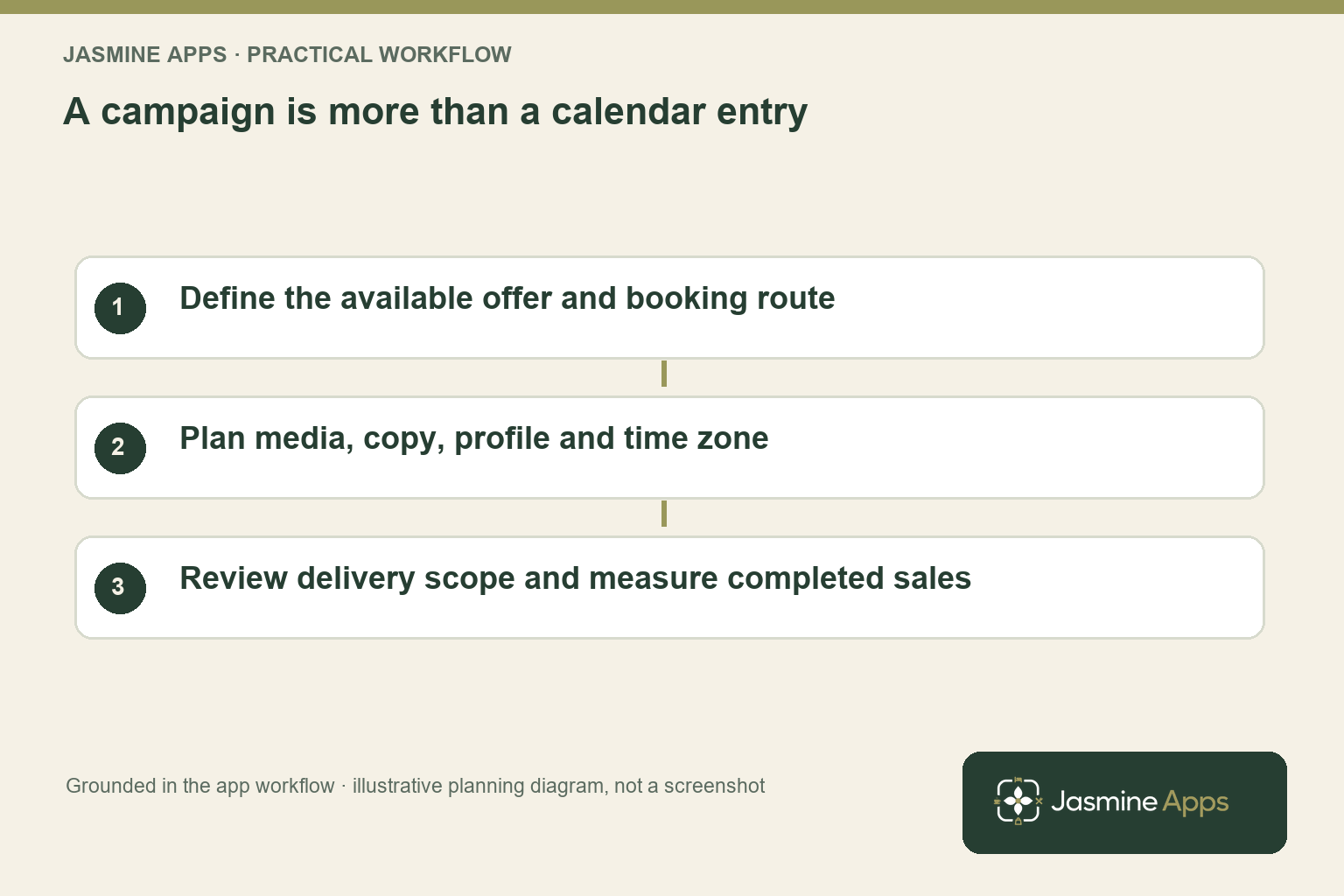
In the current administration dashboard, you can view a marketing calendar, choose a day and plan a post. The calendar shows a Europe/London time context and connected social profiles. Your demonstration should confirm the specific networks, accounts and permissions you intend to use, rather than treating a broad integration list as proof that your profile is ready.
The post-planning workflow provides space for media, copy and a campaign grouping, with draft and publishing actions. Use a sample offer to check whether your team can prepare the content, identify the intended profile and understand when it is scheduled. Do not publish test content to a live audience simply to prove a button exists.
Your operational value can come from coordination. A named campaign can keep related posts together, while a visible calendar helps your team avoid promoting a sold-out event or duplicating the same offer. Those improvements depend on a review routine: someone still needs to check availability, images, price and wording before a post goes out.
You should also separate contact records from permission to market. The subscriber area and sources help you organise information, but a customer appearing in a list does not establish that every promotional channel is appropriate. Confirm the consent and unsubscribe workflow relevant to your intended campaign before you rely on email activity in a business case.
For measurement, ask exactly what reporting the agreed installation supplies and what you will need from your booking or sales process. Calendar activity is not automatically revenue attribution. A practical demo finishes with your team knowing how to plan the offer, review it and connect results to a consistent campaign identifier through the tools you actually use.
Run a campaign pilot with a fair comparison and a stop rule
Choose one offer, one audience and one conversion route for your first pilot. If you change the menu, booking page, advertising budget and posting frequency together, you can learn whether the combined campaign worked but not which component caused the change. Keep the scope narrow enough to explain the result.
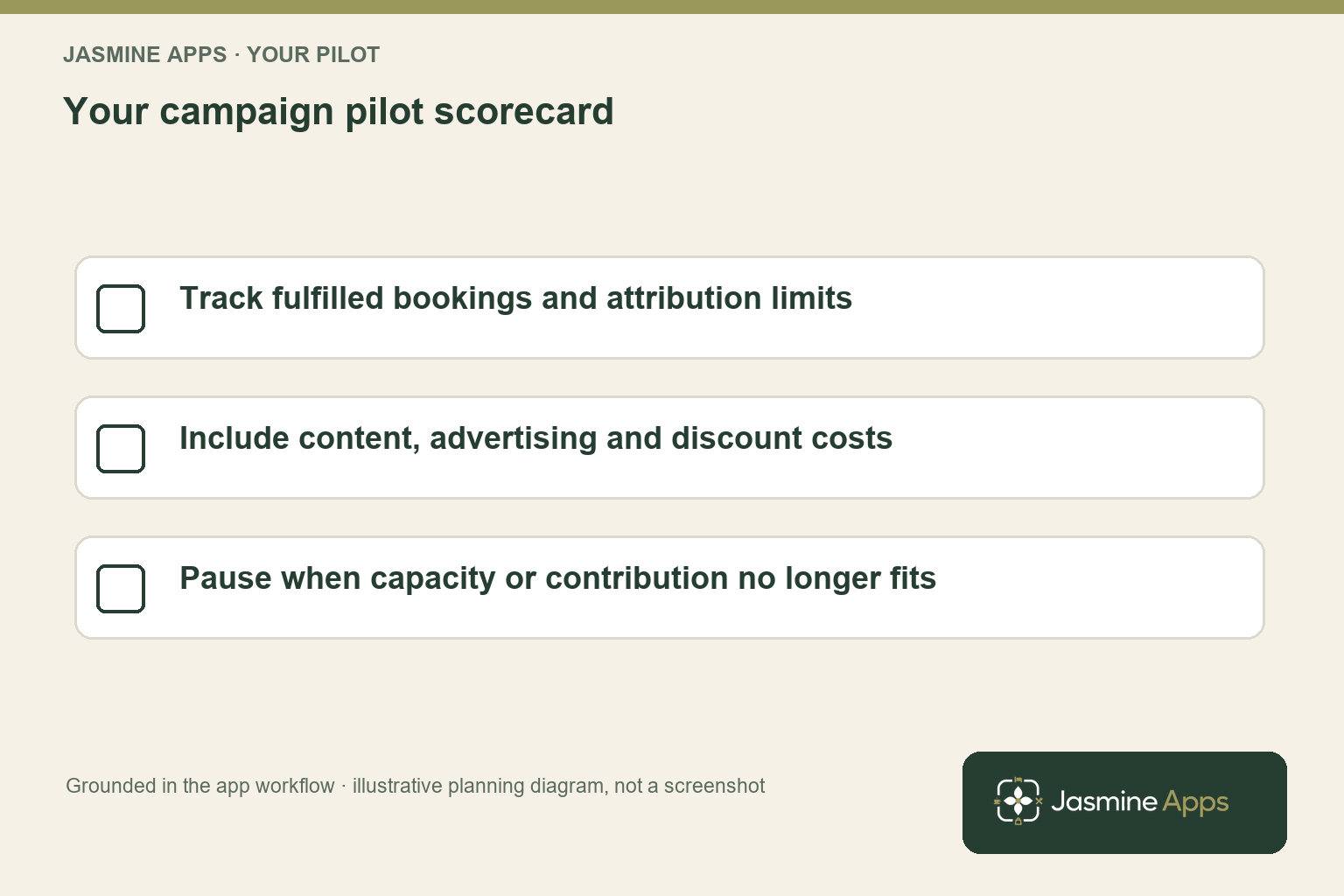
Decide how you will recognise a booking linked to the campaign. That might involve a tagged link, a booking note or another agreed measurement method supported by your setup. Record the limitations: a customer can see a post and later book directly, while a tracked booking might still have occurred without the campaign.
Measure completed, fulfilled sales rather than counting every enquiry as revenue. Subtract cancellations and refunds and use contribution after fulfilment costs. Keep software, advertising and content effort together in the cost column so your return calculation describes the whole campaign rather than its cheapest component.
Your stop rule should protect money and service quality. You might pause an offer when its available sittings fill, when the cost per useful booking exceeds your threshold or when staff cannot fulfil the promise reliably. A calendar makes coordination easier, but your team needs to make the operational decision.
At review, compare a relevant baseline and note changes in weather, local events, price or demand. You can refine the creative and offer while retaining honest limits on attribution. Your strongest sales case for the software is a repeatable planning routine that helps you deliver campaigns with visible costs and commercially useful results, rather than a large engagement total with no connection to bookings.
For the related operating detail, read your guide to restaurant social content calendar before the demonstration.
Pro Tips
Make the offer measurable. Choose a specific service, date range and booking route. A defined outcome is easier to evaluate than your venue’s total sales.
Include creative effort. Count the staff time or supplier cost needed to produce the campaign. Your content is part of the investment even when the software fee is small.
Review availability before publishing. Connect your content approval to what your operation can deliver. A popular post about an unavailable offer creates enquiries your team cannot convert.
Common Mistakes
Using likes as financial return. Engagement can support awareness, but it does not establish completed sales or retained contribution. Measure the commercial journey separately.
Quoting software-only campaign costs. Advertising and content work can exceed the subscription. Leaving them out exaggerates your return.
Assuming an allowance proves capability. The CRM email allowance needs a demonstrated sending and reporting workflow. Confirm the scope you are buying before relying on it in your campaign plan.
Frequently Asked Questions
How much does hospitality marketing software cost?
Jasmine Marketing Hub is listed at £19 per venue per month, or £190 annually. Your complete campaign cost can also include content production, advertising, discounts and agreed setup work. Confirm the supported channels, email workflow and applicable tax basis in your quotation. Compare that investment with contribution from completed, attributable sales rather than engagement or gross revenue, so your buying decision reflects the money your venue can actually retain.
Does Jasmine Marketing Hub include email marketing?
The CRM pricing description includes 10,000 emails per month, while the public page and demonstrated workflow centre on the social calendar and connected-profile publishing. You should ask to see the exact email creation, sending, consent, unsubscribe and reporting journey available to your venue before buying for that purpose. Confirm any additional charges and rollout requirements in writing, rather than treating a listed allowance as proof that every campaign function is ready.
How do you measure social media ROI for a restaurant?
You compare attributable contribution from completed sales with the full cost of the campaign. Include content work, advertising, software and discounts, and explain how you linked bookings to the offer. Keep tracked sales separate from proven incremental sales because some customers may have booked anyway. A focused pilot with a defined booking route and comparable baseline gives you a more useful answer than dividing total monthly revenue by your subscription fee.
Can marketing software increase direct hotel bookings?
You can use a coordinated campaign to make an offer clearer and help guests reach a direct booking route. The software supports planning; it does not guarantee demand or remove every conversion obstacle. Check availability, landing-page clarity and the guest journey before promoting the offer. Measure completed bookings and contribution, record other demand changes, and confirm what attribution information your agreed installation actually provides before claiming a financial improvement.
What should you test in a marketing software demonstration?
You should prepare one sample offer from calendar planning through review and the intended publication route. Confirm connected profiles, time zone, media handling, copy and campaign grouping without publishing unwanted test content. Ask how you will measure bookings, handle subscriber permissions and operate any email workflow you need. Your team should leave knowing which functions are demonstrated, which need configuration and which costs belong in the full campaign budget.
Hospitality marketing software ROI: your next decision
Your hospitality marketing software ROI should make the connection between an offer, its cost and the contribution it generates easier to see. Request a Jasmine Marketing Hub demonstration with one campaign, your intended channels and booking route. You can leave with confirmed scope and a pilot that measures useful business rather than applause on a feed.