

Christmas Hospitality Campaign: Set the Last Useful Booking Date
· Jasmine Apps

Your last available table is not necessarily a table you can still sell responsibly. If your supplier order, meal choices or staffing decision is already fixed, a late booking can create work your operation cannot fulfil. Your Christmas hospitality campaign should therefore work backwards from the last useful booking date, not simply count down to the event.
Jasmine Marketing Hub provides a content-calendar workflow to investigate. You can use that structure around approved deadlines while keeping the actual availability and stop decisions with your venue’s responsible team.
Key Takeaways
- Set the useful booking cutoff from real operating lead times.
- Separate booking, meal-choice, supplier and campaign-stop dates.
- Keep availability wording current after a deadline changes.
- Use search-interest tools as context, not a booking forecast.
- Confirm the calendar and channel scope in your demonstration.
Plan a Christmas hospitality campaign backwards from delivery
You should begin with the event and the work needed to deliver it. Ask the kitchen, supplier contact, floor manager and booking team which decisions must be complete before service. Your campaign can then promote capacity that remains operationally useful, rather than create enquiries after the preparation window has closed.
Separate the relevant deadlines. Your meal-choice cutoff may differ from the supplier order date, and your booking team may need an earlier decision to collect the required information. A single closing date can conceal that sequence and leave staff trying to complete several tasks at once.
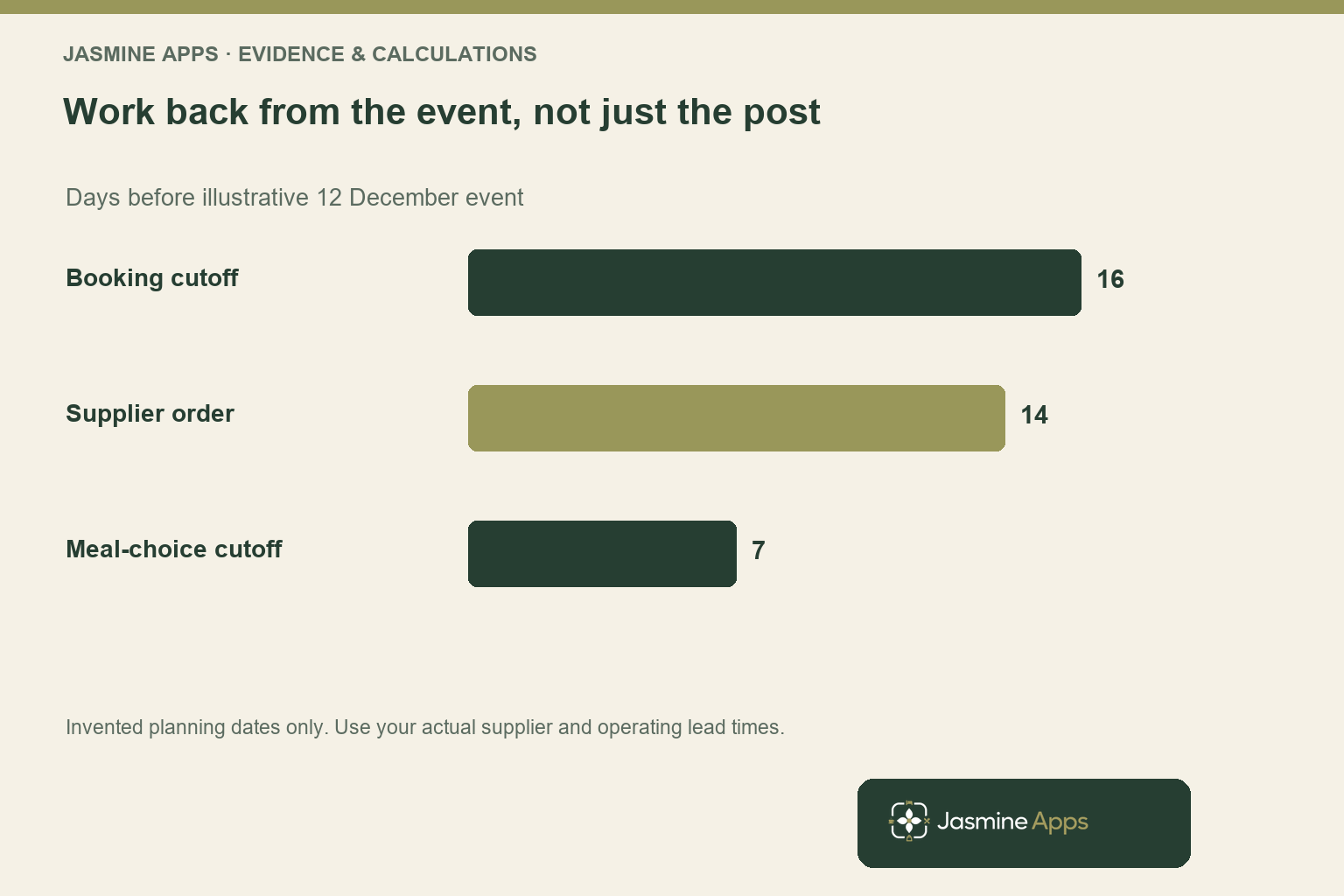
Use an illustrative event on 12 December 2026. Suppose your approved planning example places the supplier order on 28 November and meal-choice completion on 5 December, with a booking cutoff on 26 November to allow the preceding handover. Those dates are invented for the workflow illustration, not recommended industry lead times.
Your actual dates should come from the operation and supplier terms you use. If a venue can accommodate a late small party through an approved alternative, define that exception separately. Do not treat an ad hoc accommodation as proof that the original cutoff never mattered.
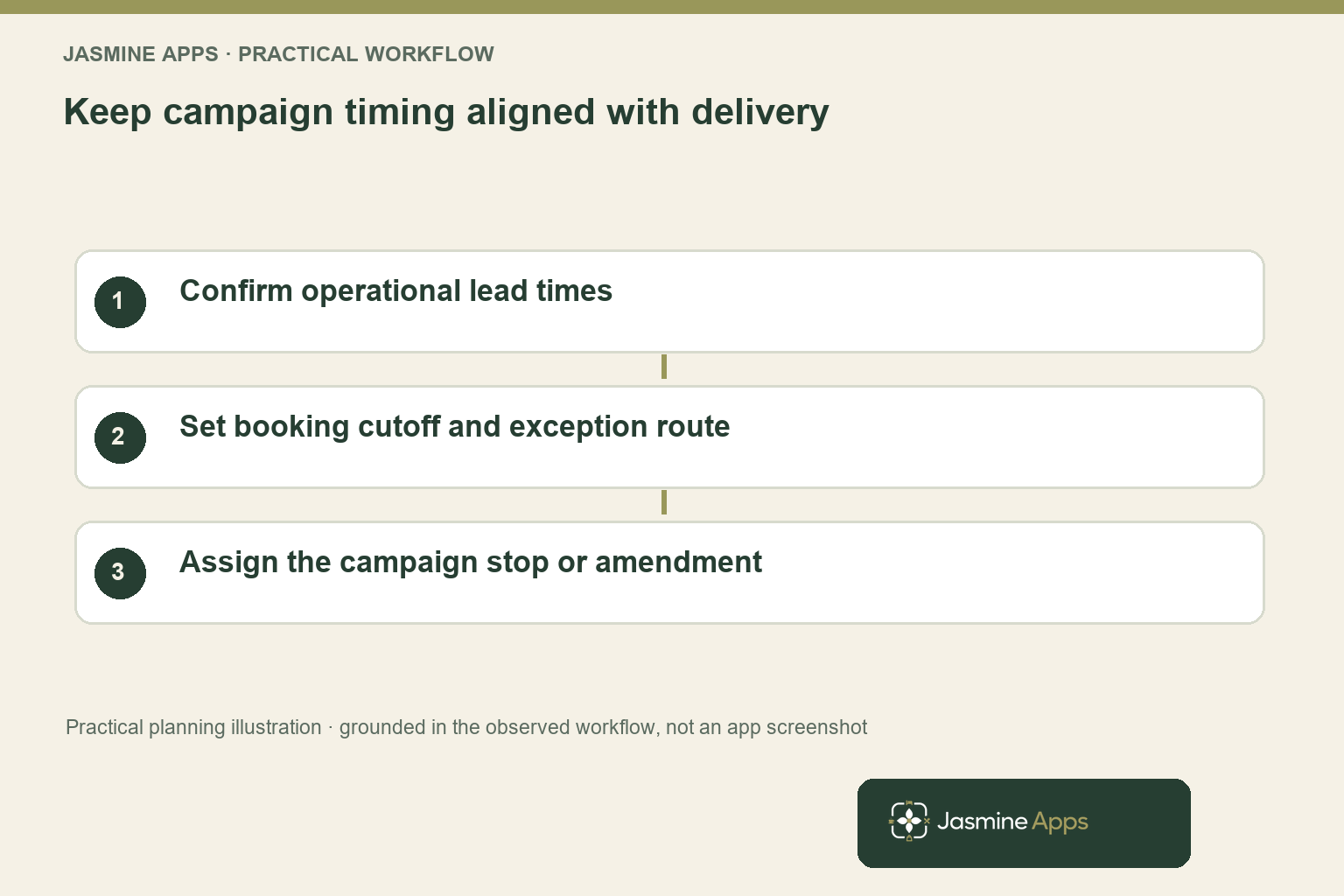
Choose a named owner for the final availability decision. Marketing needs a dependable answer when the campaign approaches its stop date, while reception needs the same answer when a late enquiry arrives. Your messages should not continue to promise ordinary bookings after the operation has changed the conditions.
This article focuses on cutoffs and the decision to stop or change the campaign. Use your existing seasonal content-calendar guide for the broader sequence of posts, keeping the operating deadlines visible within that plan.
Use Christmas hospitality campaign data without inventing demand
Your planning data should distinguish search interest, enquiries, bookings and the work still required. Each answers a different question. An increase in attention does not establish that the venue can accept another party or that the enquiry will become a completed event.
The Google Trends guidance on comparing search terms explains a tool for comparing interest. You can use it to investigate the wording and timing relevant to your audience, but relative interest is not an absolute count of local bookings. Your own enquiry and reservation records remain necessary for the campaign decision.
Do not publish a percentage claim about Christmas demand without a verified dataset and appropriate scope. A pattern from another country, year or kind of venue may not describe your local opportunity. You can still write useful content by explaining the decision and showing transparent planning calculations.
For the illustrative 12 December event, the 26 November booking cutoff falls sixteen days beforehand, the supplier date fourteen days beforehand and the meal-choice date seven days beforehand. The graph visualises the sequence; it does not suggest those lead times are normal for all hospitality businesses.
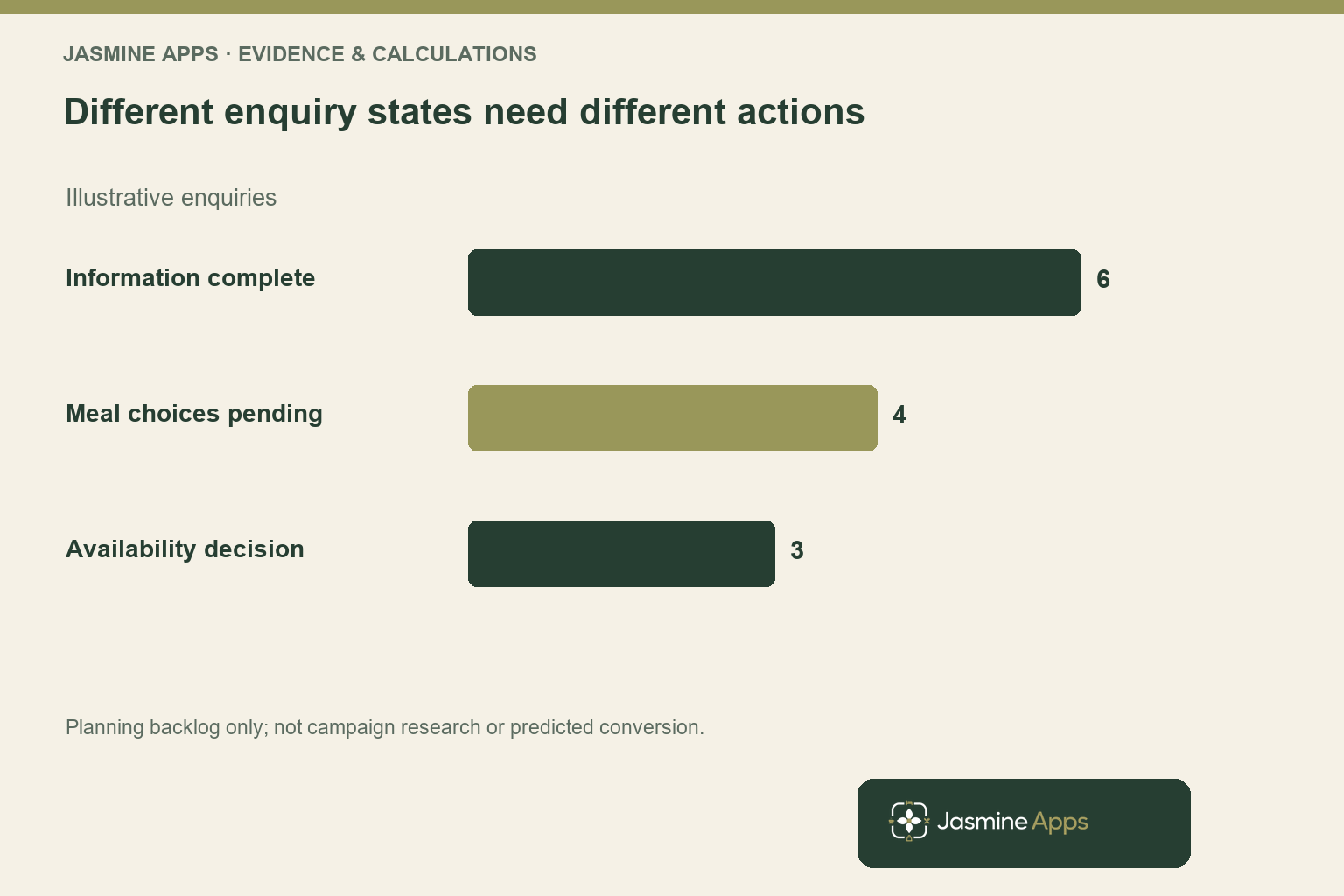
You can also track an example enquiry backlog by readiness. Six enquiries with complete information, four awaiting meal choices and three awaiting an approved availability decision represent different next actions. Those illustrative counts organise work rather than predict conversion.
Your commercial review should include the cost of fulfilling late demand. An additional party may require a changed supplier order, extra coordination or staffing, so its headline revenue can overstate the useful contribution. Your responsible team should approve the exception based on the actual cost and service implications.
Keep a Christmas hospitality campaign aligned with the live calendar
The observed Marketing Hub calendar organises media, copy and campaign-related content for connected social profiles. Draft and publishing controls support the content process you can demonstrate. You should confirm the channels, scheduling arrangements and effective timezone for your venue before planning the seasonal sequence.
Your calendar should distinguish the date you intend to post from the date the offer becomes unsuitable. A message prepared early can still be inaccurate when it reaches its scheduled day. Give the content owner a final availability and deadline check before publication.
Do not assume the system automatically stops a campaign when your booking diary fills or a supplier cutoff passes. That integration has not been demonstrated by the visible social calendar. Ask how the required stop or amendment is performed in your deployment and who owns it.
Your near-cutoff copy should tell guests the useful next step. If ordinary bookings remain open, state the approved route and deadline clearly. If only exceptions are possible, describe the enquiry process without implying guaranteed availability or the original unrestricted package.
Use practical images related to the planning task or actual event you can deliver. A generated festive scene should remain an illustration, not evidence of a real event at your venue. Keep the Jasmine branding visible within your thumbnail crop without allowing the logo to obscure the operational diagram.
Read the hotel package-promotion article when your seasonal offer combines rooms and dining. Its component and message checks remain relevant, while this deadline plan determines when that approved promise can still be fulfilled.
Review the cutoff decision before adding more seasonal spend
Choose one event or offer for the first deadline audit. Confirm the supplier, meal-choice, staffing and booking decisions with their owners, then put the approved sequence into the campaign plan. Your team should know what changes after each date passes.
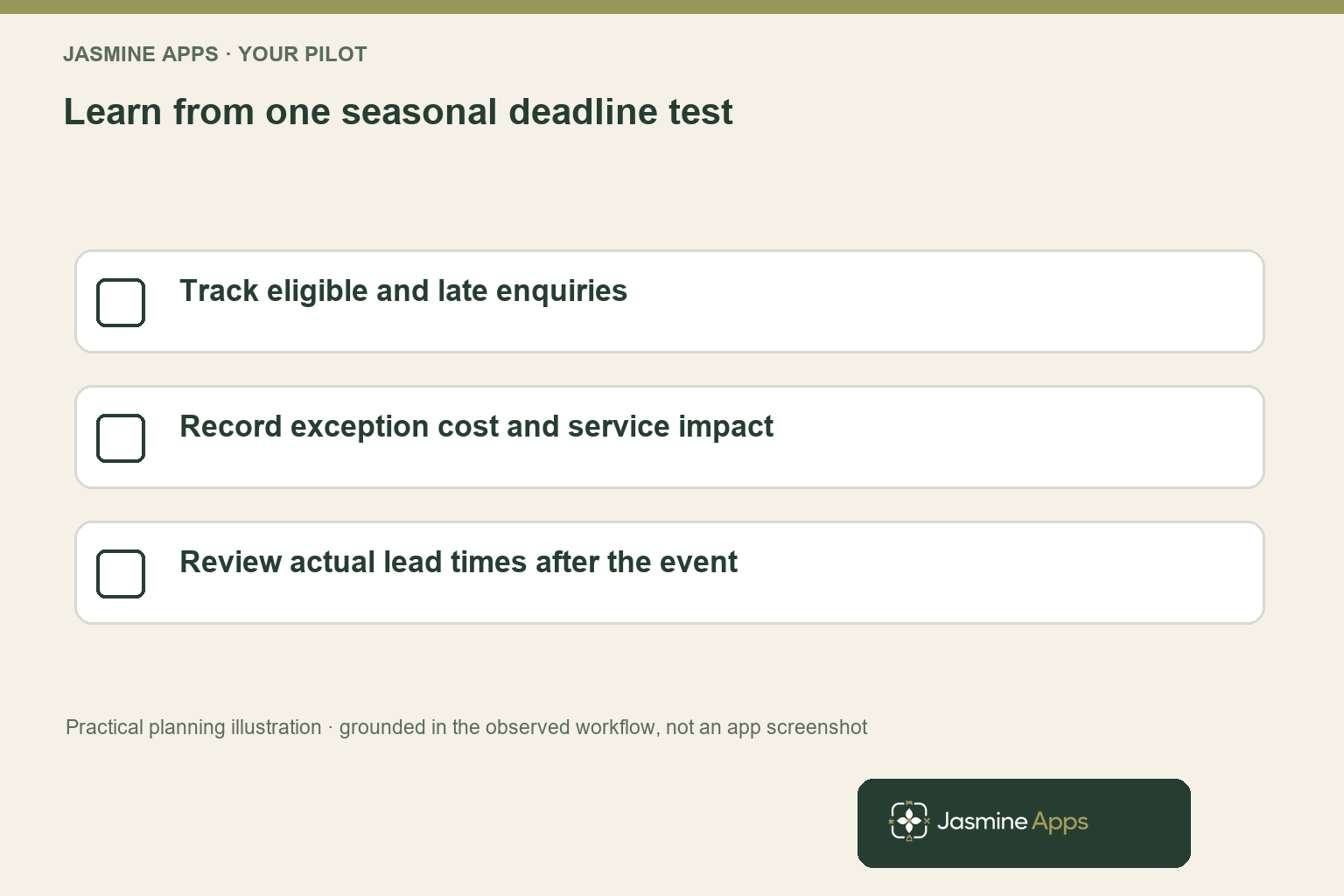
Record late enquiries and the work needed to resolve them. Separate an approved, deliverable exception from a request the operation cannot fulfil. Your review can then identify whether the campaign stopped too late, whether the wording was unclear or whether the enquiry route needs improvement.
The CRM lists Marketing Hub at £19 per venue per month or £190 annually, with a description including a ten-thousand-email monthly allowance. Confirm the actual channels, email arrangements, tax basis and setup in your proposed scope. The observed social-calendar workflow does not independently prove automated email sequences or booking-triggered campaign stops.
Your purchasing case should focus on the content work and coordination you can demonstrate. A useful calendar may help your team keep deadlines visible, but it does not create supplier capacity or decide whether a late booking is acceptable. Keep those operational decisions explicit.
Use the hospitality social-media ROI guide for the wider outcome review. Your Christmas deadline test should measure eligible enquiries, completed bookings and avoidable late coordination, with contribution assessed on a consistent cost basis.
After the season, record which lead times were accurate and which assumptions failed. You can then plan the next campaign from actual venue evidence rather than repeating an attractive countdown that ignored delivery constraints. Your strongest result is useful demand accepted while there is still time to serve it properly.
Pro Tips
Put the earliest constraint first. Your last useful booking date may be governed by a supplier or information handover. Work backwards from the constraint rather than the event alone.
Assign the stop decision. Name the person who confirms when ordinary bookings close and tells the content owner. A calendar needs an operational answer to remain accurate.
Log late exceptions. Record the cost and delivery conditions of approved exceptions. You can improve next year’s cutoff without normalising unplanned work.
Common Mistakes
Advertising until the event date. You can create demand after essential decisions are fixed. Use the last useful booking date and an approved exception route.
Calling search interest a booking forecast. You turn relative attention into an unsupported sales number. Keep search context and venue records separate.
Assuming automatic campaign stops. You may leave an offer live after the operation changes. Demonstrate the stop or amendment workflow and its owner.
Frequently Asked Questions
When should you start a Christmas hospitality campaign?
You should plan from your event dates and actual operating lead times, then allow enough time to reach the relevant audience before the useful booking cutoff. Your supplier, meal-choice and staffing decisions may require different deadlines. Use your own enquiry history and appropriate search-interest context rather than a universal launch date. The important sequence is preparation, useful demand and approved delivery, with a clear stop or change decision.
When should Christmas party bookings close?
You should set the cutoff from the work needed to fulfil the party, including supplier arrangements, guest information and staffing. The illustrative dates in this article are planning examples rather than industry standards. Your venue may approve a defined late-booking exception, but that needs its own cost and service review. Make the ordinary cutoff and exception route clear so marketing and reception provide the same answer.
Can Google Trends predict Christmas restaurant bookings?
You should use Google Trends as context for relative search interest and wording, not as an absolute local booking forecast. Your actual enquiries, eligible capacity and completed reservations answer different questions. A search pattern can help inform the campaign investigation, but it does not establish that your venue will receive a particular number of guests. Keep the data’s scope and limitations visible before using it in a commercial claim.
Can Marketing Hub stop posts when Christmas bookings fill?
You should confirm the actual stop and amendment workflow in a demonstration. The observed admin provides a social content calendar and publishing controls, but does not independently establish a booking-diary trigger that automatically ends a campaign. Your plan needs a named availability decision owner and a content owner who acts on that decision. Bring the required integration and exception rule to the demonstration before assuming automation is included.
How do you measure a Christmas hospitality campaign?
You should record eligible enquiries, completed bookings and the contribution from the service on a consistent cost basis. Keep general attention or engagement separate from the demand your venue can fulfil. Track late enquiries and the coordination or supplier changes needed for exceptions. Your review should explain the effect of capacity, deadlines and other marketing rather than attribute every seasonal sale to the content calendar alone.
Christmas hospitality campaign: your next step
Your Christmas hospitality campaign should attract bookings while you can still deliver the promise. Request a Jasmine Marketing Hub demonstration with one seasonal offer, its operating deadlines and your intended channels. You can confirm the workflow and quote, then create a campaign whose last useful booking date is as clear as its first post.