

Restaurant Repeat-visit Cohort Analysis: Find What Builds Regulars
· Yiannis Yiasemis

Your newest guests will usually look less loyal if you give them less time to return. Comparing people who first visited last week with people who joined six months ago creates an unfair test before you even consider a reward. Your restaurant repeat-visit cohort analysis needs equal observation windows before it can tell you which experience is building regulars.
Jasmine Loyalty provides member and reward records that can support the relevant guest journey. Your analysis should connect the information your setup actually records with a clear first-visit definition, completed returns and contribution. You can then distinguish a growing membership list from a stronger returning-customer pattern, making your next retention investment a better-informed decision.
Key Takeaways
- Group guests by a defined first qualifying visit.
- Compare cohorts with equal time to return.
- Separate member activity from proven additional demand.
- Track return contribution after reward costs.
- Use only the identification and reporting your setup supports.
Define restaurant repeat-visit cohort analysis before counting returns
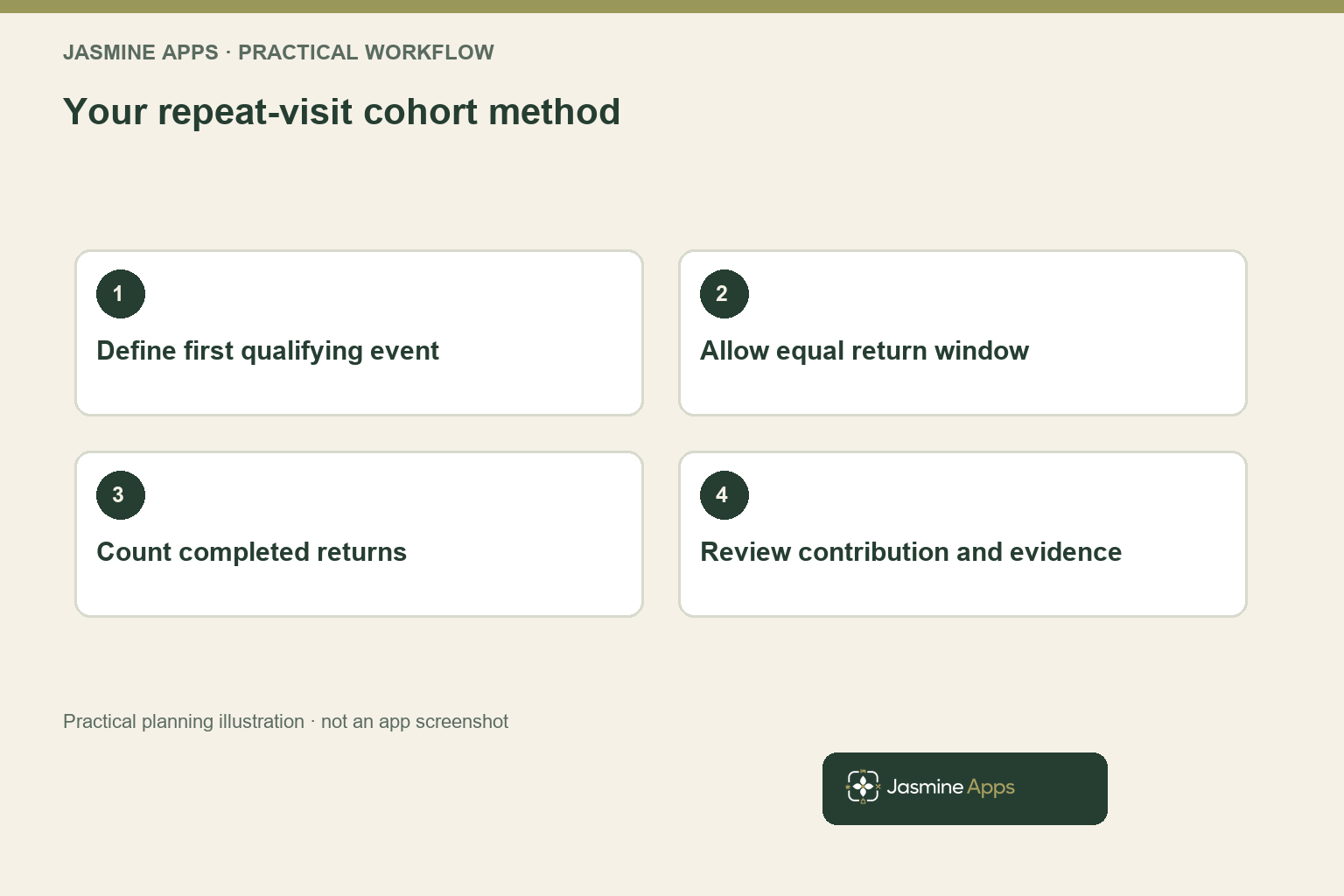
Your cohort is a group sharing a clearly defined starting event, such as a first identified completed visit during a particular month. Decide whether that event means first ever at the venue, first known in your records or first visit after joining the scheme. Those definitions can produce different groups, especially when a longstanding customer signs up only recently.
Choose the return outcome before reviewing the result. You might count at least one completed qualifying visit within thirty days, or a second and third visit within a longer window that fits your service. Your definition should specify how cancellations, refunds and non-qualifying activity are treated, so your report does not mix a reservation with a fulfilled purchase.
Use a consistent identification method that your venue can lawfully and practically maintain. An attached member record may help recognise a transaction, while an anonymous purchase may remain unlinked. Acknowledge that boundary when interpreting the result. Your known returning-member rate is not automatically the complete returning-guest rate for everyone who entered the restaurant during the period.
Keep the unit visible. A member, party, cover and transaction are not interchangeable, and one person may pay for several guests. If your analysis follows identified members, state that clearly and avoid turning their transactions into an exact count of every individual's dining frequency. Your manager should understand what the available record can establish before using it to plan a retention budget.
Use the existing second-visit strategy article for the wider guest-experience approach. Your cohort analysis adds a disciplined measurement window to that work. It helps you ask whether a new group returned under a consistent definition, rather than treating a large accumulated member total as evidence that your latest programme is performing well.
Give restaurant repeat-visit cohort analysis an equal observation window
Compare groups only after each has had the same opportunity to complete the chosen return window. A January cohort with sixty days of observation and a February cohort with ten days should not be ranked as if both are finished. Mark the newer group as incomplete, and return to it when the agreed period has elapsed.
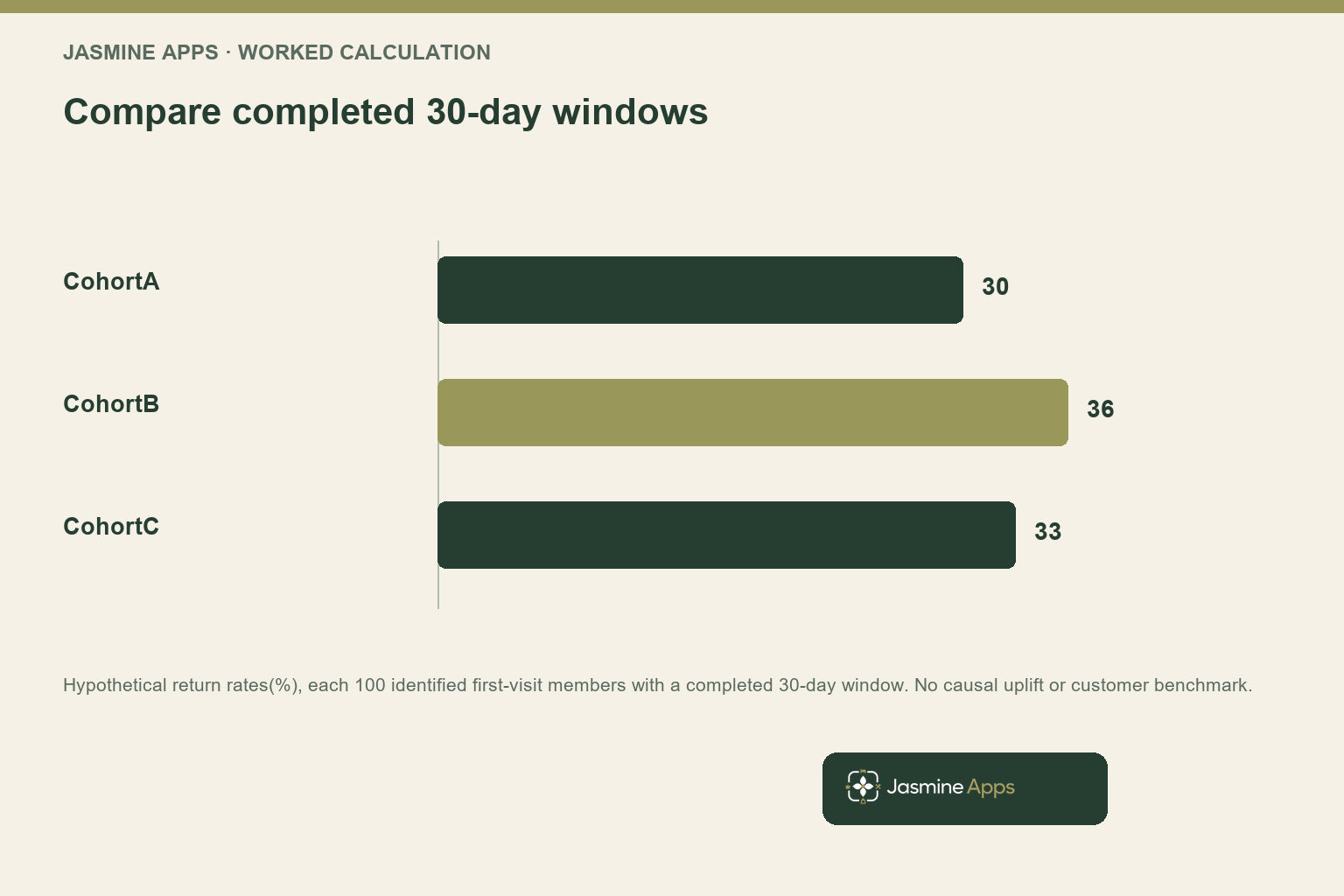
For an illustration, assume each of three completed monthly cohorts contains one hundred identified first-visit members. Thirty, thirty-six and thirty-three respectively return within thirty days. Their observed return rates are thirty, thirty-six and thirty-three per cent. Those figures describe the assumed groups; they are not Jasmine customer benchmarks or evidence that a reward caused the differences.
Now suppose a fourth cohort has fifteen returns after only ten days. Reporting fifteen per cent next to the completed thirty-day rates would invite a misleading conclusion. Keep it in a separate in-progress view or show the elapsed window explicitly, so your team can monitor it without confusing early observation with a completed outcome.
Check the calendar context. Holidays, local events, menu changes and temporary closures can affect when a guest returns. Your equal window removes one basic comparison error but does not make every cohort otherwise identical. Record important differences and repeat the review before attributing a small movement to a particular message, reward or software change.
Use a simple table with start period, eligible members, completed window, returning members and rate. Add the qualifying definition where the reader can see it. Your manager can then understand both the outcome and its limits without reconstructing the spreadsheet, making the analysis more useful than a cumulative chart that rises whenever another person signs up.
Use restaurant repeat-visit cohort analysis without confusing selection and impact
Your most frequent existing guests may be the first people to join a reward scheme. If you compare members with non-members without accounting for that difference, the scheme can appear to create loyalty that was already present. Treat membership as a characteristic to investigate rather than proof that every later visit was generated by the incentive.
The research on loyalty-programme self-selection examines the importance of separating programme effects from pre-existing customer differences. The practical implication for your venue is to ask what the guests were doing before joining and how your comparison was formed. Do not turn a higher member spend figure into a guaranteed causal uplift for a prospective buyer.
Plan a suitable comparison before introducing a change where possible. You might follow comparable groups or periods with clear eligibility and the appropriate permissions, while recording other changes in service and offer. A small venue may gain useful directional learning without enough observations to support a precise causal estimate; describe the evidence at the strength it actually has.
Keep the guest experience consistent and avoid misleading people about the reward. Your test should not create hidden terms or an unfair surprise at redemption. Where you use different offers, make their applicable rules understandable and ensure your staff can explain the process through the supported setup, with appropriate review of any legal or data-protection questions.
Report the observed pattern and the additional-demand judgement separately. Your cohort might show more completed returns after a clearer welcome, which is worth investigating. The next question is whether those guests would have returned anyway and what the reward cost. That distinction gives your manager a stronger basis for improving the programme without inventing a result the comparison cannot establish.
Measure the value of returns after reward and service costs
Once you have a reliable completed-return count, connect it with relevant contribution rather than the whole bill. Use a consistent tax basis and subtract the variable costs that belong to the qualifying sale. Keep reward cost, campaign expense and any additional operating work visible, so a higher return rate is assessed alongside what the venue actually gains.
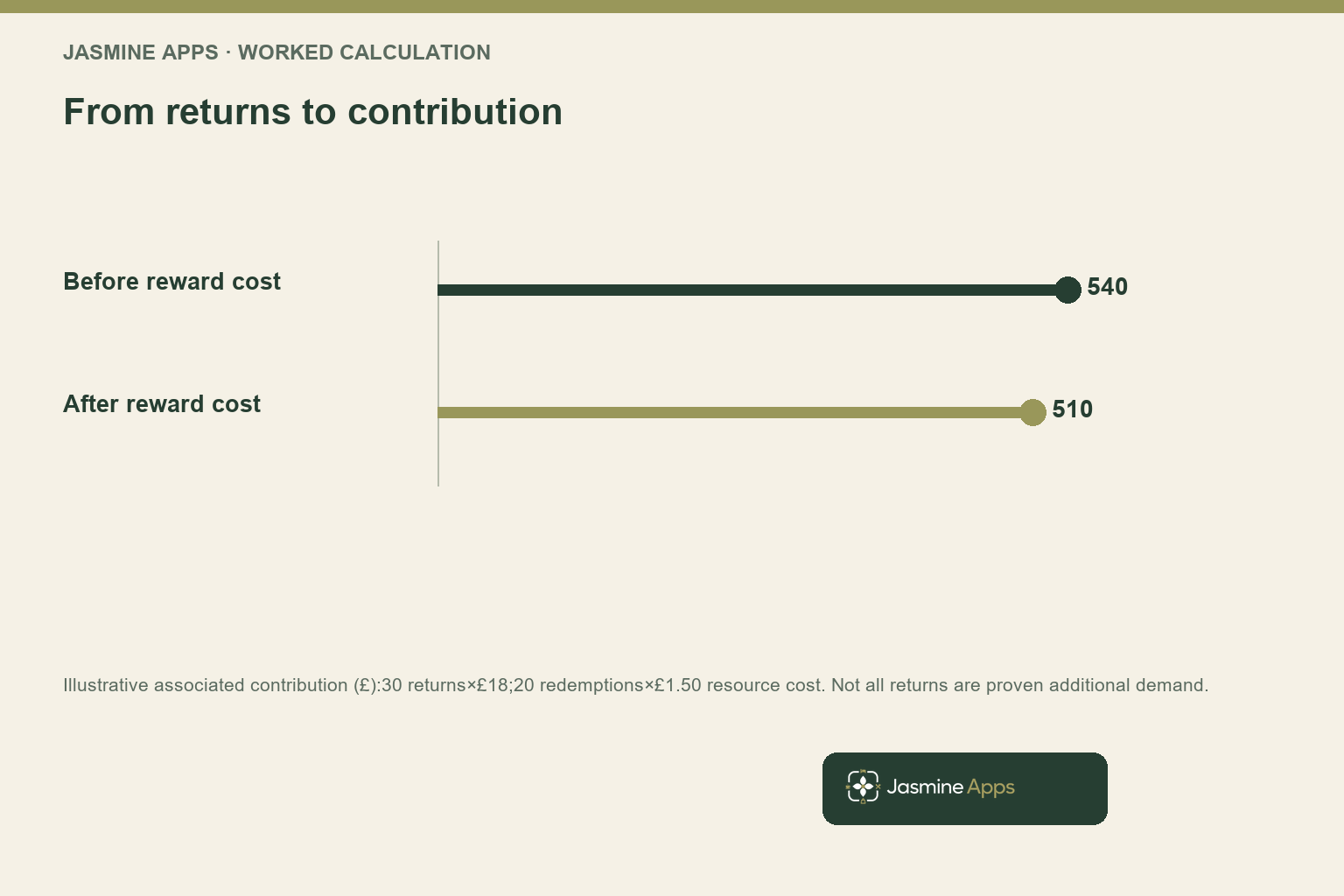
For a hypothetical cohort, assume thirty returning members each make one qualifying visit contributing £18 before reward cost. Associated contribution is £540. If twenty redemptions cost £1.50 each in actual incremental resource cost, subtract £30, leaving £510 before subscription and other relevant programme costs. The reward's menu price is not automatically the cost you should subtract in this calculation.
That £510 remains associated contribution, not proof of additional sales caused by the programme. If a justified comparison indicated that six of the thirty visits were additional, those six would contribute £108 before allocating the relevant programme costs. Your conclusion depends on the evidence and cost treatment, so avoid presenting every return as a newly created sale.
Review service capacity as well. A return at a quiet lunch may add contribution with little displacement, while the same incentive at an already full peak period may replace a full-price booking. Your off-peak reward article provides that broader capacity context; your cohort report should retain the service window needed to interpret the value.
Give the manager both a count and a financial explanation. Show completed returns, reward usage, associated contribution and the basis of any additional-demand estimate. You can then decide whether to simplify the reward, improve the guest journey or target a different occasion, rather than increasing the budget solely because the returning-member percentage moved upward.
Confirm the member record and reporting route before buying
Jasmine Loyalty's workflow includes member cards, points, redemption thresholds, exclusions, expiry and participating-venue settings. Demonstrate the specific events and dates your analysis requires rather than assuming that a ready-made cohort report or automatic return attribution is included. Your buying question is whether you can obtain and reconcile the records needed for the definition you intend to use.
Follow a fictional member through joining, a qualifying sale, a return and a redemption in an approved environment. Confirm what the venue can see, how the transaction is identified and what happens if the member is not attached at the till. Your analysis needs a practical way to recognise the event, with a clear explanation of unlinked activity that remains outside the report.
If you use Till Jasmine alongside Loyalty, demonstrate the member attachment and reward route in that configuration. The public EPOS description includes looking up members, awarding points and redeeming rewards at the till. Confirm the specific reporting and export fields needed for your cohort method separately; an operational link between products does not establish every analytical feature you might want.
Jasmine Loyalty is currently listed at £29 per venue monthly for up to five hundred members, £39 for up to one thousand and £59 for unlimited members. Annual entries are £290, £390 and £590 respectively. Confirm what counts towards the limit, your required setup, tax and complete commercial terms before choosing a tier from the size of a spreadsheet alone.
Use the existing loyalty pilot framework to test the end-to-end journey before expanding. Your acceptance checklist should include the records required for the cohort definition, the actual redemption experience and the review owner. A useful system makes the guest process dependable and the evidence obtainable, supporting a retention decision your manager can explain.
Turn the cohort review into a monthly retention decision
Choose a review cadence that fits the return window and the way guests use your venue. A coffee habit and an occasional celebration meal need different expectations, so avoid setting one short repeat-visit target across every restaurant concept. Your report should explain the occasion and observation period that make a return meaningful for the business you operate.
Review the path before the return rate. Ask whether members completed the join process, understood the first earning event and could find the reward rules. A lower return figure may reflect a weak experience or an identification gap rather than an unattractive incentive. Use appropriate guest feedback and practical observation to identify which step deserves the next test.
Keep contact permissions separate from the membership record. The ICO's electronic-mail marketing guidance is relevant when planning email or similar marketing communications. Do not assume that joining a loyalty scheme automatically authorises every promotional message; follow the applicable rules and your approved data process for the channel and circumstances.
Change one meaningful part of the journey, then keep the definition stable for the next completed window. A clearer first reward, easier explanation or more reliable member attachment may be worth testing before increasing generosity. Record the intervention date and relevant service changes so your next comparison can distinguish the intended improvement from ordinary differences between months.
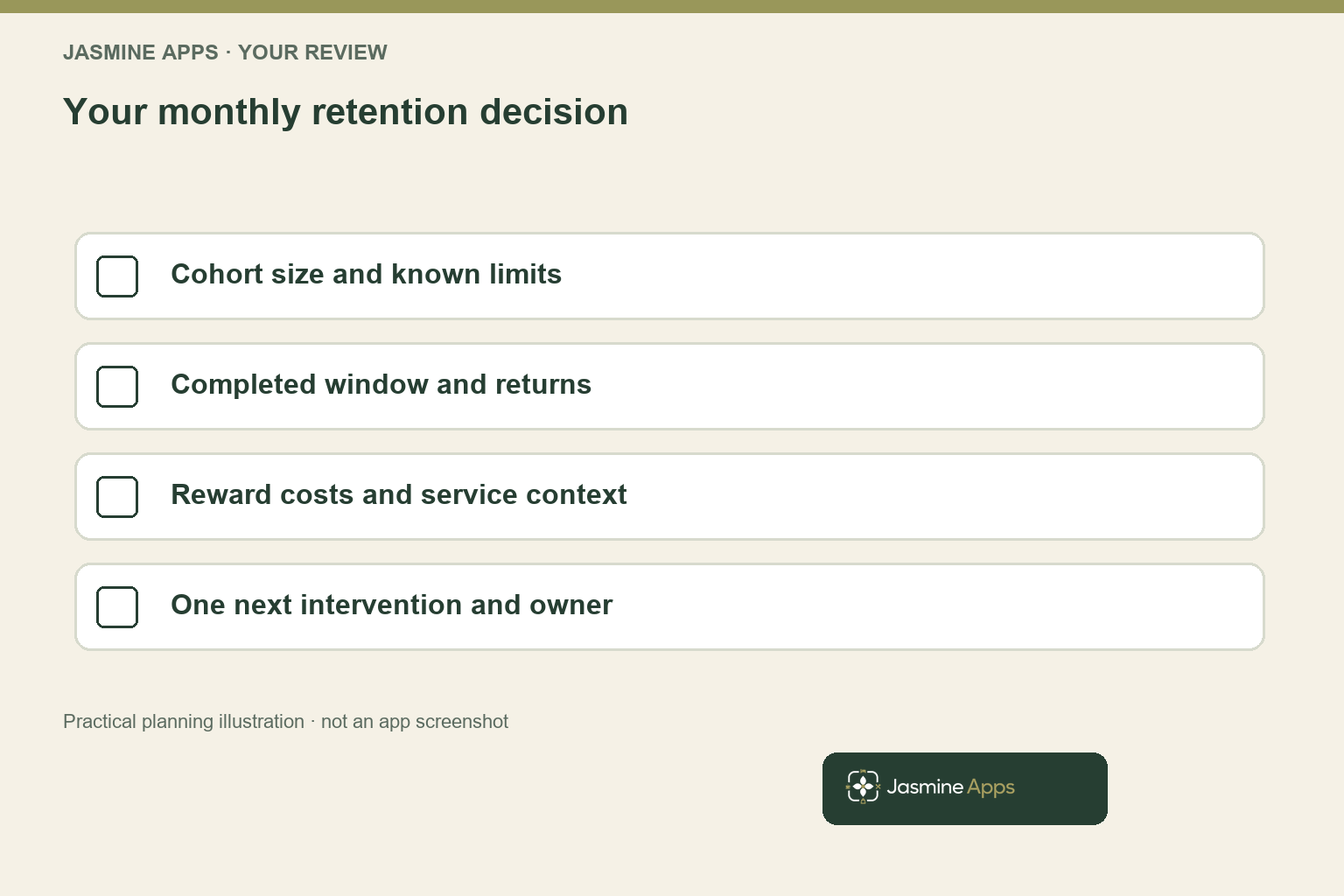
Your cohort review should finish with a decision and an owner. Continue a promising test, repair a missing record route or stop an offer whose cost is not justified by the evidence. Over time, you build a more credible picture of how guests become regulars, giving your venue a retention programme based on completed experiences and contribution rather than accumulated membership numbers alone.
Pro Tips
Label incomplete windows. Keep new cohorts visible as in progress until the agreed observation period ends. You avoid a false decline created only by less time to return.
Define first known visit. Distinguish a new customer from an existing guest newly identified in your records. That distinction affects what your retention result can legitimately describe.
Keep counts with rates. Show the group size and returning count alongside the percentage. Your manager can recognise when a small movement rests on very few people.
Common Mistakes
Comparing unequal windows. You make newer guests look less loyal by definition. Use the same elapsed opportunity for every completed comparison.
Crediting every member return to the reward. You ignore guests who already intended to visit. Separate observed association from an evidence-based additional-demand estimate.
Counting sign-ups as retention. You measure acquisition of records rather than repeat custom. Follow the defined completed return and its contribution.
Frequently Asked Questions
What is a restaurant customer retention cohort?
Your cohort is a group sharing a defined starting event, such as a first identified qualifying visit in a particular month. You then follow a consistent outcome, such as another completed visit within thirty days. Keep first-ever and first-known visits distinct, because existing guests may only recently become identifiable. Your report should state the member or transaction unit and observation window so the manager understands exactly which returning behaviour the analysis describes.
How do you calculate a restaurant repeat-visit rate?
You divide the number of eligible identified guests who complete the defined return by the starting cohort size, using a consistent observation window. For example, thirty returning members from one hundred eligible members represent thirty per cent. Mark newer groups as incomplete until they have had the same time to return. Your rate describes the records you can identify, so keep unlinked visits, cancellations and the qualifying rule visible when interpreting the result.
Does a higher loyalty-member return rate prove the programme works?
You need to consider whether frequent guests were already more likely to join and return, as well as changes in service, price and demand. A higher member rate can be useful evidence without proving that the reward caused every visit. Plan a suitable comparison where practical and report its limitations clearly. Your commercial review should distinguish observed returns, associated contribution and any justified estimate of additional demand after the relevant programme costs.
How long should you measure restaurant customer retention?
You should choose a window that fits the venue's normal occasion and purchasing pattern, then apply it consistently to completed cohorts. A daily coffee business and a celebration restaurant may need different definitions of a useful return. Keep shorter in-progress observations separate from completed comparisons and record material calendar changes. Your aim is a decision-relevant measure of repeat behaviour, not the shortest possible window that happens to produce a striking percentage.
Does Jasmine Loyalty include an automatic cohort report?
You should demonstrate the exact reporting, dates and export route required for your chosen cohort definition. The member and reward workflow provides relevant operational records, but you should not assume a ready-made cohort analysis or automatic causal attribution without seeing it. Follow a fictional join, sale, return and redemption, then confirm how the information can be reconciled. Your buying decision should rest on the records your team can actually obtain and maintain reliably.
Restaurant repeat-visit cohort analysis: your next step
Your restaurant repeat-visit cohort analysis should show which guest journeys produce completed, worthwhile returns. Request a Jasmine Loyalty demonstration with your proposed return window and one sample member journey. You can confirm the record trail and reward experience before investing in a programme designed to build more dependable regular custom.