

Restaurant Second Visit Strategy: Win the Return Before Habit
· Jasmine Apps

Your loyalty programme can look active while your newest guests never return. A large member total may include people who joined once and then disappeared from the venue’s routine. Your restaurant second visit strategy should therefore examine the first return separately from the behaviour of your established regulars.
Jasmine Loyalty gives you configurable reward rules to investigate. Your commercial question is whether a clear, achievable proposition helps the right first-time guests choose another visit without giving away unnecessary contribution.
Key Takeaways
- Define a first-visit cohort and a consistent return window.
- Separate the second visit from all-member purchase totals.
- Explain the reward and redemption conditions at the first visit.
- Include reward fulfilment and programme costs in your model.
- Treat a before-and-after result as evidence to investigate, not automatic causation.
Define your restaurant second visit strategy with a clear cohort
You should decide whom you are counting before choosing an incentive. Your cohort might be guests whose first recorded eligible purchase occurs during a defined period, with a second eligible purchase within a stated window. That definition is more useful than an undifferentiated total of all members who visited again.
Choose a window that reflects your venue’s normal occasion. A thirty-day example may suit your pilot, but it is not a universal hospitality standard. A neighbourhood café and a destination restaurant can have very different visit patterns, so your team should explain why the chosen period is relevant.
Keep the definition stable through the comparison. If you change the return window or membership rule midway through the pilot, the totals no longer answer the same question. You should also distinguish a newly recorded customer from someone who has visited before but only recently joined the scheme.
Research provides a useful principle without supplying your forecast. The goal-gradient research published in the Journal of Marketing Research examines purchase behaviour as customers approach a reward. You can use that evidence to consider visible progress and reward clarity, but it does not establish a second-visit uplift for Jasmine or your restaurant.
Your first return deserves its own view because a new guest has not yet formed the same routine as a regular. Ask what would make another visit convenient and worthwhile, then make that proposition understandable at the first purchase.
Use the loyalty programme-pilot guide for the wider scheme setup. Your second-visit test should narrow the audience and outcome rather than repeat an all-member profitability review.
Model a restaurant second visit strategy after reward costs
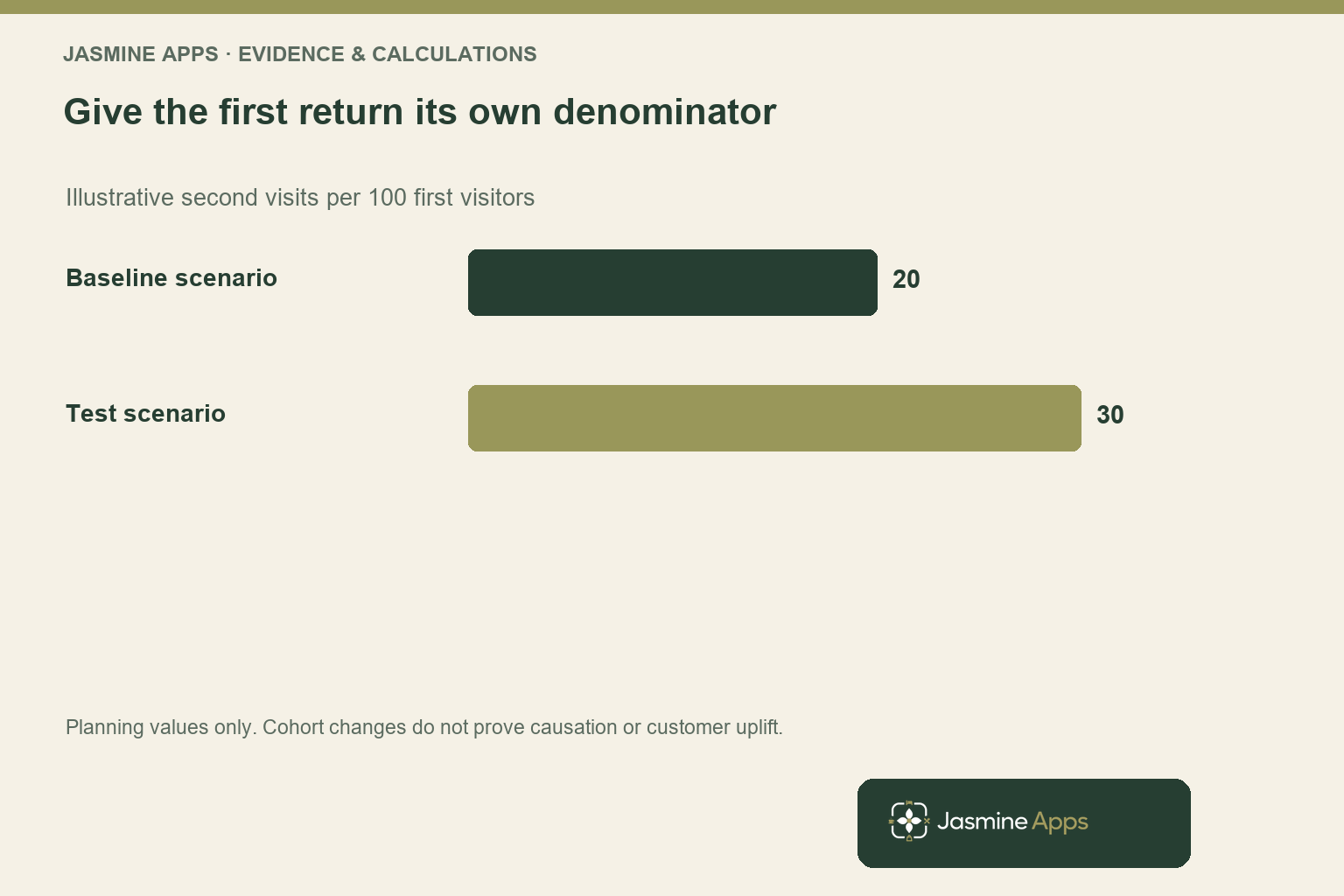
Your return-rate model should make the denominator visible. In an illustrative cohort of one hundred first-time eligible guests, twenty second visits represent a twenty-percent return rate within the chosen window. Thirty second visits represent thirty percent, assuming the definition and observation period remain the same.
Those numbers are planning examples, not real customer results. A difference between two cohorts can reflect guest mix, season, service quality or another campaign. You should not assign the entire change to the reward without considering those influences.
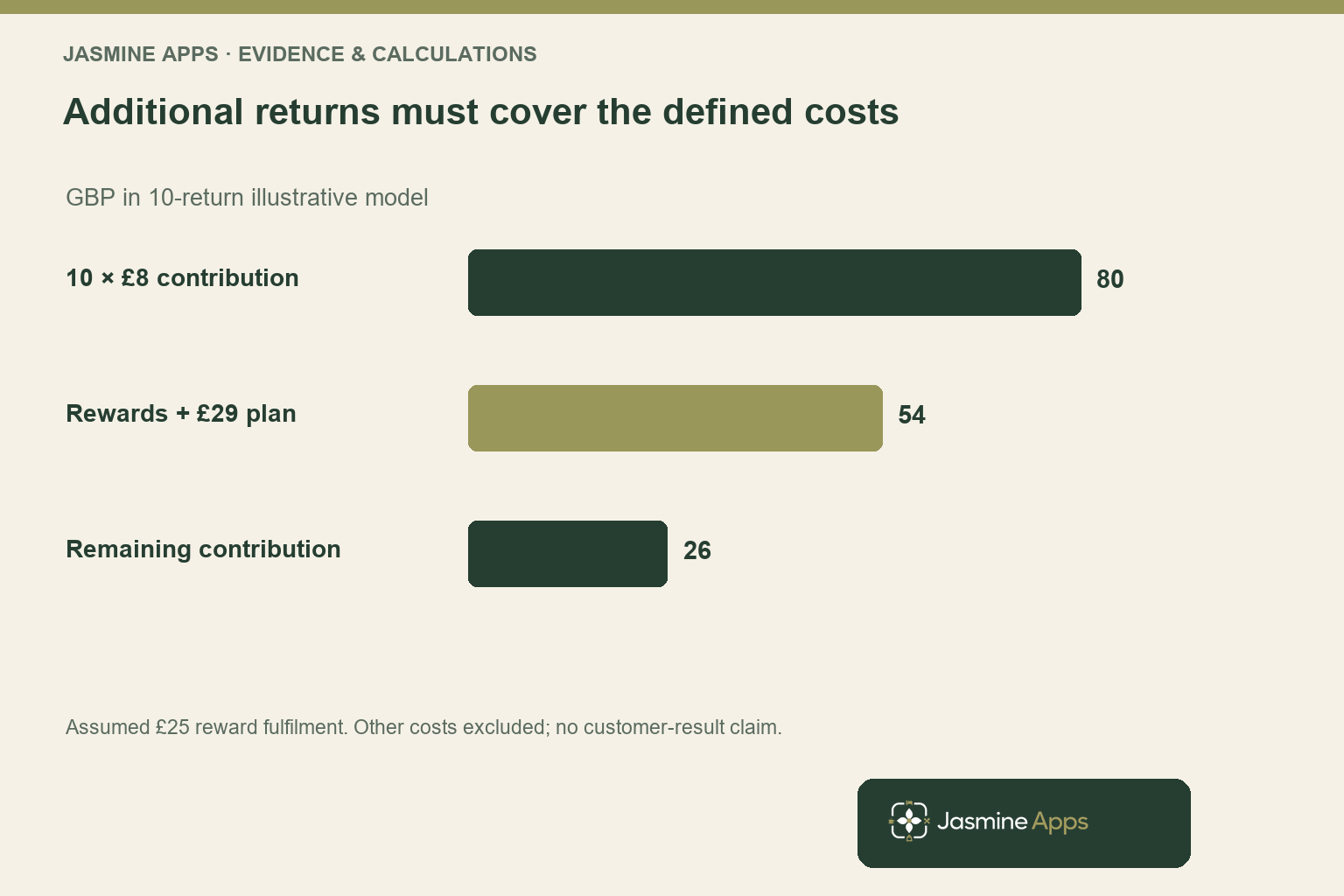
For a simple contribution illustration, assume ten genuinely additional return visits at £8 contribution each before reward fulfilment. That produces £80. If the relevant rewards cost £25 and your monthly programme subscription is £29, the defined simplified result is £26 after those two costs.
If only five of the returns are genuinely additional, the same calculation produces £40 before costs and a £14 shortfall afterwards. This is why incrementality matters more than a large redemption or member count. Your assumptions about what would have happened without the offer should be visible.
The CRM lists Jasmine Loyalty monthly tiers at £29 for up to five hundred members, £39 for up to one thousand and £59 for unlimited members per venue. Your quote should confirm the relevant member basis, tax treatment, setup and agreed scope. Do not select a tier solely from a pilot’s new-guest cohort if your venue already has other members.
You should also distinguish reward retail value from fulfilment cost. The cost of providing a reward depends on what you actually supply and what it displaces. Use your own approved cost records rather than assuming that a £5 reward always costs the business exactly £5.
Make your restaurant second visit strategy clear at the first purchase
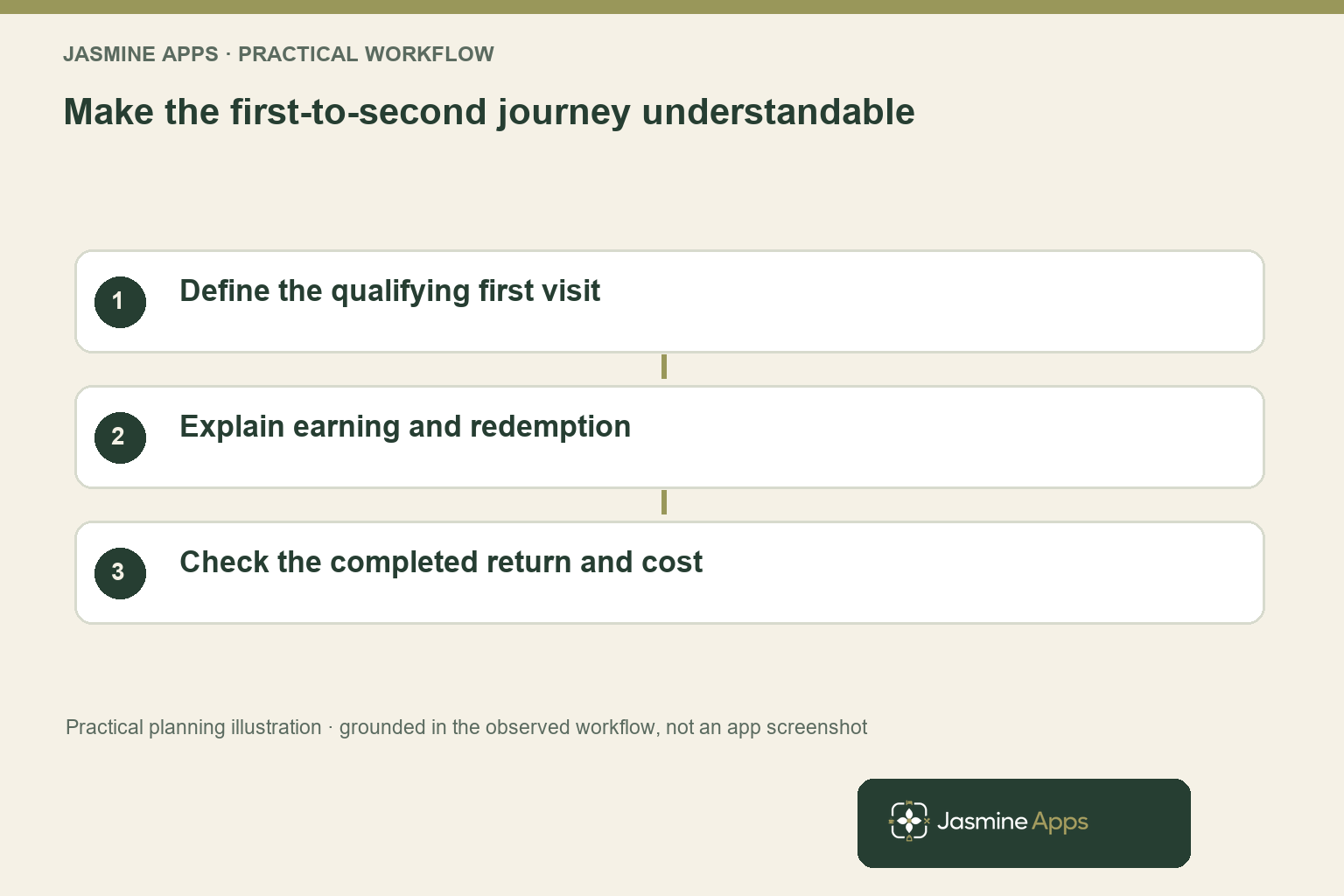
Your first-time guest should understand how the programme works before they leave. Explain what earns progress, what the relevant reward is and how they can use it. A complicated set of conditions can prevent the return decision even when the reward itself is attractive.
The live Jasmine Loyalty controls include points per pound, visit-related bonus settings, redemption thresholds, exclusions and expiry. Your admin also distinguishes earning after discounts and excluding service charge. You should demonstrate the precise rule you want rather than assume every reward uses the same calculation.
Check participating venues in the proposed till-redemption workflow. The observed barcode setup requires relevant venue participation, so a guest should not be encouraged to redeem at a location that has not been included. Your message needs to match the scope staff can fulfil.
Do not imply automated second-visit targeting unless the actual deployment demonstrates it. You can design a cohort-based commercial pilot and communicate an approved proposition without claiming the app automatically identifies every first-time guest or sends a particular reminder. Bring those requirements to your demonstration for confirmation.
Your service team should practise the explanation and the exception route. If a guest asks about expiry or a excluded item, the answer should be consistent with the approved rule. A rushed first-visit explanation can create a disagreement on the second visit, undermining the trust you wanted to build.
Keep your operating record separate from marketing proof. Use fictional examples in the demonstration and anonymised totals in your pilot review. You can show a practical reward journey without exposing member identities or presenting invented screenshots as evidence from real customers.
Review the first return before broadening your loyalty spend
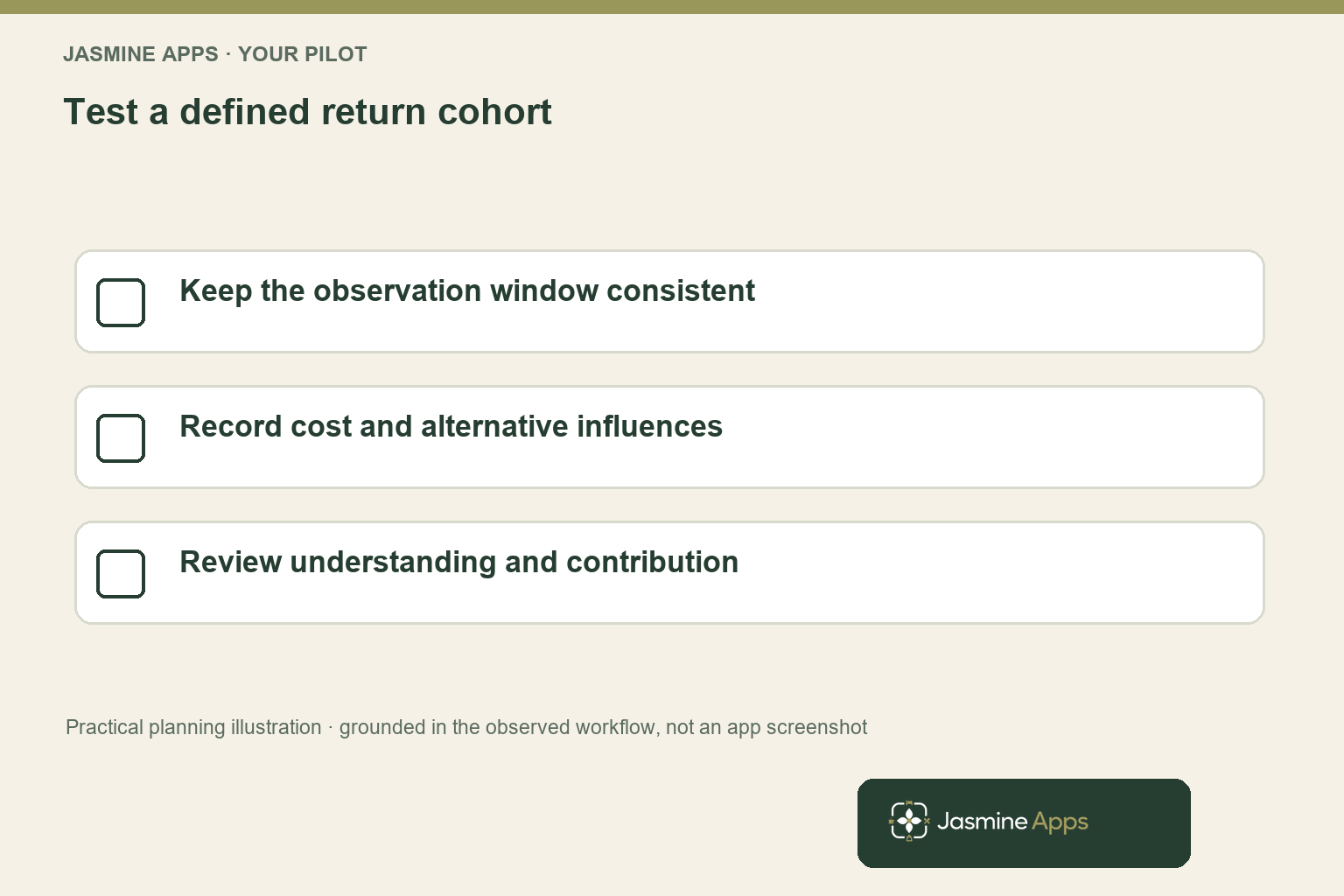
Choose one defined cohort and a manageable observation window. Establish your current return measure, approve the reward proposition and record the costs you intend to include. Your team should know how a qualifying first and second visit will be recognised in the actual workflow.
Compare the result with appropriate context. Record changes in opening hours, service quality, menu, local events and other promotions that could influence the return. A simple cohort comparison is useful for learning, but it does not remove those alternative explanations.
Look beyond the second purchase total. Check whether guests understood the reward, whether staff completed redemption correctly and whether the visit contributed enough to support the offer. Your strongest programme combines a clear guest experience with a defensible commercial result.
If the pilot reveals confusion, simplify the proposition before increasing the incentive. A more expensive reward may not resolve an unclear earning rule or a participating-venue problem. You should address the friction that your observation actually identifies.
Your off-peak loyalty-rewards article considers a different question: when additional visits fit useful spare capacity. A second-visit programme can connect with that objective, but first-return behaviour and timing-based displacement should remain separate measures.
Before expanding the spend, ask for a quote using your total member scope and a demonstration of the proposed earning and redemption rules. You can then decide whether to retain, refine or replace the pilot on evidence of the visit you wanted to encourage, rather than a membership dashboard that simply looks busier. Keep that decision with your programme owner.
Pro Tips
Keep the denominator fixed. Use the same first-visit definition and return window throughout the test. Your rate needs to answer a consistent question.
Cost the actual reward. Use fulfilment and displacement costs rather than the headline retail value alone. Your commercial result depends on what the venue gives up.
Listen at redemption. Record the questions guests ask when they return. Their uncertainty can reveal a weak first-visit explanation.
Common Mistakes
Using all-member repeat sales. Your regulars can hide a weak first-return result. Examine the defined new-guest cohort separately.
Crediting every return to the reward. You overstate incrementality and can subsidise visits that would happen anyway. Show the assumption and alternative explanations.
Promising unverified targeting automation. You set expectations beyond the demonstrated workflow. Confirm the specific trigger, channel and scope before including it in your plan.
Frequently Asked Questions
How do you encourage a restaurant customer’s second visit?
You should give a first-time guest a clear reason to return and explain how they can use the proposition. Define the audience and observation window before choosing a reward. Your team needs consistent earning and redemption instructions, while your commercial review should include fulfilment cost and visits that would have happened anyway. You can then test understanding and completed returns rather than assuming a large membership total proves the strategy works.
What is a good restaurant second-visit rate?
You should establish a relevant baseline for your own venue instead of adopting an unsupported universal benchmark. Your occasion, location and return window can change the rate substantially. Define the first-visit cohort consistently and compare like periods with the same rules.
Record changes in service or other marketing. A higher result can be useful evidence, but you should investigate its cause and contribution before calling it a programme-driven improvement.
Should you offer a reward after the first restaurant visit?
You should test whether the reward gives your intended guest a useful reason to return at an acceptable fulfilment cost. A clear proposition may work better than a larger but confusing incentive. Include guests who would return without the reward in your commercial review, and check how staff explain the rules. Your pilot should assess completed second visits and contribution, rather than choosing the reward solely from its apparent retail value.
Does Jasmine Loyalty automatically target second visits?
You should ask for a demonstration of the exact targeting and communication workflow you require. The live admin supports configurable earning and redemption rules, but that does not independently prove every first-visit trigger or reminder channel is available. You can design a defined cohort pilot without claiming automatic segmentation. Bring the qualification rule, timing and message requirements to your demonstration so the proposed scope can be confirmed accurately.
How much does Jasmine Loyalty cost for a restaurant?
The CRM monthly list is £29 for up to five hundred members, £39 for up to one thousand and £59 for unlimited members per venue. Your annual prices are listed separately, and your quote should confirm the relevant scope, tax basis and setup. Use your total programme membership when selecting the tier, not only a small pilot cohort. Your purchase case should include reward fulfilment as well as the subscription.
Restaurant second visit strategy: your next step
Your restaurant second visit strategy should make a return understandable and commercially useful. Request a Jasmine Loyalty demonstration with your intended first-visit cohort, reward and return window. You can test the rules, confirm the tier and build a pilot that measures the next visit rather than merely another sign-up.