

Restaurant Loyalty Activation: Why Members Sign Up but Never Return
· Yiannis Yiasemis

A guest can join your scheme successfully and still have no idea what to do next. If the first earning step is unclear or the reward feels unreachable, another sign-up simply enlarges your list. Your restaurant loyalty activation should begin with a useful action the guest understands, not a membership total that looks impressive in a report.
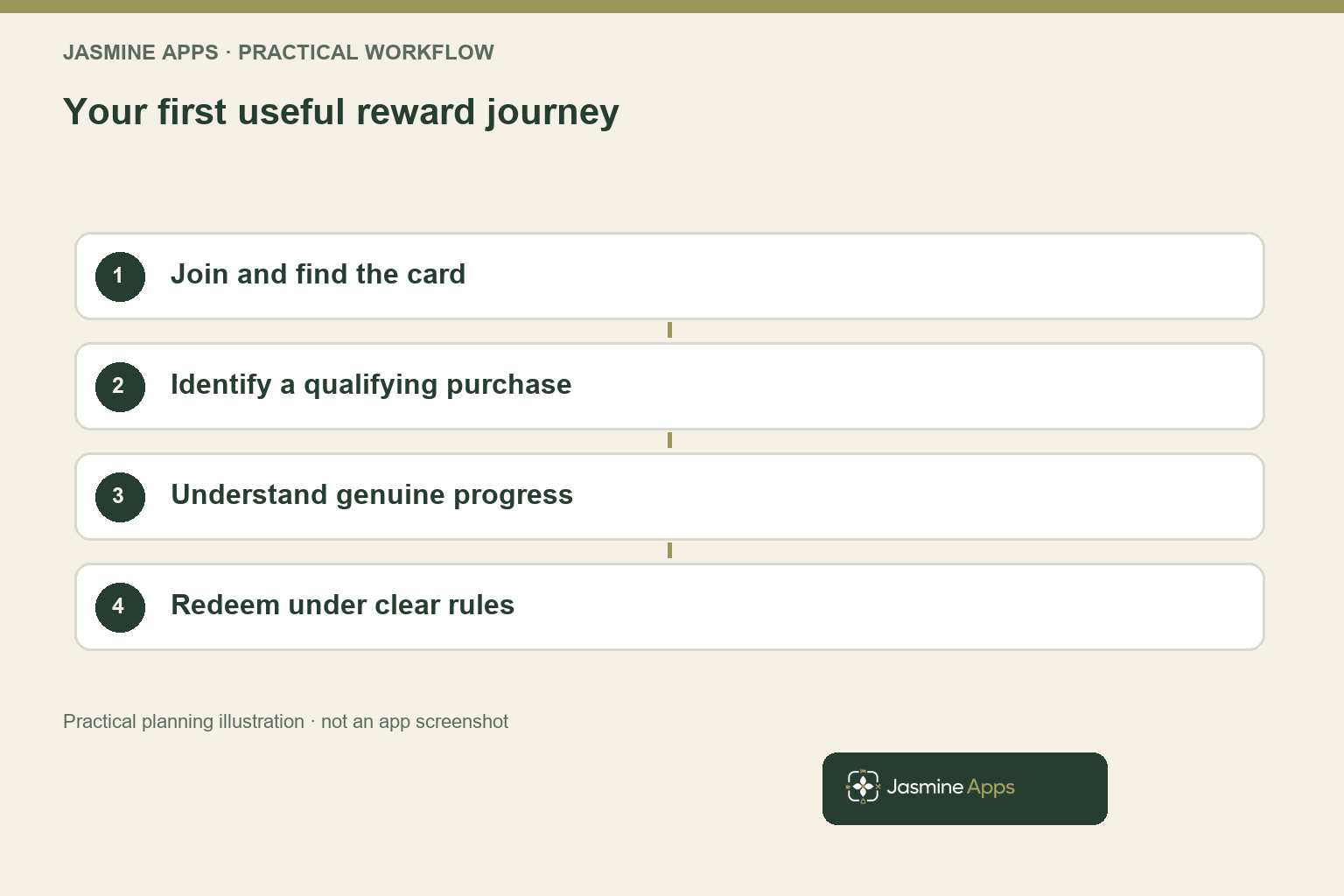
Jasmine Loyalty gives you a digital card and configurable earning and reward arrangements. Your opportunity is to make that first journey practical: join, identify the card, earn correctly, understand progress and redeem under clear rules. Find the stage where guests lose confidence before buying a more generous reward, and you can improve engagement without automatically increasing your incentive cost.
Key Takeaways
- Define activation as a meaningful completed action.
- Trace the first earning and reward journey.
- Show understandable progress and eligibility.
- Test the guest and staff sides together.
- Measure the cost of engagement, not sign-ups alone.
Define restaurant loyalty activation around an action that matters
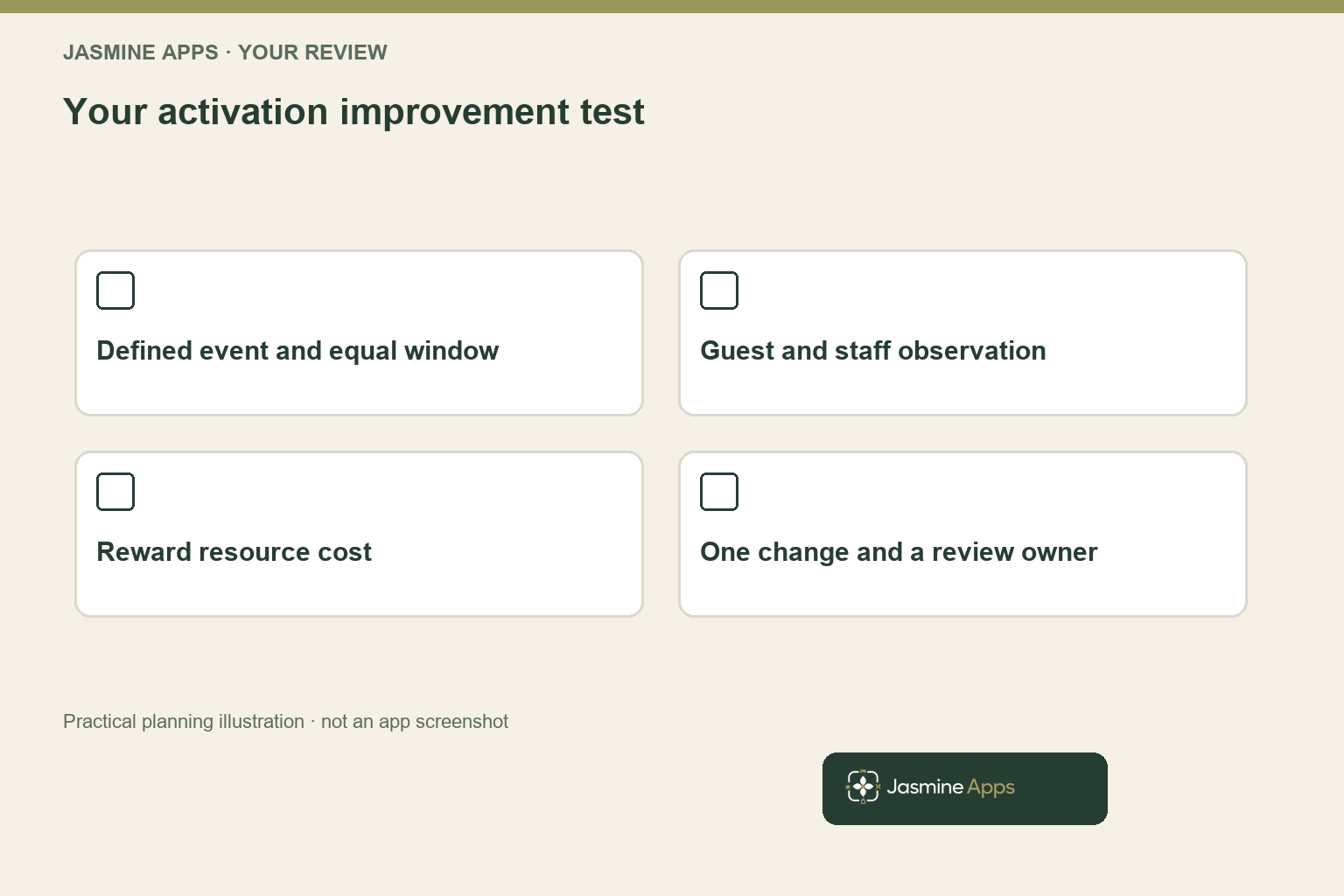
Choose an activation event that tells you the guest has moved beyond creating an account. Your definition might be the first identified qualifying purchase after joining, or a completed first redemption where that fits the programme. State the event and time window before measuring it, keeping simple enrolment separate from the behaviour you want to understand.
Start with the guest's ordinary occasion. Someone buying coffee on a familiar route may understand a frequent-purchase reward differently from a guest visiting your hotel restaurant for an occasional celebration. Your activation plan should explain the next useful step for that occasion, rather than assuming every member wants the same reward or will return at the same interval.
Map the supported events your setup records. You need to know when a person joined, whether the intended earning event can be identified and how redemption is represented. Confirm the required reporting or export route in your demonstration; a visible member balance does not by itself establish an automatic activation dashboard or every date needed for the analysis.
Keep incomplete windows visible. If you define activation as a qualifying action within thirty days, a person who joined yesterday has not yet failed the test. Compare groups after equal observation, and use a separate in-progress view for recent sign-ups. Your repeat-visit cohort framework provides the wider method for fair comparisons over time.
Give the manager a clear starting report: eligible new members, completed activation window, qualifying actions and the main stage where progress stops. A small, well-defined funnel is more useful than a large list of inactive accounts with no shared meaning. Your first decision becomes which step needs investigation, not how much discount to offer everyone on the database.
Follow restaurant loyalty activation from joining to the first earned points
Ask a suitable test participant to join through the supported route and explain what they believe happens next. Use fictional information in an approved test environment, keeping their own contact details and any real marketing choice out of an unnecessary demonstration. Observe where the wording helps and where the person needs a staff explanation before continuing.
Check how the guest finds the card when they return to the venue. A successful sign-up followed by an awkward retrieval process can prevent identification at the sale, leaving the guest unsure whether they earned anything. Your staff should know the supported lookup and attachment route, while the guest should understand the practical action expected before or during payment.
At the first earning event, review the sale and the balance under the scheme's actual rules. Jasmine Loyalty includes points and bonus-visit arrangements, with the relevant configuration determining what qualifies. Demonstrate your proposed purchase, exclusion and timing rather than assuming every sale earns the same amount or that points appear through an integration you have not tested.
The GOV.UK completion-rate guidance provides a useful measurement principle: define starts and completed outcomes consistently. Apply that principle to your own guest journey without treating a government reporting requirement as a rule for restaurants. You want to know where genuine participants stop, with internal tests kept out of the commercial result.
Brief the team on a short explanation of the first action. Your colleague should be able to tell the guest how to identify the card and what the current purchase earns, then show where the rules can be found. A dependable explanation at payment can make the next step clearer without turning service into a long technical lesson or a promise the configured scheme cannot fulfil.
Make restaurant loyalty activation progress clear and achievable
Your reward needs an understandable route from the guest's normal purchase pattern. Show what earns, what the threshold means and which venues or products participate. A mathematically generous offer can still feel irrelevant if the guest cannot tell whether their ordinary order qualifies or how many realistic visits separate them from something they value.
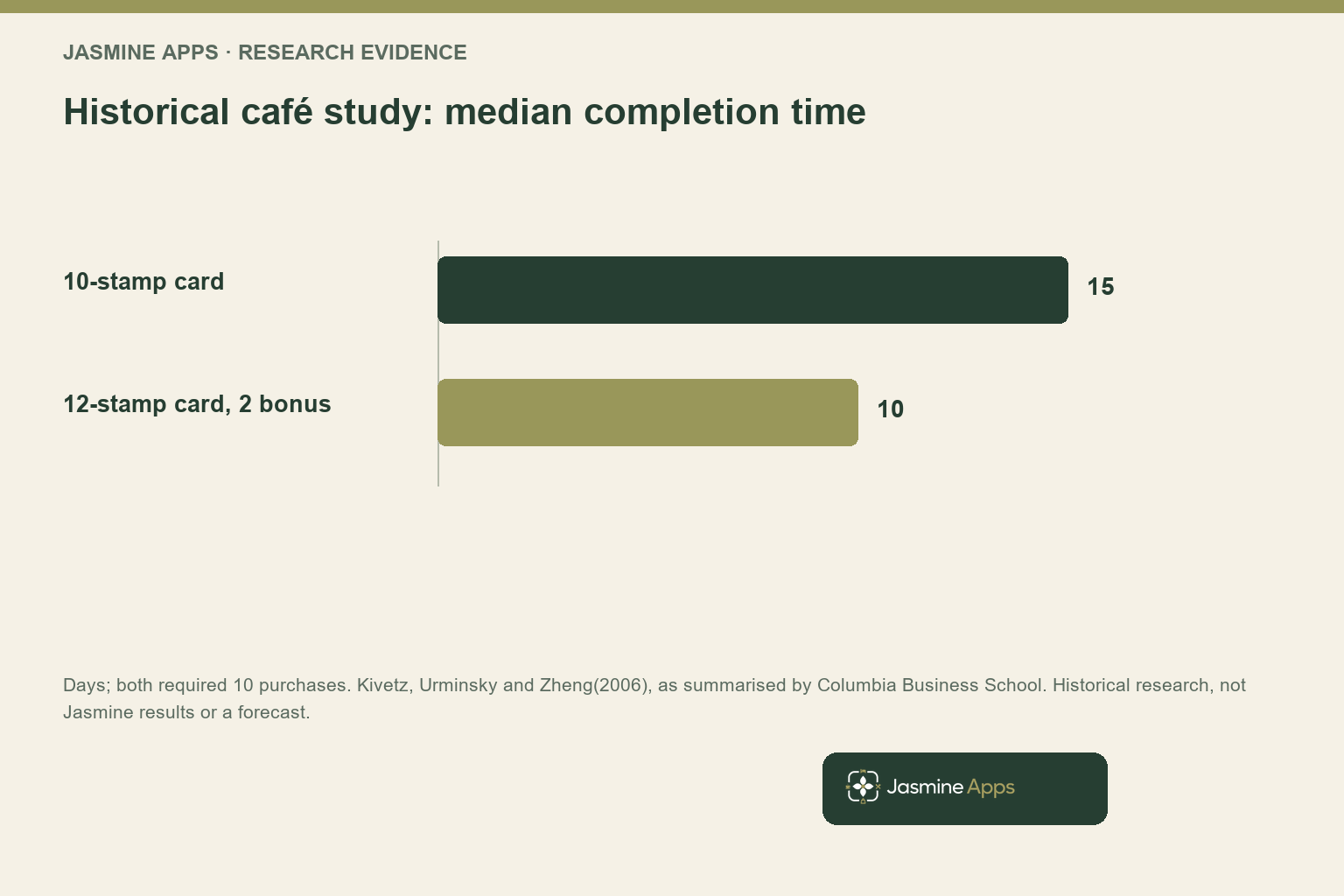
Columbia's account of the 2006 goal-gradient research reports median completion times of ten days for a twelve-stamp café card with two initial bonus stamps, versus fifteen days for a ten-stamp card. Both required ten purchases. This specific historical finding supports testing how progress is understood; it is not a Jasmine result or a forecast for your restaurant.
For a hypothetical scheme, assume a guest earns ten points per qualifying visit and needs one hundred points for the chosen reward. That is ten qualifying visits from zero; a genuine balance of forty points leaves sixty points, or six similar visits. Your communication should describe the actual configured balance and terms rather than inventing progress simply to make the target appear closer.
Check whether the threshold fits the occasion and cost. A guest who visits once every few months may view ten visits very differently from a daily customer. You might test another useful reward or a clearer explanation before lowering the threshold, because changing generosity affects the cost of both new and existing customer activity and may not solve a confusing retrieval step.
Use your loyalty reward-cost guide for the financial calculation. Your activation review should keep perceived value, realistic progress and actual resource cost together. The strongest first reward is one the guest understands and your team can deliver consistently, with no surprise restriction that undermines confidence when the person finally tries to redeem it.
Remove first-redemption friction before increasing reward generosity
Walk through the first redemption from both sides of the counter. Your guest needs to find the card, understand availability and identify the intended reward; your colleague needs to recognise the member and complete the supported action correctly. A weakness on either side can make the programme feel unreliable even when the points balance itself is accurate.
Review exclusions, participating venues, expiry and any redemption threshold in the actual configuration. Jasmine Loyalty exposes relevant scheme controls, but you should demonstrate the combined rules for your proposed offer. Do not assume automatic weekday, time-of-day or purchase-triggered eligibility unless the specific behaviour is shown in your setup, especially when a marketing message promises a narrow redemption window.
Use a fictional case close to the threshold and another with an excluded item. Ask the team to explain the outcome in language a guest would understand. Your test should reveal whether a rule is visible before the person commits to a purchase, rather than discovering the restriction only after a member expects to use their reward at payment.
Keep the correction route practical. If a guest believes points or a reward are missing, staff should know how to check the relevant record and escalate appropriately without guessing or promising an unsupported adjustment. The existing reward availability support article gives the relevant troubleshooting context, while your activation review identifies what should be clearer before a problem occurs.
Record the reason for a failed test at the stage where it happens. A missing member attachment, unclear rule and unavailable reward require different responses. Your next investment might be a better briefing or clearer scheme explanation, allowing the first redemption to build trust without increasing the reward budget merely to compensate for an operational obstacle.
Measure your activation funnel and its commercial cost
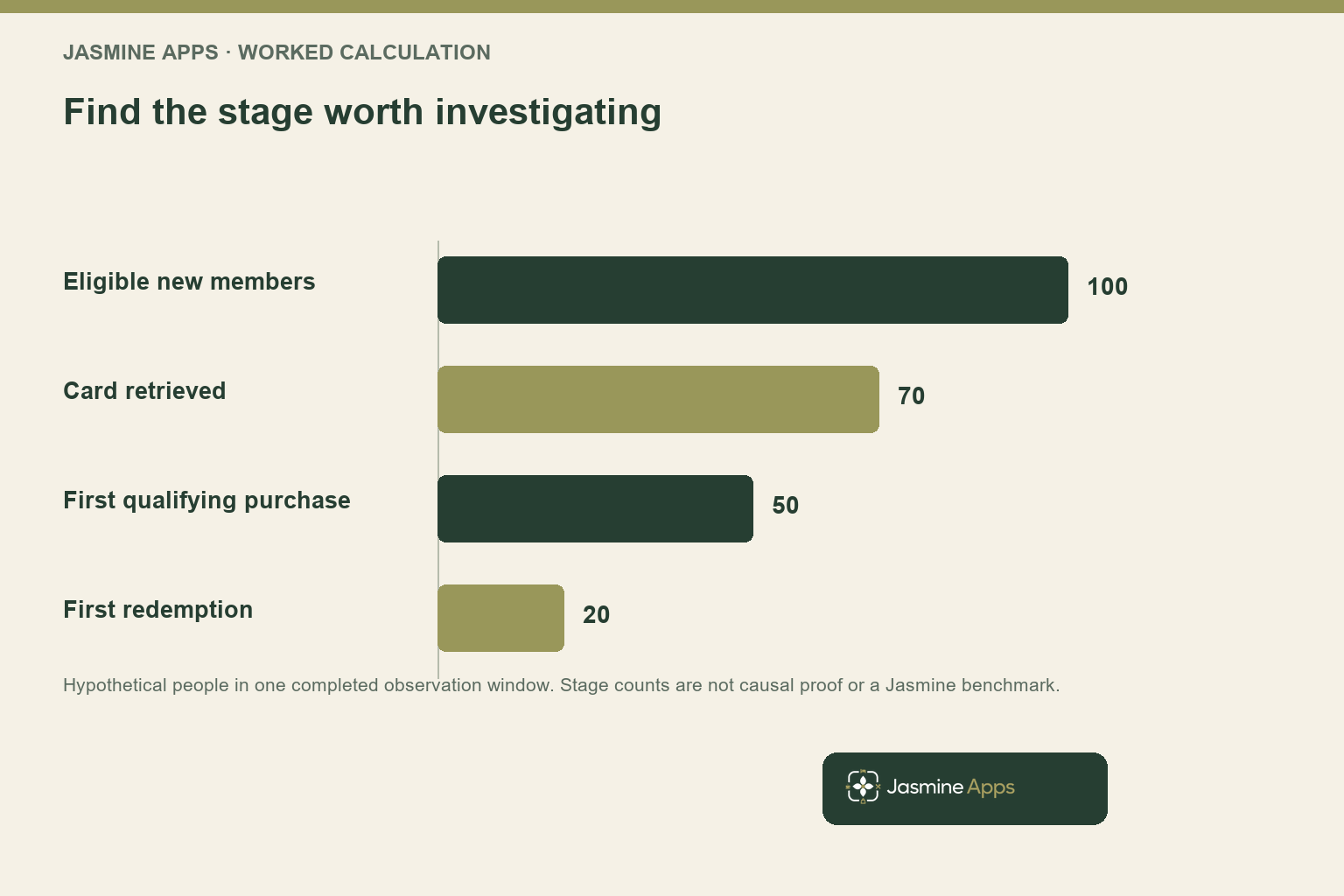
Your funnel should count consistent people or events at defined stages, with the time window shown. For a hypothetical group of one hundred eligible new members, suppose seventy retrieve the card, fifty complete a first qualifying purchase and twenty redeem within the chosen completed window. Those counts locate questions; they do not by themselves prove why anyone stopped or whether the reward created additional demand.
Do not compare unrelated stages as if every drop represents a product failure. Some guests may not have another occasion to visit, and some may earn correctly without reaching the chosen reward during the window. Combine the numbers with appropriate feedback and practical observation so the manager can distinguish lack of opportunity, low relevance and a genuinely confusing process.
For an illustrative cost review, assume twenty redemptions each use £1.50 of incremental resource cost, totalling £30. A redesigned first reward costing £3 at the same redemption volume would total £60. The difference is £30 before other effects, so your decision should ask whether the improved experience or additional contribution justifies the higher cost rather than treating more redemption as automatically better.
Jasmine Loyalty's listed tiers are £29 for up to five hundred members, £39 for up to one thousand and £59 for unlimited members, per venue. Confirm membership-limit treatment, the required configuration, tax and full terms in your quotation. Choose the tier for your supported journey and likely usage, not the largest contact count.
Keep observed activity, associated contribution and any additional-demand estimate separate. A member may have planned to visit regardless of the scheme, so do not credit every activated purchase as new business. Your manager can still use the funnel to improve delivery, with the commercial case strengthened through a suitable comparison and a transparent account of the reward and operating costs.
Turn the findings into a small, repeatable improvement programme
Choose the stage with a clear practical issue and change one meaningful part of it. You might simplify the first-action explanation, improve the supported card lookup process or clarify a restriction before enrolment. Keep the activation definition stable so the next completed group can be compared with the baseline rather than moving the target at the same time as the intervention.
Give the team a brief they can use during normal service. It should explain the current scheme in a few accurate points, show the help route and identify who maintains the guest-facing information. A long policy document may be necessary elsewhere, but the colleague at the counter needs the specific answer that prevents an avoidable misunderstanding at the next purchase.
Test the changed journey with relevant users, including people who are less confident with digital services. Observe completion and ask what they expected at the uncertain step, keeping the exercise appropriate and voluntary. Your venue can learn from a small usability check without claiming that the sample establishes an industry-wide preference or a precise future return rate for every member.
Review marketing contact permissions through your approved process before sending promotional follow-up. Membership and consent to a particular communication are separate questions, and your message should respect the applicable rules and any opt-out. Use your existing guest email-permission article as the relevant internal starting point rather than assuming every inactive account can receive any campaign.
At each review, record the outcome and the next decision. Keep a change that makes the journey more dependable, revise a step that still causes confusion and avoid increasing generosity without understanding the cost. Your programme becomes more persuasive because the first useful action is easy to explain and deliver, giving guests a reason to engage that survives beyond the sign-up screen.
Pro Tips
Test near the threshold. Use a fictional balance just below the first reward and ask the guest and colleague to explain the next step. That reveals unclear earning or eligibility rules before a live disappointment.
Keep assistance visible. Measure where staff help is needed as well as whether the task eventually succeeds. You can then simplify the difficult step instead of hiding its workload.
Change clarity before generosity. If guests cannot find or understand the current benefit, a more expensive reward may leave the same obstacle in place. Fix the demonstrated friction first.
Common Mistakes
Calling every sign-up activated. You confuse a created record with a meaningful action. Define the first useful event and its observation window.
Hiding the restrictions. You undermine confidence at redemption. Explain the relevant rules before the guest expects to use the benefit.
Treating redemption volume as profit. You ignore reward cost and purchases that would happen anyway. Review contribution and additional-demand evidence separately.
Frequently Asked Questions
What does loyalty activation mean for a restaurant?
You define it as a meaningful completed action beyond joining, such as a first identified qualifying purchase within an agreed window. The right event depends on your scheme and service occasion. Keep enrolment, earning and redemption separate so your report shows where the guest journey progresses or stops. Confirm that your setup can provide the relevant records, then compare groups with equal time to complete the chosen action before drawing a conclusion.
Why do restaurant loyalty members sign up but never use the scheme?
Your guest may not understand the next step, may struggle to retrieve the card, may find the reward irrelevant or may simply have no suitable return occasion yet. Follow the actual journey before assuming the incentive is too small. Test the staff explanation and the first earning and redemption actions, then combine that observation with a defined completed window. Your next improvement should address the demonstrated obstacle rather than increase the reward cost automatically.
How do you calculate a loyalty activation rate?
You divide eligible new members who complete the defined activation event by the eligible starting group, using a consistent completed time window. Keep internal tests and incomplete observation separate. For example, fifty qualifying first purchases from one hundred eligible members represent fifty per cent under that definition. Your result describes the supported identified activity, so explain any missing record route and avoid treating it as proof that every purchase was additional demand created by the programme.
Should you make the first loyalty reward easier to reach?
You should first check whether guests understand progress and can complete the existing journey reliably. A different threshold may improve relevance, but it also changes the reward cost and can subsidise visits that would have happened anyway. Model the actual resource cost and test one clear change with suitable comparisons. Your best first reward should fit the guest's realistic occasion, be straightforward for staff to fulfil and have understandable terms before redemption.
What should you test in a Jasmine Loyalty demonstration?
You should follow a fictional person through joining, finding the card, a qualifying purchase, progress and a first redemption. Include an excluded item or near-threshold case and confirm the correction route. Demonstrate any connection with your till and the records needed for your activation definition, rather than assuming every report or eligibility rule is automatic. Your team should explain the outcome clearly from both the guest and staff sides before the scheme is expanded.
Restaurant loyalty activation: your next step
Your restaurant loyalty activation should make the first useful action clear enough to complete and valuable enough to remember. Book a Jasmine Loyalty demonstration with your proposed first reward and a sample guest journey. You can identify the friction, confirm the cost and build a scheme that gives members a practical reason to use it.