

Hotel TV Content for Business Guests: Make Weekday Stays Easier
· Jasmine Apps
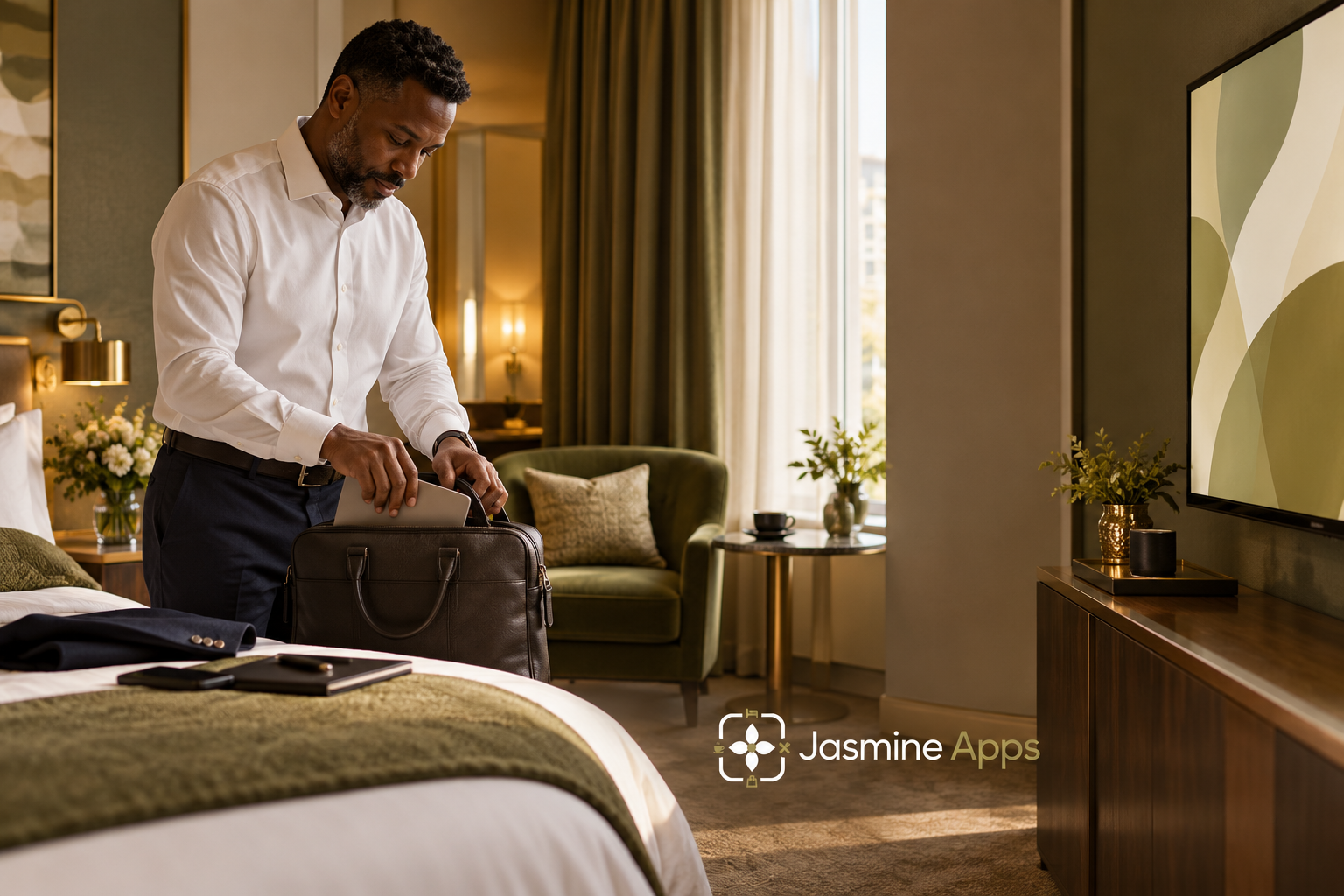
Your weekday guest may value a clear early-breakfast answer more than a beautiful list of attractions. If your screen leads with leisure content while your guest is preparing for tomorrow’s meeting, you have placed the useful information behind the wrong first impression. Your hotel TV content for business guests should reflect the decisions that make a working stay easier.
You can use Jasmine TV to organise a welcome and practical hotel-information sections. Start with a deliberate editorial plan, then check that your staff can fulfil every service you describe.
Key Takeaways
- Prioritise the tasks a weekday guest needs to complete.
- Publish verified service details rather than assumed personal preferences.
- Use the hotel-information sections to keep related answers together.
- Evaluate fewer repeated questions and suitable service enquiries.
- Compare the room-based subscription with your actual operating scope.
Plan hotel TV content for business guests around tomorrow morning
You should begin with the guest’s next deadline. A traveller who needs to leave at seven wants to know whether breakfast is available, whether an early option can be arranged and whom to ask. A generic welcome does not resolve those questions, however polished it looks.
List the tasks your reception team hears most often on working days. Your list might include breakfast timing, transport arrangements, a quiet place to take a call and where dinner is served. Include a service only when your venue actually provides it and your team has approved the wording.
The Google travel customer-journey framework describes different moments of planning, booking and exploring. You can apply that distinction after arrival: your guest now needs an actionable answer for this stay, rather than another broad reason to visit the destination. That is an editorial inference, not evidence of a sales increase from a TV system.
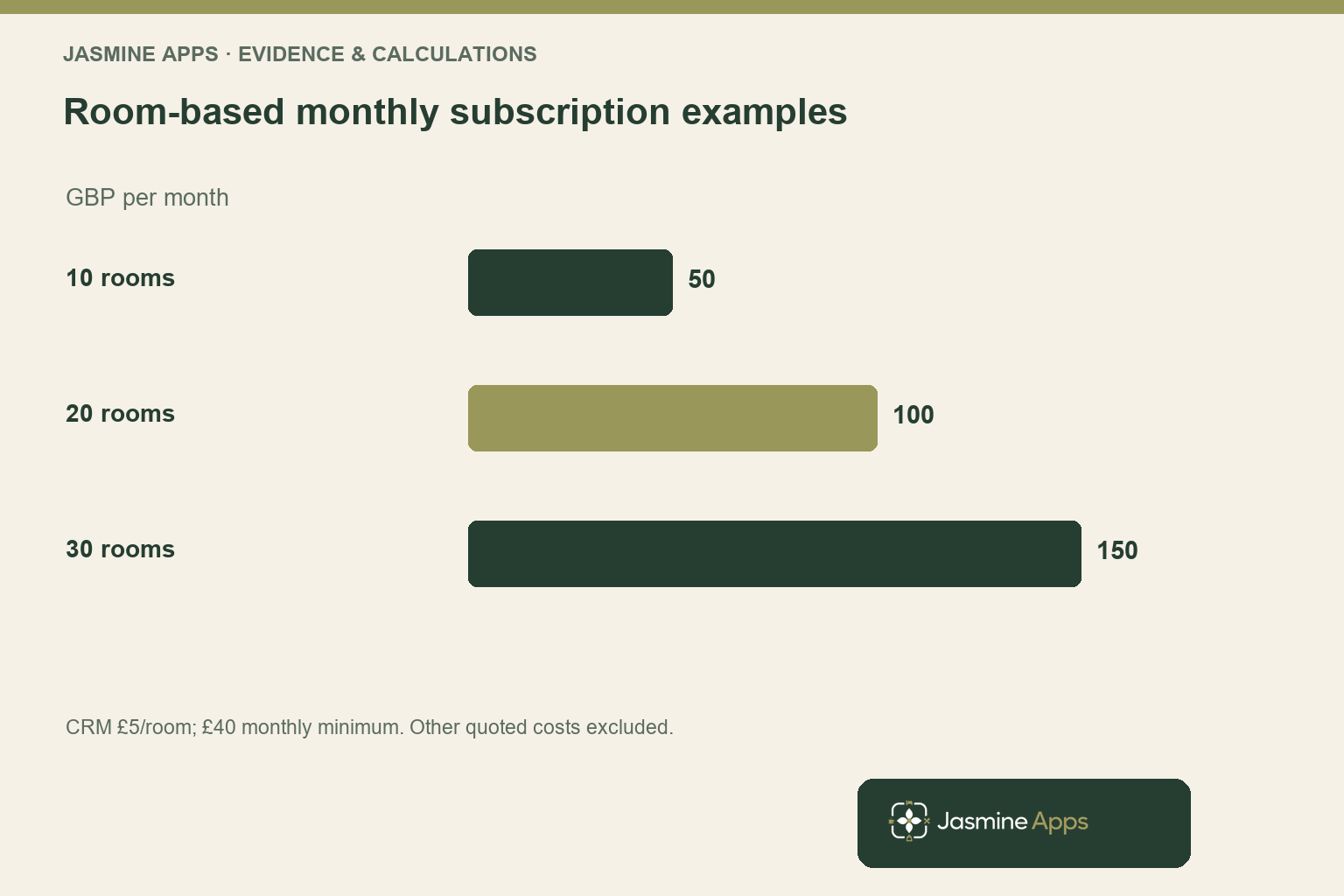
Order your information by the urgency of the decision. Put tomorrow’s breakfast and reception contact route ahead of services that can wait. Keep details such as opening times together so your guest does not have to reconcile separate messages with different hours.
You should also give an alternative when an option is unavailable. If your hotel does not provide an early breakfast, explain the approved enquiry route without implying a guaranteed arrangement. Useful content earns trust by setting expectations your operation can meet.
Read the hotel guest-information guide for the broader directory structure. Your business-guest version should select and prioritise the relevant answers, rather than repeat the entire directory on every screen.
Evaluate hotel TV content for business guests with the right measures
You cannot infer the value of a weekday message simply from the number of rooms that contain televisions. A screen is an opportunity to communicate, but it is not proof that your guest saw, understood or acted on an offer. Choose a measure that relates to the problem you want to solve.
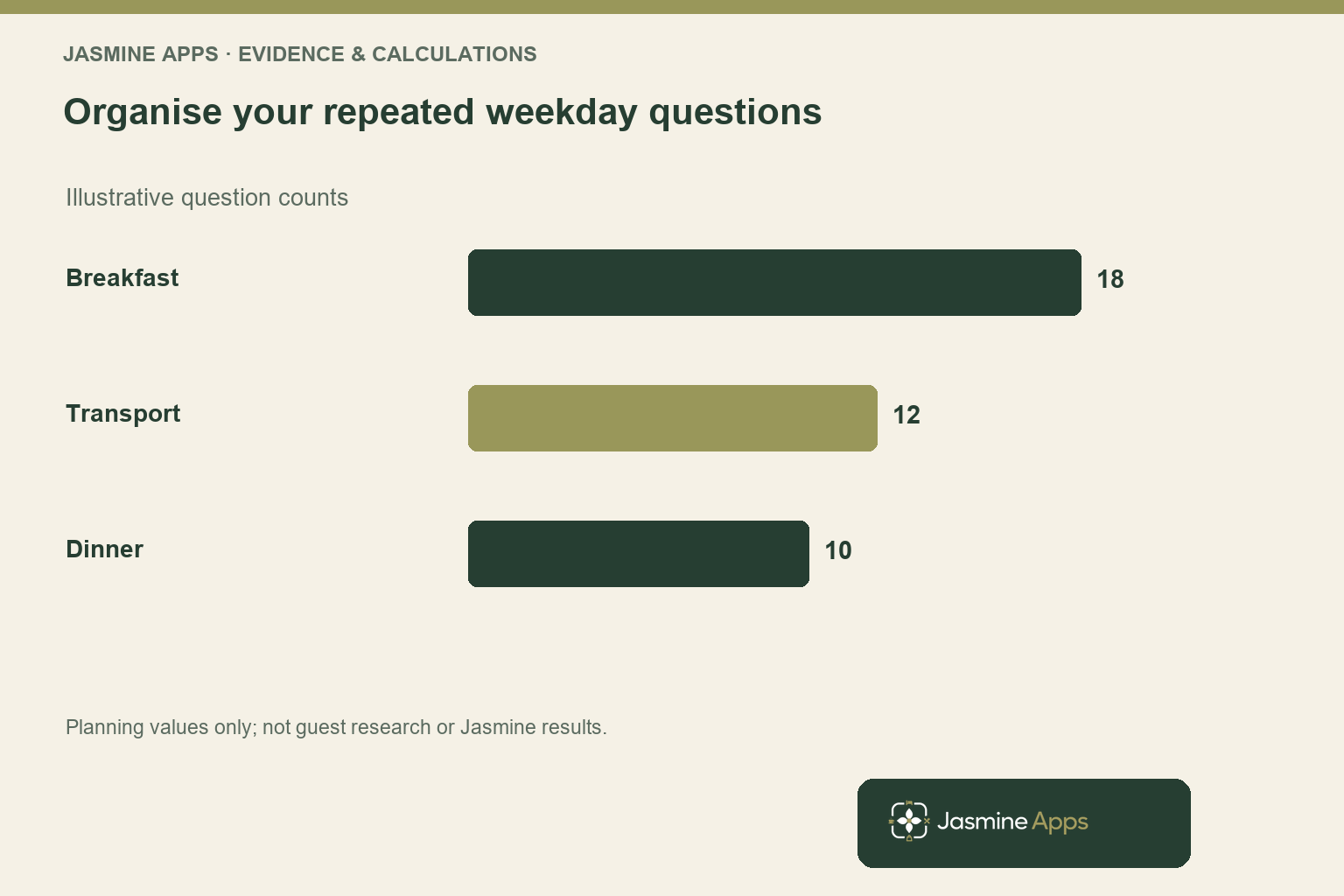
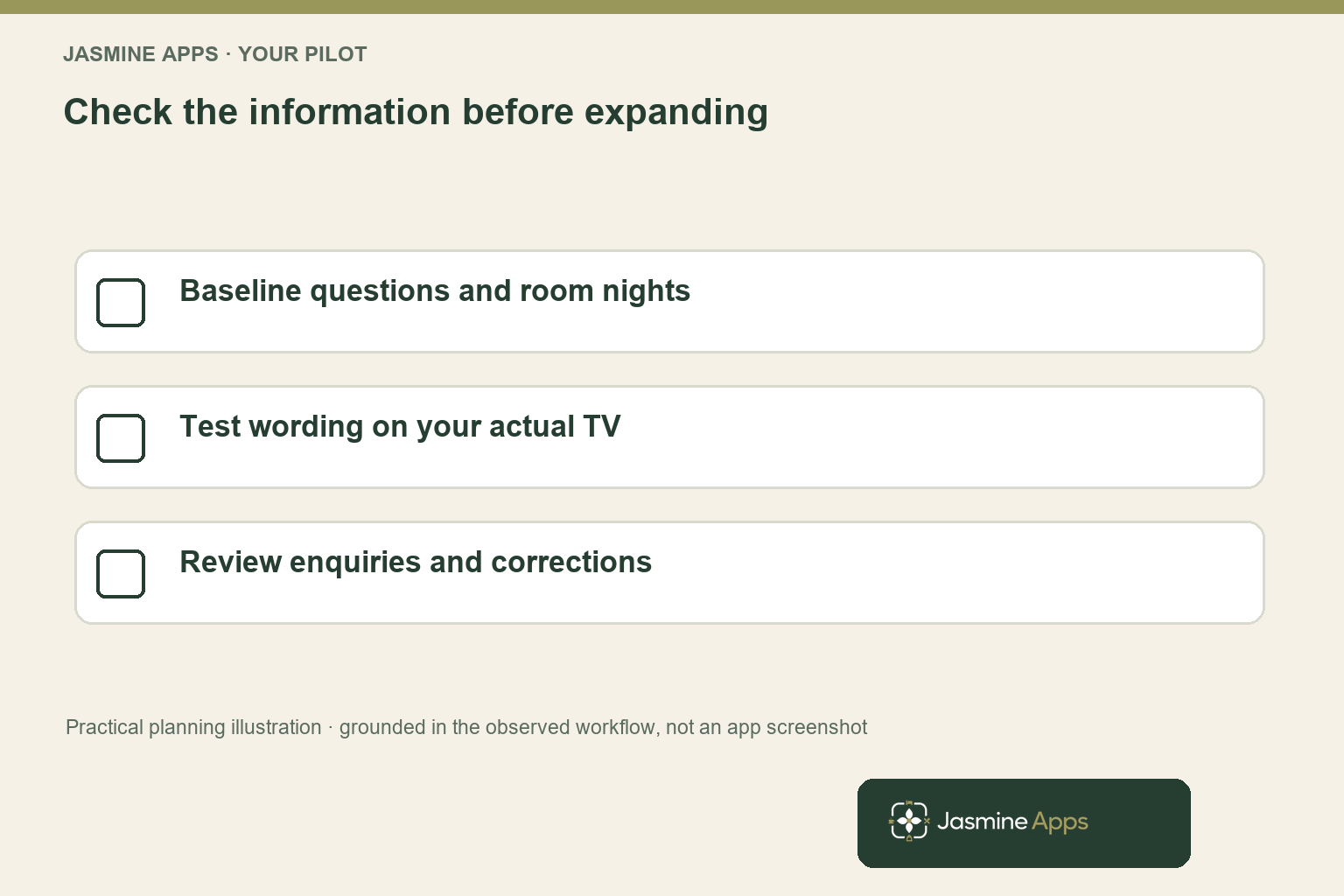
For a practical-information pilot, your reception team could tally repeated questions during comparable weekday periods. Separate questions about breakfast, transport and dinner rather than recording one total. Otherwise, an improvement in one topic can hide a new confusion somewhere else.
Consider an illustrative baseline of eighteen breakfast questions, twelve transport questions and ten dinner questions over a defined period. A second illustrative period might contain twelve, nine and eight respectively. Those invented planning values show how to organise a comparison; they are not Jasmine customer data or a predicted reduction.
Your raw question count also needs an occupancy denominator. Forty questions during one hundred occupied room nights and twenty-nine during seventy room nights represent different rates from forty and twenty-nine during the same occupancy. Record the room nights and the kinds of guests you served before claiming improvement.
You should pair the count with a quality check. Fewer enquiries could mean the information is clear, but could also mean guests gave up or chose another provider. Ask whether guests reached the right team, whether the published service was available and whether staff had to correct misleading information.
For a commercial offer, measure qualified enquiries and completed purchases separately. Your TV content may support the decision while reception completes it. Describe that contribution carefully instead of attributing every dinner sale in the building to the screen.
Build hotel TV content for business guests using the live app structure
The Jasmine TV admin separates your welcome content from hotel-information sections. Your welcome can contain a greeting and brand assets, while the information area provides titled text sections navigated with the remote. That gives you a practical way to separate a first impression from detailed answers.
Create a concise weekday information section with a descriptive title. Use short lines for the service, timing and next step, then test it from a normal viewing distance. If your guest has to lean forward to read a phone number, your design has prioritised appearance over usability.
Keep the welcome suitable for the audience without pretending the system knows their purpose of travel. You can plan content for the services you expect during the week, but a manually selected message is not an automatically personalised guest profile. Ask for a demonstration before promising booking-data integration or different content for individual guests.
You should maintain a named owner for every changing detail. Reception may own transport wording, your restaurant manager may own dinner hours and another colleague may approve the overall screen. Record the source and review date so a temporary arrangement does not become permanent information.
Check the remote navigation on the television you intend to use. Your admin preview cannot establish compatibility for every existing screen, streaming service or network arrangement. A demonstration using your hardware and proposed installation is a better purchasing test than assuming all smart televisions behave identically.
Avoid including private guest information in reusable marketing examples. You can demonstrate a room welcome with a clearly fictional guest and room, then publish neutral service content. Your article images should show the task or information hierarchy rather than fabricated app controls or a real guest’s details.
Cost a weekday pilot and decide what deserves the screen
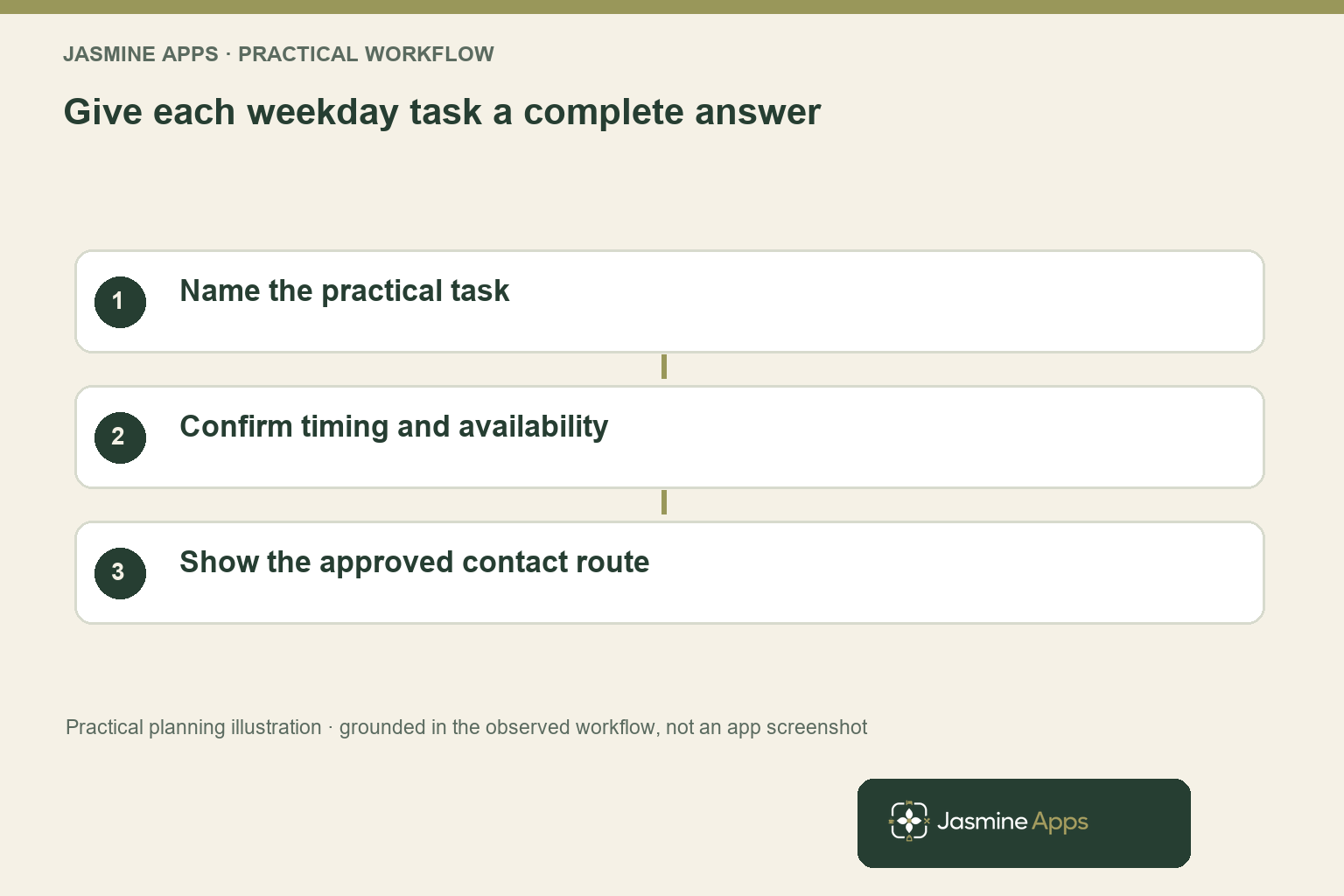
The CRM lists Jasmine TV at £5 per room per month, with a £40 monthly minimum. That makes a ten-room monthly illustration £50 and a thirty-room illustration £150 before any tax, setup, hardware or other charges in your quotation. Your charging unit is the room; do not substitute an old per-TV assumption.
The annual CRM rate is £50 per room. You should confirm any annual minimum and the agreed deployment scope rather than extrapolating the monthly minimum into terms that are not stated. Your order and quotation should also clarify the tax basis and any installation work.
The useful pilot question is whether your selected content addresses a measurable weekday problem. Choose a small set of approved answers, establish a baseline and run the revised information over a comparable period. Keep reception’s explanation consistent so you are not testing several unrelated changes at once.
If your staff spend less time answering repeated questions, describe that as released capacity until you can show an actual cost change. Your team may use the time to improve service rather than reduce paid hours. Both outcomes can be useful, but they are different financial claims.
You should retire content that creates confusion or attracts enquiries your venue cannot fulfil. A quiet-workspace message may be useful at one property and unsuitable at another. Your best screen is a considered selection of relevant services, not a showcase of every feature you could advertise.
Before buying, use the hotel TV hardware audit alongside your editorial plan. Bring a typical weekday guest question and your actual television to the discussion, so the demonstration resolves both the communication task and the technical fit.
Pro Tips
Audit the unanswered question. Listen to reception before choosing a visual. Your most repeated weekday question is a stronger starting point than a service you would simply like to promote.
Normalise by occupancy. Record questions per occupied room night and keep the comparison period consistent. Otherwise a quieter hotel can appear to have improved content without changing anything.
Show the fallback. Explain whom your guest can contact when a published option is unavailable. You protect trust when the exception has a practical next step.
Common Mistakes
Assuming every weekday guest is travelling for work. Your audience is mixed. Task-based content remains useful without asserting an individual guest’s reason for travel.
Treating fewer questions as automatic success. Guests may stop asking because a service appears unavailable. Check completed enquiries and guest understanding before celebrating the total.
Promising personalised automation from an editorial plan. Manual content planning does not prove booking-data targeting. Confirm the actual installation before including integration claims in your purchase case.
Frequently Asked Questions
What information do business hotel guests need?
You should prioritise practical decisions such as breakfast timing, the reception contact route, dinner availability and any transport arrangements your hotel actually offers. Your own enquiry records are a better guide than assuming every working traveller wants the same amenities. Keep each answer specific enough to act on, and give an approved alternative when a service is unavailable. You can then use guest feedback and repeated-question counts to refine the order.
Can hotel TV content improve the guest experience?
Your content can help when it removes an unanswered question or makes a service easier to find. You should test that benefit through guest understanding, successful enquiries and the frequency of staff corrections. A screen alone does not establish a better experience, and a reduction in questions is not sufficient evidence by itself. You need accurate details, readable presentation and a team that can deliver the service you have described.
Can Jasmine TV personalise content for business guests?
You can organise your welcome and hotel-information content around relevant weekday tasks. You should ask for a demonstration before assuming automatic segmentation by travel purpose, booking package or guest profile. The admin structure supports editorial planning, but that does not prove every proposed data integration is available. Bring the specific targeting rule you want to use and ask how it would work with your property’s booking and television arrangements.
How much does Jasmine TV cost for a small hotel?
The CRM lists £5 per room per month with a £40 monthly minimum, so ten rooms provide a £50 monthly subscription illustration. Your annual rate is listed at £50 per room, but you should confirm any annual minimum separately. Ask for the tax basis, installation, hardware requirements and other agreed charges in your quotation. Your final comparison should use the actual rooms and services included in the proposed deployment.
How can you measure whether hotel TV information works?
You can compare a defined set of repeated guest questions across similar periods, record occupied room nights and check whether guests reached the intended service. Keep your counting rules unchanged and note changes in occupancy, guest mix or service availability. For commercial messages, record enquiries and completed purchases separately. You should avoid assigning all venue revenue to the screen when staff, prices, packages and other marketing also influence the decision.
Hotel TV content for business guests: your next step
Your hotel TV content for business guests should help a traveller complete a useful task with confidence. Request a Jasmine TV demonstration with your weekday guest questions, room count and television details. You can then assess a clear content plan, an accurate deployment quote and a pilot that measures the benefit your property actually needs.