

Hotel Guest Information Channels: TV, Reception or Your Website?
· Yiannis Yiasemis
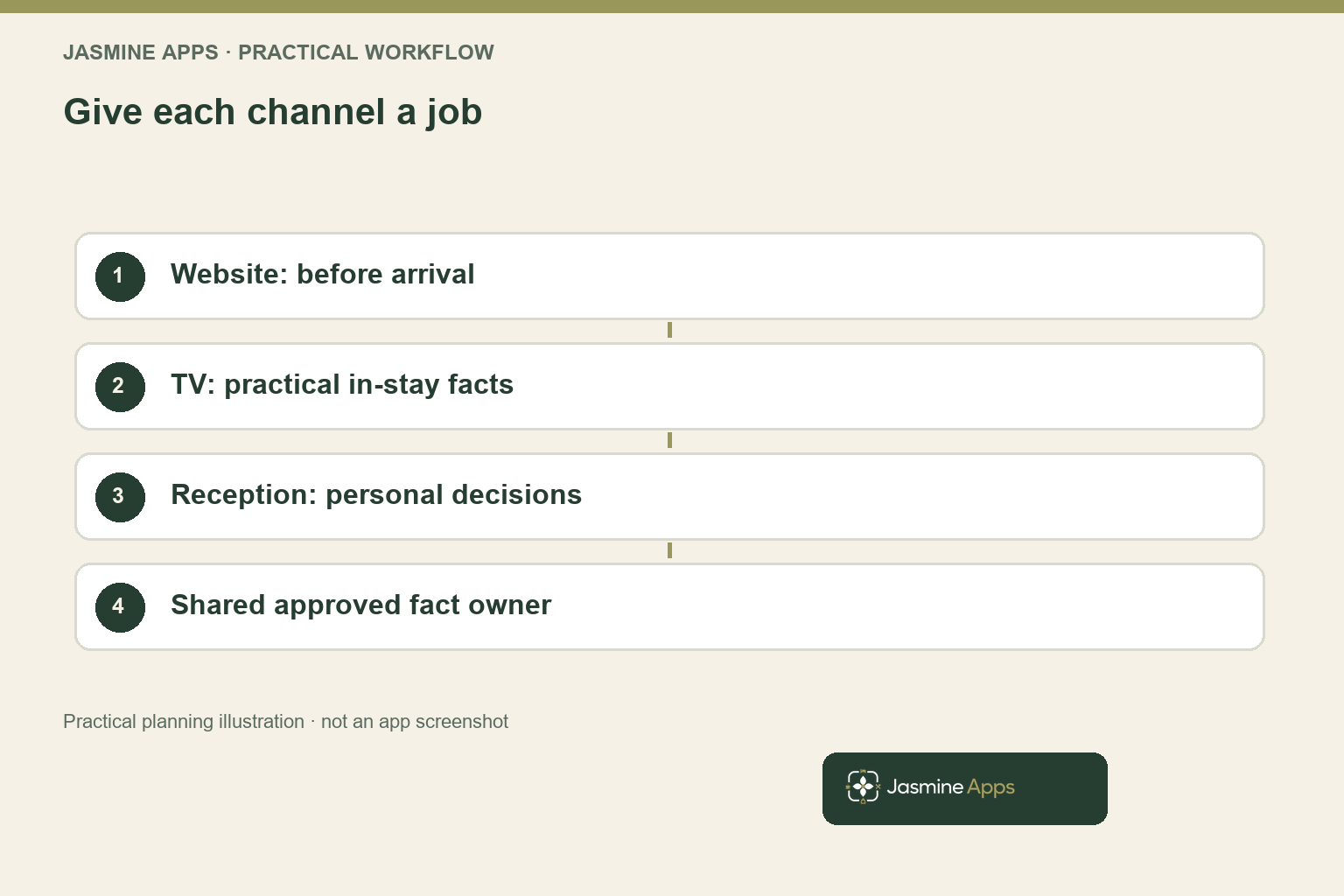
Repeating the same information everywhere can make your guest experience less clear. Your website, reception desk and bedroom TV serve guests at different points, with different questions and different opportunities to act. Your hotel guest information channels work best when each has a useful job and all draw from the same approved facts.
Jasmine TV gives you welcome content and titled hotel-information sections for the in-room part of that journey. The next step is deciding what belongs there, what needs a conversation and what guests should find before they arrive. A practical channel plan helps you reduce repeated questions while presenting services your team can confidently deliver.
Key Takeaways
- Give each channel a purpose in the guest journey.
- Keep one owner for each operational fact.
- Use reception for exceptions and personal decisions.
- Make room-screen information readable and navigable.
- Review repeated questions to improve the channel plan.
Assign hotel guest information channels to the guest journey
Your website usually meets the guest before the stay or while they are deciding what to book. It should help them understand your location, facilities, offer and the next booking step. During the stay, guests may still use it, but they should not need to search through a promotional page to discover a practical departure time.
Reception can explain entitlements, discuss an exception and help someone whose needs do not fit a standard answer. That personal role remains valuable when digital information is strong. Your aim is to reserve the conversation for the questions that benefit from it, while making routine facts easy to find without another queue.
The bedroom TV meets a guest who is already on site and looking around their temporary room. Welcome content can orient them, while information sections can answer practical questions about breakfast, dining and departure. Give each section a recognisable title and a clear route to reception when the answer depends on the individual booking.
Start with a short list of repeated questions rather than a copy of your full website. Mark when each question arises, whether the answer is general or personal, and whether the guest needs to act immediately. That turns your content plan into a service design exercise your reception and operational colleagues can review together.
GOV.UK’s service-design guidance provides a useful method for designing around user needs and testing content. Apply that principle to a guest task such as finding breakfast time from the room. Your channel choice should help the guest complete the task, with the tone and detail suited to the point in the stay.
Keep hotel guest information channels aligned with one fact owner
Your channels become unreliable when nobody owns the underlying fact. Breakfast times may be updated on the website while an old room-screen message remains, or reception may hear about a restaurant closure through a different route. Identify the colleague who confirms the fact and the people responsible for updating each relevant channel.
Create a small content register for operational information. Include the fact, approving owner, affected channels, change trigger and last review. A seasonal service time needs a different review cycle from a temporary fault, so make the trigger practical rather than asking someone to reread every page on an arbitrary date.
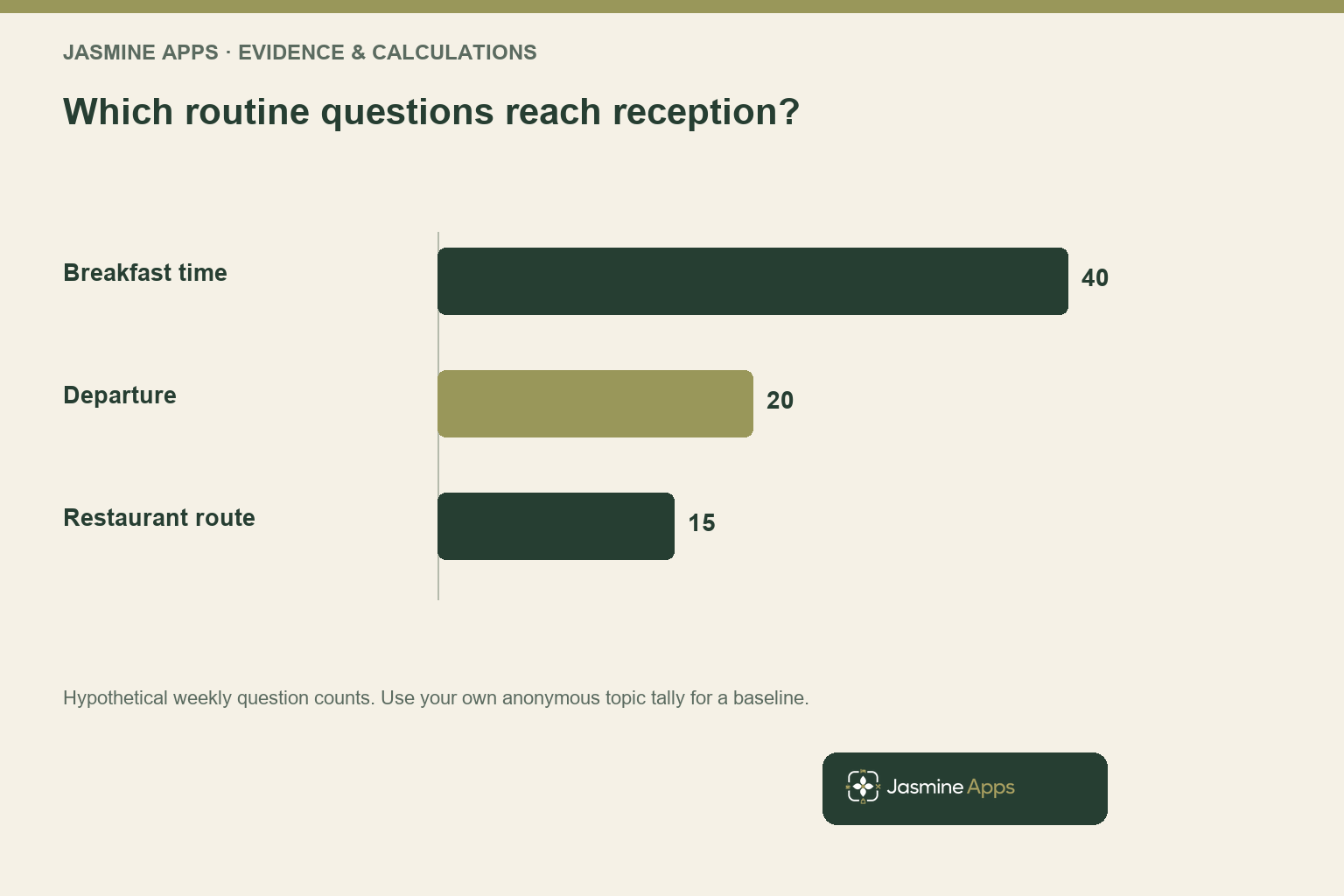
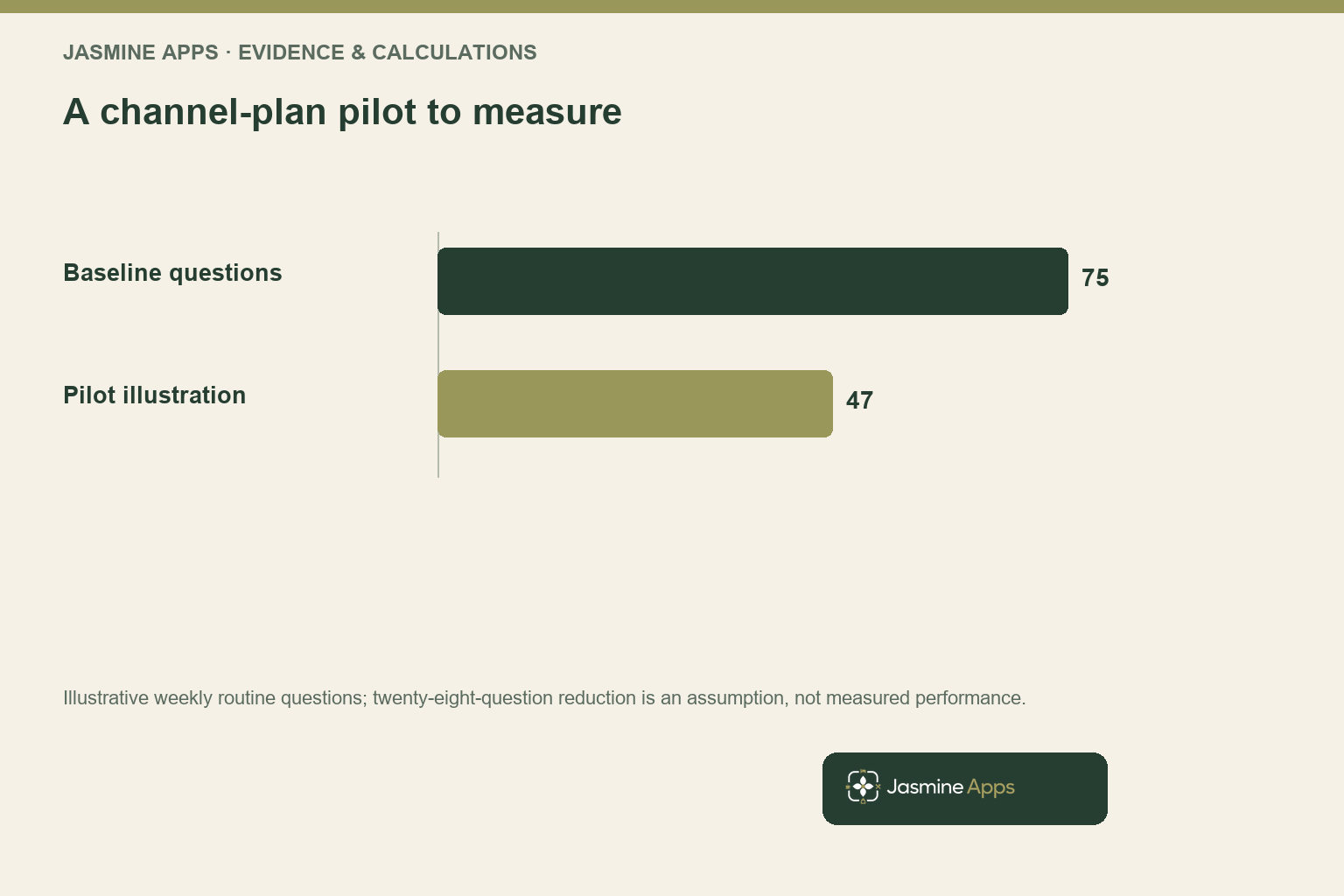
For a hypothetical baseline, suppose reception receives forty weekly questions about breakfast times, twenty about departure and fifteen about finding the restaurant. That is seventy-five questions with potentially reusable general information. A pilot that reduces those groups to twenty-five, twelve and ten leaves forty-seven; the difference is a planning illustration until your own counts establish it.
Your question record should stay simple and avoid unnecessary personal details. Categorise the topic and whether a general answer would have helped, then review the pattern with reception. Some questions will continue because guests prefer a conversation or need a personal answer; a useful content plan supports that choice rather than treating every enquiry as a failure.
Your hotel guest information guide examines factual accuracy in more detail. This channel register makes that work repeatable across TV, reception and the website. You can update the information once at its source, then check the places where your guest relies on it before the new service arrangement begins.
Make hotel guest information channels commercially useful
Your practical information can also help a guest choose an additional service. A breakfast section that states the service time, location, relevant price and request route makes the decision easier. A vague promotion that omits those facts may generate another reception question without bringing the guest closer to a completed purchase.
Keep general information separate from personalised entitlement. If the screen does not recognise the guest’s confirmed package, it should not tell every room that a service is included. You can explain the optional offer and direct the guest to reception for their booking details, with a wording choice the staff team can support consistently.
Jasmine TV’s editor provides welcome branding and greeting content alongside titled information sections. Demonstrate the navigation on a supported room device, then ask someone unfamiliar with the content to find a service answer. Your office preview is useful for editing, but viewing distance and remote-control navigation need their own practical check.
At the current listed price of £5 per room monthly with a £40 minimum, your deployment cost depends on the room count and agreed scope. Include hardware, setup, taxes and the work of maintaining information in the quotation. You can then compare the full cost with service capacity and offer outcomes rather than assigning an assumed sales uplift to every screen.
Use your hotel TV business-guest content guide to refine weekday priorities. The channel plan gives those messages a home and a responsible owner. You can help guests act on the services relevant to them while keeping reception available for the individual decisions a general screen message cannot resolve.
Review channel performance through completed guest tasks
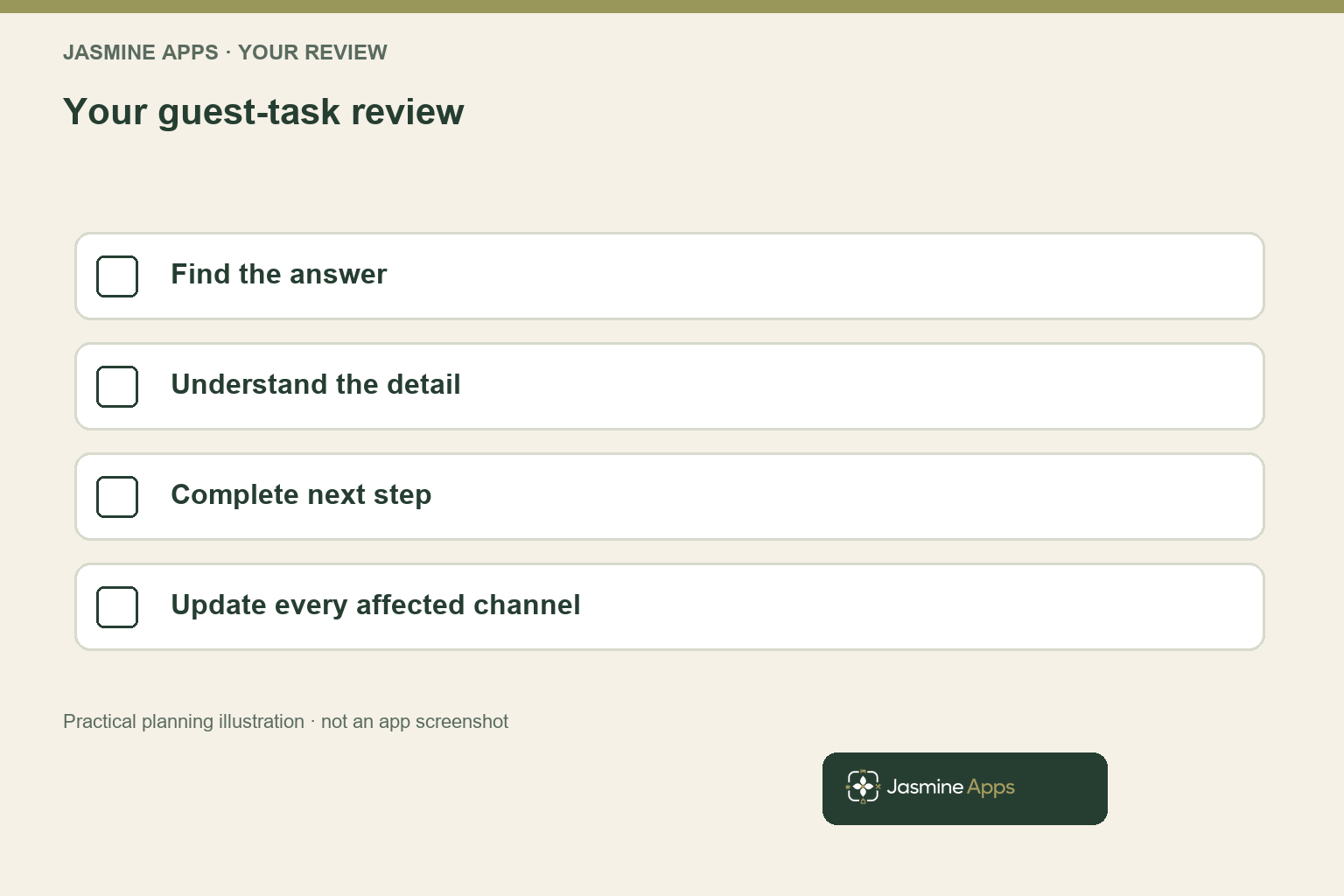
Choose three guest tasks for the first review. You might test finding breakfast time, understanding the checkout process and locating the restaurant. Ask a colleague or suitable tester to begin at the normal starting point and explain the next action, using general information and fictional booking details where a personalised scenario is needed.
Record whether the answer was found, understood and usable. A page view does not prove that the guest knew what to do, while a quick conversation may successfully resolve an exception. Your measurement should reflect the task outcome, with repeated reception questions providing an additional signal about content that remains difficult to find.
If you estimate time released, use the question types the information actually addresses. In a worked model, twenty-eight fewer routine questions at two minutes each would release fifty-six minutes weekly. That is staff capacity, not automatically a wage saving; record the remaining conversations and any extra content-maintenance work alongside the estimate.
Review the commercial tasks separately. An additional breakfast purchase and a correctly understood departure time deliver different kinds of value. Track completed purchases and contribution for the offer, while using clarity and question counts for the service task. That keeps the buying case understandable without forcing every guest-information improvement into a sales claim.
At each service change, check the approved fact, the affected channels and the reception explanation together. Your strongest channel plan remains useful because it is maintained, not because it contains more content. Guests can find a reliable answer, colleagues know when a personal conversation is needed, and your venue presents its services with the same confidence across the stay.
Pro Tips
Write the task before the message. State what the guest needs to find or do, then choose the channel and content. That keeps a promotional headline from replacing the practical answer the guest came for.
Own the operational fact. Give service times and availability a named approving role. Channel editors can then update the approved answer instead of independently interpreting a change.
Test the exception route. Include a guest whose package or needs differ from the general information. Your screen should guide them towards the colleague who can resolve the individual question.
Common Mistakes
Copying the website onto the TV. You can overload a room screen with content designed for an earlier booking decision. Choose the in-stay tasks and shorten the route to their answers.
Using channel activity as proof of understanding. A view or installed device does not establish that the guest completed the task. Test the answer and next step directly.
Leaving temporary changes without an expiry owner. An old closure or service-time message can remain after operations change. Assign a review trigger and check every affected channel together.
Frequently Asked Questions
What information should you put on a hotel bedroom TV?
You should prioritise the practical questions guests ask during the stay, such as service times, locations, departure arrangements and relevant optional offers. Keep the content readable and easy to navigate on the supported room device. If an answer depends on the guest’s booking, give a clear reception route. Your room screen should help the guest complete a task, with approved facts and a named colleague responsible for keeping them current.
What should reception explain instead of the TV?
Your reception team is best placed to handle personalised entitlements, exceptions, accessibility needs and questions that require a decision for the individual guest. A general screen can supply routine information and explain how to enquire. Keep those roles joined so guests receive a consistent answer. Your channel plan should make the useful conversation easier to reach, while allowing people who prefer self-service to find accurate general facts during their stay.
How do you keep hotel information consistent across channels?
You can maintain a register of approved facts, their operational owner and the channels affected by a change. Record review triggers for seasonal schedules, temporary closures and other updates. Ask each editor to use the same approved answer, then check the website, room screen and reception explanation together. Your process should make responsibility clear without requiring every colleague to independently decide what a new service arrangement means for guests.
Can better guest information reduce reception questions?
Your information may reduce routine questions when guests can find and understand the relevant answer. Measure the repeated topics before and after a defined content change, while allowing for guests who prefer conversation or need personal help. If you value fewer questions financially, distinguish staff capacity from an actual wage reduction. Include the recurring work of maintaining the content so your comparison reflects the whole service process you intend to run.
How can Jasmine TV fit your guest-information strategy?
You can use Jasmine TV’s welcome content and titled hotel-information sections for the in-room part of your guest journey. Demonstrate navigation, readability and the route to reception on a supported device. Confirm your hardware, reporting and transaction scope separately. Your best setup gives each section a useful task, aligns it with approved operational facts and assigns responsibility for changes, so the screen supports the same service your reception and website describe.
Hotel guest information channels: your next step
Your hotel guest information channels should give guests a reliable answer and a practical next step. Request a Jasmine TV demonstration with three repeated reception questions and your current information channels. You can leave with a clear room-screen structure, an ownership plan and a small test of the guest tasks your venue most wants to make easier.