

Hotel TV Ancillary Sales: What Can One Bedroom Screen Support?
· Yiannis Yiasemis
Your bedroom TV can help sell a service without taking the payment itself. A guest may simply need to know that late checkout is available, what breakfast costs or how to enquire about another stay. Your hotel TV ancillary sales opportunity begins when the screen answers the question that would otherwise stop the purchase.
Jasmine TV’s welcome content and hotel-information sections give you a place to make those decisions easier. You can test one offer at a time, connect it to a booking or reception route and measure what guests actually buy. That turns one screen into a useful part of the service journey, with an economics model your manager can understand.
Key Takeaways
- Promote a service the guest can actually receive.
- Give price, availability and purchase route together.
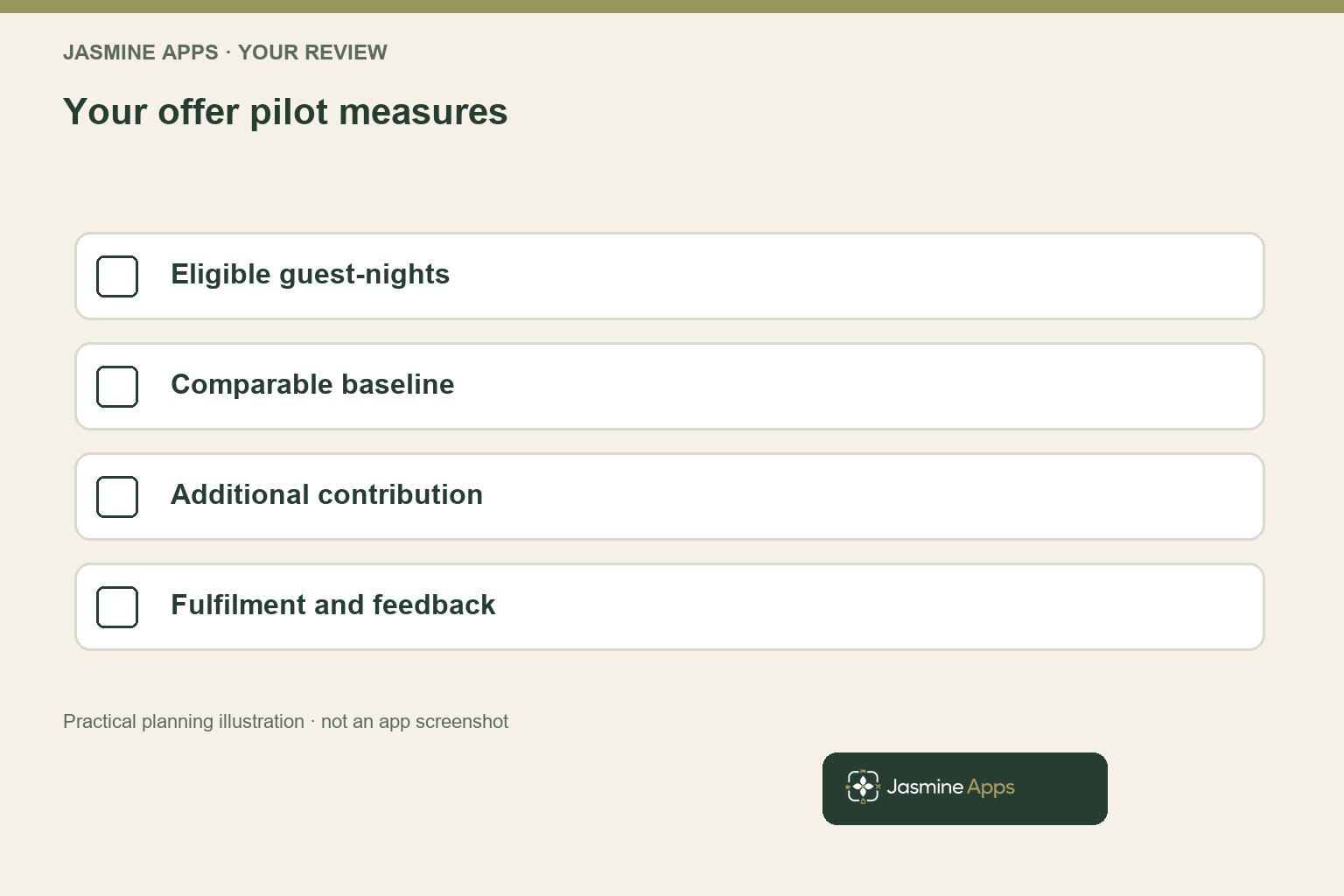
- Count eligible guest-nights for each offer.
- Measure additional contribution after fulfilment costs.
- Price TV by your room-based deployment, including its minimum.
Build hotel TV ancillary sales around the guest’s decision
Your guest’s reason to buy changes during the stay. On arrival, they may need dinner or breakfast information. Before departure, late checkout or luggage arrangements become more relevant. Start with the decision and its timing, then choose the screen content that helps rather than filling every section with a list of promotions.
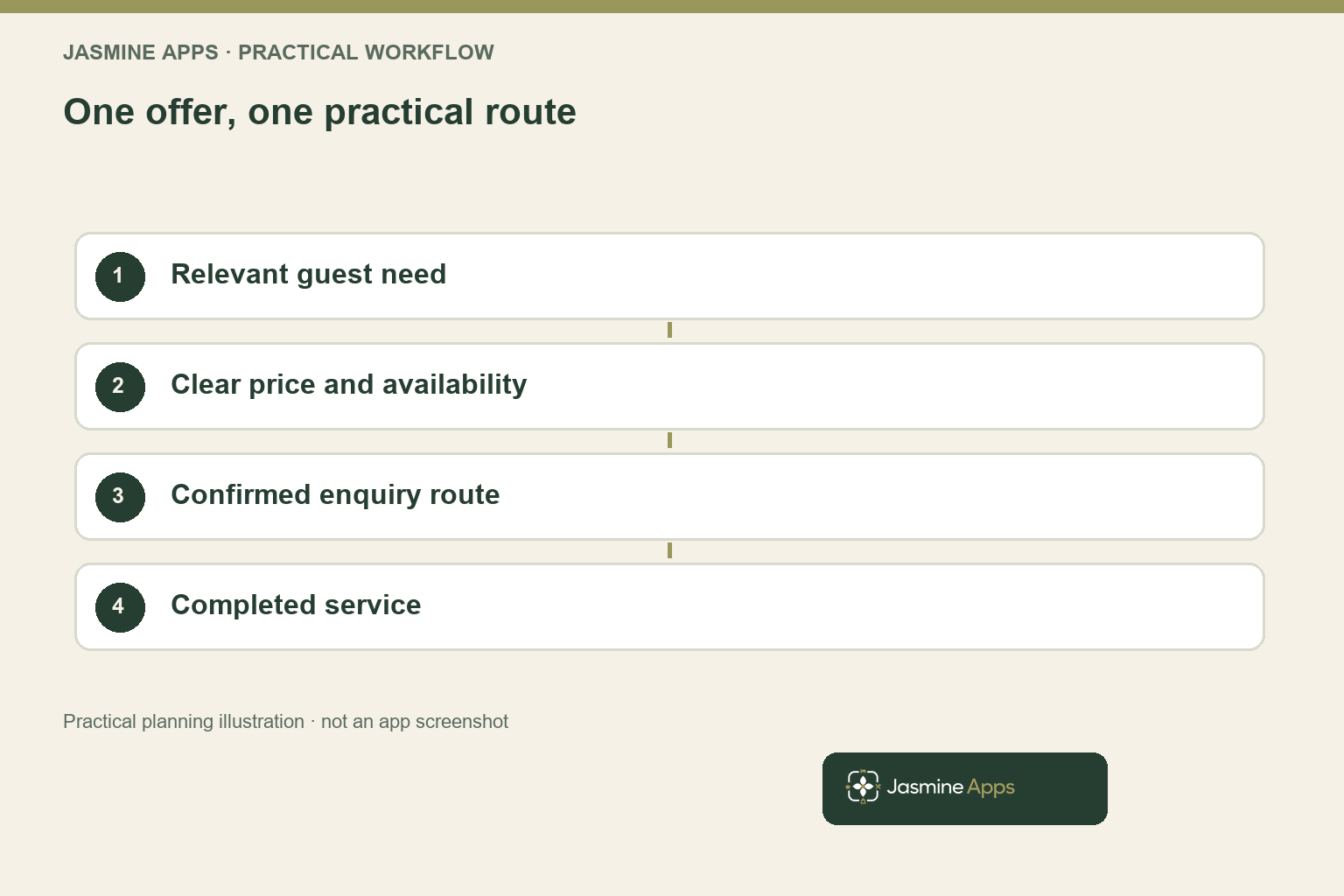
For each offer, write the unanswered question in plain language. Your late-checkout guest needs the latest departure time, price, availability and a request route. Your breakfast guest needs entitlement, service hours and what the price covers. A return-stay invitation needs a relevant reason to enquire, with terms your team can explain consistently.
Keep the fulfilment owner close to the content owner. Reception can confirm late-checkout capacity, while housekeeping needs the agreed departure information to plan the room. The TV should describe the actual enquiry route; it should not promise an automatic booking or personalised entitlement unless those capabilities are confirmed in your installation.
Choose one service that has a clear contribution and available capacity. A late-checkout offer may be useful on some dates and impractical on others, so your message needs a suitable availability condition. Your aim is to help the guest make an informed purchase while keeping the operational handover manageable for your team.
Use your hotel breakfast upselling guide for that specific offer, and apply the same decision structure to another service. The screen becomes commercially useful when it joins a guest need with a deliverable next step. Attractive photography supports the choice, while clear facts make it possible to act on it.
Calculate hotel TV ancillary sales using incremental contribution
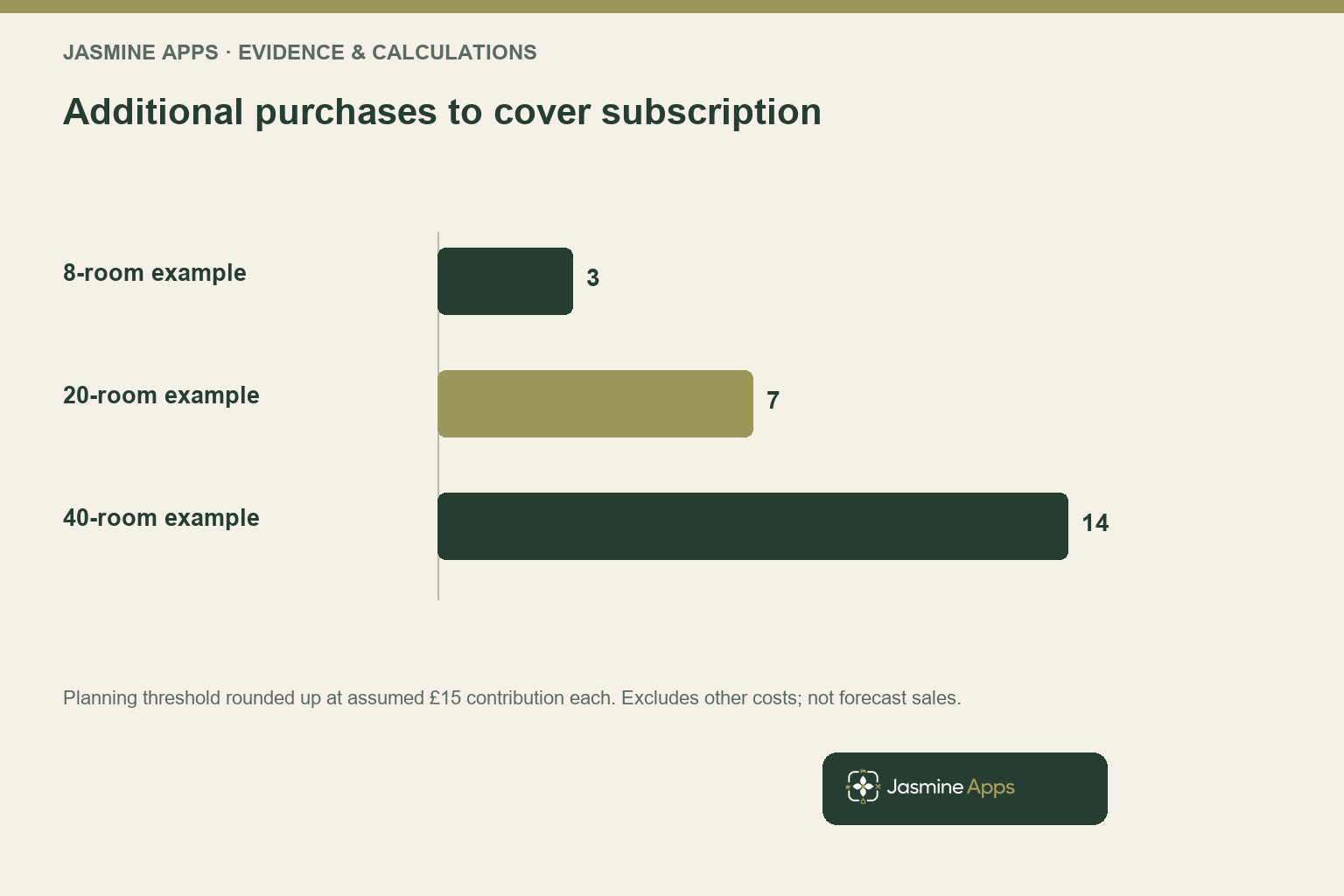
Your first calculation should describe the offer separately from the whole TV deployment. Suppose a hypothetical twenty-room hotel has 300 eligible guest-nights in a month. If ten additional late-checkout purchases each contribute £15 after incremental fulfilment costs, the offer creates £150 of additional contribution before content and software costs.
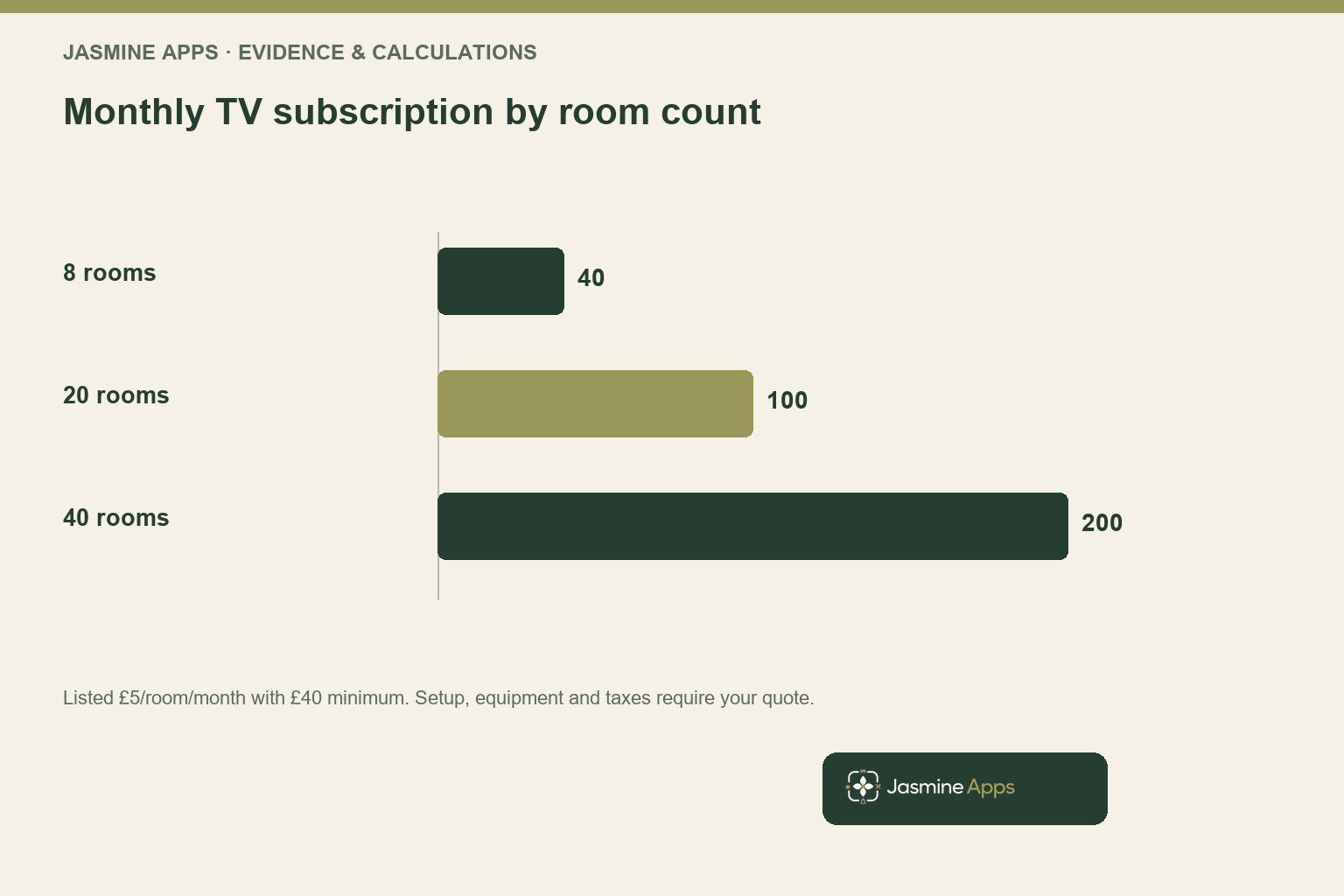
Jasmine Apps currently lists Jasmine TV at £5 per room monthly with a £40 monthly minimum. Your twenty-room subscription is therefore £100 monthly under that listed calculation. At £15 contribution per additional purchase, seven purchases cover the £100 subscription in this simplified model, before setup, equipment, taxes and content work.
An eight-room hotel also reaches the £40 monthly minimum. At the same assumed £15 contribution, three additional purchases cover that subscription amount. The room count changes the software calculation, while guest demand, eligibility and fulfilment capacity determine whether the offer can actually produce those purchases; the arithmetic is not a forecast.
Keep purchases that would have happened anyway separate from the additional portion. Your reception team may already sell late checkout effectively, so the TV could redistribute where guests learn about it without increasing total sales. Track a comparable baseline and guest enquiry routes to understand the change rather than claiming every purchase as screen-generated revenue.
Your hotel TV software ROI guide sets out the broader deployment cost. This article adds the offer-level view: which guest decision changed, what contribution followed and what extra work was needed? That gives you a more useful buying case than dividing all hotel revenue by the number of screens.
Make hotel TV ancillary sales practical on the actual screen
Jasmine TV’s administration separates welcome branding and greeting content from titled hotel-information sections. Use that structure to keep the arrival experience welcoming and the practical offer easy to find. A recognisable section name can help guests reach breakfast or departure information without reading a crowded promotional message first.
Write for the viewing distance and remote navigation your guest will use. Put the service name, relevant price and next step in a readable sequence, with enough space around the text. Ask a colleague unfamiliar with the content to find the offer from the normal starting screen on a supported room device.
Confirm the purchase route with reception before publishing the message. If the guest needs to telephone or visit the desk, say so clearly. Your hotel information editor supports a content workflow; direct TV ordering, live room entitlement and external-system updates need their own demonstration before you build them into the advertised guest journey.
Food offers also need an approved information route. The Food Standards Agency’s allergen guidance provides the relevant context for food businesses. Use the screen to help guests reach accurate service and dietary information, with your team’s established process available when a promotional description cannot answer the guest’s question.
Test the message at the time it matters. A late-checkout promotion needs a usable request deadline and current availability, while a breakfast offer needs the correct service window. Give one colleague responsibility for updating those facts so your room screen, reception explanation and actual service remain joined when your operating schedule changes.
Run an offer pilot that separates usefulness from extra sales
Begin with one offer and a clearly defined eligible audience. Record the current purchases and enquiry route before changing the screen, then introduce the message without simultaneously changing price or reception scripts where practical. Note any other differences so your review can distinguish a useful signal from a change in underlying demand.
Count exposure only where you have a supported, meaningful measure. A TV installed in a room does not prove that a guest read the offer. You can still assess completed purchases, relevant questions and feedback, while confirming any device or content activity reporting available in your proposed setup before relying on it.
Keep the operational effect visible. Record requests you could not fulfil, extra housekeeping work and misunderstandings about entitlement or deadlines. A strong offer should produce a clearer decision, with staff able to complete the next step. If questions increase because the message is unclear, revise the information before increasing the campaign reach.
Review each offer on its own economics before combining results. Breakfast, late checkout and a return-stay enquiry have different eligibility, contribution and fulfilment timing. A future reservation is not current cash contribution until you account for completion and cancellation, so keep the stages separate when reporting what one screen has supported.
Your successful pilot may deliver additional purchases, fewer repeated questions or both. Keep those outcomes distinct and compare them with the complete cost of the setup. You can then expand the content with a clear purpose, using the TV as a useful guest-information channel that helps your team present the right service at the right point in the stay.
Pro Tips
Choose an operationally available offer. Start where your team can fulfil extra demand without disrupting the next service. For late checkout, align the offer with housekeeping and incoming arrivals before promoting it.
Count eligible guest-nights. Exclude bookings that already include the service when measuring optional purchases. Your denominator should describe the guests who could genuinely make the decision you are testing.
Test from the bed. Check text size and navigation on the supported room device at normal viewing distance. An offer that looks clear on an office monitor may need a shorter message for the guest.
Common Mistakes
Counting every purchase as additional. You can credit the screen with sales reception already generated. Compare the baseline and enquiry route before reporting uplift.
Promising direct TV purchasing. You create an unusable guest journey if your deployment only displays information. Describe the confirmed booking or reception route accurately.
Ignoring fulfilment capacity. You can sell a benefit housekeeping or catering cannot deliver. Agree availability and deadlines with the operational owner before promoting the offer.
Frequently Asked Questions
Can one hotel TV increase ancillary sales?
Your screen can support a purchase when it makes a relevant service easier to understand and gives the guest a usable next step. Additional sales depend on eligibility, demand and fulfilment, so you should test one offer with a comparable baseline. Track completed purchases and contribution after incremental costs. Your TV may also reduce repeated questions, but keep that service benefit separate from the commercial result you can actually measure.
What hotel services should you promote on bedroom TVs?
You can consider breakfast, dining, late checkout, relevant events and a return-stay enquiry where your team can fulfil the offer. Choose the guest decision and timing first, then provide the price, availability and request route together. Avoid crowding the welcome screen with every promotion. Your best starting offer is one with clear eligibility, understandable terms and a colleague responsible for keeping the service information current for your guests.
How many additional purchases cover Jasmine TV’s monthly price?
Your answer depends on room count and contribution per additional purchase. In the hypothetical twenty-room example, the listed £5-per-room price gives a £100 monthly subscription. Seven genuinely additional purchases at an assumed £15 contribution exceed that subscription amount.
You still need to include setup, equipment, taxes and content work, and measure whether the purchases are additional. The example is a planning calculation rather than a prediction of your hotel’s result.
Can guests buy breakfast or late checkout directly through Jasmine TV?
You should confirm the transaction route in your proposed installation. The product administration provides welcome content and hotel-information sections, which can explain an offer while reception or another confirmed process handles the purchase. Direct ordering, personalised entitlements and external-system updates need a specific demonstration. Write the screen message around the route your guest can actually complete, including request deadlines and availability, so the information supports a dependable service experience.
How much does Jasmine TV cost per room?
Jasmine Apps currently lists Jasmine TV at £5 per room per month with a £40 monthly minimum, and £50 per room annually. Your quotation should confirm annual minimum treatment, supported equipment, setup, content responsibilities and taxes. A twenty-room monthly subscription calculates to £100 under those listed terms. Compare the full deployment with the guest-information and offer outcomes you intend to improve, rather than assuming the room-based subscription is your only cost.
Hotel TV ancillary sales: your next step
Your hotel TV ancillary sales opportunity starts with one clear guest decision. Request a Jasmine TV demonstration with your room count, chosen offer and reception route. Ask to test the message on a supported room screen and build an offer-level calculation, so you can see what useful additional contribution and clearer guest information your deployment may support.