

Hotel TV Software ROI: Can £5 Per Room Pay for Itself?
· Jasmine Apps
One additional purchase contributing £5 per room each month can cover the listed room-level software rate once your hotel clears the monthly minimum. That makes hotel TV software ROI an interesting question, but it is not a promise that a welcome screen creates a sale. Your offer, guest attention and service capacity determine what the screen can earn.
The CRM currently lists Jasmine TV at £5 per room per month with a £40 minimum, not £8 per TV. Here is how you can evaluate a useful guest-information screen against additional contribution and avoidable operating costs.
Key Takeaways
- The listed rate is £5 per room monthly, subject to a £40 minimum.
- For a 20-room hotel, monthly software is £100 before other agreed costs.
- Twenty additional £5-contribution purchases would cover that £100 fee.
- Published digital-guest results are context, not proof of Jasmine TV returns.
- Test the remote-control journey and a clear route from the offer to purchase.
Hotel TV software ROI depends on what your guest can do next
Your room television can make useful information visible at a moment when the guest is deciding how to spend their stay. Restaurant opening times, a clear breakfast offer or a local recommendation can reduce uncertainty. The commercial value depends on whether the guest notices the information and can act on it without friction.
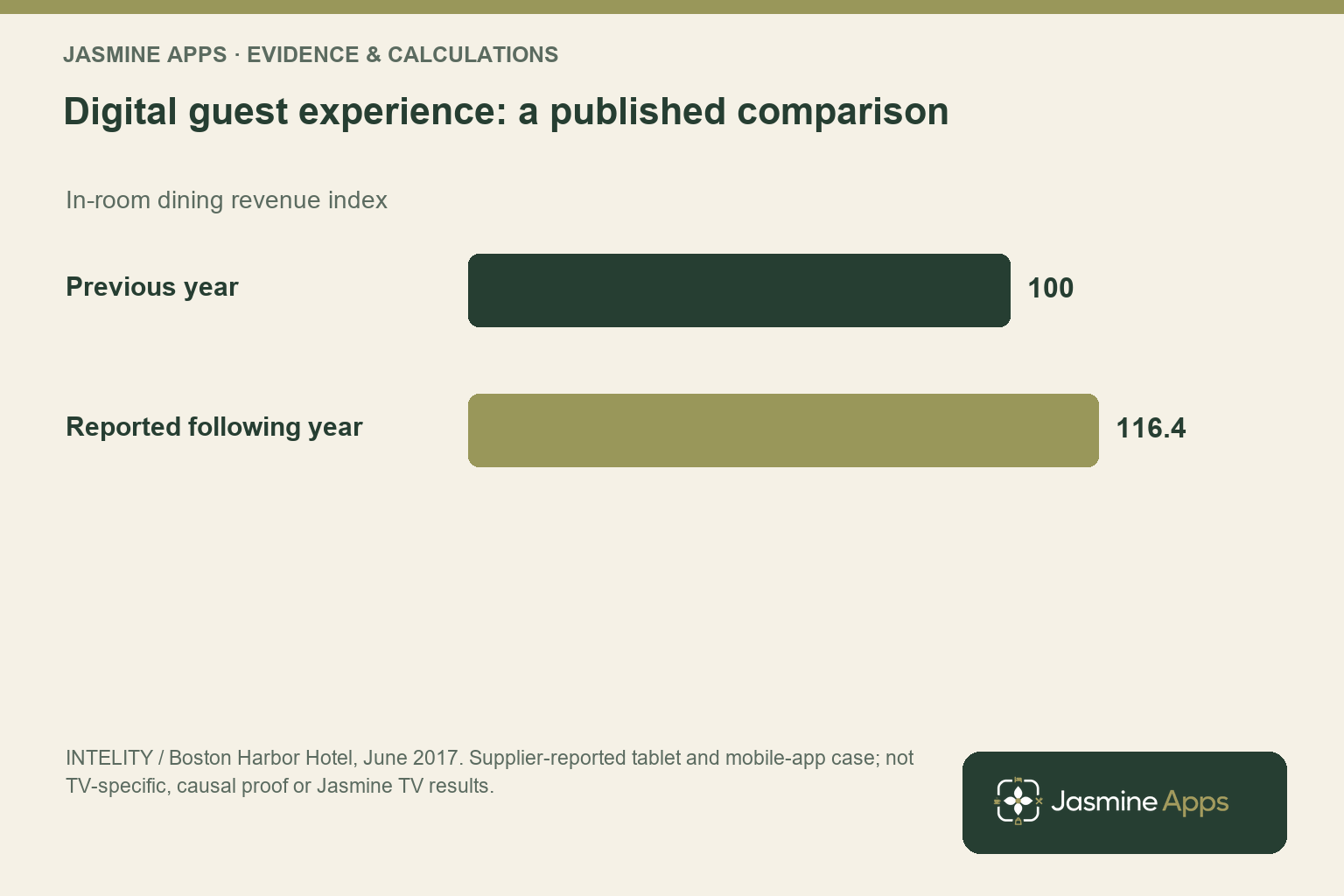
You should distinguish digital guest experience evidence from a TV-specific sales claim. In a June 2017 Boston Harbor Hotel case study, INTELITY reported a 16.4% annual increase in in-room dining revenue after deploying room tablets and a mobile app. The provider also reported substantially lower print costs; this was an observational supplier case, not a randomised study, a TV installation or a Jasmine TV result.
That example supports investigating a useful mechanism: clearer information and an easier purchase route may help guests use services they otherwise overlook. It does not justify placing a 16.4% uplift into your own TV forecast. Your hotel may have different facilities, demand, pricing and ways for guests to order.
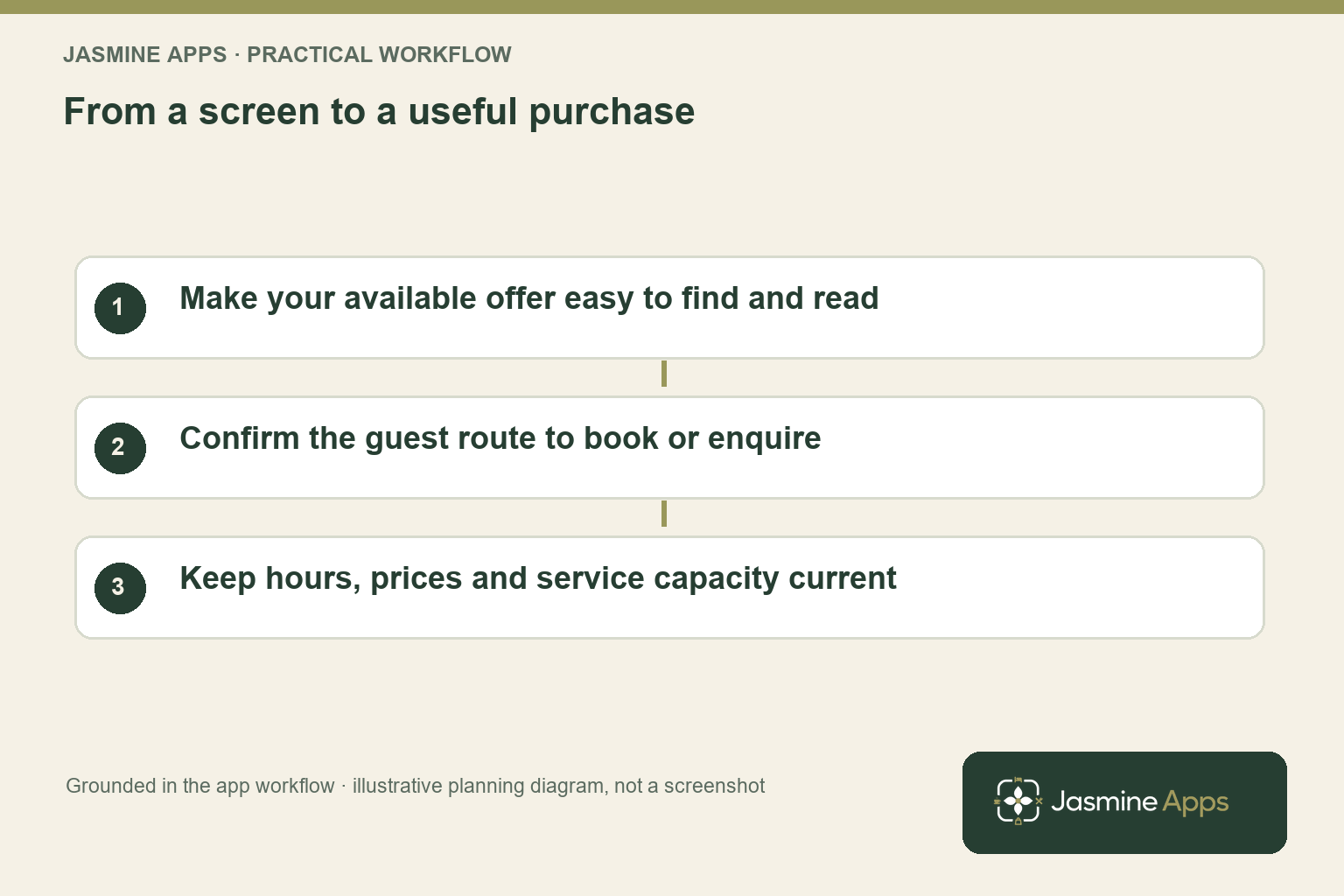
Start with one service your hotel can deliver profitably. If your restaurant has no capacity that evening, promoting it more heavily may create disappointment rather than contribution. If afternoon tea has available sittings and a clear booking route, the screen can help a guest discover a relevant option during their stay.
You also need a practical next step. Your television may display information while your reception team, phone line or existing booking page handles the purchase. Confirm what the agreed installation actually supports; do not assume direct room-service ordering, casting, payment or a PMS connection simply because other hospitality platforms offer those capabilities.
Calculate hotel TV software ROI using the £40 minimum
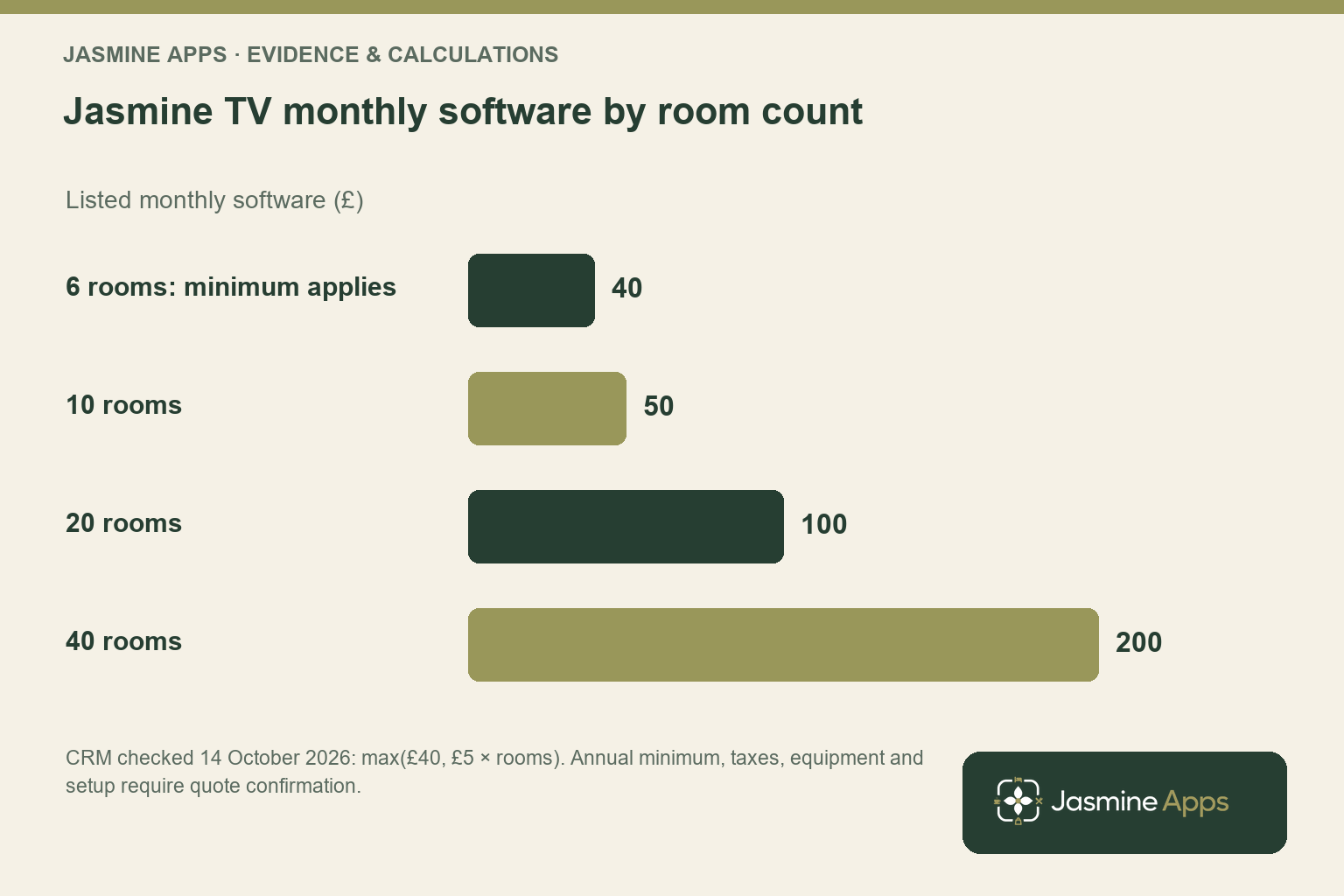
Jasmine TV is listed at £5 per room per month, with a £40 monthly minimum, and £50 per room annually. The monthly cost is the greater of £40 and £5 multiplied by your room count. Six rooms therefore cost £40, ten cost £50, twenty cost £100 and forty cost £200 before other agreed charges.
The minimum changes your effective room price for a small installation. At six rooms, £40 divided by six is about £6.67 per room monthly, while eight rooms reach the £5 rate. Confirm annual minimum treatment and installation scope in your quote rather than assuming the annual wording works exactly like the monthly rule.
For an illustrative sales model, suppose an additional guest purchase contributes £5 after its variable costs. Your 20-room £100 monthly software cost requires twenty such purchases; your 40-room £200 cost requires forty. Your six-room minimum requires eight purchases across the hotel. These are requirements for covering the software, not predicted guest behaviour.
You can express the 20-room model as one additional £5-contribution purchase per room each month. If each room is occupied for an assumed twenty nights, your software cost is 25p per occupied room-night. That occupancy figure is an example input, not an official occupancy statistic or a forecast for your property.
Your complete investment may include suitable screens or devices, configuration, content work, training and other installation requirements. The public terms leave fees and taxes to the order; request actual charges and the tax basis. Add those costs before describing the system as paid for, and count reduced printing or staff enquiries separately to avoid double-counting benefits.
Test hotel TV software ROI on the actual guest journey
The actual TV administration lets you configure welcome-screen branding, background imagery and greeting content. It also provides hotel-information sections with titles and text that guests navigate through the television interface. Use those controls to make a small amount of relevant information easy to read, rather than treating the screen as an unrestricted advertising board.
Ask to see the remote-control journey from the guest’s normal starting point. Your guest should find the restaurant hours, understand the offer and know how to proceed. Check readability from the bed or seating area and avoid burying important details in a long paragraph designed for a laptop screen.
The administration includes a demo viewer and options for welcome video with a fallback image. Your demonstration should confirm what happens on the devices you intend to install, including the supported behaviour when content or connectivity is unavailable. A preview on an administrator’s computer does not prove that every television model behaves the same way.
You can also discuss streaming-app access and local recommendations described on the public site. Confirm compatibility, guest-account handling and the exact scope delivered to your rooms before promoting a particular experience. Keep operational credentials and guest information out of public marketing examples and use an agreed sample room for demonstrations.
Your screen needs a content owner. When restaurant hours change or an event sells out, someone should update the information and check the guest view. That ongoing work belongs in your value model. The strongest installation gives guests useful choices that your team can fulfil, with a supported device arrangement and a clear handover for keeping content accurate.
Find out how much one TV can earn without inventing a result
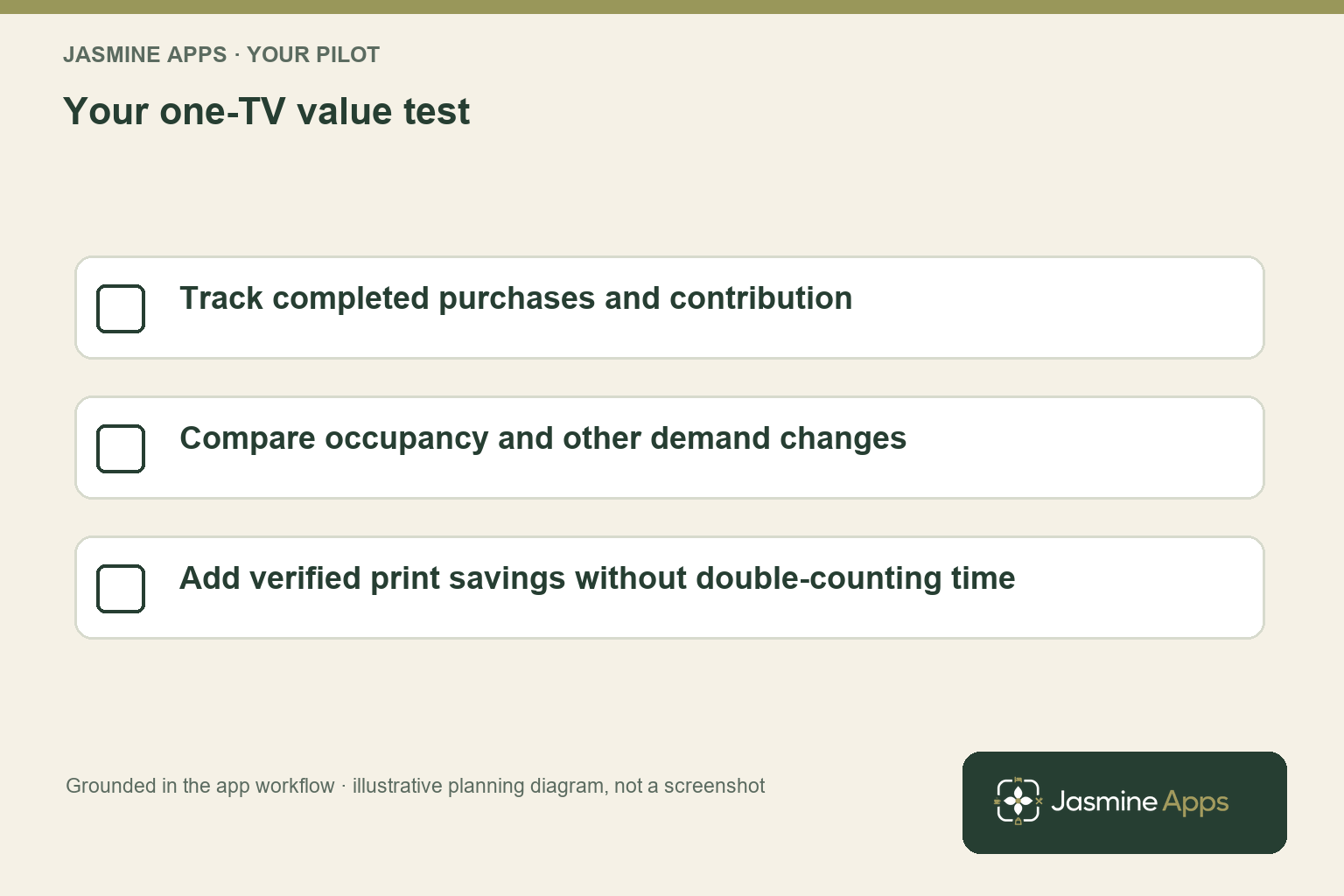
Choose one offer and a defined review period for your pilot. Record relevant guest purchases before changing the TV content, then compare a similar period after the change. Note occupancy, room mix, prices and local events so you can explain other reasons demand might have moved.
Your sales measurement needs a practical attribution method supported by your operation. You might use an agreed booking note or ask how a guest learned about an offer, while acknowledging that self-reported attribution is imperfect. Do not assume the TV platform automatically tracks purchases or that a displayed message proves a guest saw it.
Use completed purchases and their contribution, subtracting cancellations, refunds and fulfilment costs. If the guest would have bought breakfast anyway, that purchase should not become an additional sale merely because the offer appeared on a screen. A conservative model gives the screen credit only for a plausible, documented change in behaviour.
You can evaluate non-sales value as well. Count verified reductions in printed material you no longer buy, or compare repetitive reception enquiries about information now easy to find. Treat staff time released as capacity unless expenditure actually changes, and keep the benefit distinct from the same time already counted elsewhere in your software investment.
At review, decide whether your screen is earning through useful discovery, avoiding cost or simply improving presentation. All can matter, but only measured financial benefits justify a numerical ROI claim. Browse your hotel technology articles for the wider buying context, then request a device-specific demonstration and quotation built around your rooms and service offer.
For the related operating detail, read your guide to hotel TV hardware audit before the demonstration.
Pro Tips
Sell a useful next step. Show an available service with a clear route to book or enquire. An attractive image without an action leaves your guest to work out the rest.
Use contribution per purchase. A £15 sale is not £15 of return. Deduct variable fulfilment costs before calculating how many additional purchases cover your installation.
Keep the content current. Assign ownership of hours, offers and expiry dates. Your screen builds trust when the information matches what your team can deliver.
Common Mistakes
Using the old £8-per-TV figure. The current CRM rate is £5 per room with a £40 monthly minimum. Price your actual room count and confirm the order terms.
Borrowing a tablet case-study uplift. Different devices and ordering routes can produce different outcomes. Industry evidence does not prove your TV will achieve the same increase.
Counting every guest purchase as new. Your guest may have bought the service anyway. Use a conservative attribution method and keep your baseline visible.
Frequently Asked Questions
How much does Jasmine TV cost?
The CRM currently lists Jasmine TV at £5 per room per month with a £40 monthly minimum, or £50 per room annually. Your six-room monthly software would therefore be £40, while twenty rooms would be £100. Confirm annual minimum treatment, setup, compatible equipment, content requirements and applicable taxes in your quotation. The earlier £8-per-TV planning figure should not be used to describe the current listed room-based price.
How much revenue can one hotel TV generate?
You cannot know without measuring your offer and guest behaviour. At the £5 room-level monthly rate, one genuinely additional purchase contributing £5 would cover that software portion once the minimum is met. Equipment, setup and content work still increase the threshold. Track completed sales and explain your attribution limits, because a television displaying an offer does not prove the guest noticed it or that the purchase would not have happened anyway.
Can hotel television software reduce operating costs?
You can evaluate reduced printing and fewer repetitive information enquiries if your installation actually replaces those tasks. Use your real printing invoices and comparable enquiry counts rather than applying another hotel’s savings percentage. Include content maintenance and any alternative information route guests still need. Describe staff time released as capacity unless paid expenditure falls, and keep those benefits separate from additional sales so the same improvement does not enter your calculation twice.
Does Jasmine TV let guests order room service directly?
You should confirm the exact purchase route in your demonstration rather than assume it. The observed administration supports welcome content and navigable hotel-information sections; your agreed installation may use reception, a phone or an existing booking route to complete an offer. Ask to see your required journey on the intended device, including compatibility and any connection needed. A case study about another provider’s tablets does not establish Jasmine TV ordering capability.
Is hotel TV software worth it for a small hotel?
You should calculate the minimum, complete installation cost and a conservative benefit case. With six rooms, the £40 monthly minimum is about £6.67 per room before other costs, so the effective rate is higher than £5. Identify a useful guest-information or sales problem and test one offer. If the screen improves discovery, avoids verified expense or releases useful capacity at an acceptable cost, you have a practical case to consider it.
Hotel TV software ROI: your next decision
Your hotel TV software ROI should be built around useful information, a deliverable offer and the contribution your hotel retains. Request a Jasmine TV demonstration and room-based quotation, bringing your room count, TV models and one service you want guests to discover. You can leave with a complete price and a pilot that shows what your screens can earn.