

Hotel Maintenance Response Times: Find the Waiting Between Jobs
· Jasmine Apps
Your technician can finish a repair in forty-five minutes while the room remains unavailable for most of the day. The lost time may sit in assignment, parts or the final release rather than the technical work. Your hotel maintenance response times should therefore follow the whole operational journey, not just the repair stopwatch.
Jasmine Maintenance shows a room-and-fault workflow you can explore. Confirm current availability and the timestamp or reporting scope before assuming the system automatically measures every stage you want to improve.
Key Takeaways
- Define report, assignment, repair and release as separate stages.
- Record waiting time beside hands-on work.
- Rank delays by their actual effect, not ticket count alone.
- Keep safety verification and room release inside the process.
- Measure actual availability before making a sales-loss claim.
Define hotel maintenance response times from report to usable room
You should first decide what response means in your operation. Acknowledging the fault, assigning a technician and returning the room to an approved usable state are different endpoints. One short response figure can conceal a long delay after the first acknowledgement.
Map the journey using your actual responsibilities. Your room report may reach reception, a supervisor may assess impact, a technician may diagnose the issue and another colleague may verify readiness. Name the owner of each transition so a completed task does not wait because everyone assumes someone else owns the next step.
The live maintenance preview includes venue, room and symptom details, with blocked, restricted and can-sell impact states. Open and resolved fault labels provide another view of progress. You should ask how those states relate to your room-release decision rather than assume resolved always means ready for the next guest.
Keep technical completion and operational release separate when your procedure requires it. Your team may need a check, cleaning step or another approval before changing availability. The aim is to remove avoidable waiting while preserving the verification that protects the service.
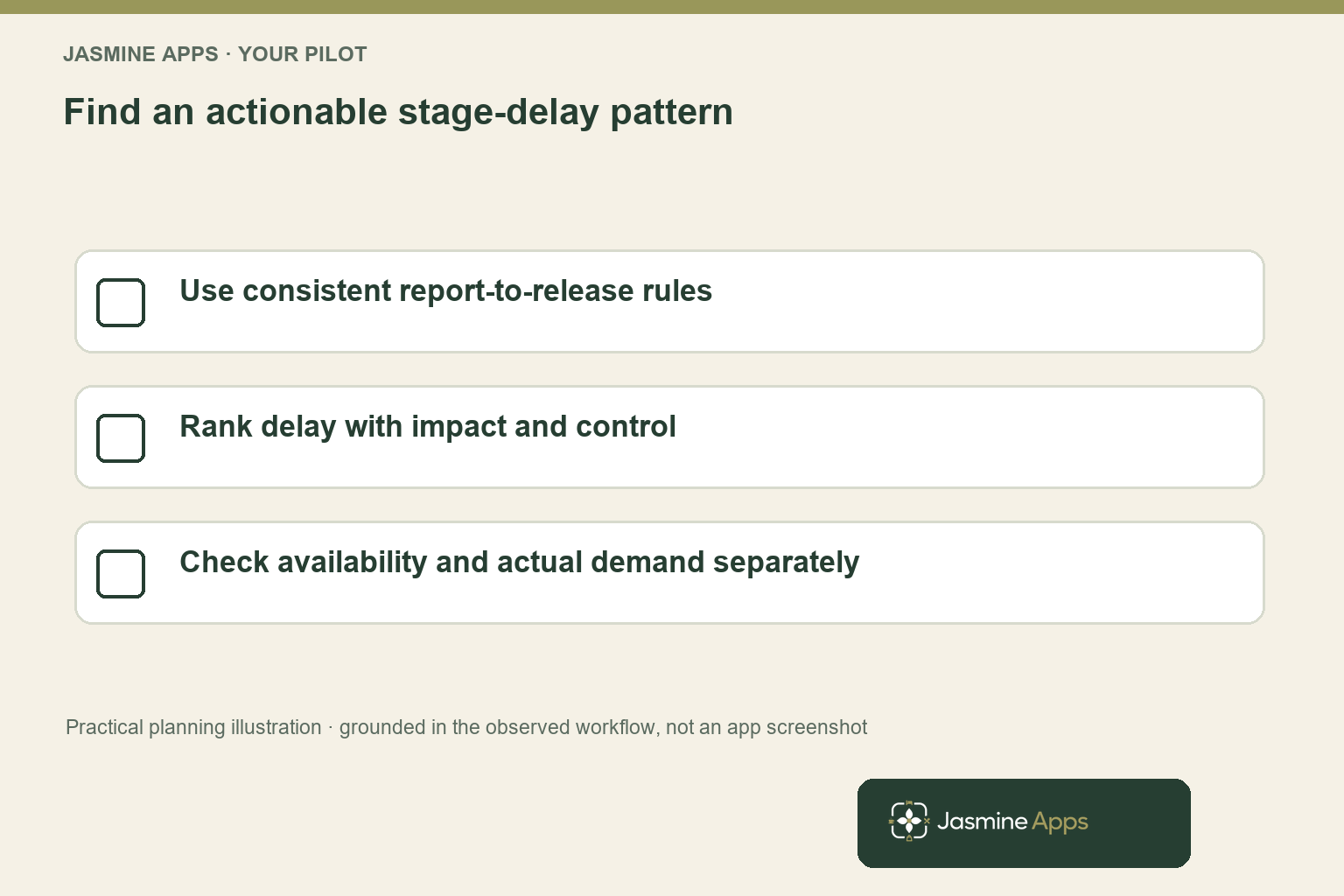
Use consistent definitions for every recorded time. If one supervisor starts the clock when housekeeping notices a fault and another starts it after assignment, your comparison does not measure the same journey. Write the rule before you interpret the chart.
Read the recurring maintenance-faults article when repeated symptoms are the concern. Your response-time review addresses a different question: where an individual job spends time between reporting and a usable room.
Break hotel maintenance response times into work and waiting
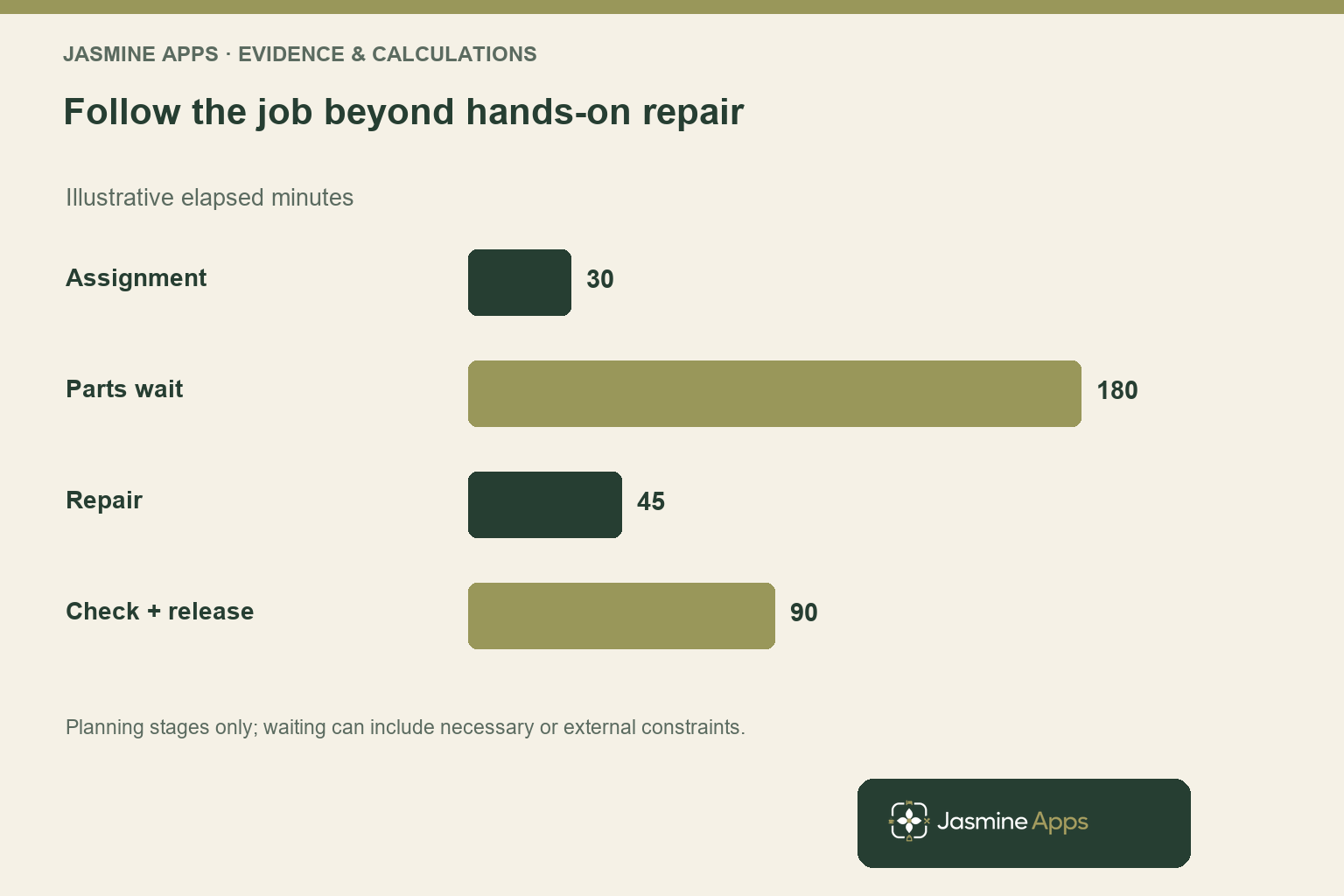
Consider an illustrative job with thirty minutes from report to assignment, one hundred and eighty minutes awaiting parts, forty-five minutes of repair and ninety minutes for verification and release. The total is three hundred and forty-five minutes, although the hands-on repair occupies only forty-five.
These values are planning examples, not a measured hotel or Jasmine result. Your actual process may contain different stages or parallel work. Record what happens at your property before choosing a target or presenting a delay as avoidable.
In the simplified example, three hundred minutes sit outside the repair itself. That does not mean all three hundred can be removed: parts availability and necessary checks can create legitimate elapsed time. Your review should identify the reason for the wait rather than turn every non-repair minute into a criticism of staff.
The ASQ Pareto-chart guidance describes ranking categories by measures such as frequency or cost. You can use that method to rank your recorded delay stages, without assuming that every process follows an automatic eighty-twenty split. Your own values should determine the order.
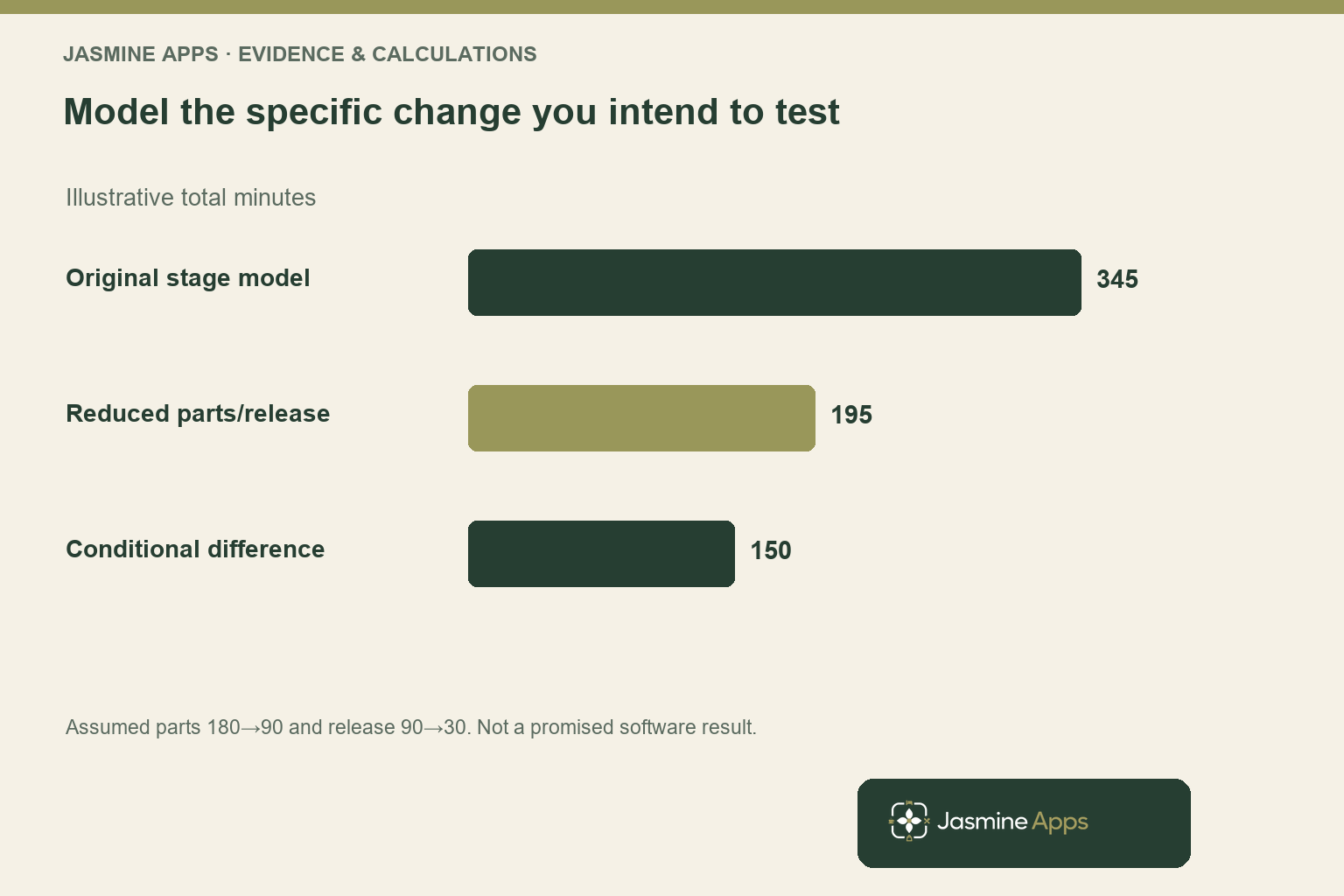
Suppose a second illustrative scenario reduces parts waiting to ninety minutes and release time to thirty, leaving assignment and repair unchanged. The total becomes one hundred and ninety-five minutes, a difference of one hundred and fifty minutes. That is a conditional planning calculation, not a promised improvement from software.
Your next question is what operational change would produce those reductions. A clearer parts-order process or named release owner may help, while another dashboard alone may not. Choose the intervention that addresses the largest evidenced, controllable delay.
Use hotel maintenance response times to clarify the handover
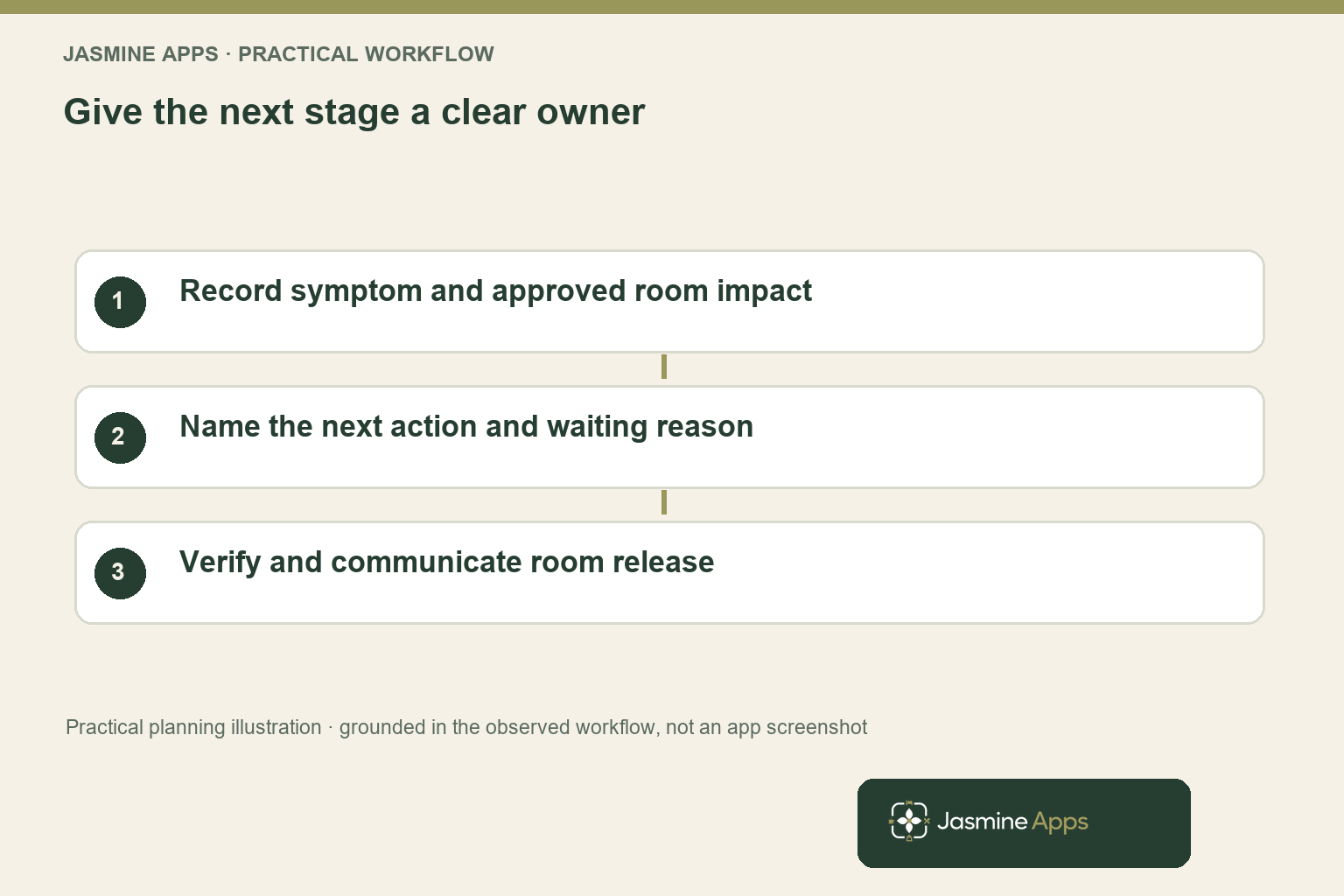
Your useful handover tells the next person what is known, what remains unresolved and what action they own. A vague note that someone is looking at the issue can prevent another colleague from acting. Your record should make the next decision easier without asking staff to write an unnecessary narrative.
Confirm the symptom and room impact when the report is created. Your technical assessment may change the initial view, so your process should support an approved update rather than preserve the first description as unquestionable fact. Keep the current operating decision clear to reception and the relevant team.
Ask the demonstrator which timestamps, assignments and reports are actually supported. The preview’s room and state structure is useful evidence, but it does not establish automatic stage-by-stage elapsed-time reporting or integration with every supplier. You can measure a pilot manually while confirming the delivered scope.
Your parts stage needs a practical owner and an expected next check. A job can remain open for a valid supplier delay, but the team should know when the information will be reviewed. An unowned waiting state often creates repeated questions without accelerating the repair.
Your final release also needs a named action. If the technician finishes but reception receives no approved update, the room may remain restricted unnecessarily. Ask how the intended record reaches the person authorised to change availability, and test the exception when the check fails.
You should avoid using personal blame as the organising principle. Rank stages and reasons, then review constraints with the team. A clear process can reduce uncertainty while preserving the technical and service checks that a responsible room-release decision requires.
Make a stage-delay pilot support a sensible purchase decision
Choose a manageable set of comparable jobs for your first review. Record the agreed stage times, reason for each wait and the person responsible for the next step. Avoid combining very different faults into one average that hides their operating requirements.
Separate urgent impact from elapsed time. A short restricted-room issue and a long low-impact maintenance task do not necessarily deserve the same priority. Your venue should apply its approved assessment and escalation process rather than let a single time metric decide every job.
The CRM lists Jasmine Maintenance at £79 per venue monthly or £790 annually. Because the public page indicates coming-soon status, confirm current availability and the reporting workflow that would be delivered. Your quotation should also specify the tax basis, setup and any integrations relevant to your property.
Your value review should distinguish released availability from realised revenue. A room returned earlier may improve operating flexibility, but it creates an additional sale only when there is suitable demand and your booking operation can use the capacity. Do not multiply every saved minute by a room price and call the result profit.
Use the hotel asset-replacement article when repeated equipment faults create the underlying demand for repairs. Replacement and handover improvement solve different problems, and your evidence should show which action addresses the observed delay.
After the pilot, retain the useful stage definitions and review the largest remaining constraint. Your recommendation should include the actual workflow, measured waiting pattern and proposed change. That gives a decision maker a concrete reason to investigate the product instead of a generic promise to make maintenance faster.
Pro Tips
Name the endpoint. State whether you mean acknowledgement, repair or approved room release. Your metric becomes interpretable only when its endpoint is clear.
Rank controllable delays. A large wait may depend on a supplier, while a smaller handover delay is immediately actionable. Review reason and control together.
Keep release visible. Include the final operational decision in your map. Your technician’s completion does not always end the room’s availability problem.
Common Mistakes
Measuring repair time only. You hide assignment and release delays that guests and reception still experience. Follow the whole journey.
Calling every wait waste. You can pressure staff to skip necessary checks or ignore a real supply constraint. Classify the reason before setting a target.
Turning available minutes into guaranteed sales. You omit demand and commercial conditions. Record availability and realised contribution separately.
Frequently Asked Questions
What should you measure in hotel maintenance response time?
You should define the relevant endpoints and record the stages between the initial report and approved room availability. Assignment, diagnosis, parts, repair and release can create different delays. Use consistent timing rules and classify the reason for waiting.
Your hands-on repair duration remains useful, but it does not describe the entire guest or reception experience. Keep the final operational release visible when your procedure requires a separate check.
Why can a hotel room stay unavailable after a quick repair?
Your room may still need verification, cleaning or an approved availability update after the technical work finishes. A handover can also wait when nobody owns the next action. You should map the actual process and name the release responsibility before assuming the technician is the constraint.
Preserve necessary checks while investigating avoidable delay. Your useful measure follows the room to a confirmed usable state rather than stopping at repair completion.
Can maintenance software automatically measure every delay stage?
You should confirm the timestamp, assignment and reporting scope in the actual deployment. The live Jasmine preview shows room, symptom, impact and fault states, but that does not independently establish every stage-level elapsed-time report or supplier integration. Bring your proposed process map to a demonstration and ask how each event is captured. You can use a controlled manual pilot where a desired measure is not yet available.
How do you choose which maintenance delay to improve first?
You should rank the recorded stages by a relevant measure, then examine impact, reason and how much control your team has over the delay. The largest elapsed category is not automatically the easiest or safest to reduce. A necessary verification step should not be removed simply because it appears on a chart. Choose an evidence-based change, keep your approved priority process and check the whole operational outcome afterwards.
Does faster room release always increase hotel revenue?
You should not assume released availability automatically becomes a sale. Your hotel needs suitable demand and a booking operation able to use the room within the relevant period. An earlier release can still improve flexibility or reduce service disruption, but that is different from measured additional revenue. Record the availability improvement, the actual bookings and the contribution basis separately before presenting a financial return from the maintenance change.
Hotel maintenance response times: your next step
Your hotel maintenance response times should reveal the next action your team can improve. Discuss a Jasmine Maintenance demonstration with one real process map and anonymised stage timings. You can confirm availability and reporting scope, then build a pilot around the waiting that matters to your property.