

Hotel Room Downtime Cost: What Does an Unavailable Room Lose?
· Yiannis Yiasemis
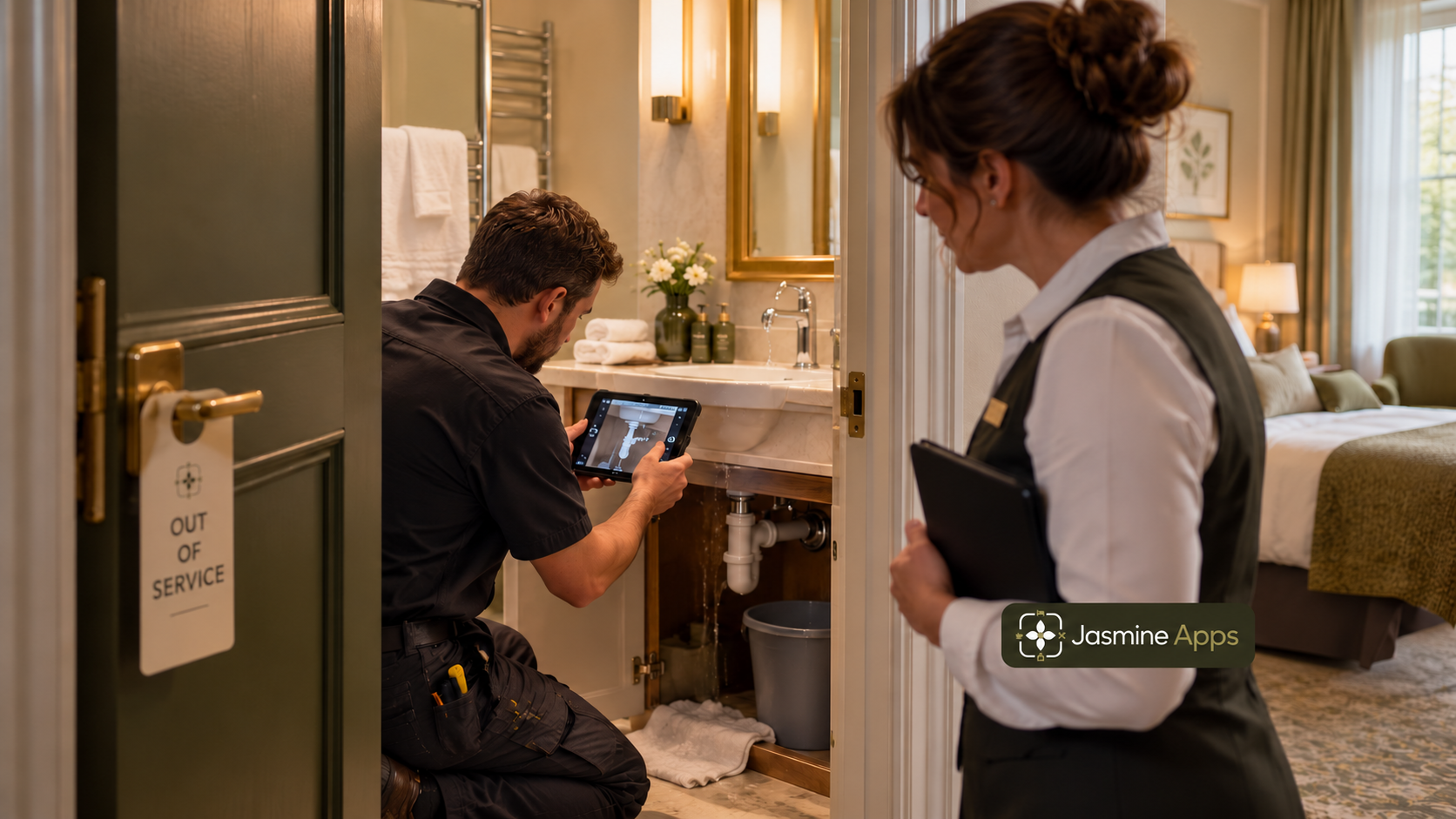
An unavailable room does not always lose its advertised nightly rate. On a quiet night, you may have sold another room anyway; on a sold-out night, the same fault can displace a valuable booking. Your hotel room downtime cost depends on the demand you could have served and the contribution that booking would have produced.
Jasmine Maintenance’s room and fault workflow gives you a way to discuss that operating impact alongside the symptom. You can connect the commercial question with the handover: who knows the room is restricted, what needs to happen next and when the decision to return it to service can be made.
Key Takeaways
- Value displaced demand rather than every blocked room-night.
- Calculate contribution on a consistent tax basis.
- Record restricted, blocked and sellable impact clearly.
- Separate repair completion from the return-to-service decision.
- Prioritise safely with a clear operational owner.
Calculate hotel room downtime cost from displaced demand
Your room-night becomes a commercial loss when the unavailable capacity prevents a sale you could reasonably have completed. Begin with demand for the relevant date and room type. A blocked room in an otherwise empty hotel has a different financial effect from the last available room needed for a confirmed or credible enquiry.
Estimate the net selling value of the displaced booking and subtract avoidable fulfilment costs. Keep your tax basis and cost definition consistent, with suitable accounting treatment where needed. Room cleaning, amenities and transaction charges may differ by stay, while many property costs remain payable whether the room is occupied or unavailable.
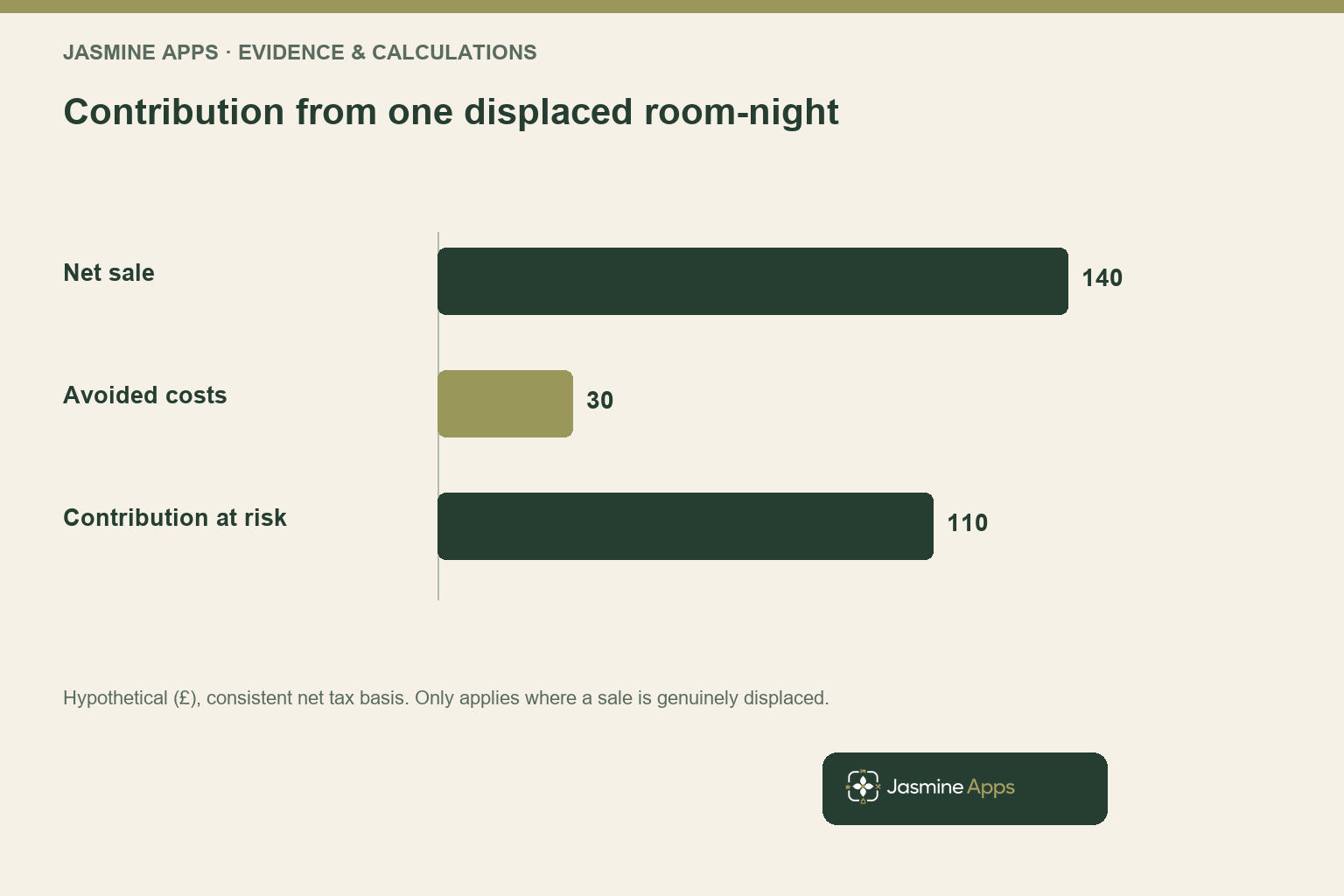
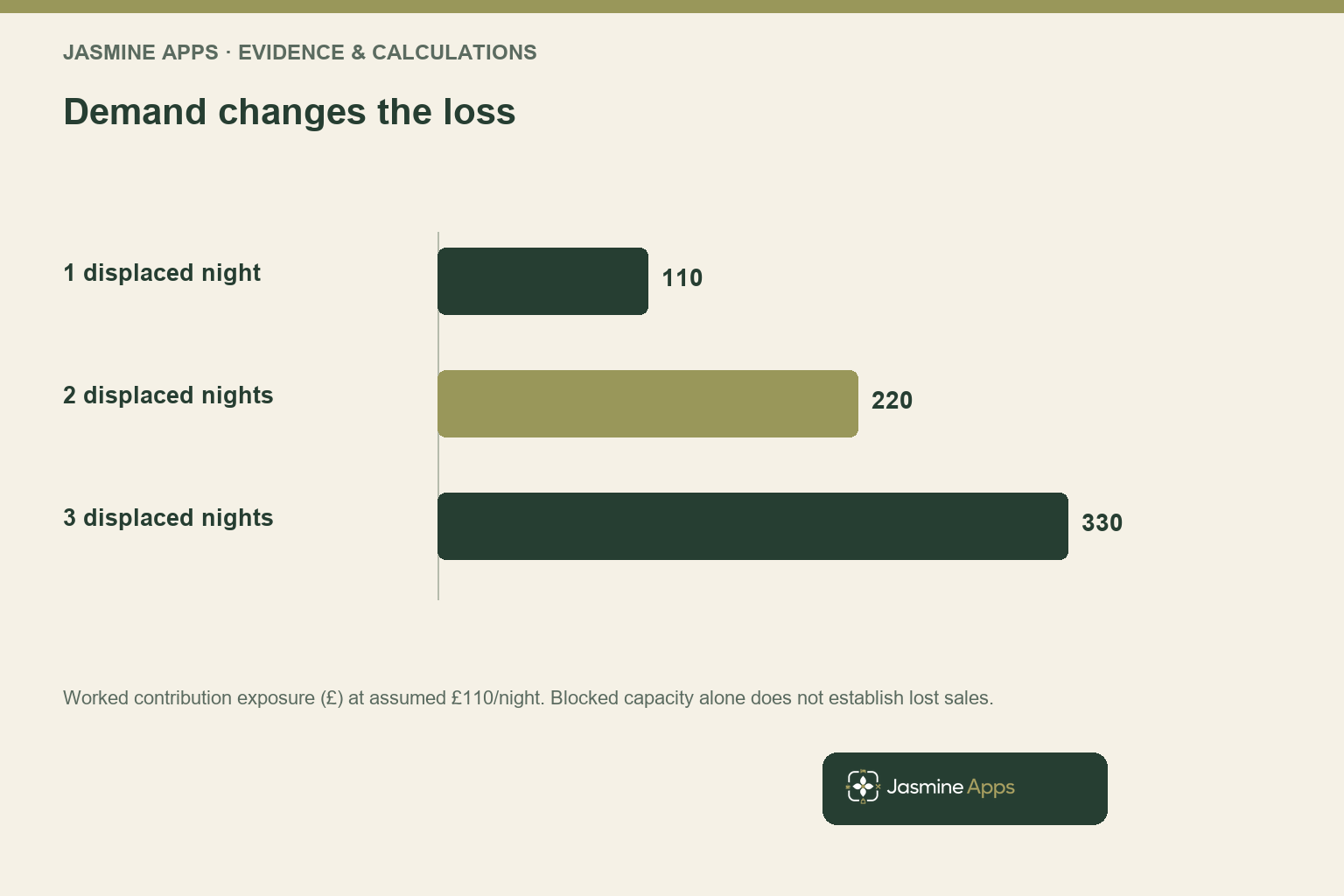
For a hypothetical night, assume a £140 net room sale with £30 avoidable fulfilment costs. The contribution at risk is £110 if that sale is genuinely displaced. Three such nights create £330 of exposure; the room’s advertised gross rate and the number of blocked nights alone would not establish that result.
Record what happened to the demand. You may move the guest to another suitable room, retain the booking with an agreed arrangement or lose the sale entirely. Include the relevant additional costs, but avoid counting the same booking as both lost and successfully recovered. Your commercial review needs the actual outcome of the room restriction.
Your hotel maintenance priorities guide provides the wider triage context. This calculation gives the manager a clearer view of exposure within that process. Safety and guest suitability remain essential decisions; financial value helps explain the operational urgency once the necessary safeguards and competent assessment are in place.
Find where hotel room downtime cost accumulates between steps
A room can remain unavailable while nothing physical is happening to it. Your team may be waiting for a report, access, parts, a contractor or confirmation that housekeeping can complete the final preparation. Separate those stages so the repair duration does not conceal the avoidable waiting between one decision and the next.
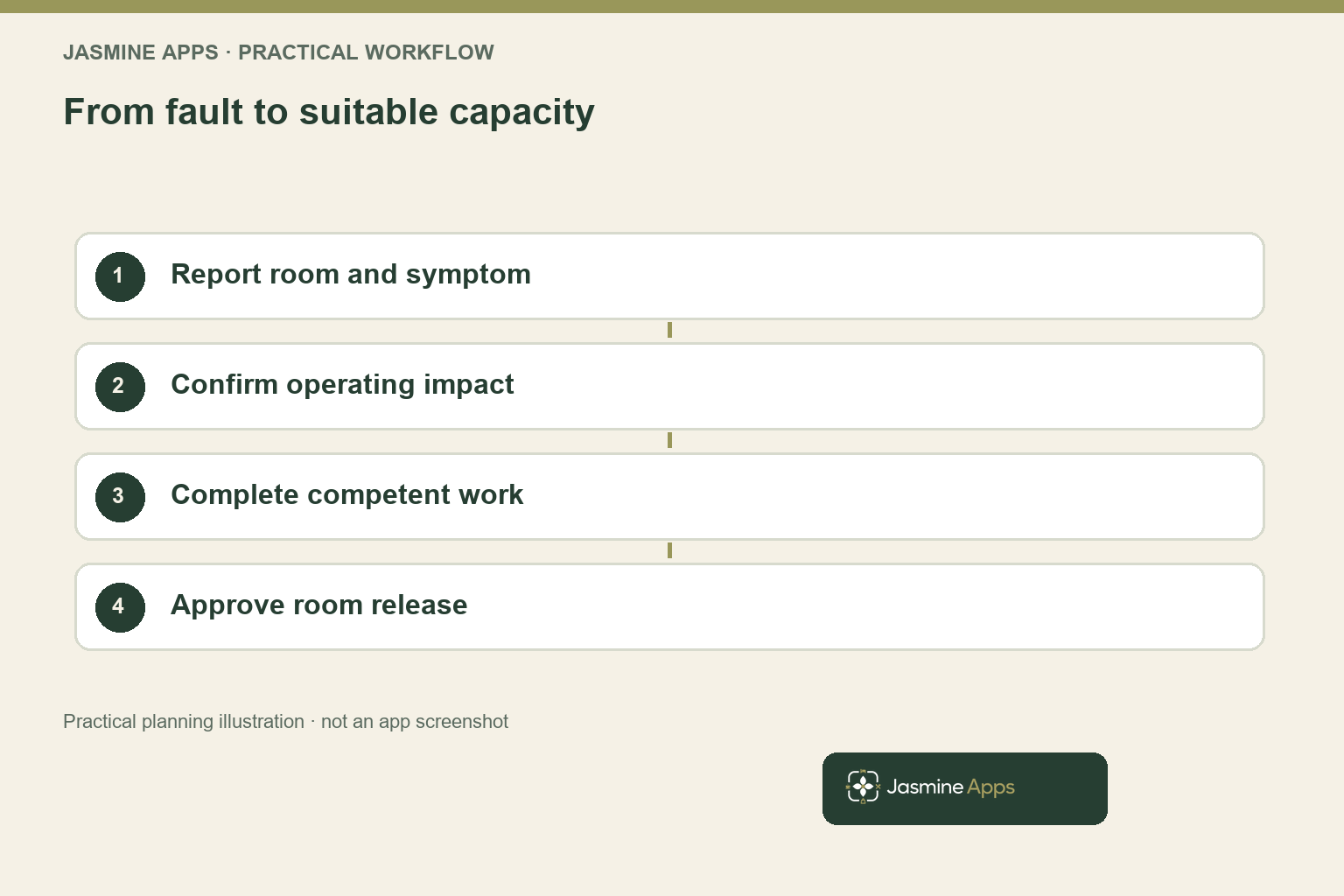
Use a simple timeline: first reported, operating impact confirmed, job assigned, access ready, repair completed and room release approved. Confirm which timestamps your delivered setup records and which your team must maintain through another agreed route. Your analysis should use records you can actually obtain, rather than assuming every stage is automatically timed.
In a worked scenario, one day diagnosing the fault, two days waiting for a part and one day preparing and approving the room creates four unavailable days. If only three nights displaced £110 contribution each, the exposure remains £330. The timeline and financial measure answer different questions, so retain both in your review.
Ask which stage could change without rushing necessary checks. A clearer access handover may help the contractor start sooner, while an earlier parts decision may avoid another delivery delay. You can improve the operating sequence even when the technical repair itself still takes the same amount of skilled work.
Use your maintenance response-time guide to examine that waiting in more detail. The downtime article adds the demand and contribution view, helping you connect a delayed stage with the capacity your venue could have used. Your team can then discuss a specific process change instead of a general request to finish jobs faster.
Use hotel room downtime cost in a clear fault handover
Jasmine Maintenance’s product preview identifies the venue, room, symptom and operating impact, including blocked, restricted or can-sell conditions. Those fields make a useful demonstration starting point. Your reporter should describe what they see, while the appropriate colleague decides the restriction and the next action using your venue’s procedures.
Keep the report practical. State the location, symptom, guest impact and any access information needed by the person investigating. A room reference with a vague note saying broken leaves the next colleague to repeat the discovery work. Use permitted photographs or supporting information where appropriate, without including unnecessary guest belongings or personal details.
HSE’s maintenance guidance emphasises appropriate planning and competent work. Your operating process needs to respect those requirements where they apply. A commercial priority should never become an instruction for an unqualified colleague to attempt a hazardous repair or return unsuitable equipment or accommodation to use.
Jasmine Apps lists Jasmine Maintenance at £79 per venue monthly or £790 annually. The public product page describes it as coming soon, so agree availability, delivered capabilities and deployment timing before planning a live rollout. Your quotation should include setup, support and tax basis alongside the room and fault workflow you need.
Demonstrate a fictional room fault through reporting, impact review, assignment, resolution and release. Confirm how reception learns the approved room status and where another system or staff handover remains. The useful result is a dependable decision route from the first report to suitable sellable capacity, with each colleague clear about their responsibility.
Review downtime without confusing availability with sales
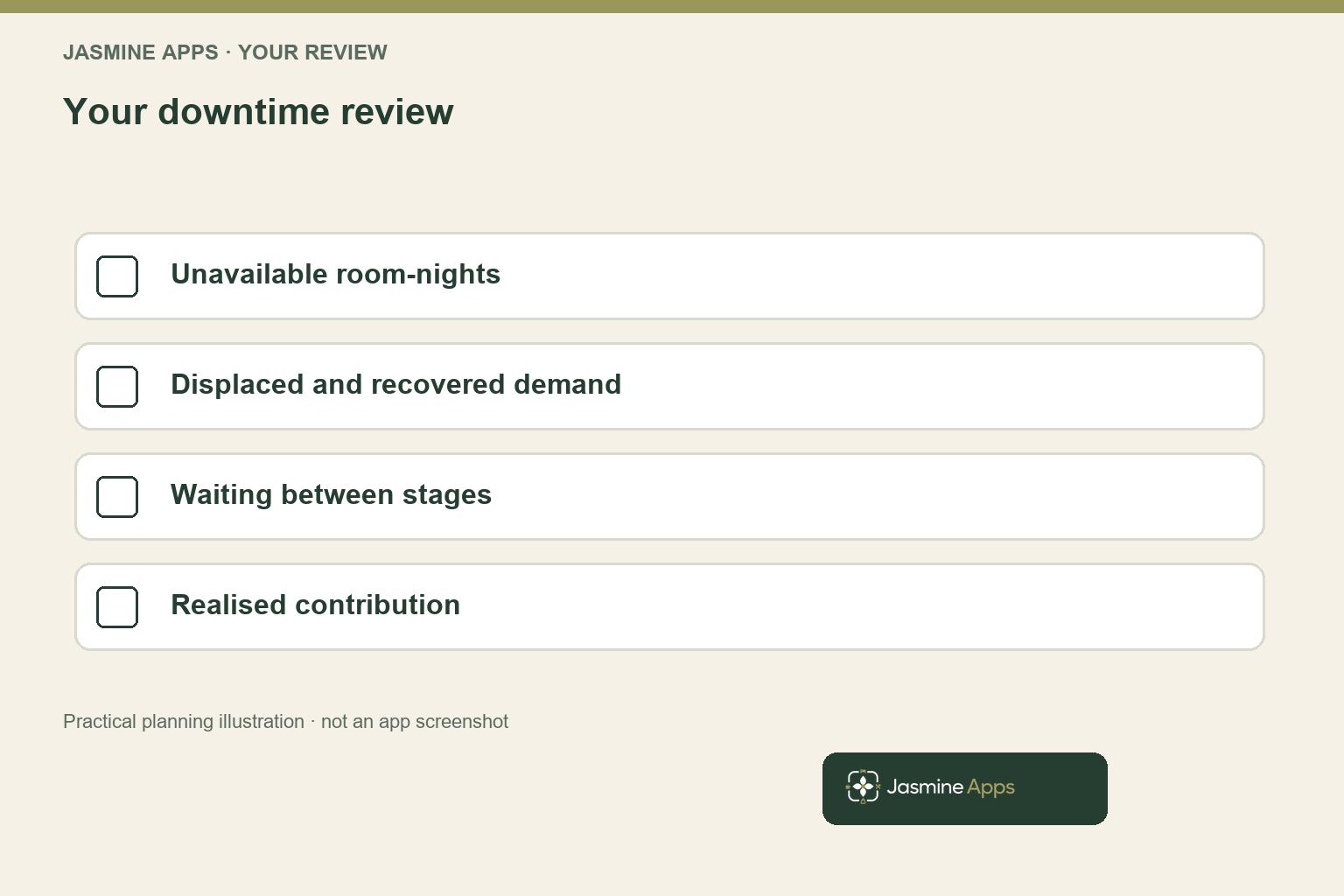
Your review should show unavailable room-nights, displaced bookings, recovered bookings and the resulting contribution impact separately. Returning a room to service creates capacity; it does not guarantee that a guest will buy it. That distinction helps your manager prioritise work without turning every completed repair into a claimed revenue gain.
Choose a small set of repeated fault types or high-impact rooms for the first analysis. Record the relevant demand periods and stage delays using consistent definitions. A recurring issue may deserve a preventive or replacement discussion, while a one-off access problem may be resolved through a clearer handover and appointment process.
Compare process improvements with their complete cost. Include additional contractor charges, parts, software, administration and the time spent maintaining reliable records. If faster release enables an otherwise displaced sale, value the realised contribution after relevant costs. If demand is absent, describe the improved readiness rather than inventing a booking that never occurred.
Review the room-release decision with reception, housekeeping and maintenance together. Each may finish their own task while another step remains outstanding, so a technical completion status alone can be insufficient. Agree the final check, authority and communication route your venue needs before the room is offered to the next guest.
Your strongest maintenance buying case identifies a real loss mechanism and the practical workflow that addresses it. You can then select the capability that makes those records and decisions usable, with availability confirmed for the proposed deployment. The room returns through a controlled process, and your manager understands the commercial value when that capacity is actually needed.
Pro Tips
Compare the same room type. Use the demand and contribution relevant to the restricted room and dates. A hotel-wide average can conceal the impact of losing the last suitable family room or another scarce category.
Record waiting separately. Distinguish technical work from parts, access and release approval. Your most achievable improvement may sit in a handover rather than the repair itself.
Name the release authority. Agree who can confirm suitable room readiness and how reception receives the decision. That keeps completion, cleaning and sellable status connected in the actual operating process.
Common Mistakes
Counting every blocked night as a lost sale. You overstate loss where no demand was displaced. Record credible demand and recovery before calculating contribution impact.
Returning the room on repair completion alone. You may leave cleaning or final suitability checks unfinished. Follow the complete release process before offering the room.
Treating urgency as permission for unsafe work. You create unacceptable operating risk. Use competent assessment and necessary safeguards, with commercial priority informing the plan within those requirements.
Frequently Asked Questions
How do you calculate the cost of a hotel room being out of service?
You identify bookings the room restriction actually displaced, estimate their net sales and subtract avoidable fulfilment costs. Account for bookings recovered through another suitable room and any additional costs, avoiding double-counting. Keep unavailable capacity separate from lost demand. Your calculation then explains the contribution at risk for the relevant dates and room type, rather than assuming every blocked night lost the full advertised room rate to your hotel.
Does reopening a hotel room automatically increase revenue?
You create suitable capacity when the room returns to service, but a sale still depends on demand and booking completion. If the reopened room serves a guest you would otherwise turn away, you can assess the realised contribution after relevant costs. On a quieter date, the benefit may be readiness and guest choice. Keep those outcomes separate so your maintenance review describes what actually changed for the venue’s operating capacity.
Which room fault should you repair first?
Your first decision needs suitable safety and guest-impact assessment by the appropriate person. Within that process, consider blocked or restricted capacity, demand for the room type, parts and access availability, and the expected release route. Commercial exposure can help you plan, but it should not override necessary safeguards or competent work. Use a clear triage rule and responsible owner so the next colleague understands the priority and the permitted action.
What should you record when a hotel room becomes unavailable?
You should capture the venue, room reference, symptom, operating impact, reporter and the next responsible role, using only necessary information. Track useful stage dates through the supported setup or another agreed record, including access, repair and final release. Reception needs the approved availability decision rather than an ambiguous task status. Your records should help colleagues complete the handover and later explain where avoidable waiting or displaced demand occurred during the restriction.
Is Jasmine Maintenance available for a live rollout?
Jasmine Apps currently lists the subscription at £79 per venue monthly or £790 annually, while the public product description identifies it as coming soon. Agree production availability, delivered features, support and deployment timing before relying on it for live service. Demonstrate the room-fault and release route you need with fictional data. Your quotation should define the supported scope and complete costs so your operating plan fits the capability actually being supplied.
Hotel room downtime cost: your next step
Your hotel room downtime cost becomes useful when it connects displaced demand with a clear route back to suitable capacity. Discuss your room-maintenance workflow with Jasmine Apps, bringing one fault timeline and the affected room dates. You can agree availability, demonstrate the handover and build a practical buying case around the capacity your venue needs to protect.