

Hotel Preventive Maintenance Schedule: Plan Around Your Guests
· Yiannis Yiasemis
A completed calendar task does not prove a hotel asset is ready for the next guest. The check may have found a defect, required specialist work or left a room waiting for housekeeping release. Your hotel preventive maintenance schedule needs to connect planned work with the decision that follows, otherwise a reassuring completion rate can hide an unresolved operating problem.
Jasmine Maintenance is positioned around assets, rooms and repeating checks, with room-issue workflows to organise the operational record. Start with the needs of your equipment and property, then confirm the delivered scheduling and reporting scope in a demonstration. You can build a useful plan around competence, access and evidence, rather than buying a calendar and hoping it becomes a maintenance programme.
Key Takeaways
- Base intervals on the asset, risk and competent advice.
- Plan access with reception and housekeeping.
- Separate inspection completion from fault resolution.
- Keep statutory and specialist work appropriately controlled.
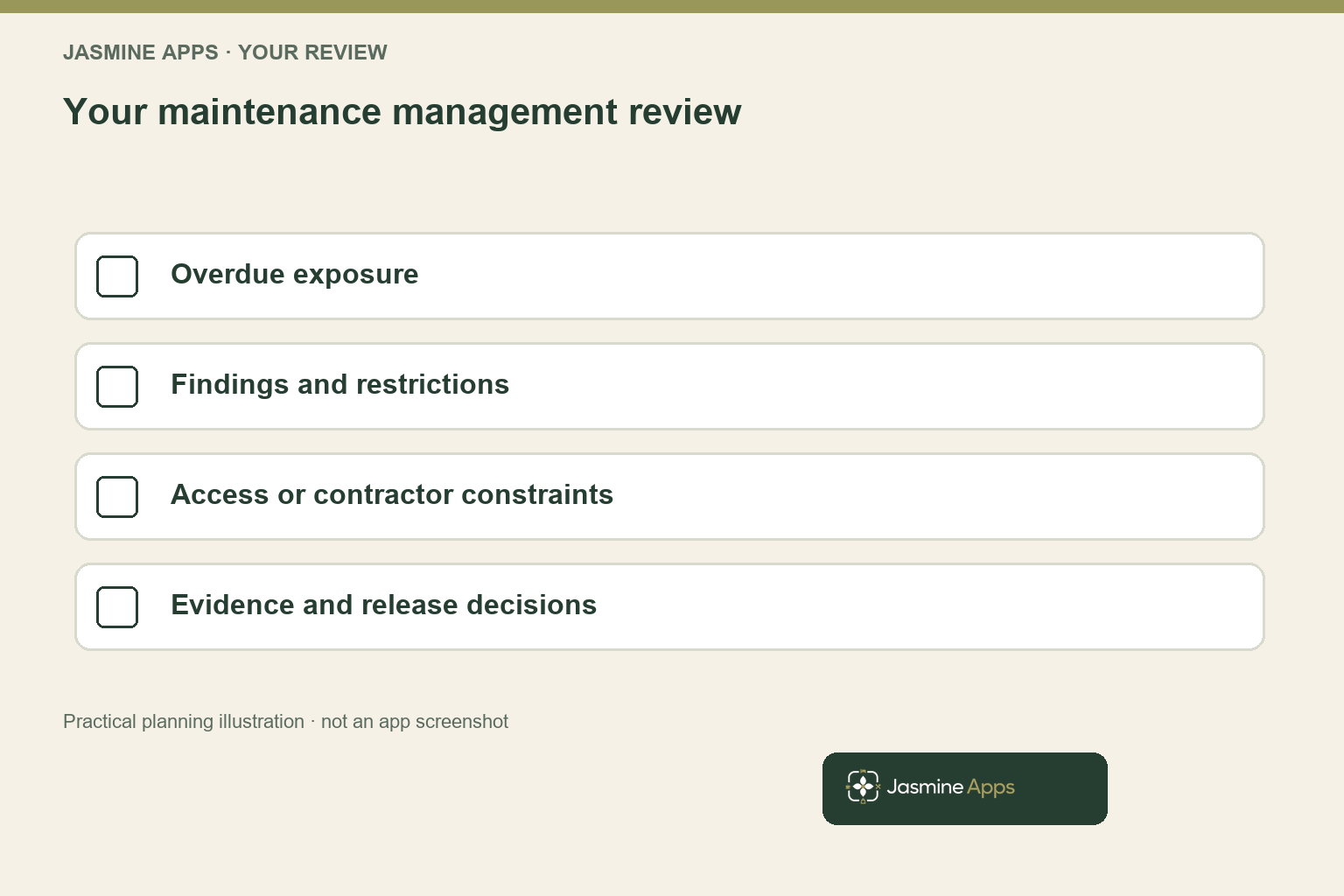
- Measure overdue exposure and repeat faults alongside task counts.
Build your hotel preventive maintenance schedule from an asset register
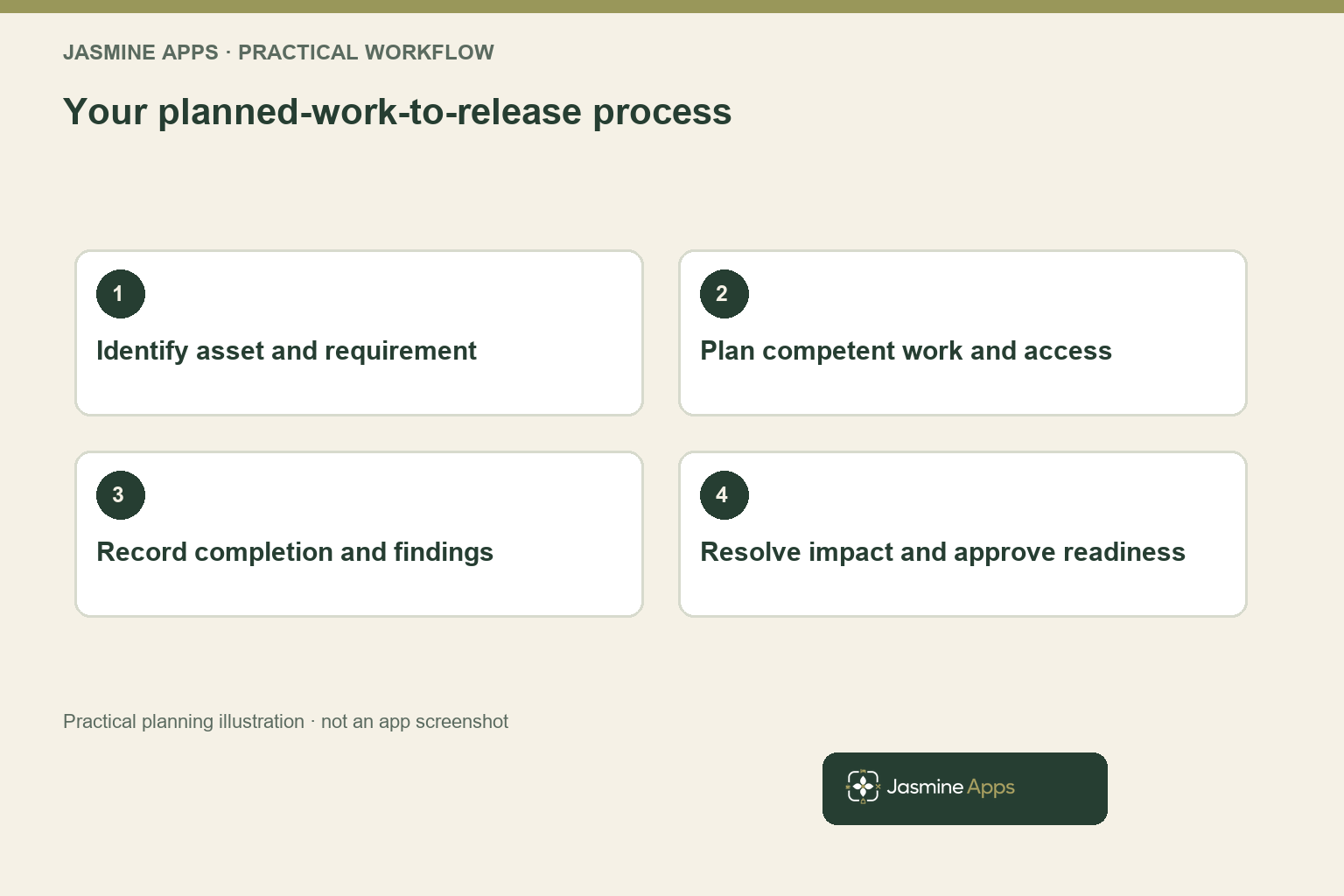
Begin with the assets and areas that matter to safe, dependable operation. Record an appropriate identifier, location, equipment description and the responsible owner. Your register should help someone distinguish two similar units and find the relevant information, rather than simply list broad categories such as boiler or television with no reliable link to the physical item.
Gather manufacturer instructions, service arrangements and the competent advice applicable to each asset. Your schedule should reflect the equipment's requirements, condition, use and risks. A generic blog frequency cannot establish the correct inspection or maintenance interval for your lift, electrical installation, water system or other specialist equipment, so retain the appropriate professional requirements as the controlling source.
The HSE maintenance guidance explains the need for suitable maintenance arrangements and competent work. Use that foundation to distinguish an ordinary reported condition check from a task requiring a qualified contractor or a formal inspection. Your software can organise the record; it does not make an untrained person competent to carry out the work.
Start with a manageable area if your existing information is incomplete. Your maintenance lead can prioritise the assets whose failure would affect safety, guest service or a large amount of capacity, then improve the register systematically. Keep urgent safety action within the relevant procedure rather than waiting for the administrative project to be complete before addressing a known risk.
Use the maintenance-priority guide for the broader triage discussion. Your preventive register adds the planned work and reference information behind that response. You can then explain why an item appears on the schedule, who is competent to deal with it and what evidence the venue needs before considering the planned task complete.
Set hotel preventive maintenance schedule intervals from evidence
Separate the sources that determine timing. Manufacturer instructions, risk assessment, legal or contractual requirements and competent service advice may each affect the plan. Your maintenance lead should understand which requirement controls a particular task, because moving a calendar item for convenience is not the same as approving a change to a safety-critical interval.
Use condition and history to inform review where appropriate. A heavily used asset or a recurring fault may justify asking the competent person whether the plan remains suitable. Do not assume that every failure means the interval should simply be shortened; the cause may involve installation, operating conditions or a repair that did not address the underlying problem.
Create task definitions that describe the intended outcome. A useful entry identifies the asset, required activity, relevant instructions, competent role and evidence expected. Words such as check equipment can mean very different things to different colleagues, making the completion record difficult to interpret and leaving a new contractor unsure what the venue actually requested.
Keep different kinds of work distinct. Routine observation, planned servicing, statutory inspection and corrective repair have different purposes and may require different evidence. Your schedule should show those differences rather than presenting all four as interchangeable ticks. The responsible manager needs to know whether an item is overdue, a defect was found or a certificate is still awaiting review.
Review proposed changes through the appropriate authority and keep the reason with the effective date. Your venue can then show why the current plan differs from an older one without relying on memory. The result is a schedule that follows the asset and its requirements, making the calendar a usable expression of your maintenance decisions rather than the source of those decisions.
Fit your hotel preventive maintenance schedule around guest access
Agree the access route with reception and housekeeping before assigning work to occupied rooms. Your team needs to know when access is permitted, how guests are informed where relevant and who confirms the room's status. A contractor arriving with an accurate job description can still lose useful time if nobody has arranged a feasible working window.
Distinguish a preferred low-demand slot from a task that cannot wait. Your responsible manager must handle urgent risk through the relevant procedure even when the hotel is busy. Preventive planning can reduce avoidable disruption, but guest occupancy does not justify leaving unsafe equipment in service or allowing someone to perform work without the appropriate controls.
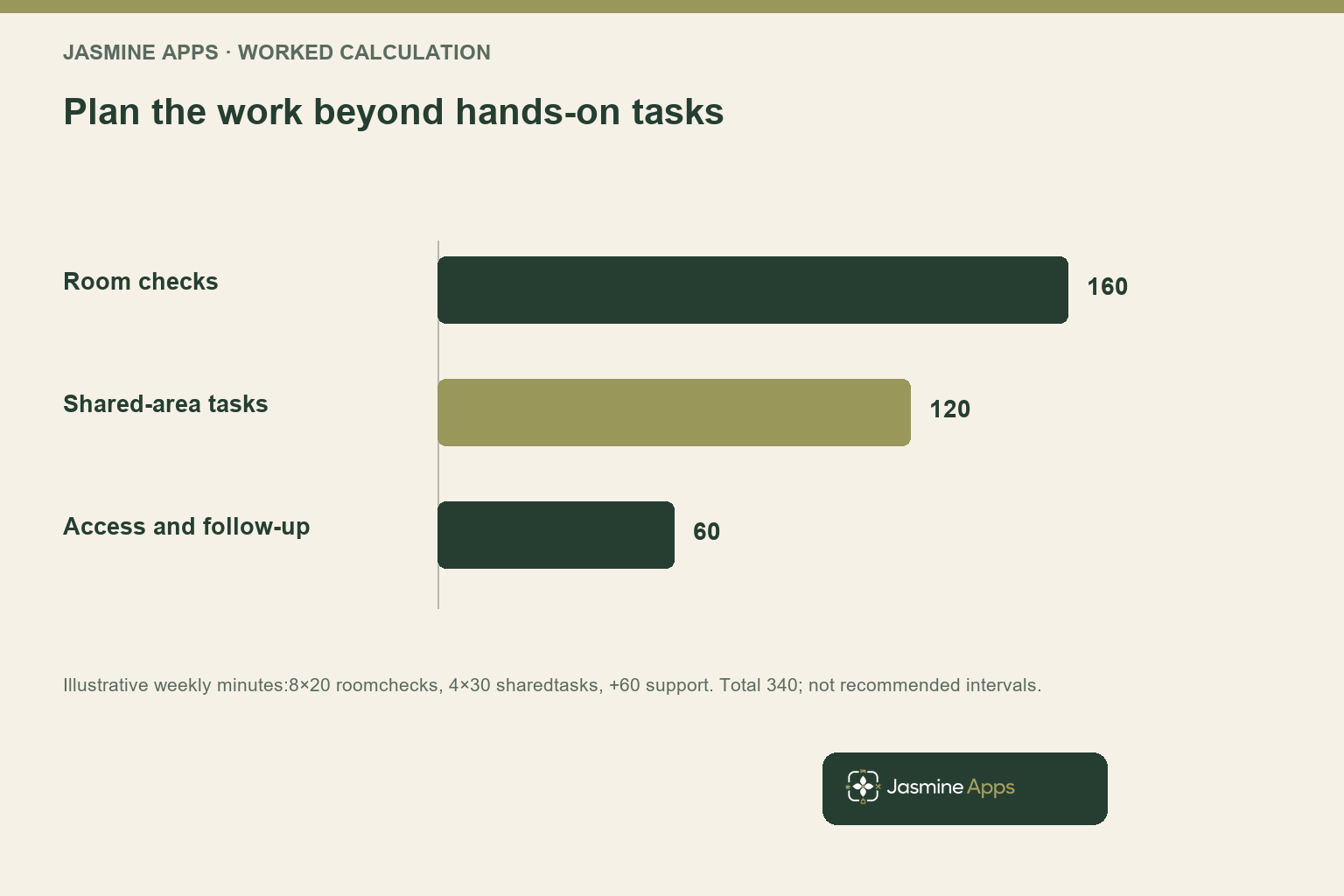
For an illustrative weekly plan, assume eight room checks require twenty minutes each and four shared-area tasks require thirty minutes each. The work totals two hundred and eighty minutes before access, preparation and follow-up. If the team also needs sixty minutes for those supporting activities, plan three hundred and forty minutes rather than treating the task duration as the entire resource requirement.
Group suitable work where it reduces repeated access without compromising the required method or interval. A room already unavailable for an approved repair may provide a practical opportunity for other due work, subject to competence and the plan. Confirm the release sequence afterwards so a completed maintenance task does not cause reception to offer a room before cleaning and the appropriate readiness checks are finished.
Use your room-return-to-service guide for that final handover. Your schedule should identify the people involved from access to release, not simply the technician's appointment. You can then give reception a realistic operating picture and reduce the avoidable waiting that comes from treating maintenance, housekeeping and saleable status as unrelated tasks.
Record completion, findings and the next decision separately
Your task record should say what was done and what was found, using the evidence appropriate to the work. A completed inspection can reveal a defect that remains unresolved. Keep that distinction visible so a high completion percentage does not imply that every asset inspected is suitable for continued use or that every related room is ready for guests.
When a finding needs corrective work, create or follow the approved issue route with a responsible owner and operating status. Jasmine Maintenance's room workflow distinguishes impacts such as blocked, restricted or can sell, alongside open and resolved issues. Demonstrate how your proposed planned task connects with that workflow rather than assuming every repeat check automatically creates and updates all related records.
Keep specialist documentation under the appropriate review. A certificate, service note or contractor report may need a competent person's interpretation and a follow-up action. Uploading or filing a document is not the same as accepting that all requirements have been met, so agree who checks the evidence and what happens if the contractor identifies a limitation or recommends further work.
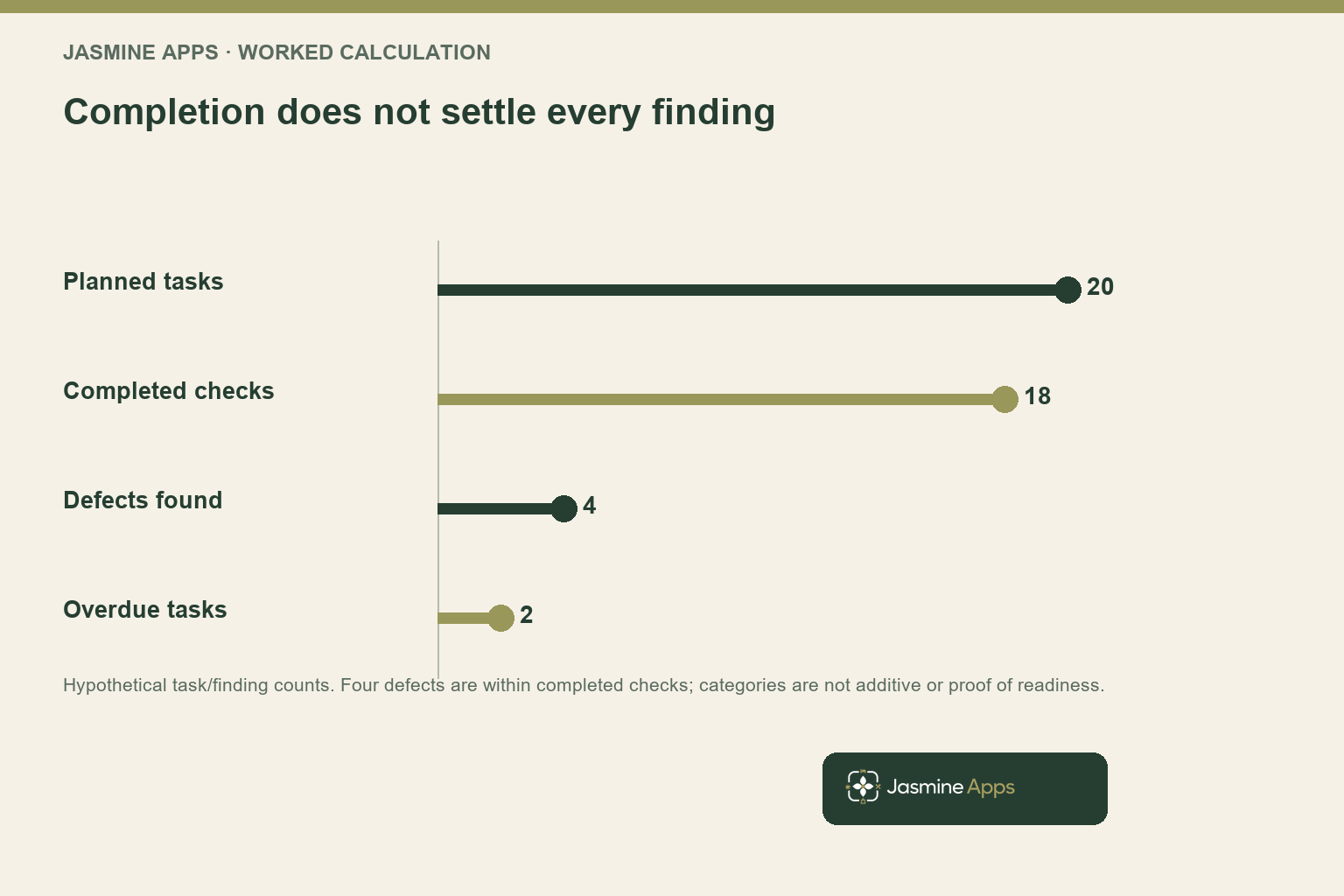
For a hypothetical week, twenty planned tasks might show eighteen completed, or ninety per cent. If four of those completed checks found defects, your operational review also needs the four corrective outcomes and the two overdue tasks. The headline completion rate describes activity; it does not describe the unresolved exposure without those additional facts.
Give the next shift a concise exception view: work overdue, findings awaiting action, assets or rooms restricted and evidence needing review. Confirm the actual reporting route in your configuration, with a secure supporting record where required. Your manager can then act on the remaining decisions instead of rereading every routine completion and assuming the greenest dashboard is the safest operating position.
Choose maintenance software by the work it can demonstrate
Bring a realistic asset and task to your demonstration. Follow the proposed repeat schedule, assignment, access arrangement, completion evidence and defect outcome in an approved environment. Include a missed task and a contractor finding so the demonstration covers the parts your manager needs to control, rather than only the simplest example of marking a check complete.
Jasmine Maintenance is currently listed at £79 per venue monthly or £790 annually. Its public product page has identified availability as coming soon, so confirm current release, delivered repeat-check functions and implementation scope directly before committing. Your quotation should state the required users, records, configuration, support, tax and any additional arrangements for specialist work or data migration.
Check the records needed by the people who use them. Your technician needs the correct asset and instructions; reception needs an understandable room impact; the manager needs outstanding decisions. A shared platform is valuable when those roles can obtain the information appropriate to their work, with permissions and notifications demonstrated rather than inferred from a broad product description.
The government cloud lock-in guidance supports considering portability and switching implications when choosing services. Apply that principle to your maintenance history: confirm how asset identifiers, task records and documents can be exported or handed over in a usable form, alongside the relevant retention and access requirements.
Use your acceptance checklist before widening the rollout. A small working area can establish whether the team can maintain the records and complete the handovers reliably. Your buying decision then rests on a demonstrated maintenance process and a clear scope, making the subscription price one part of a complete operating arrangement rather than a substitute for competent planning.
Review the schedule by exposure and reliability, not ticks alone
Your monthly review should begin with outstanding risk and operating impact. Identify overdue work that matters, repeated findings and assets with unresolved restrictions, then involve the appropriate competent person in deciding the response. A large number of completed low-impact tasks should not obscure a small number of important decisions still waiting for action or evidence.
Look at how the plan performs in practice. Record access failures, postponed work, missing parts and reports awaiting review, with the relevant owner. These are different constraints, so one instruction to clear the backlog may not solve them. Your next improvement could be a better access window, earlier contractor confirmation or a clearer evidence review rather than more reminders to the technician.
Compare relevant periods carefully when examining breakdowns or room availability. A quieter month, new equipment or changed occupancy can affect the result. Your schedule may improve reliability, but the evidence needs to support the strength of your claim. Avoid attaching a universal percentage reduction in faults to the software when your actual test covers only a small area and a short period.
Keep the commercial calculation separate from safety requirements. You can estimate avoided disruption and useful capacity where the assumptions are clear, while an essential task still needs the appropriate action regardless of a simple short-term return calculation. The room downtime cost article provides the wider contribution framework without treating every unavailable room-night as a lost sale.
Update the register and plan when assets, use or competent advice change. Give the team a clear current version and review the exceptions that prevent the process working. Your strongest preventive programme is one that connects requirements, scheduled work, findings and suitable release, helping the hotel plan confidently around guests while retaining the professional judgement the equipment and property require.
Pro Tips
Separate done from suitable. Keep task completion distinct from the finding and the operating decision. Your manager can then see when completed work still leaves a restriction or corrective action.
Budget access time. Include preparation, guest access and release handovers in the work plan. A calendar built only from hands-on minutes can overcommit the available resource.
Ask for a missed-task demonstration. Follow an overdue item through escalation and resolution. That test reveals whether the proposed system supports the exception your manager needs to control.
Common Mistakes
Copying generic maintenance intervals. You may ignore manufacturer, risk or specialist requirements. Let competent advice and applicable obligations control the schedule.
Using completion rate as readiness. You can hide defects found during completed checks. Review findings and unresolved restrictions separately.
Returning a room after repair alone. You can bypass cleaning and release decisions. Include the complete readiness handover before changing the saleable position.
Frequently Asked Questions
How do you create a hotel preventive maintenance schedule?
You start with an identifiable asset register, relevant manufacturer information and the competent advice and requirements applicable to each task. Define the activity, interval, responsible role, evidence and follow-up route, then plan access with reception and housekeeping. Keep routine checks, specialist inspections and corrective work distinct. Your calendar should express those decisions and connect findings with the appropriate operating status, rather than treat every completed task as proof that the room or asset is ready.
How often should hotel equipment receive preventive maintenance?
You should follow the requirements appropriate to the specific equipment, its use, condition and risks, including manufacturer instructions and competent professional advice. A generic frequency from another hotel cannot establish the right interval for your asset. Review changes through the responsible authority and record the reason and effective date. Your software can help organise the plan, but it does not replace specialist competence or determine whether a statutory or safety-critical obligation has been satisfied.
How can you plan maintenance without disturbing hotel guests?
You can coordinate suitable access windows with reception and housekeeping, explain the relevant guest arrangements and group appropriate due work where practical. Include preparation and release checks in the plan, not only hands-on task time. Keep urgent risk within the required procedure even when occupancy is high. Your objective is to reduce avoidable disruption while preserving safe work and the correct maintenance standard, rather than postpone necessary action simply because a room is occupied.
What should you measure in a hotel maintenance schedule?
You should review overdue exposure, findings awaiting action, repeated faults, operating restrictions and evidence needing competent review alongside task completion. Keep the units and definitions clear so a completed inspection that finds a defect is not mistaken for a resolved asset. Track access and contractor constraints separately to identify the next useful process change. Your commercial review can consider relevant disruption and capacity, with safety requirements and unproven revenue assumptions kept appropriately distinct.
Is Jasmine Maintenance ready for every preventive maintenance requirement?
You should confirm current availability and demonstrate the exact repeating-check, asset, evidence and reporting workflow required by your venue. The product has been publicly described as coming soon, so the listed price alone does not establish delivery of every function. Follow a realistic task through scheduling, missed work, findings and room impact, then obtain the implementation scope in writing. Specialist maintenance and formal inspection responsibilities still require the appropriate competent people and procedures.
Hotel preventive maintenance schedule: your next step
Your hotel preventive maintenance schedule should connect the right work with the right access, evidence and next decision. Request a Jasmine Maintenance availability and workflow demonstration with one asset group and a sample room-access plan. You can confirm delivered scope and build a practical schedule that supports reliable service around your guests.