

Hospitality Equipment Repair Lead Time: Can You Afford to Wait?
· Yiannis Yiasemis

The cheaper repair quote can become the more expensive operating decision if the part takes weeks to arrive. Equally, a replacement can disappoint when installation delays keep the equipment unavailable for just as long. Your hospitality equipment repair lead time belongs beside the invoice when you compare the options.
Jasmine Maintenance’s asset, room and fault scope gives you a workflow to discuss with the person planning the response. Your decision should combine the technical assessment, lost capacity, temporary arrangements and return-to-use date. That keeps the commercial comparison grounded in what your venue can actually deliver while the equipment is unavailable.
Key Takeaways
- Compare the ready-for-use date, not only the quoted price.
- Value the contribution genuinely constrained by downtime.
- Include safe temporary arrangements and their costs.
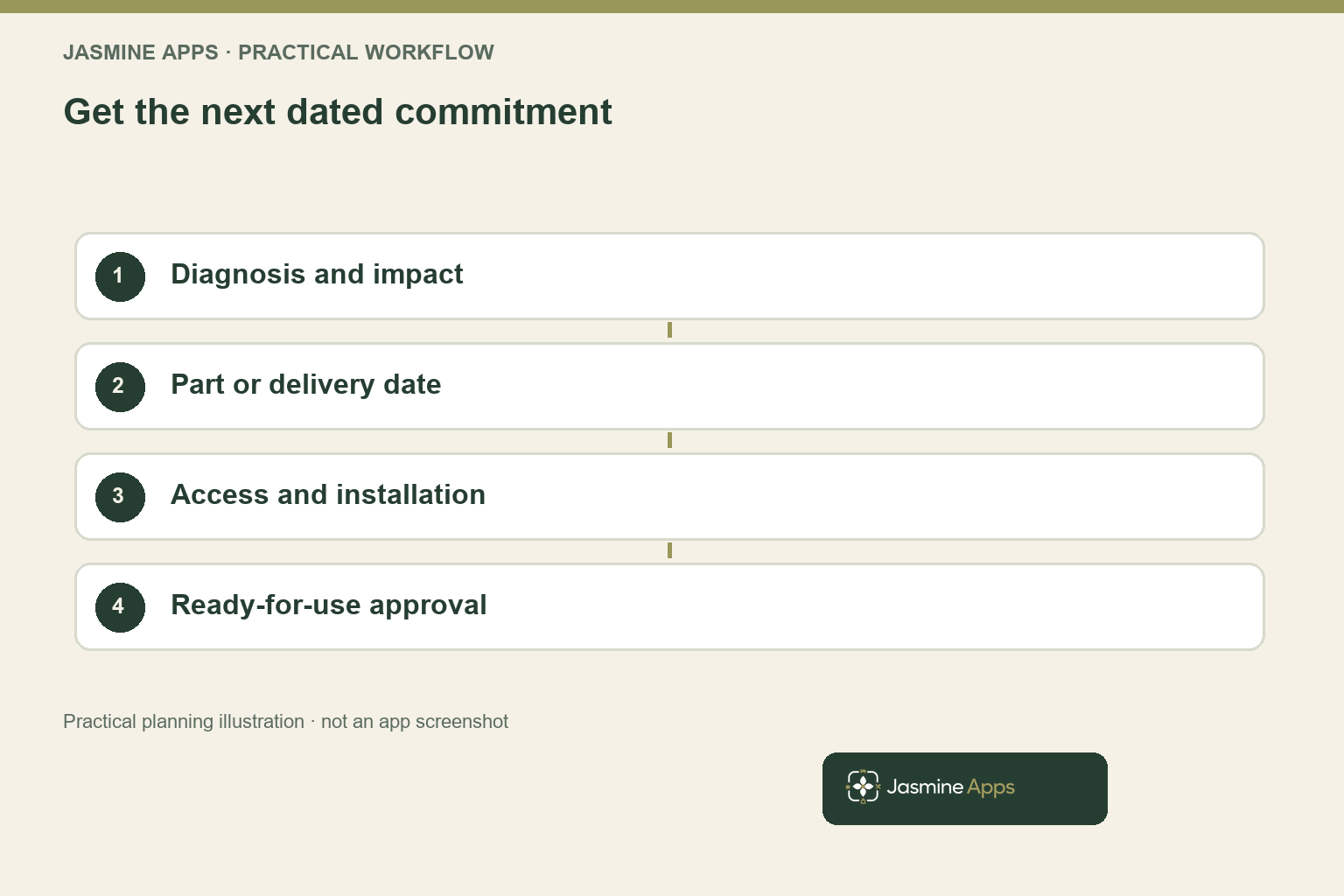
- Confirm parts, delivery, installation and final checks.
- Agree availability before planning a Maintenance rollout.
Put hospitality equipment repair lead time beside the quote
Your repair quote should identify more than the price of parts and labour. Ask when the part is expected, when access can be arranged and when the competent person can complete the work. A low invoice with an uncertain delivery date gives you an incomplete basis for planning the service that depends on the equipment.
Apply the same questions to replacement. Delivery is not necessarily the date the unit becomes usable: installation, commissioning, training and relevant checks may follow. Confirm the practical sequence and the responsible supplier, so your comparison uses the ready-for-use date on both sides rather than a repair completion against a replacement dispatch date.
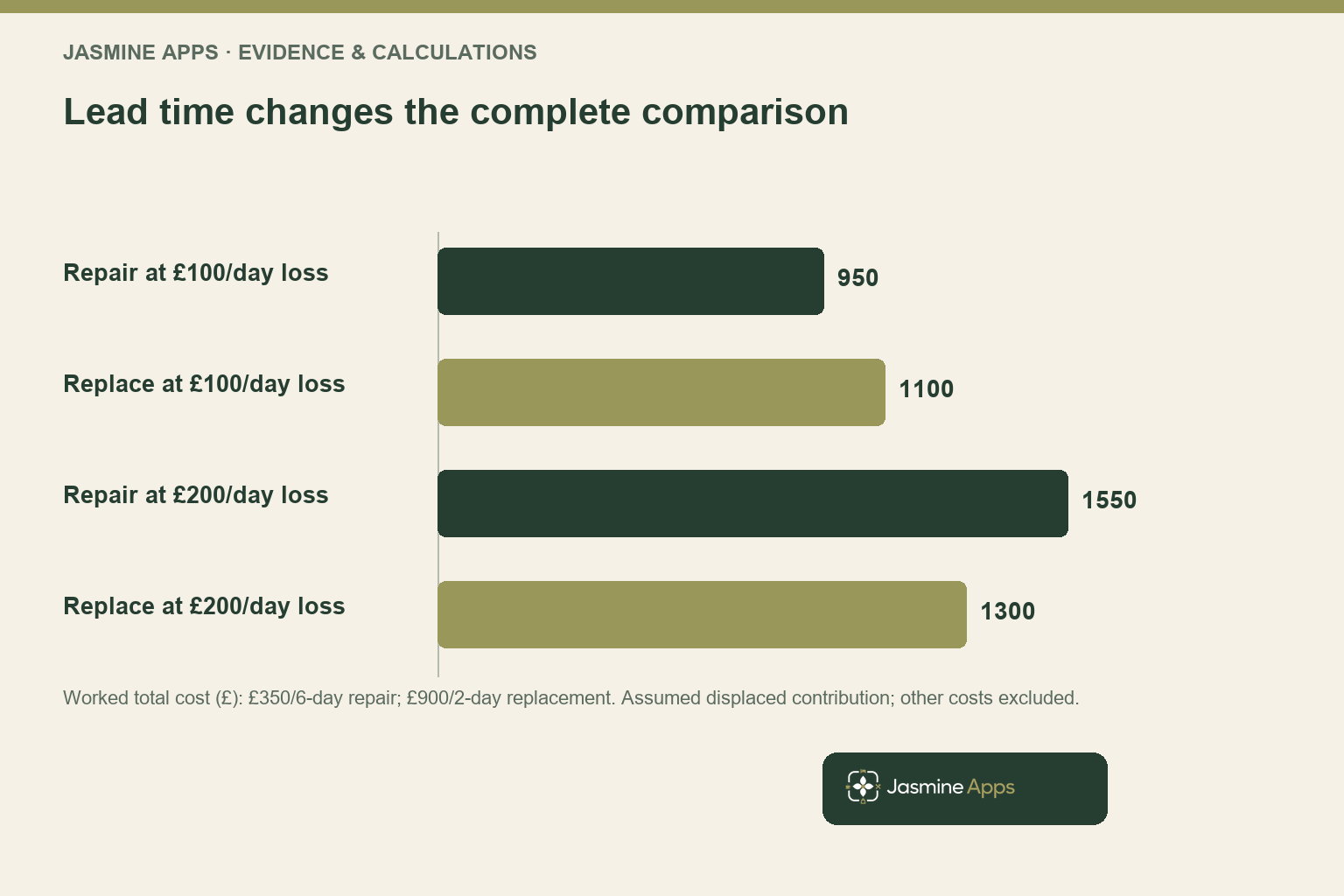
For a hypothetical decision, assume a repair costs £350 and returns the unit in six operating days. A replacement costs £900 and becomes ready in two days. If the unavailable capacity genuinely loses £100 contribution per operating day, the simplified totals are £950 for repair and £1,100 for replacement, before other relevant costs.
That result changes when demand, timing or temporary capacity changes. At £200 displaced contribution per day, the repair total becomes £1,550 and replacement £1,300. Those examples show why the lead-time assumption matters; they do not establish which technical option is appropriate or predict the losses at your venue.
Your hotel asset replacement decisions guide covers the wider lifecycle comparison. This article isolates the waiting window, with dates and capacity your manager can verify. You can then bring a more complete commercial question to the technical discussion and choose the option that fits the operating circumstances.
Value hospitality equipment repair lead time through capacity
Define the service that the unavailable unit limits. A spare appliance may absorb all the work, while a specialist unit could restrict a profitable part of your menu or room operation. Your loss estimate needs that specific constraint and the demand you cannot serve, rather than applying a daily sales average to every fault.
Calculate the contribution from displaced business after avoidable costs. Include additional work or expenses caused by an alternative process, with care not to count the same loss twice. A temporary menu can retain some sales, so its actual contribution belongs in the comparison as recovery rather than pretending the whole service stopped.
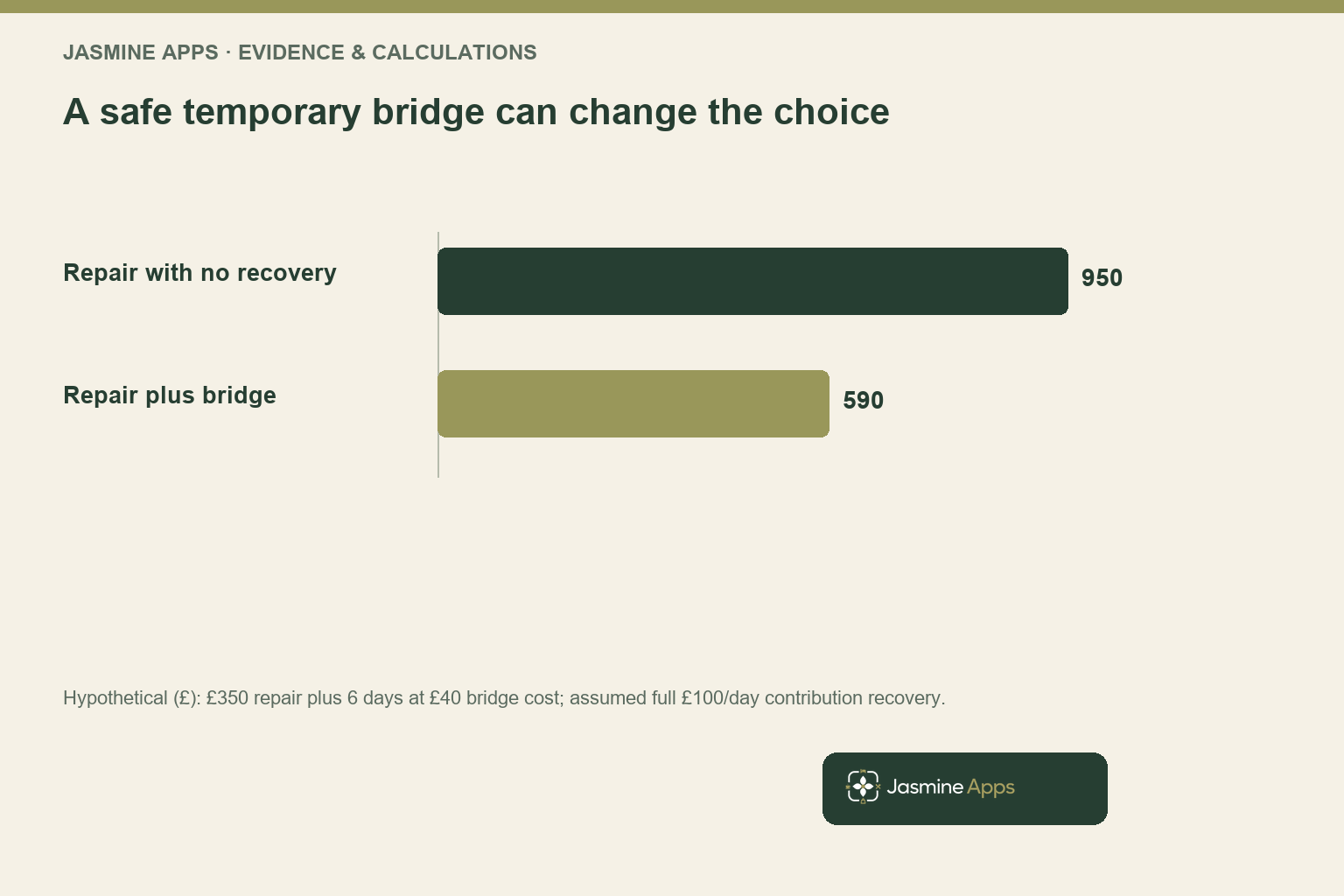
In the previous repair example, a safe temporary arrangement costing £40 per day could preserve the £100 daily contribution for six days. Your simplified repair-plus-temporary cost becomes £590: £350 repair plus £240 temporary expense, assuming full recovery and no other changes. Confirm whether that capacity and cost are realistic before treating the arrangement as a solution.
The US Department of Energy’s lifecycle-cost guidance supports examining costs beyond acquisition. Use that general comparison principle alongside your own supplier and operational evidence. Your UK venue still needs the appropriate technical and regulatory advice for the equipment and work involved.
Review the temporary process with the colleague delivering it. Ask whether it adds handling, waiting or supervision, and whether it remains suitable at peak demand. You can then distinguish a practical bridge from a paper assumption that shifts the problem into another part of the service and creates an unrecorded cost for your team.
Manage hospitality equipment repair lead time through clear handovers
Your fault record should give the planner the location, symptom, operating impact and the next responsible role. Add the supplier’s agreed action and expected dates through the fields or supporting process your delivered setup supports. Confirm those capabilities in the demonstration rather than assuming automated cost calculations or every stage timestamp is already available.
Jasmine Maintenance’s content workflow includes room and fault impact, while the product listing describes assets, rooms and repeating checks. Bring a fictional equipment case to the discussion and ask how the records connect to the decisions you need. Your planner should be able to distinguish waiting for diagnosis, parts, access and release approval using a dependable record.
HSE’s work-equipment maintenance guidance emphasises competent work and appropriate safeguards. Your temporary arrangement and return-to-use decision need suitable assessment. Commercial urgency can inform scheduling, but it should not invite an unqualified colleague to bypass a fault, improvise a hazardous repair or use unsuitable equipment while waiting for a part.
Give one role responsibility for chasing the next dated commitment. A supplier update is useful when it reaches the manager planning service capacity, not just the person who answered the telephone. Agree how a changed arrival date affects the temporary process and whether the replacement option needs to be reviewed again.
Jasmine Apps currently lists Jasmine Maintenance at £79 per venue monthly or £790 annually, while its public description says coming soon. Confirm availability, delivered features, support, setup and taxes before including it in your live plan. Your buying case should identify the fault handovers and records it will make easier for the operating team to maintain.
Compare the options again when the waiting window changes
Your first decision uses the best information available, but the lead time can move. A part may be delayed, access may become available earlier or a supplier may offer a suitable temporary unit. Recalculate the relevant costs when those facts change, keeping the technical assessment and existing commitments visible to the decision maker.
Set a review trigger rather than checking every option endlessly. You might revisit the plan when a promised delivery date slips or when expected service demand increases. Record who can approve the alternative and what information they need, so the next decision can be made without reconstructing the original discussion from scattered messages.
Keep purchase price, downtime impact and temporary costs as separate lines. That makes the reason for a change understandable and prevents a lower invoice from dominating the review. Include disposal, installation, ongoing running costs and other relevant lifecycle factors where they affect the decision, with your existing replacement guide providing the broader framework.
After the unit returns, compare the estimated dates with the actual sequence. Ask where the information was late, whether the temporary process worked and what the next similar fault would need. Your review can improve supplier questions or parts planning even when the original repair choice was commercially and technically sensible.
Your best result is a decision your team can explain and a service plan they can deliver safely while waiting. A clear maintenance record supports that continuity and gives the manager a reusable basis for the next case. You can protect commercial capacity without pretending that the cheapest initial quote or the newest unit always provides the best outcome.
Pro Tips
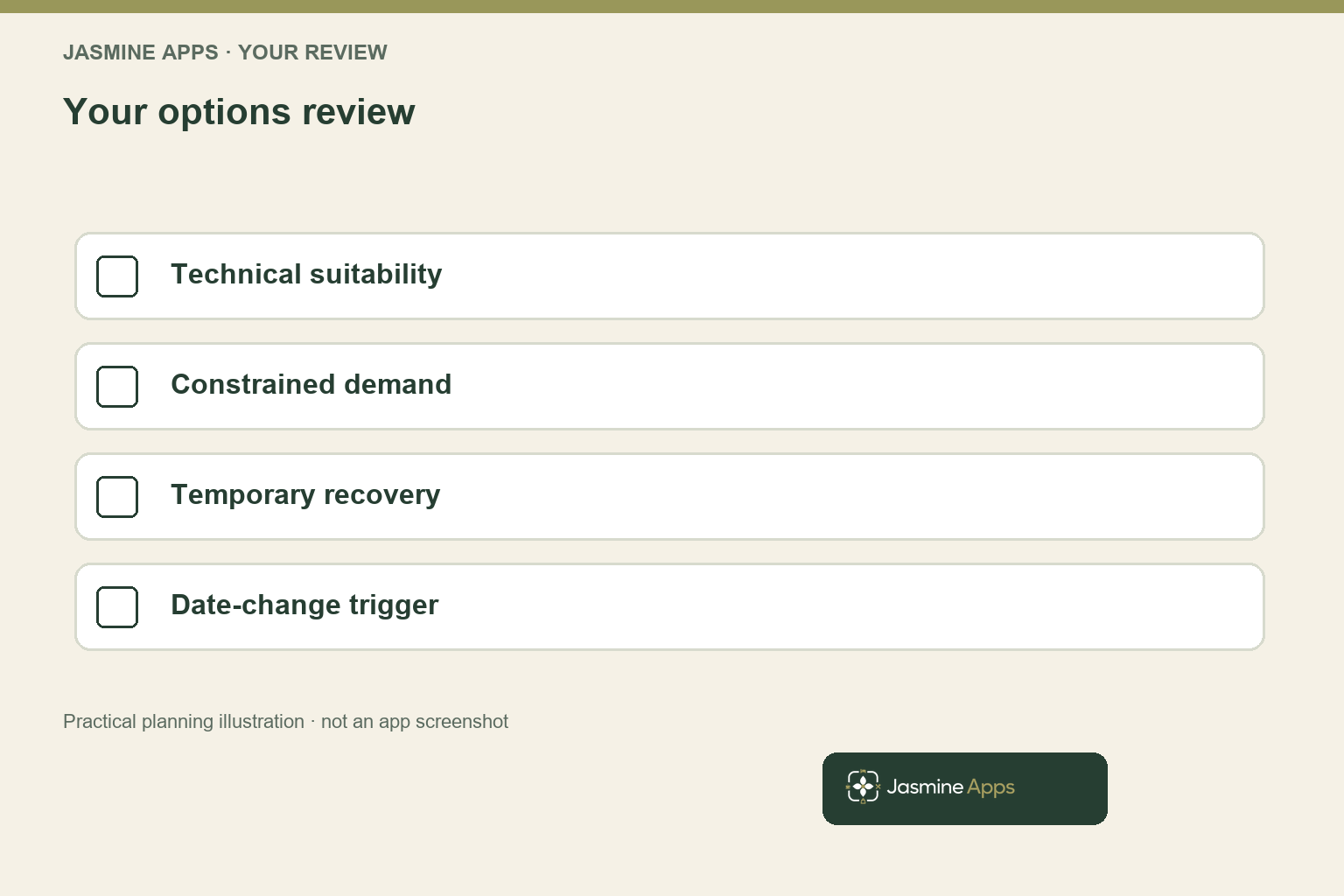
Ask for the usable date. Confirm delivery, installation and relevant release checks together. Your service plan needs to know when the unit can actually do its job, rather than when it leaves a warehouse.
Model a temporary bridge. Compare safe alternative capacity with the contribution it can preserve and the additional work it creates. Keep partial recovery visible instead of assuming the workaround performs like the original equipment.
Set one review trigger. Agree when a date change or demand change requires a new decision. Your manager can then respond promptly without reopening the entire comparison for every routine update.
Common Mistakes
Comparing only repair and purchase invoices. You overlook waiting and installation that may determine the operating outcome. Include the ready-for-use dates and actual constrained demand.
Using all venue revenue as downtime loss. You overstate the effect when other capacity continues serving guests. Identify the specific business the fault displaces and subtract useful recovery.
Treating temporary equipment as automatically suitable. You can create a safety or service problem. Obtain the appropriate assessment and verify the process before depending on the workaround.
Frequently Asked Questions
Should you repair or replace hospitality equipment?
Your decision needs the technical assessment, expected remaining usefulness, complete costs and the date each option becomes ready for service. Include downtime and any suitable temporary arrangement alongside repair or purchase invoices. Use the demand genuinely constrained by the fault when estimating contribution impact. Your manager can then compare practical options with the competent person, rather than assuming the cheapest quote or fastest advertised delivery always produces the best operating outcome.
How do you value equipment repair downtime?
You identify the service capacity the unavailable unit actually limits, estimate displaced contribution after avoidable costs and account for recovered business through another process. Add relevant temporary expenses without counting the same effect twice. Use the operating days and demand window affected by the lead time. Your calculation should explain the specific constraint, while suitable technical and safety assessment determines which temporary or permanent options are appropriate for your venue.
What should you ask a commercial equipment repair supplier?
You should ask about diagnosis, parts availability, expected delivery, access needs, completion timing and the checks required before use. Confirm who updates you if a date changes and whether a suitable temporary arrangement is available. Your comparison needs a ready-for-use date, not just the repair invoice. Record the commitments in the agreed workflow so the colleague planning service understands the current capacity and the next action needed to restore it.
Can a temporary appliance make waiting for repair cheaper?
You may preserve useful contribution through a suitable temporary unit or adjusted service, but you need to include rental, handling, supervision and any capacity limits. In the worked example, a £40 daily bridge changes the repair economics only if it genuinely preserves the assumed demand. Obtain the appropriate suitability and safety assessment, then compare actual recovery with the cost. Your workaround should fit the service your team can reliably deliver while waiting.
How can Jasmine Maintenance support the repair decision?
You can discuss the asset, room and fault records needed to keep symptoms, operating impact and next actions understandable. Demonstrate how expected dates and supplier updates will be maintained in your proposed scope. The current public product description says coming soon, so confirm availability and delivered features before rollout. Your value comes from a dependable handover and review process; automatic lifecycle calculations or every stage timestamp should be demonstrated separately if you require them.
Hospitality equipment repair lead time: your next step
Your hospitality equipment repair lead time should be part of the commercial decision from the first quote. Discuss your maintenance workflow with Jasmine Apps, bringing one fault, supplier dates and the capacity it restricts. You can agree the required records and availability, then compare the options around the service your venue needs to keep delivering.