

Hospitality Rota Changes: Stop the Last-minute Chasing Loop
· Jasmine Apps

Your rota can be correct when you publish it and unreliable an hour later. A change agreed in a private message can leave your floor manager, colleague and published schedule working from different information. Your hospitality rota changes need a controlled handover, not simply a better-looking original timetable.
Clock Jasmine provides the scheduling context, with shift-swap and approval areas visible in the live admin. Your decision should focus on how your team agrees, records and communicates a change in the actual workflow.
Key Takeaways
- Give each change a named owner and an approval route.
- Check coverage and working-pattern risks before updating the rota.
- Separate proposed changes from the approved published schedule.
- Measure repeated contacts and unresolved changes at handover.
- Demonstrate the actual swap and approval sequence before buying.
Map hospitality rota changes before adding another communication channel
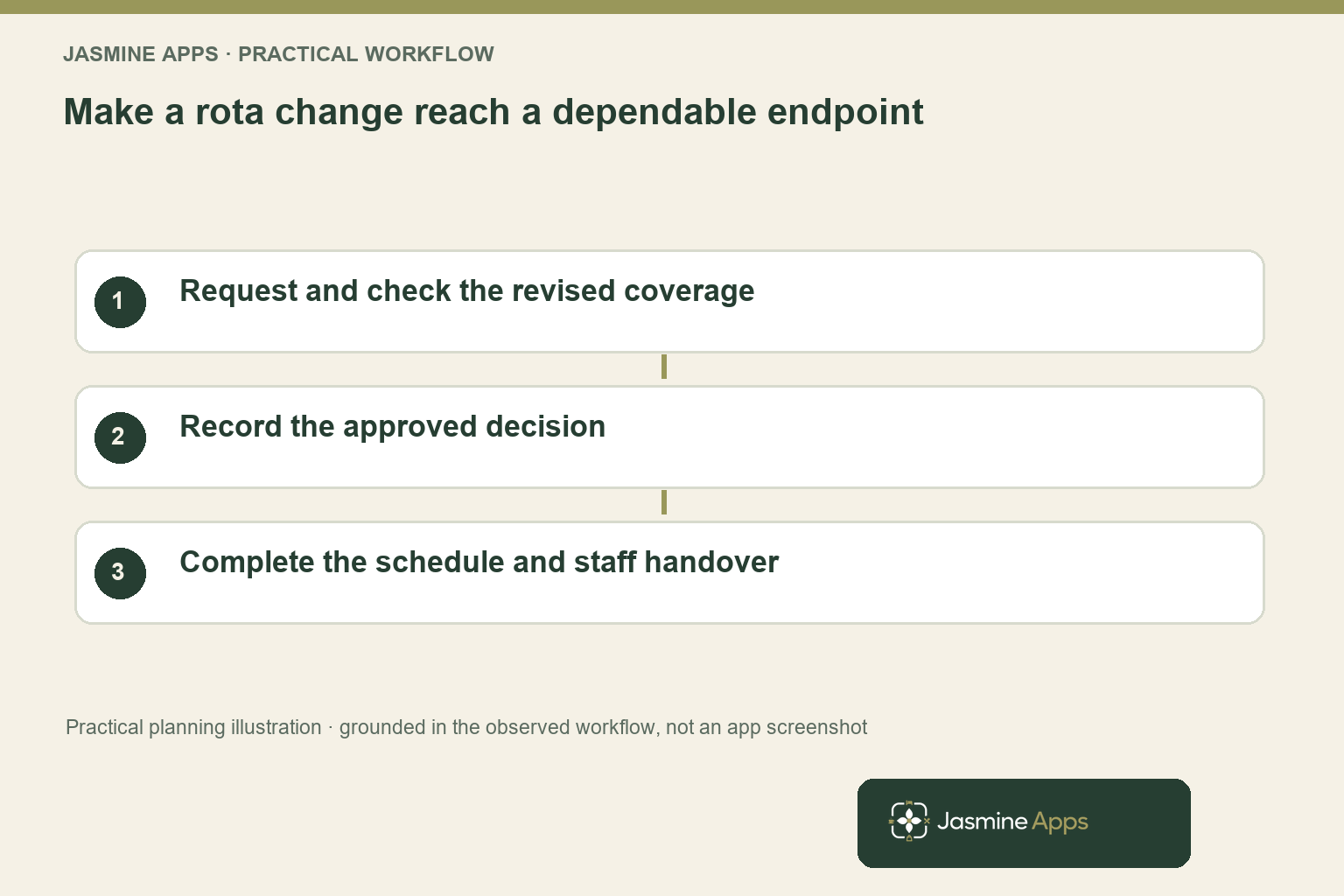
You should follow one recent change from the first request to the next shift handover. Ask who proposed it, who assessed coverage, who approved it and how the final decision reached each affected colleague. Your problem often becomes visible when two people assume someone else completed the last step.
A private agreement between colleagues does not necessarily establish an approved change. Your venue may need to consider role coverage, competence, working hours and other operating constraints. Put those checks into a clear process before choosing how the software should support them.
The live Clock admin includes Shift Swaps and Approvals areas, while the rota shows published scheduling blocks. You should ask the demonstrator to follow your intended request through review and publication. The visible menu names do not prove every notification, permission or exception rule you might want is included.
Distinguish the request from the decision. Your team should know whether an item is awaiting approval or has become the working schedule. If staff act on a proposed change as though it were final, the software may simply organise the same confusion more neatly.
Create one owner for the final handover. That person should confirm the approved schedule reflects the decision and that affected colleagues know where to find it. Your venue can still use a conversation to resolve the request, but the conversation needs a dependable endpoint.
Read the hospitality software-adoption guide for the wider rollout. Your change-control pilot should examine the events after publication, rather than repeat the basic exercise of building a rota from scratch.
Cost hospitality rota changes through repeated coordination work
Your coordination cost is easy to underestimate because each contact seems small. A manager answers a question, forwards a message and checks with another colleague, then repeats the sequence when someone has the old version. Track the whole event rather than timing only the final edit.
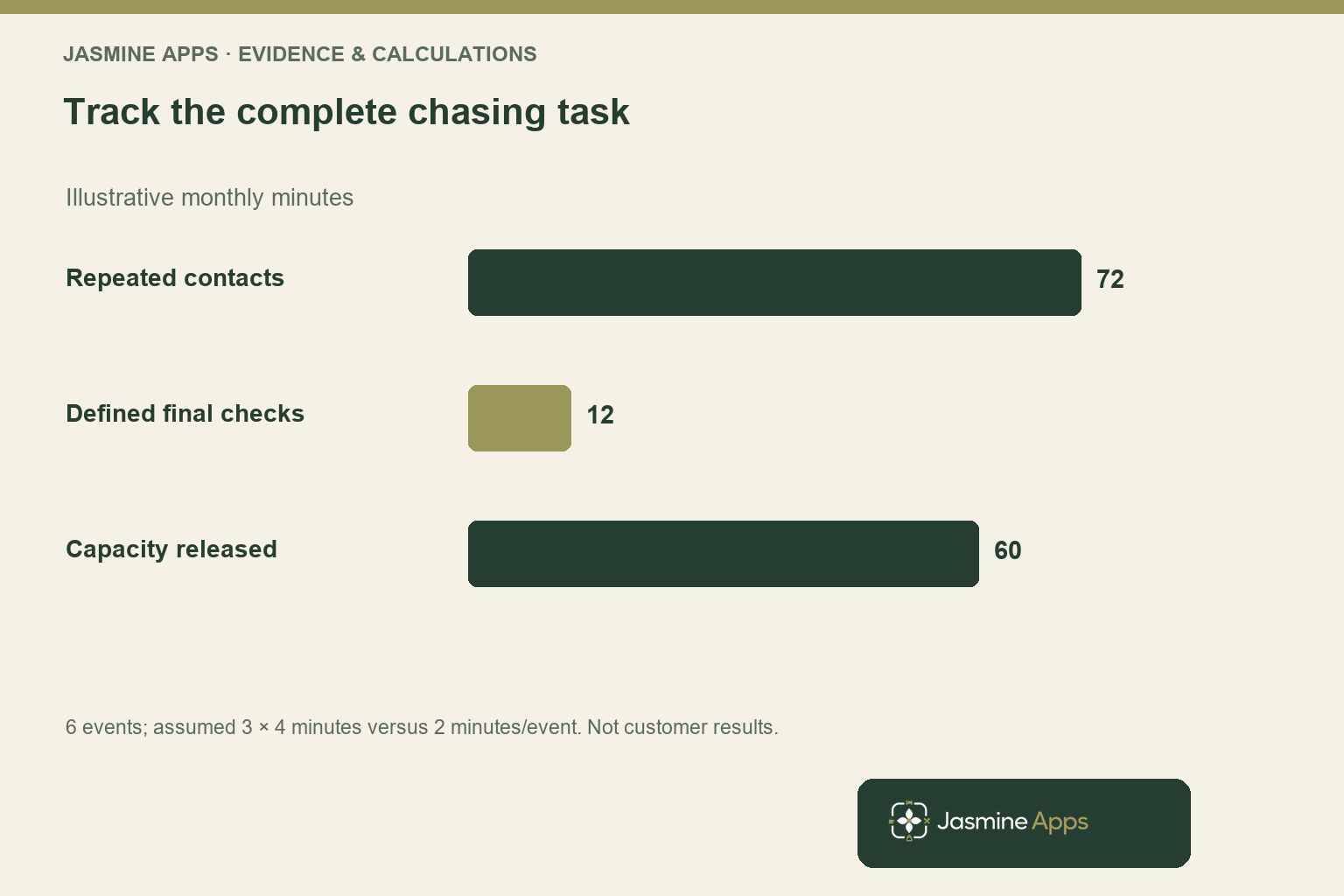
Consider an illustrative month containing six change events. If each event involves three repeated contacts taking four minutes each, your team spends seventy-two minutes on the defined chasing task. If a clear owner and final-check process requires two minutes per event instead, that task takes twelve minutes.
The resulting sixty-minute difference is a planning example, not measured Clock Jasmine performance. At an assumed £18 hourly value, it represents £18 of released capacity. You should not call it a cash saving unless it reduces an actual paid cost or creates a separately measured commercial benefit.
Your records should separate ordinary coordination from genuine exception work. A complex coverage problem may require discussion even with a well-managed system. Your aim is to reduce avoidable repetition, not to discourage necessary consultation or rush a decision that affects the service.
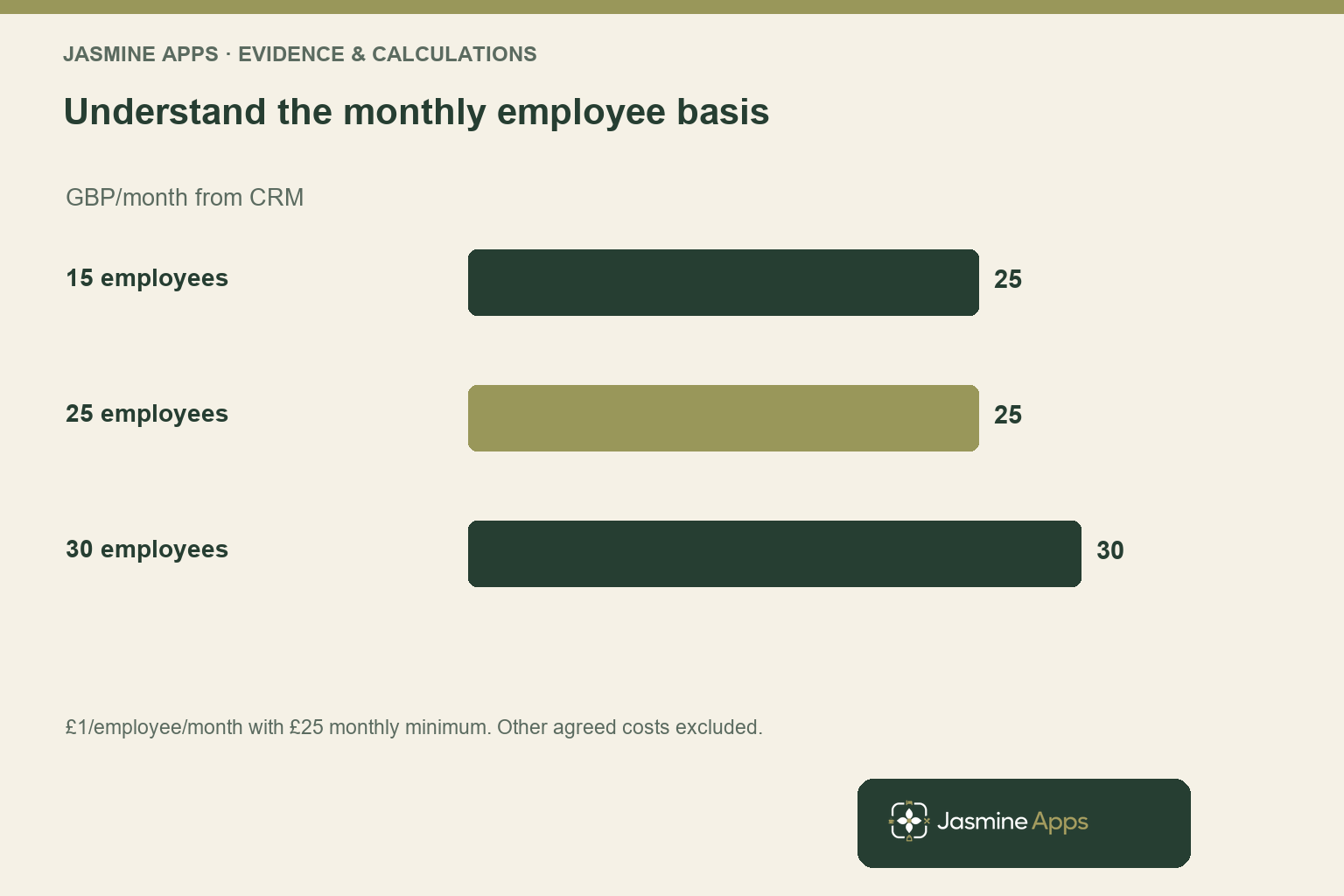
The CRM lists Clock Jasmine at £1 per employee per month, with a £25 monthly minimum. An illustrative thirty-employee monthly subscription is therefore £30, while a smaller team still meets the stated monthly minimum. The annual listed rate is £10 per employee; confirm any annual minimum and other quoted costs.
Use the full operational benefit when comparing a new system, but keep this specific process test honest. A rota-change example does not establish the return on all scheduling, attendance and training functions. Your buyer should see which result was measured and which remains a separate opportunity.
Review hospitality rota changes for coverage and working-pattern risks
Your fastest possible change is not always your best decision. You need enough time to confirm that the revised service has suitable coverage and that the affected staff can perform the required work. A change that fills a box on the rota can still leave an important task unsupported.
The HSE fatigue guidance identifies working patterns, overtime and shift swapping as matters that need active management. It also discusses assessing changes to working hours. Your software supports records and coordination, but does not remove your responsibility to assess the actual pattern and relevant risks.
Check the whole sequence of shifts rather than viewing a request in isolation. A colleague may be available for one evening while the surrounding pattern raises a concern. Your venue should apply its approved policy and seek appropriate advice where employment or contractual questions arise.
Keep the reason for an operational decision concise and proportionate. Your manager needs enough information to explain coverage and approval, but a public rota does not need private personal details behind a colleague’s request. Demonstrate how permissions and visibility work before using sensitive information in a trial.
Your handover should also distinguish scheduling from attendance records. An approved rota change does not automatically prove the hours that were subsequently worked. The live attendance area records punches and net time with breaks deducted, while correction approvals require their own review.
Ask to see an exception involving a changed shift and an attendance correction together. Your team should understand which record answers which question, and who approves the final outcome. That clarity prevents the published plan from being mistaken for an unquestionable payroll instruction.
Run a publication-to-handover pilot with your supervisors
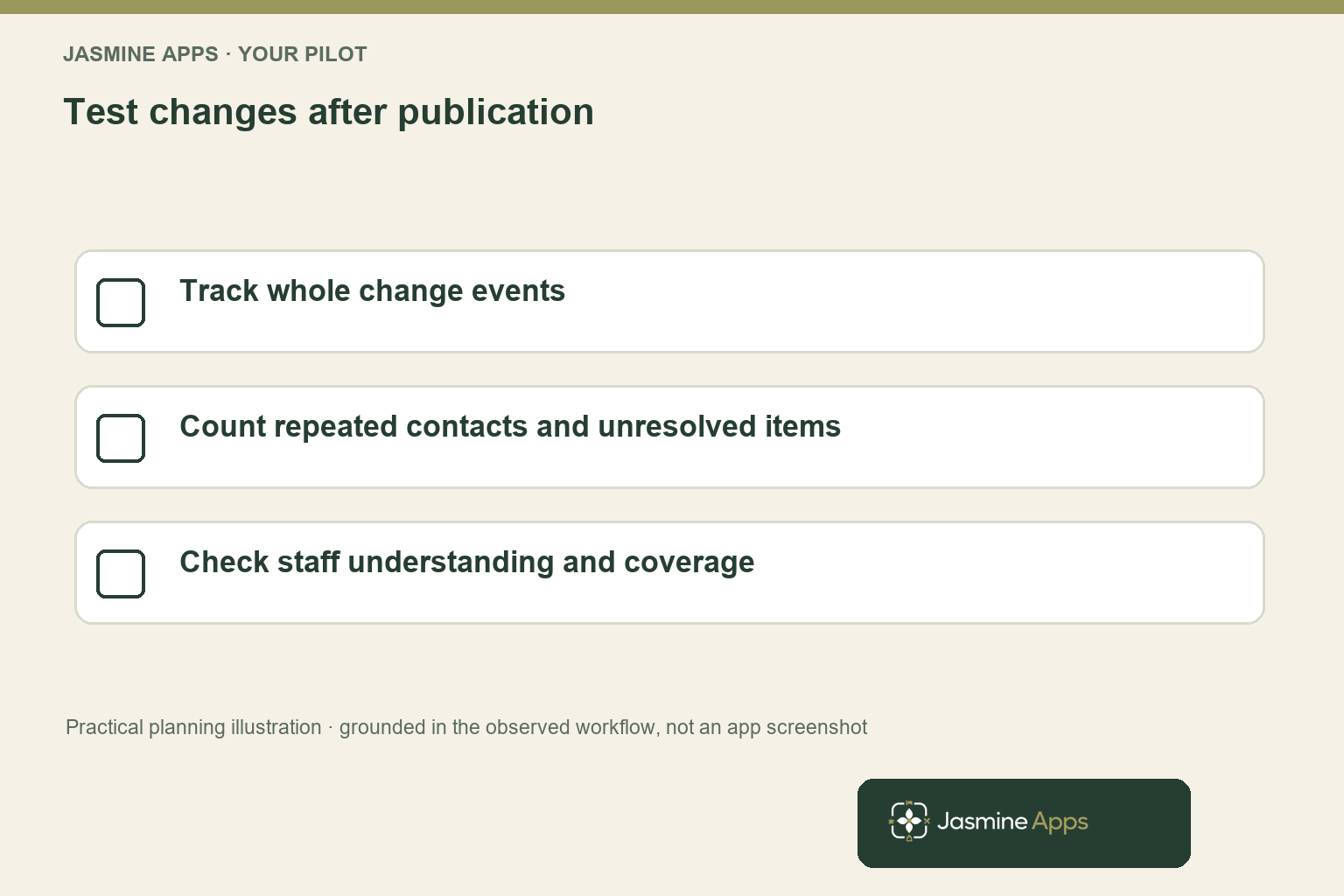
Choose a manageable rota period and a small group of supervisors. Write down the existing change process, then agree the proposed owner, checks and final communication route. Your pilot should establish whether the revised workflow reduces uncertainty after a change is approved.
Record each change event, its decision status and the number of repeated contacts. You can also tally changes still unresolved at the relevant shift handover. Use the same definitions throughout so a different manager’s recording style does not create an apparent improvement.
Ask affected colleagues whether they know which schedule to follow. Your manager may see a complete dashboard while a staff member remains unsure whether a swap was accepted. The practical test needs both sides of the handover, not just an admin count.
Review the time figures alongside the quality of the decision. A faster process is not useful if coverage checks are missed or colleagues receive unclear information. Record necessary exceptions separately, then look for repeated work that your agreed process can realistically remove.
Use the staff-access review to check that the relevant people can perform the demonstrated tasks. Confirm the live swap, approval and publication rules before expanding the process to other teams or venues.
Your purchase recommendation should include the subscription scope, the approved workflow and the measured result. If the pilot reveals a policy problem rather than a software gap, address that first. You can then invest in a system that supports a clear operating process your supervisors actually use. Your supervisors should review those findings together.
Pro Tips
Name the final owner. Assign responsibility for completing the approved handover. You remove the assumption that someone else updated the working schedule.
Count a whole change event. Include repeated contacts and final checks. Your coordination burden is larger than the time required to edit a shift.
Separate plan and actuals. Keep the approved rota distinct from attendance corrections. Your team can then review each record for its own purpose.
Common Mistakes
Acting on a proposed swap. You can leave the service with unapproved coverage. Make the decision status clear before anyone follows the new arrangement.
Equating speed with safe scheduling. You can miss coverage or working-pattern concerns. Keep the relevant checks inside the workflow.
Publishing personal reasons on the rota. You expose information colleagues do not need to perform the shift. Use proportionate records and confirm visibility controls.
Frequently Asked Questions
How should you manage last-minute hospitality rota changes?
You should give the request a clear owner, assess the effect on coverage and working patterns, record the decision and complete the final handover. Your affected colleagues need to know which schedule is approved and where to find it. Keep proposed changes distinct from the published plan. You can then measure repeated contacts and unresolved events, while retaining the necessary consultation and checks for a responsible operational decision.
Should staff be able to swap shifts without approval?
You should follow your venue’s approved policy rather than assume a private agreement is sufficient. A swap may affect role coverage, competence or the surrounding working pattern. Your demonstration should show how a request reaches the relevant reviewer and becomes an approved schedule change.
You should also clarify what staff see while the decision is pending. The useful workflow makes responsibility clear without discouraging colleagues from raising a request.
Can rota software remove WhatsApp shift-change messages?
You may reduce repeated chasing when your team has a clear request, approval and publication process, but you should not assume software eliminates every conversation. Complex coverage decisions can still need discussion. Test whether the final approved schedule and decision status are easy to find, then measure repeated contacts across complete change events. Your benefit comes from a dependable endpoint rather than simply moving the same uncertainty into another channel.
Does changing the rota also change attendance records?
You should distinguish the planned shift from the hours actually recorded. An approved rota change explains what your venue intended, while punches, breaks and correction approvals address attendance. Ask for a demonstration that follows a changed shift into the relevant attendance review so your supervisors understand both records. You should not treat the published plan as automatic proof of worked hours or assume it replaces your final payroll checks.
What does Clock Jasmine cost for a small team?
The CRM lists £1 per employee per month with a £25 monthly minimum. Your illustrative thirty-person monthly scope is £30, while a team below twenty-five employees still meets the stated minimum. The listed annual rate is £10 per employee, but you should confirm any annual minimum separately. Ask for the tax basis, setup and relevant scope in your quotation before comparing the final cost with your operational benefit.
Hospitality rota changes: your next step
Your hospitality rota changes should end with a decision everyone can follow. Request a Clock Jasmine demonstration with a recent swap, your approval policy and one difficult handover. You can assess the actual workflow, confirm the employee-based quote and test whether your supervisors spend less time resolving avoidable uncertainty.