

Second-venue System Readiness: What Must Work on Opening Day?
· Yiannis Yiasemis

Your second venue can have every app installed and still be unready for its first guest. A colleague may be able to open the till but lack the correct menu, find a booking but miss the local service rule, or clock in without a clear review route. Your second-venue system readiness depends on completed tasks, not the number of activated modules.
Jasmine Apps’ shared login, guests, staff and venues provide a foundation to explore for expansion. Your rollout should decide which standards travel between sites, which facts remain local and how each handover works on opening day. That gives the new manager a usable operating plan rather than a collection of unfamiliar screens.
Key Takeaways
- Define the complete tasks needed for opening service.
- Standardise rules and definitions that must be comparable.
- Keep venue-specific menus, capacity and service facts clear.
- Test permissions with each role’s actual responsibilities.
- Expand modules after the core handovers work reliably.
Define second-venue system readiness through completed tasks
List the guest and staff tasks your venue must deliver from the first service. That may include taking a booking, recording an order, handling a permitted adjustment, reviewing attendance and finding the current event document. Give each task a start, a finish and a responsible role so the readiness review has a practical outcome.
Choose the tasks from your operating model rather than a generic software checklist. A small cafe and a hotel restaurant have different dependencies, even within the same group. Identify the local service sequence and the external systems that remain involved, with a demonstration for any required transfer or reconciliation before you rely on it.
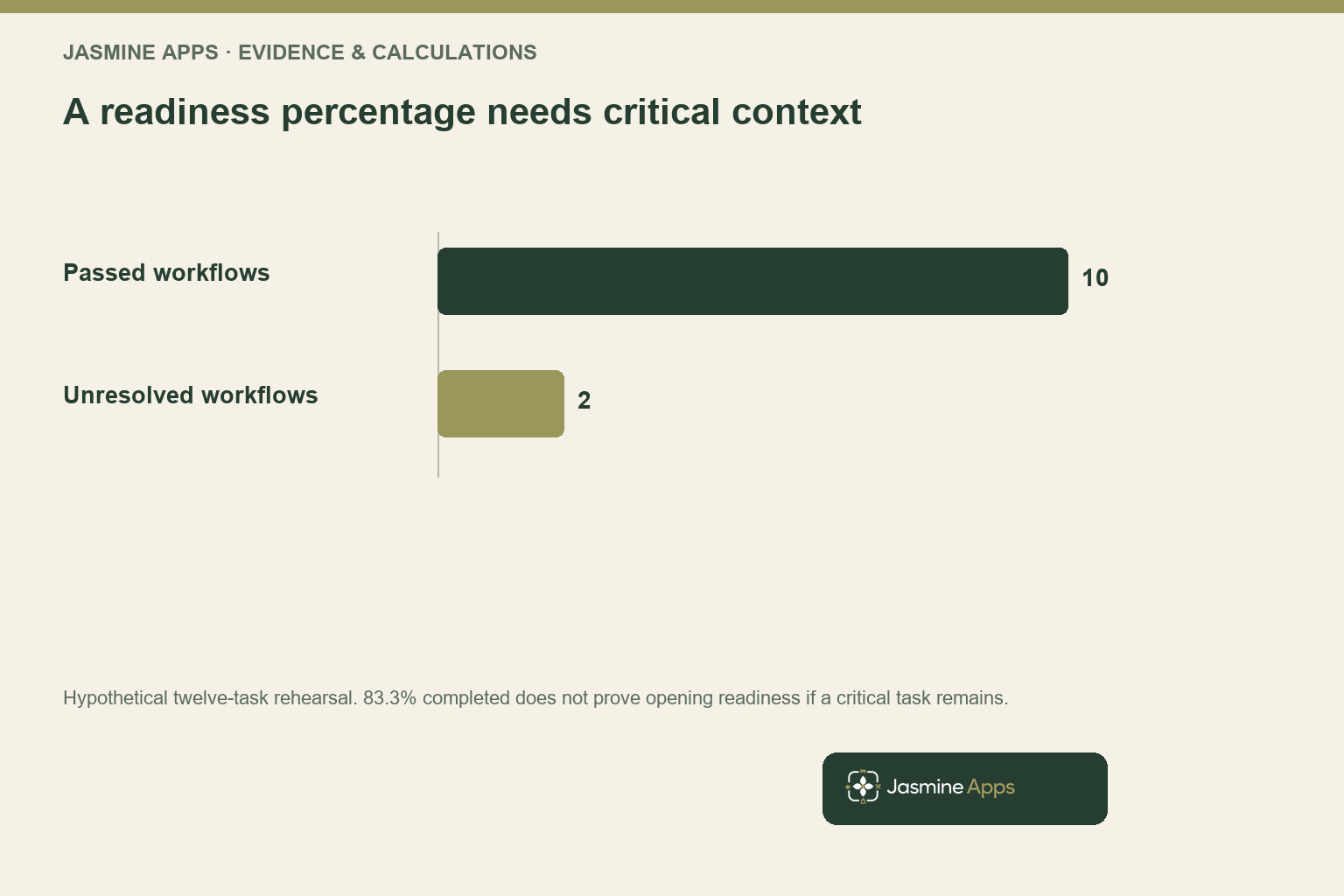
For a hypothetical opening review, suppose you identify twelve essential workflows and ten pass the complete rehearsal. You have an 83.3% completion result, but the two remaining tasks may still prevent safe or commercially workable service. Mark critical dependencies separately so a high percentage does not hide the step that must be resolved before opening.
Record why a task did not finish. Missing permission, unsuitable hardware, unclear staff instructions and an incomplete menu need different remedies. Your readiness plan should assign the next action to the person who can resolve it, with a useful date and a retest that follows the same complete task after the change.
The GOV.UK completion-rate method provides a useful distinction between starting and finishing a task. Apply that idea to your rehearsal, with your own operational criteria. You can then judge whether the second venue is ready to serve guests rather than merely ready to display a successful installation message.
Standardise second-venue system readiness without losing local facts
Decide which standards make the group easier to run. Product naming, discount authority, reporting periods and incident categories may need consistent definitions across venues. A comparable record lets your managers discuss the same measure, while a shared process gives a colleague moving between sites a recognisable route for the task they need to complete.
Keep local operating facts explicit. Your second site may have a different menu, table layout, opening hours or room inventory. Copying the first venue’s setup without checking those details can create a confident-looking record that gives staff the wrong answer. Assign a local owner to approve the facts before the opening rehearsal.
Your second-venue staff-process guide covers workforce standards. This readiness article adds the dependency between those standards and the guest-service tasks. A manager needs to know both who owns the decision and which approved local information the team should use when fulfilling it.
Till Jasmine includes product fields such as price, cost, tax, category, course, kitchen and on-till status in the product administration. Use a fictional or approved sample to review the new site’s configuration. Confirm any copy, import or shared-product capability separately rather than assuming every venue inherits the same settings automatically.
Ask the new manager to explain one normal service task and one exception using the proposed setup. That reveals whether the standard is understandable and whether local differences are visible. Your goal is a repeatable group method with suitable venue facts, so the second site can deliver its own service without rebuilding every operating rule from scratch.
Test second-venue system readiness with the right access
Your roles should reflect the work each colleague needs to do at the second site. A host may need bookings, a supervisor may need attendance review and a manager may approve certain adjustments. Shared account context does not mean every employee should receive every module or the same authority across all venues.
Create a role-based rehearsal using fictional records and the approved access process. Ask each tester to complete their normal task and confirm that unrelated information is appropriately restricted. Do not use real private staff documents as demonstration material; your readiness review can test the workflow without exposing personal records to people who do not need them.
The NCSC’s identity and access guidance recommends managing access as people join, move and leave. Apply that principle when colleagues transfer between venues or cover shifts. Your approval process should keep their access aligned with current responsibilities, with a clear owner for reviewing changes.
Include the handovers between roles. A booking may need a service update, an attendance exception may need approval and a room fault may need an availability decision. Demonstrate each supported cross-app route and identify staff-led steps, so your opening plan does not depend on an automatic transfer nobody has actually confirmed.
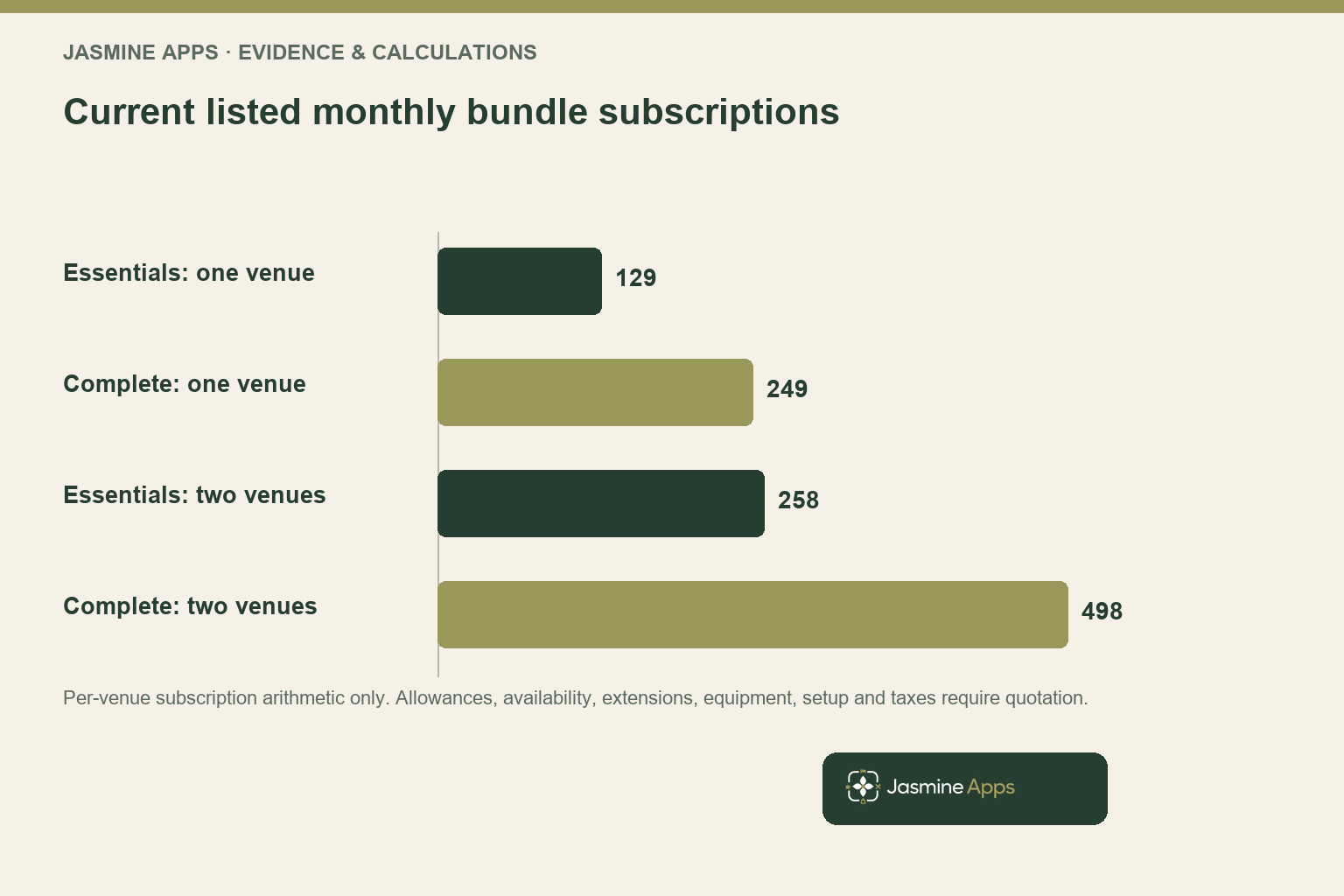
Jasmine Apps currently lists Essentials at £129 per venue monthly and Complete at £249, with different staff, booking and module allowances. Confirm each site’s scope, availability, devices, setup and tax basis in the proposal. Your readiness plan should use the modules being supplied for the opening, while later additions receive their own task and access review.
Sequence the rollout around the first reliable service
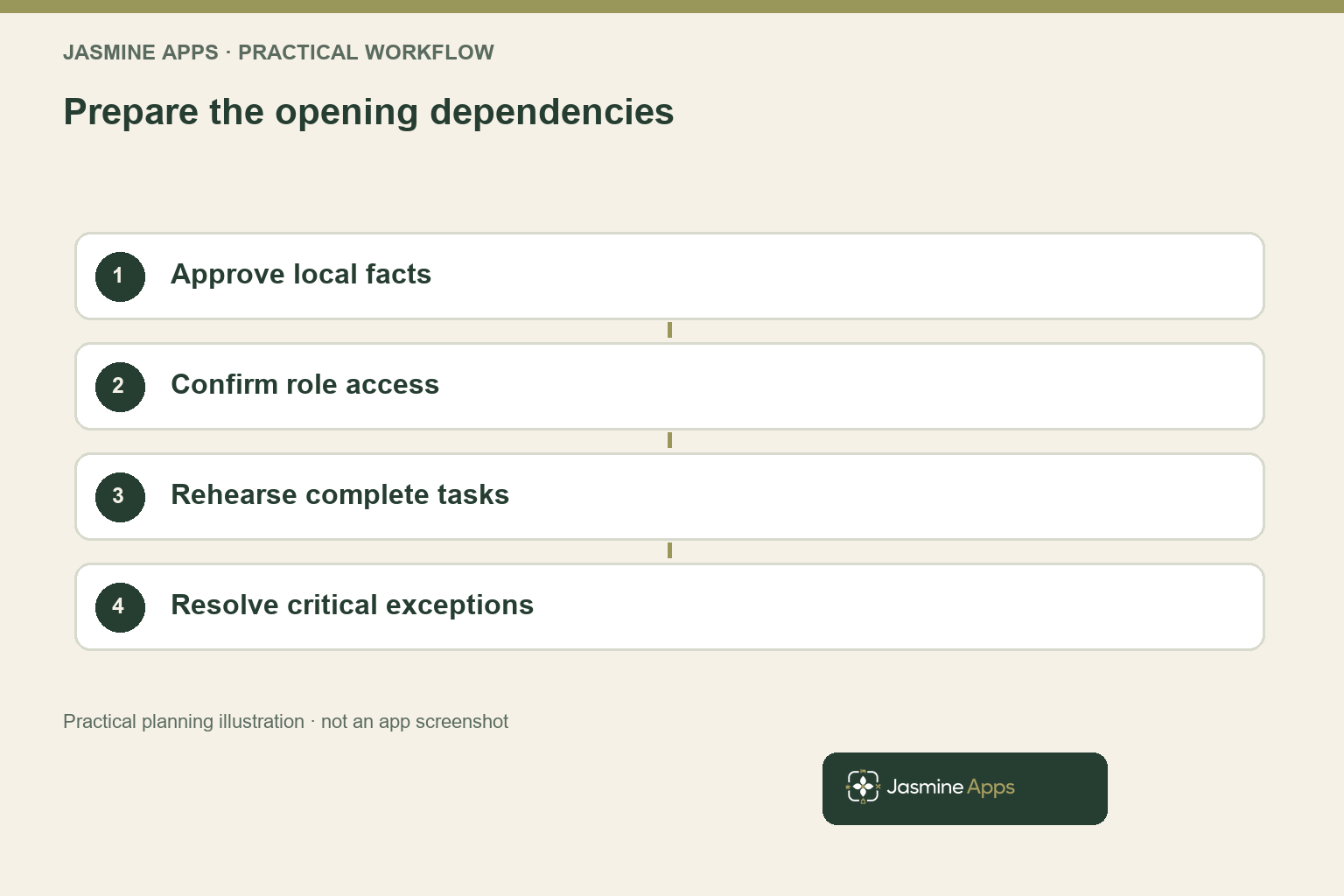
Put the opening dependencies in order. Local facts and permissions need to be ready before staff rehearse the service, while the reporting and closing route needs to be tested before you rely on the first day’s records. Your rollout sequence should follow those dependencies rather than activating modules in the order they appear on a dashboard.
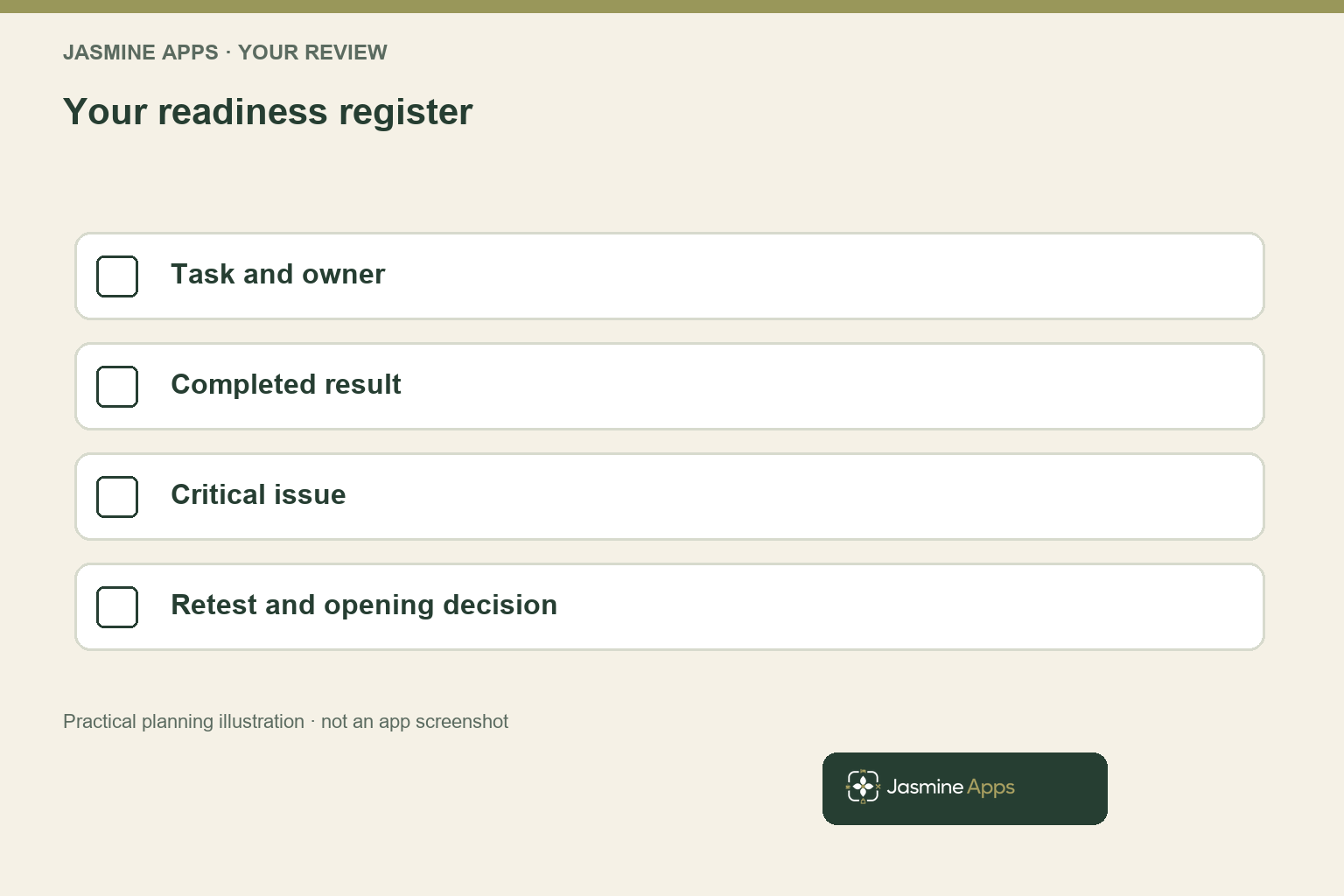
Use a short readiness register with the task, owner, current result, unresolved issue and retest date. Keep critical items visible at the top, while less essential enhancements can sit in the later plan. That gives your opening manager a practical view of the next decision and prevents optional features from distracting attention from an incomplete core process.
Budget for the adoption work as well as subscriptions. Training, configuration, supported equipment and the time to rehearse all contribute to opening readiness. A connected suite can give your team a coordinated foundation, but the local preparation still needs an owner and enough time for colleagues to demonstrate that they understand the tasks.
Your hospitality software adoption guide helps you plan learning around usable outcomes. Apply it to the new site with a normal case and an exception for each critical task. After opening, review the first service’s questions and records before expanding the module scope or copying the rollout to another venue.
Your strongest expansion plan leaves the new manager with approved facts, appropriate access and a service sequence the team has completed. You can then grow the suite around real operating needs, with comparable reporting and clear local ownership. The second venue becomes easier to support because the group knows which standards are shared and how the site delivers them in practice.
Pro Tips
Mark critical tasks separately. A completion percentage can hide the unresolved workflow that blocks opening. Identify mandatory service dependencies and require their practical resolution before calling the setup ready.
Give local facts an approver. Menus, capacity and opening hours need confirmation by the new site. Your shared standard is useful only when it points to the right information for that venue.
Rehearse a role handover. Test where one colleague’s task becomes another colleague’s responsibility. Confirm the record and next action so the service does not rely on an assumed automatic transfer.
Common Mistakes
Copying the first venue unchanged. You can carry unsuitable menus, hours or capacity into the new site. Standardise the method and approve the local facts separately.
Giving everyone broad access for convenience. You expose information and authority beyond the role’s needs. Use the approved access process and test the actual responsibilities.
Measuring installation rather than service completion. You miss the permissions, instructions and records needed to finish the task. Rehearse complete opening workflows with their exceptions.
Frequently Asked Questions
Which systems should you prepare first for a second venue?
You should begin with the complete guest and staff tasks essential to opening service, then identify the systems, local facts and role permissions they depend on. Bookings, orders, attendance and closing records may need different priorities for your operating model. Mark critical dependencies separately from optional enhancements. Your sequence should produce a first service the team can actually complete, with a clear owner and retest for each unresolved step before opening.
Should both venues use identical menus and settings?
You should share the standards that make the group understandable and comparable, while approving local menus, capacity, prices and service hours for each site. Identical configuration is useful only where the operating facts are genuinely the same. Confirm any copying or shared-product capabilities in the proposed setup. Your new manager should be able to follow the group method and still find the approved information that belongs to their own venue.
How do you test whether a second venue is ready?
You can rehearse essential workflows with fictional or approved test records, using the roles and supported devices intended for service. Define the start and completed outcome, then include an exception and the next handover. Record unresolved permissions, configuration or instruction issues with an owner and retest date. A task-completion percentage is useful context, but critical dependencies need their own decision so the result does not conceal a step that still blocks opening.
Can shared Jasmine Apps access replace local staff permissions?
Your shared login and venue context provide an operating foundation, while role permissions still need to fit each colleague’s responsibilities. Demonstrate the module and venue access required for the task, with appropriate restrictions on unrelated information. Review access when staff join, move or leave using your approved process. Your opening rehearsal should confirm the actual role handover rather than assume everyone needs the same authority because the venues use a common suite.
How much does a Jasmine Apps bundle cost for a second venue?
Jasmine Apps currently lists Essentials at £129 per venue monthly or £1,290 annually, and Complete at £249 monthly or £2,490 annually. The packages have different booking, staff and module scopes. Confirm the second site’s requirements, delivered availability, equipment, setup, allowances and taxes in a matched proposal. Your readiness plan should use the confirmed opening scope, with later additions receiving their own workflow and access review before they become part of live service.
Second-venue system readiness: your next step
Your second-venue system readiness should give the new manager a service plan the team can demonstrate. Request a Jasmine Apps expansion discussion with your opening tasks, local differences and venue scope. You can agree the required modules, rehearse the critical handovers and build a rollout around the first reliable guest service.