

Restaurant Profit Improvement: Why a Full Dining Room Can Earn Less
· Yiannis Yiasemis
You can serve more guests and finish the week with less money left over. If your extra covers arrive on low-contribution offers, need another shift or generate more waste, a full dining room can disguise a weaker commercial result. Your restaurant profit improvement starts with what each service leaves behind.
That is where your till and workforce records become useful together. Till Jasmine gives you product and service reporting to investigate sales, while Clock Jasmine helps you review attendance and timesheets. You can use those records to ask sharper questions about your menu, offers and paid hours before chasing another increase in covers.
Key Takeaways
- Compare contribution and costs alongside total sales.
- Separate menu mix changes from price and volume changes.
- Measure discounts at the item and service level.
- Use actual paid-hour records when reviewing labour.
- Choose one commercially meaningful improvement per pilot.
Start restaurant profit improvement with the service result
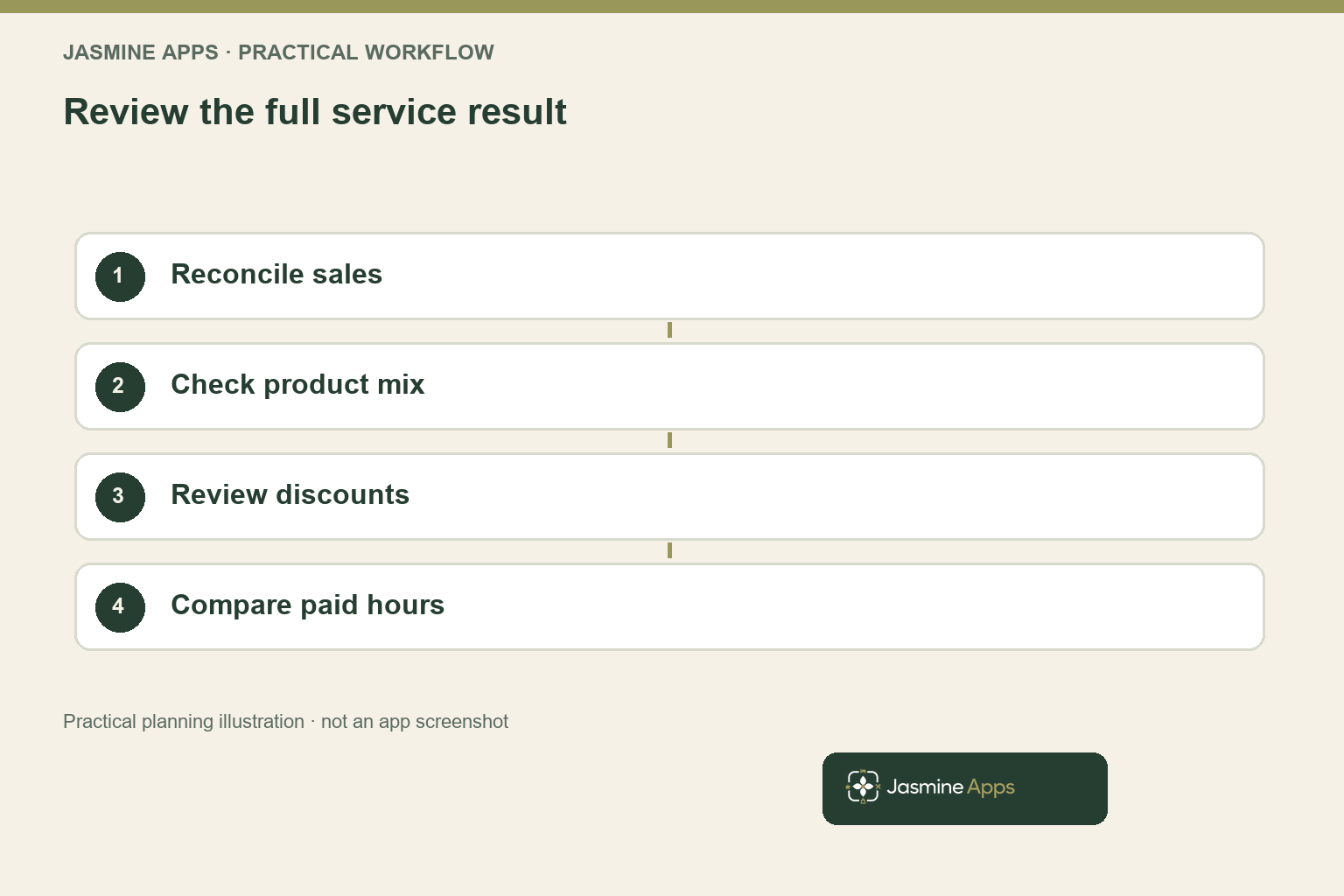
Your sales total tells you how much you took, but it does not explain the cost of generating it. Begin with a service you understand well and reconcile sales on a consistent tax basis. Then identify the variable product costs, discounts, waste and labour that belong to the same period.
Keep contribution and operating profit distinct. Contribution helps you see what remains after defined variable costs; operating profit also reflects the wider expenses of running your venue. A product can contribute positively while the restaurant still loses money overall, so neither measure should be presented as a complete answer on its own.
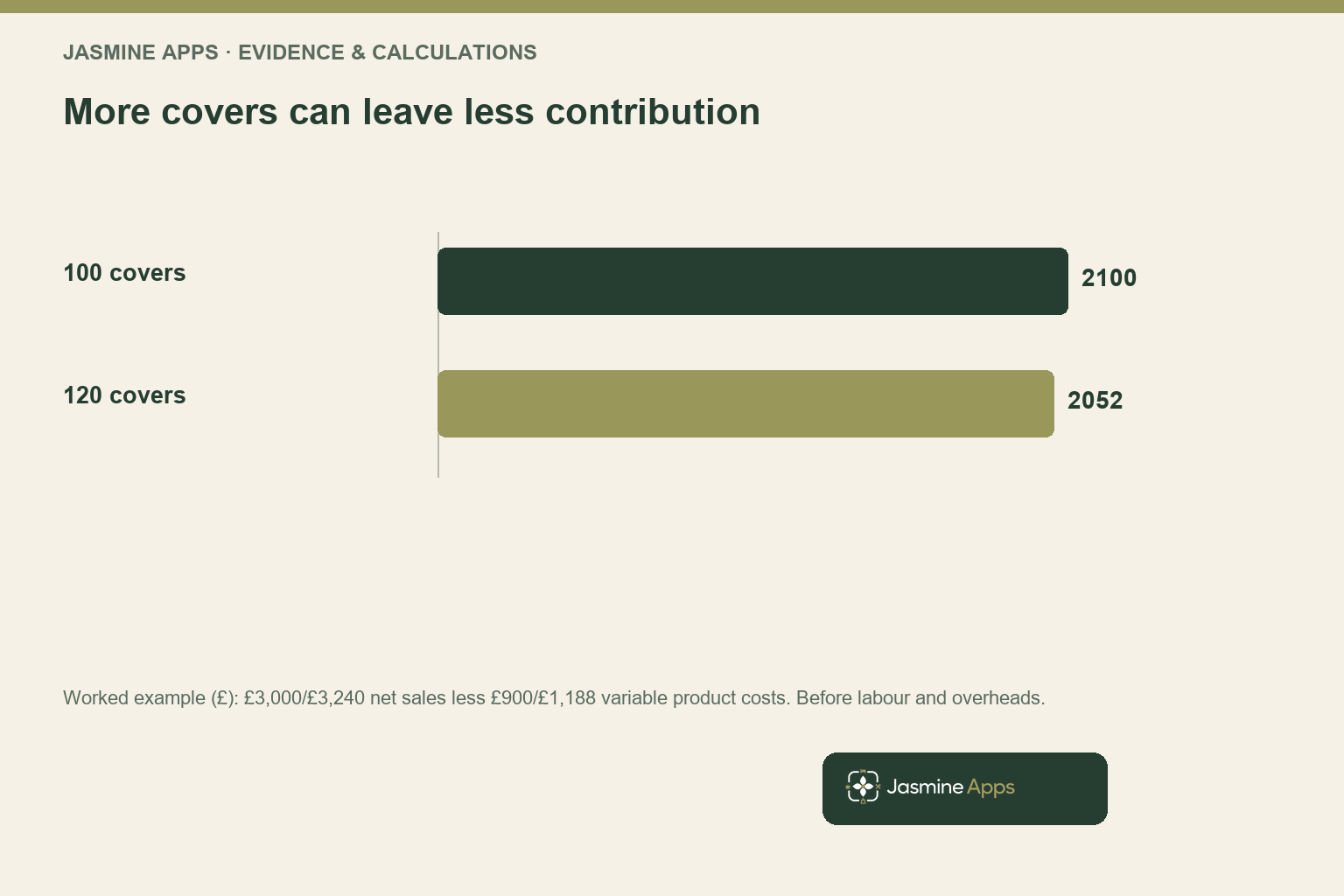
Consider a worked example with 100 covers generating £3,000 of net sales and £900 of variable product costs. That leaves £2,100 before labour and other overheads. A busier service with 120 covers generating £3,240 and £1,188 of product costs leaves £2,052: more guests, but £48 less contribution.
Your explanation might sit in the product mix rather than a general failure to sell. More low-margin items, a heavily discounted package or extra preparation can change the relationship between covers and contribution. Investigate what changed before telling your team to work harder or assuming that a price increase is your only option.
Use a small set of comparable services to establish your baseline. Include covers, sales, discounts, product cost and actual paid hours, with a note for unusual events. You then have a review that tells your manager where to look next and makes the effect of any intervention easier to understand.
Use restaurant profit improvement to examine mix and discounts
Your highest-selling item is not automatically your strongest contributor. Calculate its selling price and relevant variable cost, then multiply the contribution by the number sold. Review the resulting total alongside preparation effort and capacity, because a profitable dish can still create a bottleneck that limits the rest of the service.
Your restaurant menu profitability guide develops that item-level analysis. Here, the next step is to look at the whole service mix. Ask whether your extra guests bought more of the items that support the business, or whether a promotion shifted sales towards dishes with a lower contribution.
Discounts need their own calculation. An illustrative £30 sale with £9 variable costs contributes £21. A ten-percent discount reduces the contribution to £18 if costs stay unchanged, so you need about 16.7% more equivalent sales to restore the original contribution; operational capacity and additional labour can raise that hurdle.
You should also count discounts given to guests who would have bought anyway. An offer can attract additional visits while lowering contribution from existing demand. Compare a defined eligible group, completed transactions and relevant costs, rather than treating every discounted sale as new revenue created by your campaign.
Food waste deserves a place in the review as well. Champions 12.3’s restaurant study examined 114 restaurants in twelve countries and reported average savings of seven dollars for each dollar invested in reducing kitchen food waste. Use that historical evidence to investigate your own waste process; your software and venue results still depend on the changes you make.
Connect restaurant profit improvement with paid hours
Your labour review needs actual attendance as well as the plan you intended to run. Compare the rota with clocked time, approved corrections and breaks, then check how those hours align with service demand. A late finish caused by poor preparation has a different remedy from a necessary extra shift for an event.
Use hourly sales patterns to ask where staffing and demand diverge. Your team still needs setup, cleaning, supervision and food safety work when sales are low, so a quiet hour is not automatically an hour you can remove. Look for avoidable waiting, duplicated tasks and repeated late changes before reducing useful coverage.
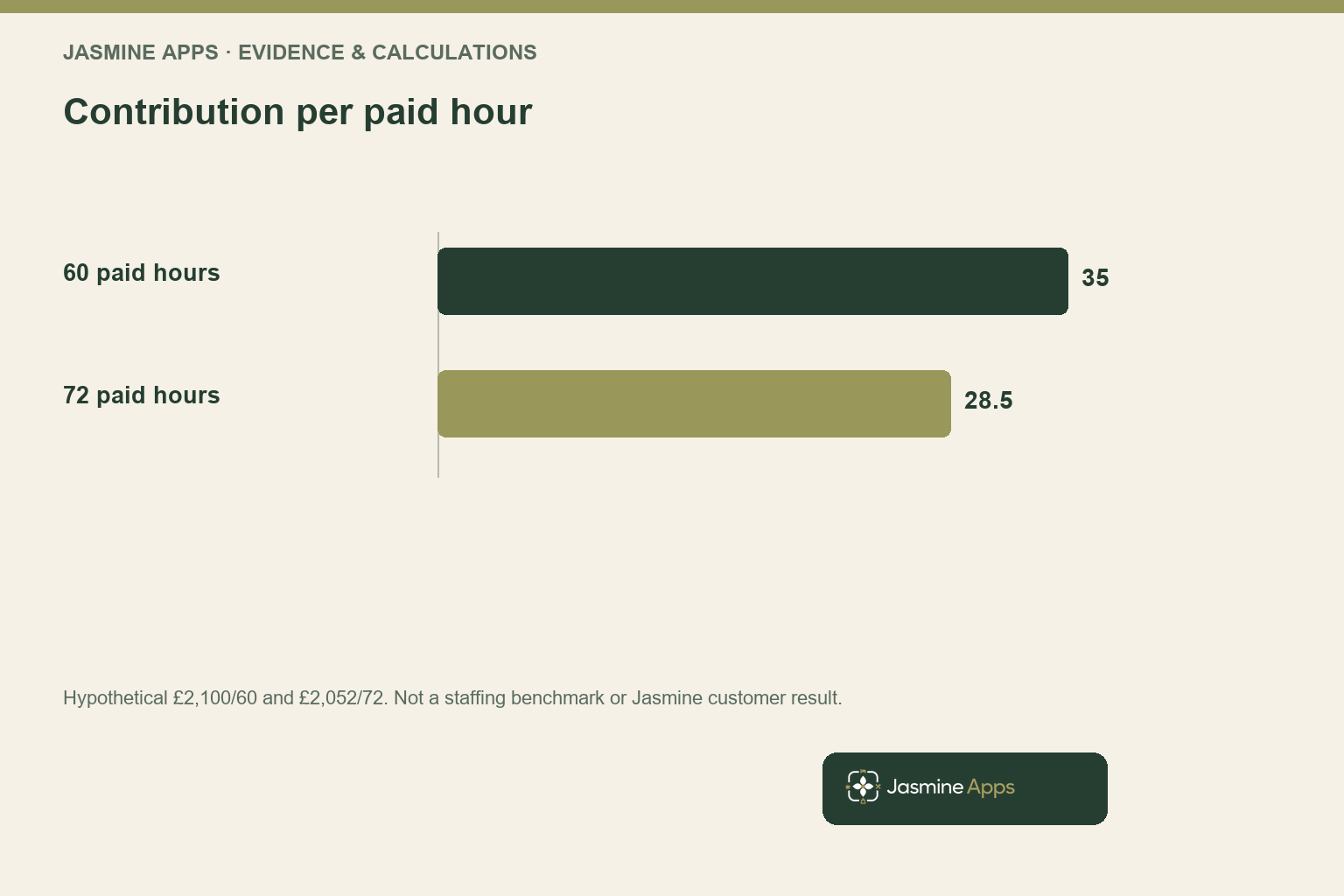
In a hypothetical comparison, your quieter service uses 60 paid hours against £2,100 contribution, while the busier service uses 72 hours against £2,052. Contribution per paid hour falls from £35 to £28.50 before overheads. That ratio helps you investigate the operating change, but it should not become a substitute for service quality or fair staffing.
Till Jasmine product and hourly reporting, alongside Clock Jasmine attendance reviews, can support that discussion. Bring one service period to your demonstration and confirm how you obtain consistent records from both apps. Ask to see the complete review route rather than assuming that every cost or payroll figure is automatically combined.
Your current listed prices start at £59 per venue monthly for the till and £1 per employee monthly for Clock, with a £25 monthly minimum. Select the required scope in your quote, including devices, setup and taxes. Your buying case should identify the decision those records improve and the colleague responsible for acting on it.
Build a service experiment your manager can act on
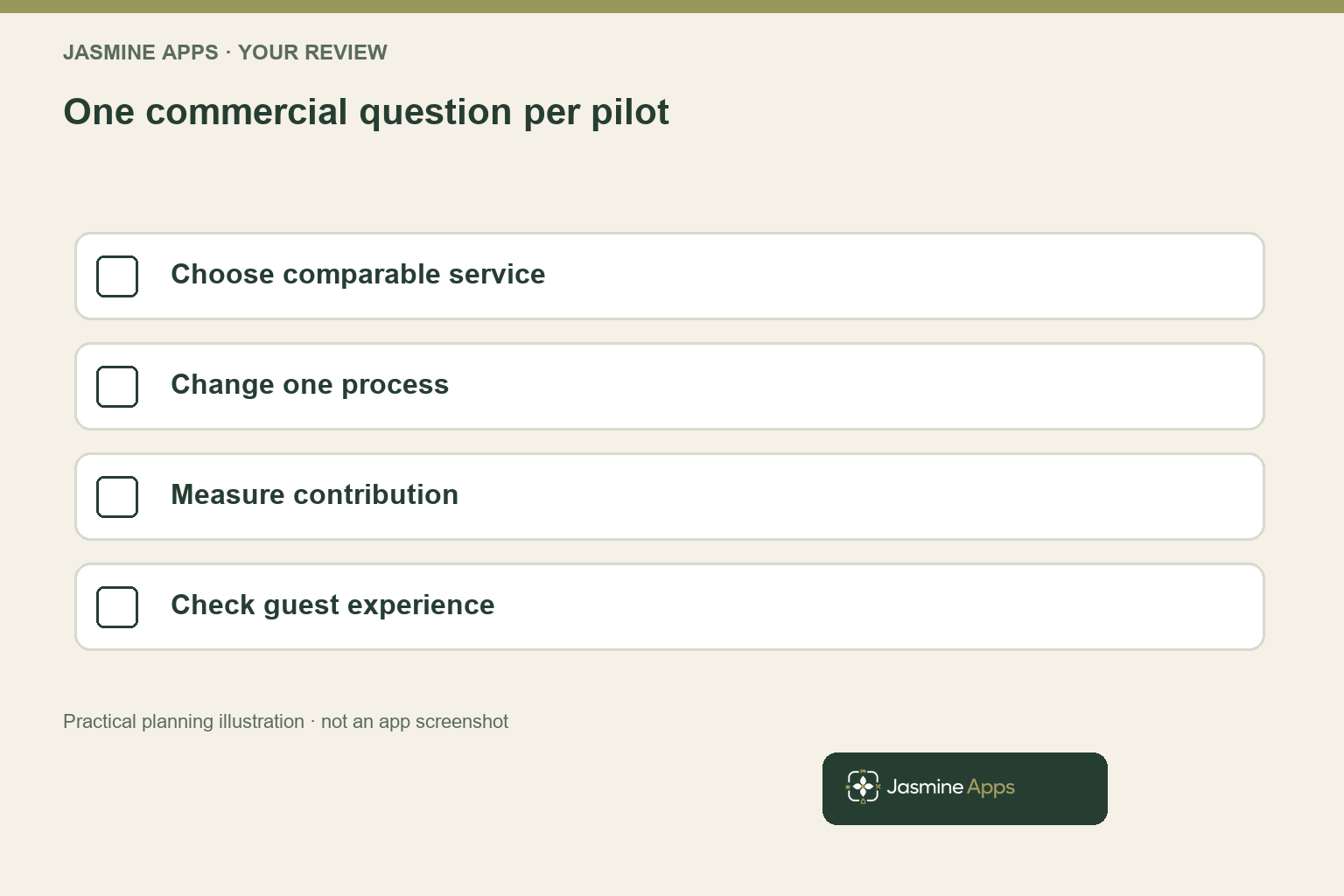
Choose one question from the baseline. You might test a clearer menu recommendation, a revised discount rule or better preparation before the busiest hour. Give the intervention a defined service window and an owner, with enough detail for your staff to deliver it consistently and explain what changed.
Set a primary commercial measure before you begin. Contribution per cover can reveal a mix improvement, while contribution per paid hour can help investigate workflow efficiency. Use a small supporting set of service measures, such as waiting time, complaints and waste, so the commercial result remains connected to the guest experience.
Compare like with like wherever practical. A bank-holiday Saturday, a private function and a normal weekday service have different demand and cost patterns. Record those differences rather than forcing every period into a single average, and avoid attributing seasonal demand or a changed menu price entirely to the software.
Review the results with the people who delivered the change. Ask whether the recommendation was practical, whether the kitchen could fulfil it and whether the staffing plan remained workable. You may find a useful process improvement even when the first financial sample is too small to establish a reliable pattern.
Your restaurant discount policy guide can help you turn a successful test into clear staff rules. Keep the change that improves your defined result without weakening service, then tackle the next question. That is a repeatable way to make a busy restaurant commercially stronger, with your records supporting each decision. Keep the owner clear.
Pro Tips
Reconcile the tax basis. Use the same net or gross basis for sales, costs and discount calculations, with your accountant’s treatment where needed. A mixed basis can create an apparent margin problem that disappears when the figures are aligned.
Track one service cohort. Keep your comparison to similar service windows and guest groups. Separate private events and unusual menus so the manager can see whether the improvement applies to normal trading.
Review the bottleneck. Ask which profitable recommendation slows production or service. Your best item may need a different preparation process before more sales translate into a stronger overall result.
Common Mistakes
Treating covers as the profit measure. You can fill tables with lower-contribution orders or expensive promotions. Track the defined costs alongside sales so the busier service has a meaningful result.
Cutting every quiet paid hour. You can remove necessary setup and cleaning time, creating late finishes or poorer service. Investigate the work behind the hour before changing coverage.
Changing everything together. You cannot tell whether menu mix, pricing or staffing caused the result. Give each pilot one clear commercial question and retain useful context.
Frequently Asked Questions
Why is your restaurant busy but not profitable?
Your extra sales may bring lower contribution, heavier discounts, more waste or additional labour. Compare the same service’s sales, variable costs and paid hours before deciding which factor matters most. Your fixed costs also affect the final profit result. A full dining room is useful demand, but your manager needs to understand what remains after fulfilling it and whether the operating process can deliver that demand efficiently.
What should you measure besides restaurant sales?
You can begin with contribution per cover, contribution per paid hour, discount value and waste for a clearly defined service. Keep your tax basis consistent and explain which costs are included. Add a small number of quality measures, such as waiting time and guest feedback, so a financial improvement does not conceal a service problem. Your records should help the manager choose an action rather than create a larger dashboard.
How much extra volume offsets a ten-percent restaurant discount?
In the worked example, a £30 sale with £9 variable costs contributes £21 before the discount and £18 afterwards. You need roughly 16.7% more equivalent sales to restore the same total contribution, assuming those costs do not change. Your actual hurdle depends on product mix, extra labour and capacity. Calculate it for the offer you plan to run rather than applying that example to every menu item.
Can your till system calculate all your restaurant profit?
Your till records can help you investigate sales, product mix and discount patterns, but a full profit calculation also needs reliable costs and overheads. Confirm which costs, exports and reporting periods your setup supports. You may need your accounting and workforce records alongside the till. Your demonstration should show the complete review process using representative data, so you understand which figures are captured and which require additional work.
How can Jasmine Apps help with restaurant profit improvement?
You can use the till’s product and hourly views to investigate sales patterns and Clock Jasmine’s attendance records to review paid-time context. Demonstrate one service period and confirm the reporting route, permissions and data you need. Your improvement comes from the menu, discount or workflow decision those records support. Start with a defined problem, measure the resulting change and choose the subscription scope that makes that review practical.
Restaurant profit improvement: your next step
Your restaurant profit improvement should turn busy services into stronger commercial results. Request a Jasmine Apps demonstration with one service’s sales, product mix, discounts and paid-hour questions. Ask to follow the review from record to decision, so you can identify the next practical change that protects contribution while keeping your guest experience strong.