

Restaurant Booking Lead Time: What Your Diary Can Tell You Before Service
· Jasmine Apps
Your Friday diary can look quiet on Monday and still finish full, while another service looks secure early and loses several tables before opening. The useful question is not just how many reservations you have today, but when comparable bookings usually arrive and what happens afterwards. Your restaurant booking lead time helps you examine that pattern without pretending it forecasts every guest.
You can use this information to time reviews, spot missing demand and give your team a clearer preparation picture. Start with consistent definitions and your own records before adopting someone else’s advance-booking assumptions.
Key Takeaways
- Define lead time as the interval between booking creation and the service.
- Separate new bookings, amendments and cancellations.
- Compare similar days, services and party sizes.
- Keep same-day demand visible instead of hiding it in an average.
- Use the pattern to plan checks, not to promise a final cover count.
Define restaurant booking lead time consistently
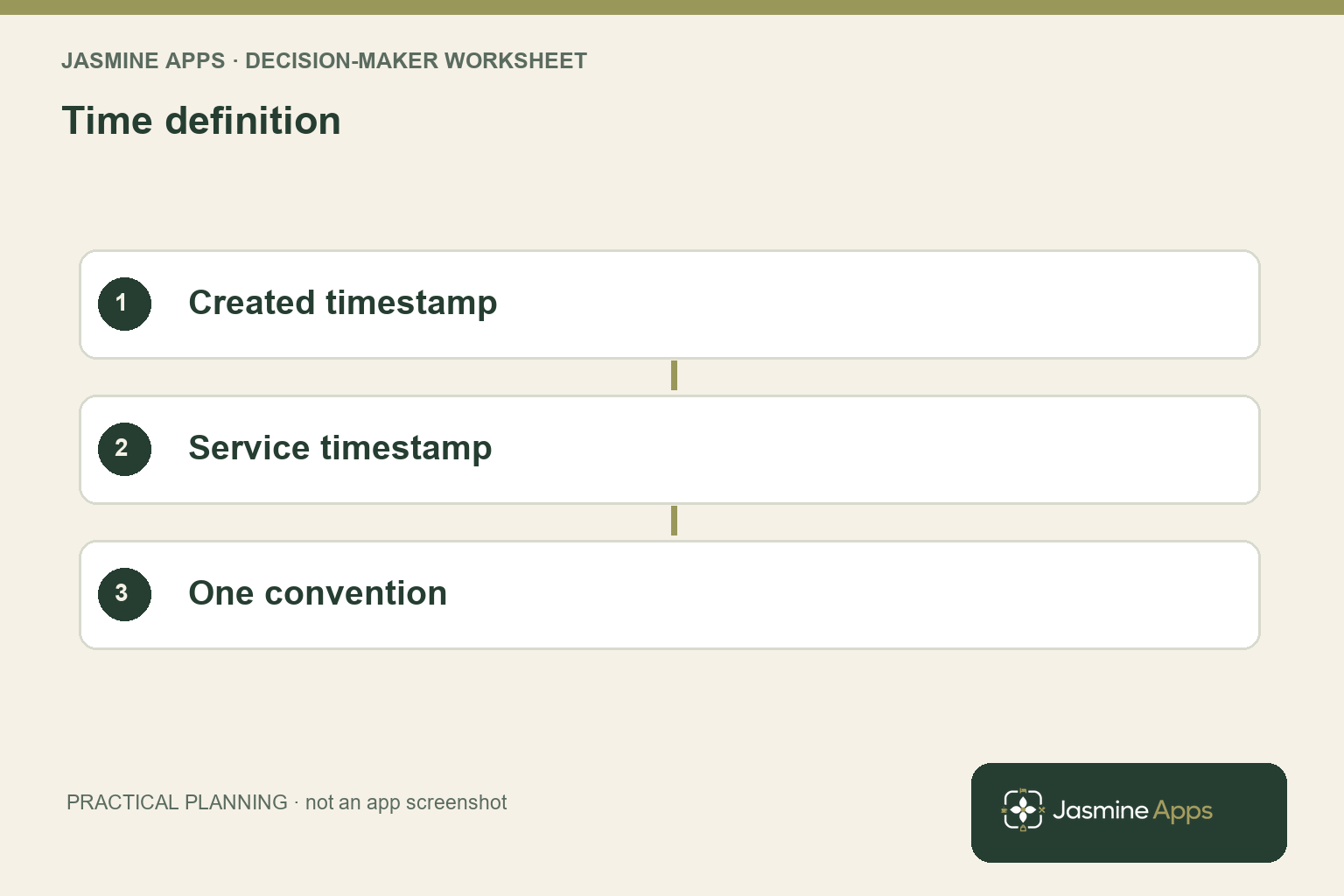
Choose whether your working measure uses elapsed hours or restaurant-local calendar days. Either can be useful, but they are not interchangeable. A reservation made shortly before midnight for the next evening crosses a calendar date without necessarily representing a full day of elapsed time. State your convention so your manager can understand what the report means and repeat the calculation.
Use the original booking-created time where the supported record provides it. An amendment to the arrival time should not automatically reset the reservation’s origin. Keep creation, scheduled service, amendment and cancellation as different concepts. If your records do not expose the timestamps you need, label that limitation rather than reconstructing a precise booking interval from memory or the date of an email you happen to find.
Your basic calculation is service time minus creation time under the chosen convention. The booking lead-time definition provides a useful restaurant-specific reference for the calendar-day approach. You should still select the definition appropriate to your review. The value lies in a consistent comparison, not in insisting that one presentation suits every venue or every decision.
For Table Jasmine, begin with the actual reservation context and service configuration. The app distinguishes reservation states including Confirmed, Arrived/Waiting, Seated, Has Left, No Show and Cancelled. Those outcomes should remain separate from the original lead-time measure. Your analysis can then ask both when a booking arrived and whether it became the service you expected, without turning a later cancellation into an apparently new reservation.
Keep the restaurant-local timezone in the calculation notes so another reviewer can interpret bookings created close to a calendar-day boundary consistently.
Read restaurant booking lead time by service pattern
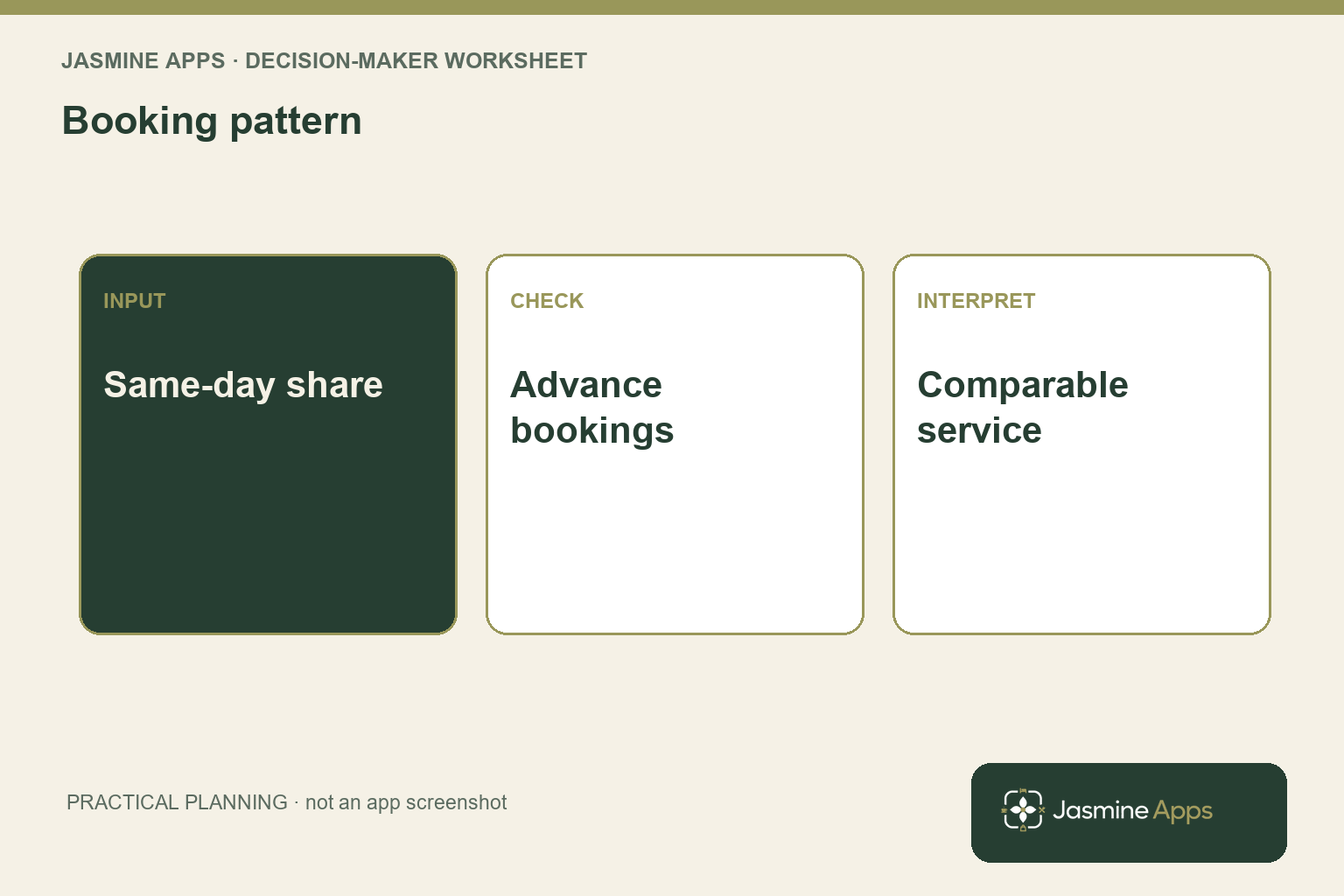
Group comparable services before calculating a summary. Your weekday breakfast, Saturday dinner and private celebration are different planning problems. A single average across them can describe none of them well. Start with the service window that matters to your question, then inspect the distribution of booking intervals rather than only the overall mean.
Use clear bands that your operation can act on. You might distinguish same-day requests, short advance bookings and longer-planned occasions, with the boundaries defined in your worksheet. Those are your planning categories, not universal hospitality benchmarks. Keep the original dates alongside the bands so you can change the presentation without losing the underlying records or silently altering the result.
Consider a hypothetical service containing six bookings: four arrive on the day and two are made well in advance. The average interval can look substantial even though most bookings arrive late. No performance result is claimed by that example. Your manager needs to see the short-notice share as well as the central summary before deciding how often to review the diary or when to prepare the host briefing.
Check your service promise when interpreting demand. Your opening hours and online rules influence which requests your venue can accept. Your guest might enquire early because they want a large party or a special offer rather than an ordinary table. Keep that context visible, and avoid concluding that every early request represents the same type of demand or deserves the same automated response.
Label unusually long-planned functions separately when they materially affect the average for ordinary dining, and retain their original dates for comparison.
Use restaurant booking lead time for better preparation
Choose a review point that fits the pattern you have observed. If your comparable services often gain suitable reservations close to opening, a final diary check matters more than declaring the day quiet from an early snapshot. Your preparation still needs to respect kitchen capacity, table readiness and staffing decisions. Use the pattern to organise information, not to justify an unsupported promise that late demand will always appear.
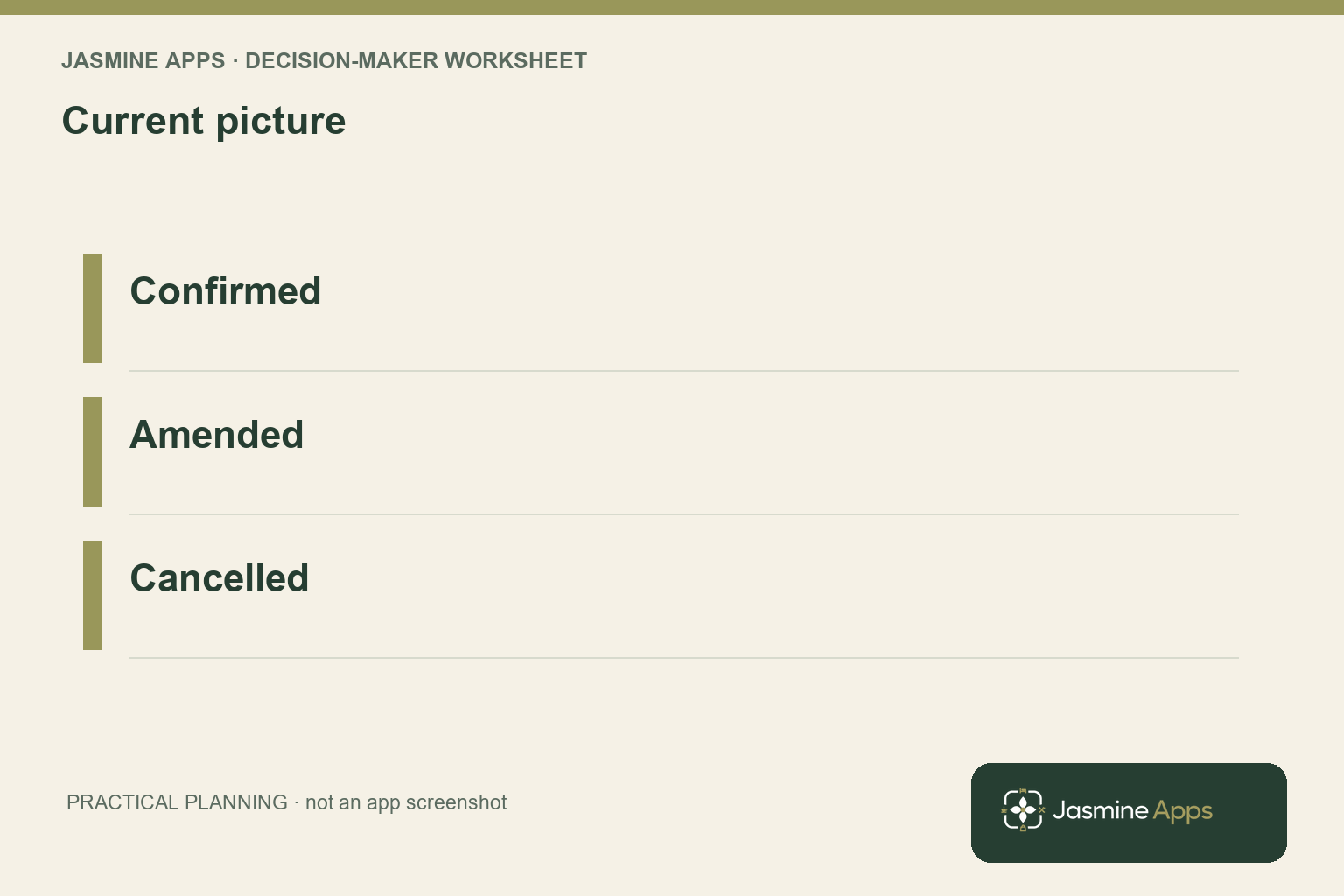
Review cancellations and amendments alongside the booking curve. An early total can overstate the final service if the same period also includes a material number of later changes. Your operations team should distinguish the current confirmed picture from historical creation counts. That helps you avoid briefing the kitchen from a report showing every reservation ever entered for the day rather than the current accepted service.
When you plan an offer, check its timing against your actual booking behaviour. Your Table Jasmine offer setup should support an approved service proposition and a clear enquiry route. Lead-time analysis can inform when you review availability or publish practical information, but it does not establish that a promotion caused a particular booking. Keep marketing exposure and reservation outcomes separate unless your measurement can connect them reliably.
After each review, record the decision and the evidence you expect next. You might change the time of a diary briefing, clarify a large-party route or investigate an unusual gap in comparable demand. Return to the same definition and service scope when checking the result. Your Table Jasmine records then support a repeatable management habit rather than a one-off chart whose categories change whenever the story becomes inconvenient.
Pro Tips and Common Mistakes
Pro Tips
Keep an as-of date. Your diary is a changing picture. Label the time of each snapshot so you can distinguish what your manager knew before service from what the final records show afterwards.
Inspect the late-booking tail. An average can hide the guests who arrive close to service. Keep same-day requests visible and ask whether your final review happens late enough to include their operational requirements.
Separate planned occasions. A private function and an ordinary dinner reservation often have different preparation needs. Review them independently before combining their records into a general venue summary.
Common Mistakes
Using an amendment date as the creation date fails because a long-planned reservation can appear newly booked. Preserve the original timestamp where it is available and retain the change separately.
Treating the historical average as a forecast fails because events, availability and guest behaviour can change. Use it to inform your checks while keeping the current service picture authoritative.
Combining cancelled and confirmed bookings without a label fails because your creation curve can be mistaken for accepted demand. Show the outcome and the scope of each count.
Your useful report should tell the team when to look again and what changed. If it merely produces a number of days, connect that number to a preparation decision before asking your staff to act on it.
Keep each pre-service snapshot distinguishable from the final diary rather than overwriting it with the eventual outcome after the guests have arrived. Your manager can then review the decision using the information available at that time and identify whether a later booking or amendment explains the difference in service expectations.
Frequently asked questions
What is restaurant booking lead time?
It is the interval between your guest creating a reservation and the service they booked. You can express it in elapsed time or restaurant-local calendar days, provided you state the convention. Keep amendments and cancellations separate from the original creation event. Your measure helps you examine how far ahead comparable guests book, but it does not by itself predict the final service or explain whether a reservation came from a particular promotion or channel.
How do you calculate booking lead time?
Use the scheduled service time and the original booking-created time, then calculate their difference under your agreed convention. Verify that the record provides both timestamps and that the timezone is consistent. If you use calendar days, state that explicitly rather than presenting the figure as elapsed hours. Preserve the original dates so another person can reproduce the result.
Where the required data is unavailable, disclose the gap instead of claiming precision from approximate notes or email timestamps.
Is average booking lead time useful for a restaurant?
It can be useful when your bookings belong to comparable services, but an average alone can hide important short-notice demand. Inspect the distribution and keep same-day bookings visible. Separate ordinary dining from private functions or other occasions with different preparation needs. Your manager should understand what the summary describes and which records it includes.
Use it to organise reviews and guest communication, rather than treat the average as a guaranteed schedule for future reservations.
How should same-day bookings affect your service planning?
Use your own pattern to choose an appropriate final diary review and a clear handover route for later changes. Check the accepted bookings against your real seating and kitchen capacity before promising availability. Your historical same-day demand can explain why an early snapshot is incomplete, but it does not guarantee more reservations will arrive. Keep your current operational records authoritative and communicate the review time, exception owner and remaining capacity to the relevant team.
Can booking lead time help you time promotions?
It can inform when comparable guests tend to plan, so you can review an offer and publish useful information at a relevant point. You still need to check current availability, the service promise and the guest’s next step. Do not claim that timing caused additional bookings without suitable attribution evidence. Compare the resulting reservations and outcomes on a consistent basis, and recognise that seasonality, events and changes to capacity can affect the pattern independently of your promotion.
Put restaurant booking lead time to work
Your restaurant booking lead time should help you choose a better review point and a clearer service briefing. Bring your current diary routine, service hours and one planning question to Contact Us. Ask for a Table Jasmine walkthrough of the reservation and service context, so you can understand the supported records before building your next booking review around them.