

Restaurant Missed Booking Cost: What an Empty Table Really Loses
· Yiannis Yiasemis

An empty table does not always cost you the full value of the bill you expected. You avoid some food costs when guests do not arrive, and you may recover the table through a walk-in. Your restaurant missed booking cost becomes useful when you separate those effects from the contribution you genuinely lose.
That distinction helps you decide where to spend your booking budget. With Table Jasmine, you can work from booking statuses and overlapping guest counts, giving your team a clearer view of what happened during service. The opportunity is to recover useful capacity and protect contribution without treating every empty seat as the same commercial problem.
Key Takeaways
- Calculate lost contribution after avoided variable costs.
- Record recovered covers before valuing a missed booking.
- Separate cancelled bookings from guests who never arrived.
- Compare recovery windows across services and party sizes.
- Choose booking tools around the loss your venue can address.
Calculate restaurant missed booking cost from contribution
Your starting point is the sale you would reasonably have expected to complete. Estimate the likely bill from comparable parties at that service, rather than using your most expensive menu combination. A four-person dinner booking and a two-person lunch have different values, preparation requirements and recovery windows.
Next, subtract the variable costs you avoid when the party never orders. Those might include ingredients you have not prepared and transaction charges you do not incur. Rent and a shift already staffed usually remain payable, so removing them from the lost contribution can hide the effect of the missed visit.
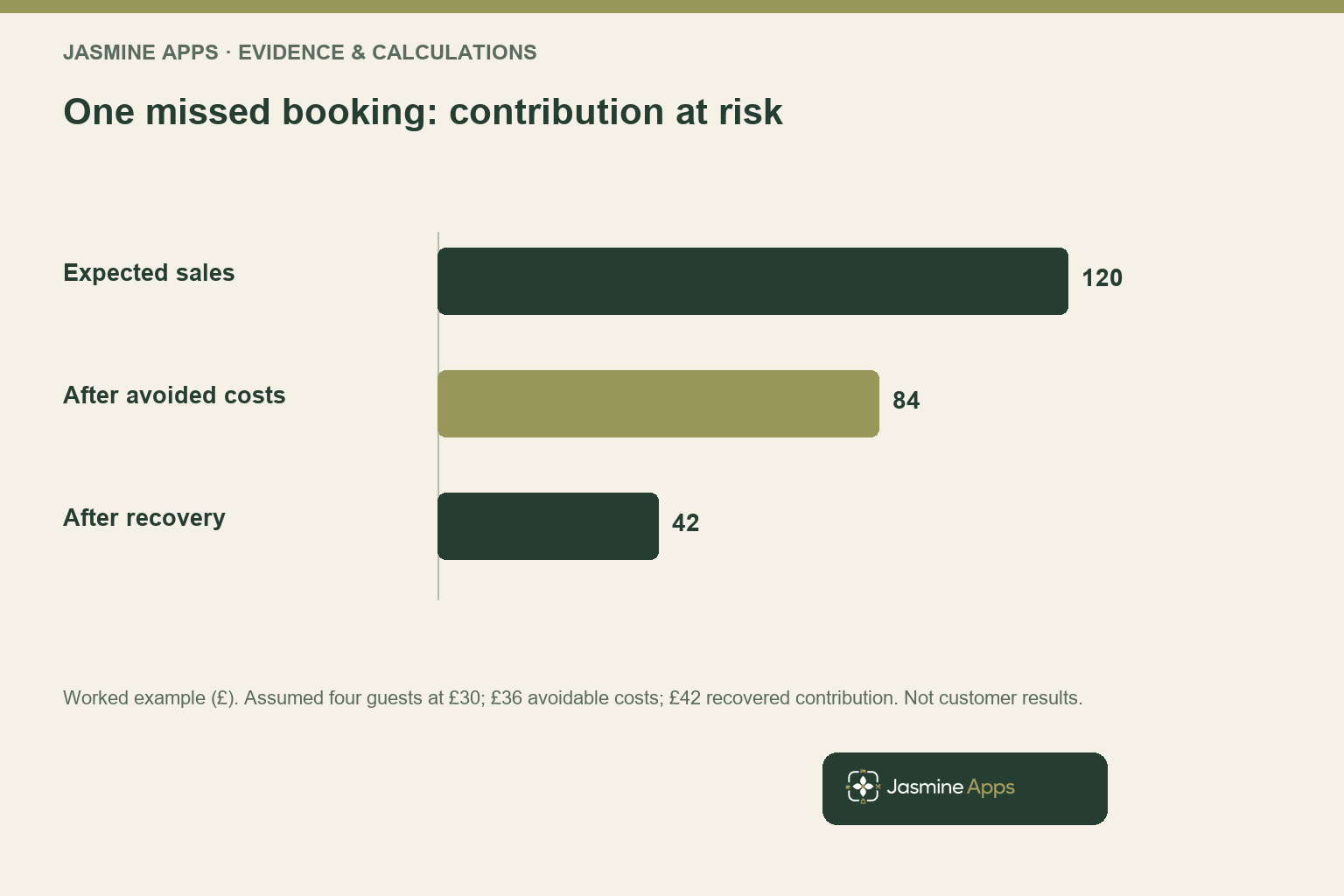
For a worked example, assume four guests would each spend £30 on a consistent net-of-tax basis. Your expected sales are £120, with £36 of avoidable variable costs. The contribution at risk is £84, before considering recovery, already-prepared food or any additional cost caused by the incident.
If two walk-in guests take the table and contribute £21 each, you recover £42. Your remaining lost contribution is £42, not £120. Keep any food prepared specifically for the missing party as a separate cost, and avoid subtracting it twice if your variable-cost estimate already includes it.
These hypothetical figures give you a calculation you can reuse with your own records. Build a small sample by party size, service and menu rather than attaching one universal value to every booking. You then have a commercial measure that can guide reminders, deposits, booking policies and a practical discussion with your host team. Your definitions should remain consistent across every monthly review.
Find where restaurant missed booking cost can be recovered
Your next question is when the table becomes available to sell again. A cancellation on Monday for Saturday dinner gives your team a different opportunity from a party that has still not arrived halfway through the service. The value of earlier notice depends on demand, staffing and the time needed to prepare for a replacement.
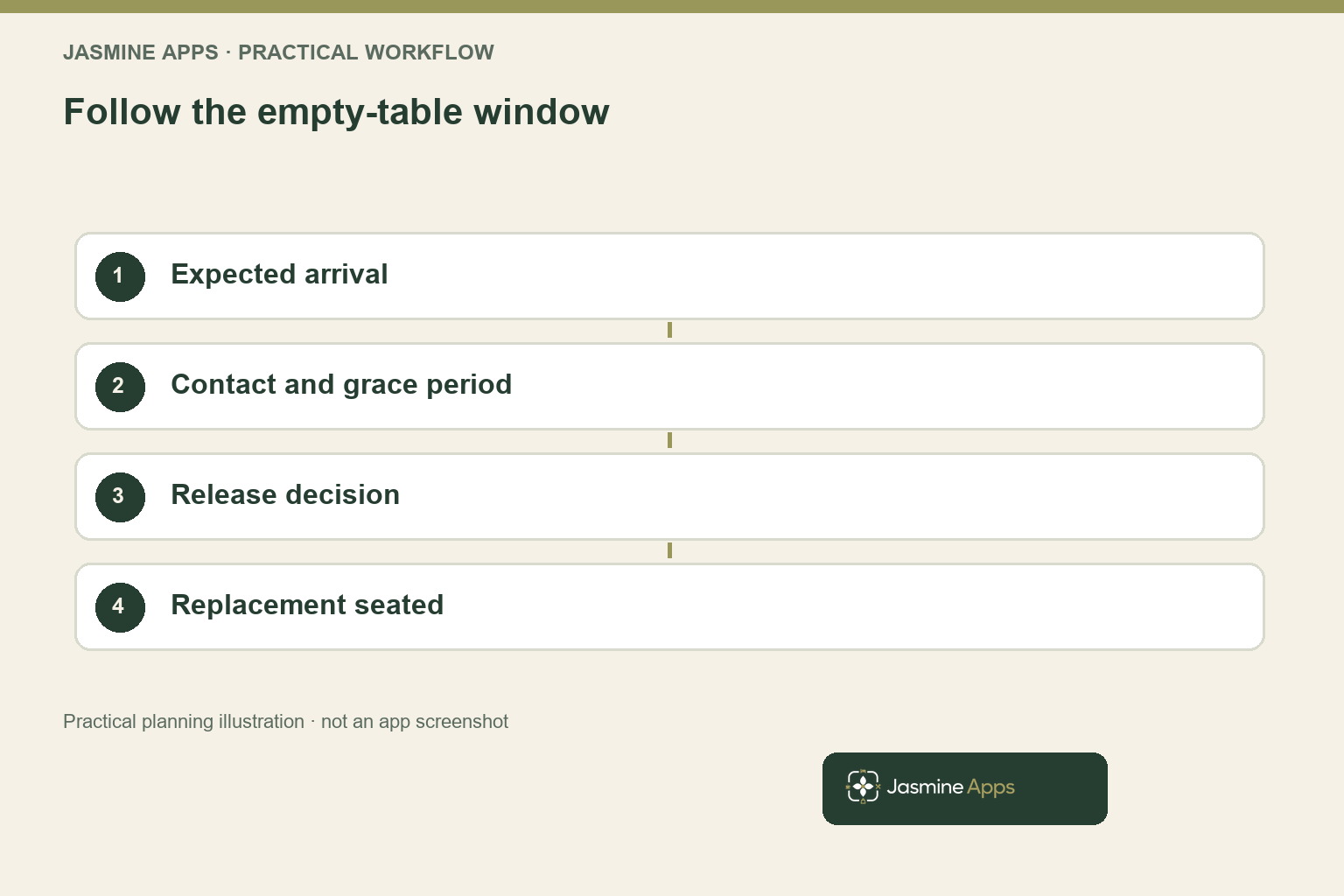
Map the actual timeline: booked arrival, first contact attempt, agreed grace period, release decision and replacement seating. You may find that most of the loss sits in the waiting period while nobody knows whether the original guests are coming. Give the host a clear release policy so the decision can be made consistently.
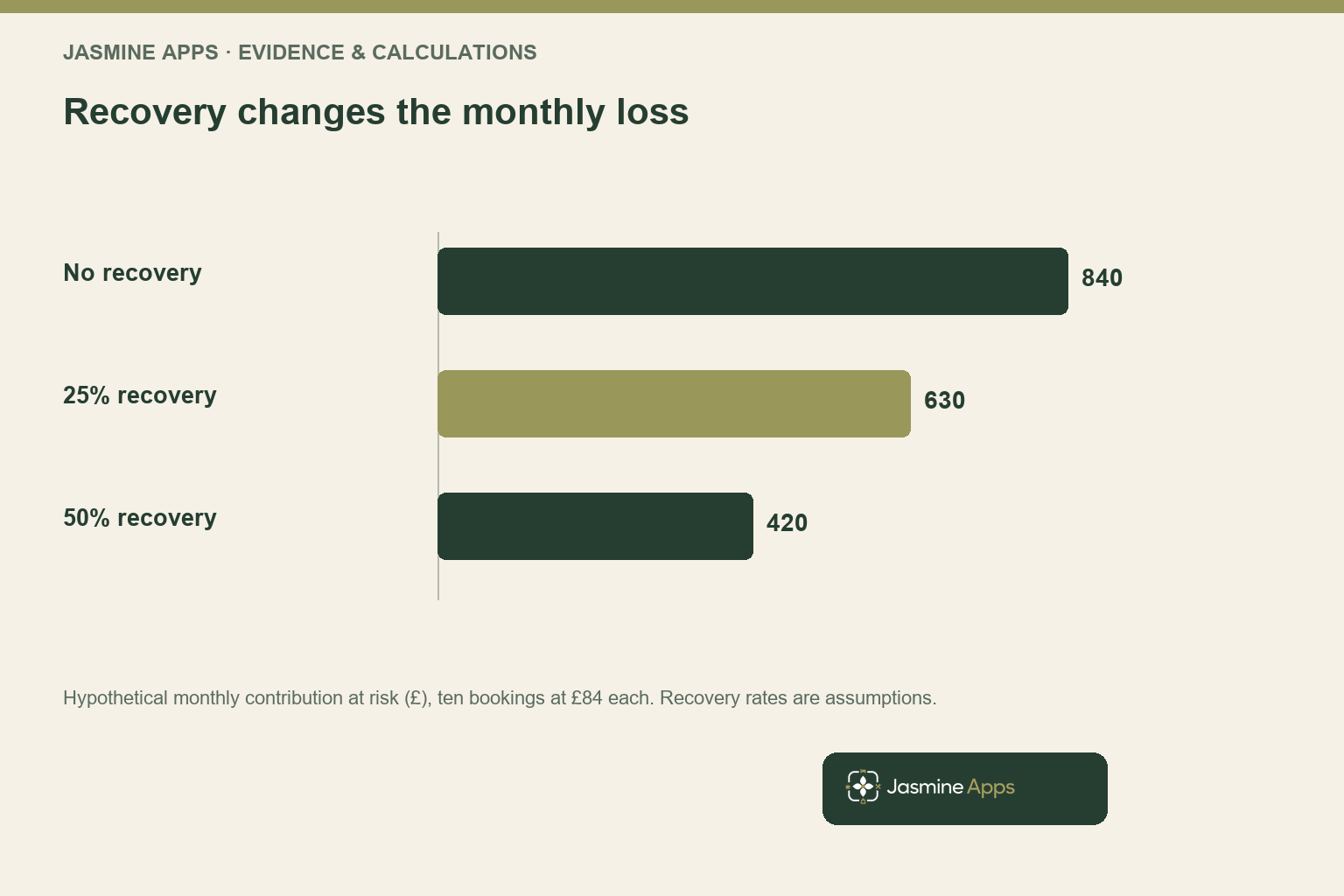
In a hypothetical monthly sample, ten missed four-person bookings put £840 of contribution at risk using the previous example. Recovering one quarter of that contribution leaves £630 at risk; recovering half leaves £420. Your graph should show the recovery assumption explicitly, rather than presenting those outcomes as typical restaurant performance.
You can also recover value without refilling every seat. A smaller walk-in party may make a worthwhile contribution when the alternative is an empty table. Check whether their seating blocks a later confirmed booking, though, because a short-term recovery can create a second loss if your service plan no longer works.
Use your restaurant booking lead-time guide to understand which services receive useful demand close to arrival. That gives you a better basis for choosing contact timing and a recovery route. Your team can then focus on the booking windows where earlier information genuinely changes the next decision.
Use restaurant missed booking cost to choose the right tools
Table Jasmine’s booking statuses distinguish confirmed bookings, arrivals, seated parties, departures, no-shows and cancellations. That helps your team record the service outcome more precisely than a note saying the table was empty. Your analysis still needs a consistent rule for when a booking becomes a no-show and who updates it.
Start with your main cause of loss. If guests want to cancel but cannot find the route, clearer communication may matter more than a tougher charge. If a large party requires advance preparation, your booking terms and confirmation process deserve attention before you buy an extension on the strength of a headline feature.
Jasmine Apps currently lists Table Jasmine at £69 per venue per month, with unlimited bookings in its listed scope. Guest messages and card deposits are separate £9 monthly extensions. Your quotation should set out the capabilities, payment charges, equipment and tax basis you need for the workflow you intend to run.
For cancellation terms, the CMA’s fair-contract guidance emphasises proportionate losses and steps to reduce them. Make the guest-facing terms clear before booking, and obtain appropriate advice for your policy. A deposit can support commitment, but it should not become a substitute for an understandable booking experience.
Bring a fictional booking to your demonstration and follow it through confirmation, cancellation or no-show recording, table release and recovery. Ask your team to identify the person responsible for each step. You can then choose a tool because it improves a specific handover, with your no-show prevention guide providing the broader policy context.
Turn your booking records into a monthly commercial review
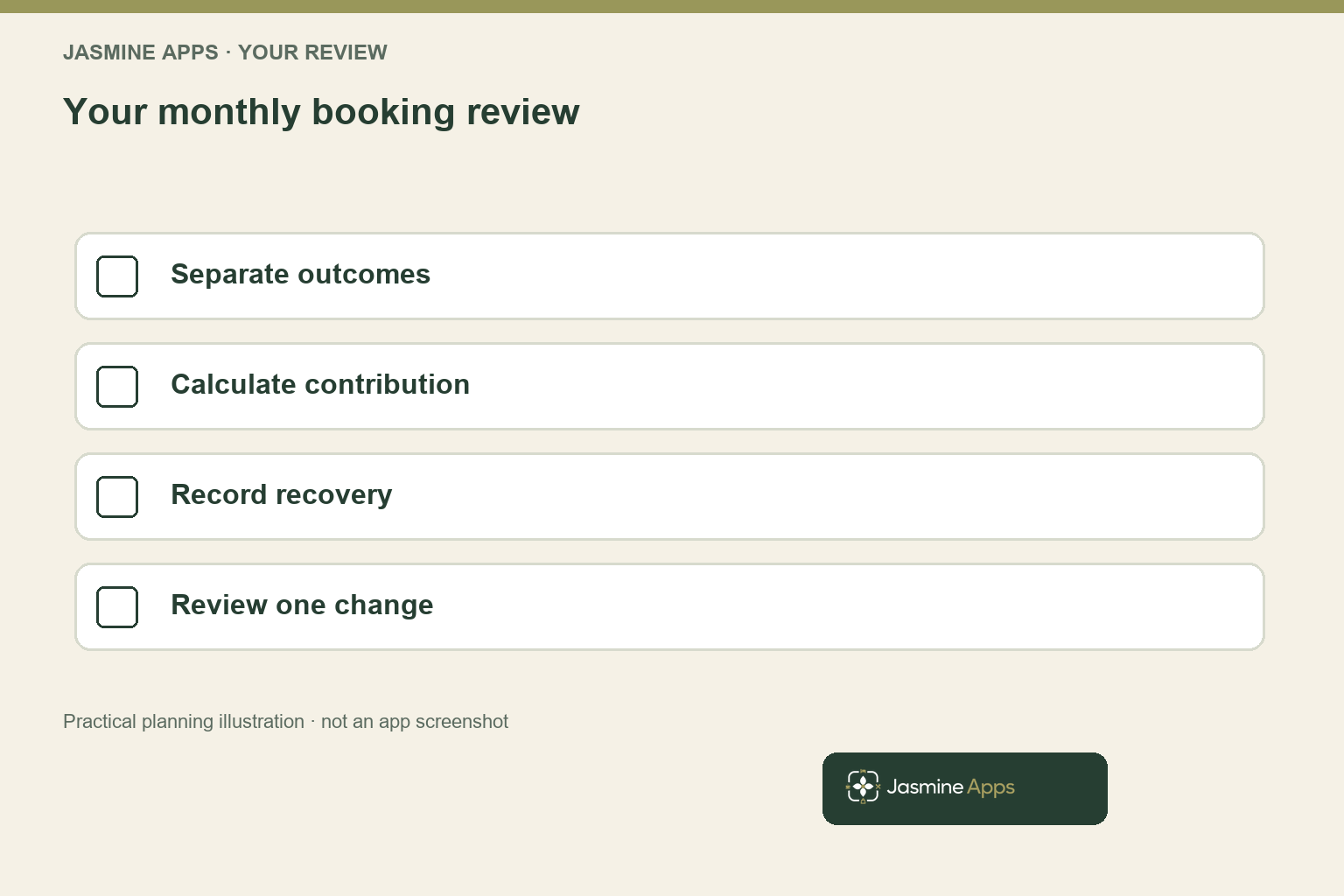
Your monthly review should begin with outcomes, not a list of individual guests. Count missed bookings, cancelled bookings, expected covers, recovered covers and prepared-food costs using the same rules. Compare similar services so a quiet Tuesday lunch does not distort a discussion about Saturday dinner demand.
Choose a short baseline period that includes enough relevant bookings to reveal a pattern. Record your original contact and release process, then change one part of the workflow. If you introduce reminders, new terms and a different table policy together, you will struggle to see which change helped or whether guests simply booked differently.
Track contribution recovered alongside guest experience. A process that fills more seats but generates confused payment disputes or long reception calls can create work elsewhere. Ask the host team which messages guests understand, when they need help, and whether the new release rule is practical during a busy service.
Compare your improvement with the complete ongoing cost of running it. Include subscription changes, payment fees, staff administration and any extra preparation. You can value time released as useful capacity, while a cash saving requires an expense you actually reduce; keep those measures separate when deciding whether to continue.
At the end of the review, keep the intervention that changed a useful outcome and adjust the part that caused friction. Your best result may be fewer avoidable no-shows, earlier cancellations or quicker recovery rather than a perfect attendance record. A clear monthly calculation gives you a repeatable way to protect the value of your tables.
Pro Tips
Use a recovery ledger. Record the replacement booking or walk-in against the original table window, using an anonymous service reference. Your team can then distinguish a genuine recovery from a sale that would have happened elsewhere, keeping the calculation useful without building a list of guest blame.
Value each service separately. Use expected contribution from comparable completed visits for lunch, dinner and large parties. A blended average can send your budget towards high-volume low-impact incidents while hiding the smaller number of bookings that need earlier operational attention.
Test the release decision. Ask a host to explain when a table can be offered again, how they contact the guest and what happens if the party arrives late. A clear rule turns information into a usable action while keeping the guest experience consistent.
Common Mistakes
Counting the whole bill as lost profit. You overstate the loss when ingredients and other variable costs are avoided. Calculate contribution first, then add genuinely wasted preparation and subtract useful recovery.
Combining cancellations and no-shows. You lose the timing information that makes recovery possible. Keep the categories separate and compare how much notice each gave your team.
Buying every extension at once. You increase your costs without learning which step was weak. Begin with one demonstrated problem and measure the outcome before expanding the setup.
Frequently Asked Questions
How do you calculate the cost of a restaurant no-show?
You estimate the expected sale on a consistent tax basis, subtract avoidable variable costs, then account for prepared-food losses and contribution recovered through replacement guests. Use comparable completed bookings to estimate spend rather than your highest possible bill. Your result is contribution at risk, not automatically net profit lost. Keep the service window and party size visible so your monthly analysis explains where the loss occurs.
Should you count a cancelled booking as a no-show?
You should record cancellations separately because they give your team information at a different time. A booking cancelled early may allow you to resell the full table window, while a no-show can leave you waiting during service. Compare notice, expected covers and recovery for each category. Your booking policy can then address the actual issue instead of making every empty table appear to have the same cause.
Can a walk-in recover the cost of a missed booking?
You can recover some or all of the contribution when a walk-in uses capacity that would otherwise remain empty. Calculate the replacement party’s contribution and check that their seating does not displace another confirmed visit. You may still have wasted preparation or a shorter selling window. Your recovery record should connect the replacement with the relevant table period, rather than assigning unrelated walk-in sales to every missed booking.
Are restaurant booking deposits always the best solution?
Your best approach depends on preparation, party size, demand and guest behaviour. Clear cancellation routes and timely communication may solve some problems before a deposit is needed. If you use deposits, make the terms understandable and proportionate, with appropriate review for your circumstances. Confirm how collection, cancellation, refunds and charges work in your proposed setup, including any extension and payment fees that affect your complete operating cost.
How can Table Jasmine help you analyse missed bookings?
You can use Table Jasmine’s booking statuses to distinguish arrivals, seated parties, departures, cancellations and no-shows. Apply a consistent recording rule and combine those outcomes with your expected spend, variable costs and recovered covers. Your demonstration should follow a fictional booking through the full service process. Confirm the reporting and export scope you need, so your monthly calculation rests on records your team can reliably maintain.
Restaurant missed booking cost: your next step
Your restaurant missed booking cost becomes actionable when you can see the contribution lost, the recovery available and the handover worth improving. Request a Table Jasmine demonstration with one missed-booking example, your release policy and the service you most want to protect. You can leave with a clearer booking process and a calculation that helps you choose the tools your venue will actually use.