

Restaurant Booking Deposit Policy: When Does a Deposit Make Sense?
· Yiannis Yiasemis

The booking most worth protecting may be the one that needs preparation, rather than the one with the largest expected bill. A late cancellation for a customised group menu can leave costs you cannot recover, while a smaller standard booking may be easy to refill. Your restaurant booking deposit policy should reflect that difference.
Table Jasmine’s card-deposit extension gives you a booking-linked collection route to investigate. The useful decision comes first: which bookings need commitment, what loss you are addressing and how the guest will understand the terms. A clear policy helps you protect the service while keeping the booking experience approachable.
Key Takeaways
- Choose deposit rules around preparation and recovery.
- Make the amount, deadline and terms clear before booking.
- Separate taking a deposit from retaining it on cancellation.
- Record replacements and avoided costs when reviewing losses.
- Demonstrate collection, cancellation and refund routes together.
Build your restaurant booking deposit policy around exposure
List the commitments your venue makes before a booking arrives. You may reserve an exclusive space, buy ingredients for a special menu or schedule additional colleagues. Those decisions create different exposure from a standard table that uses the normal menu and can be offered to another party with little notice.
Group your bookings by that exposure and the practical recovery window. Party size can be a useful signal, but it should not be the only rule. A smaller private event with bespoke preparation may need earlier commitment than a larger group choosing from the usual menu, especially when the date is easy to resell.
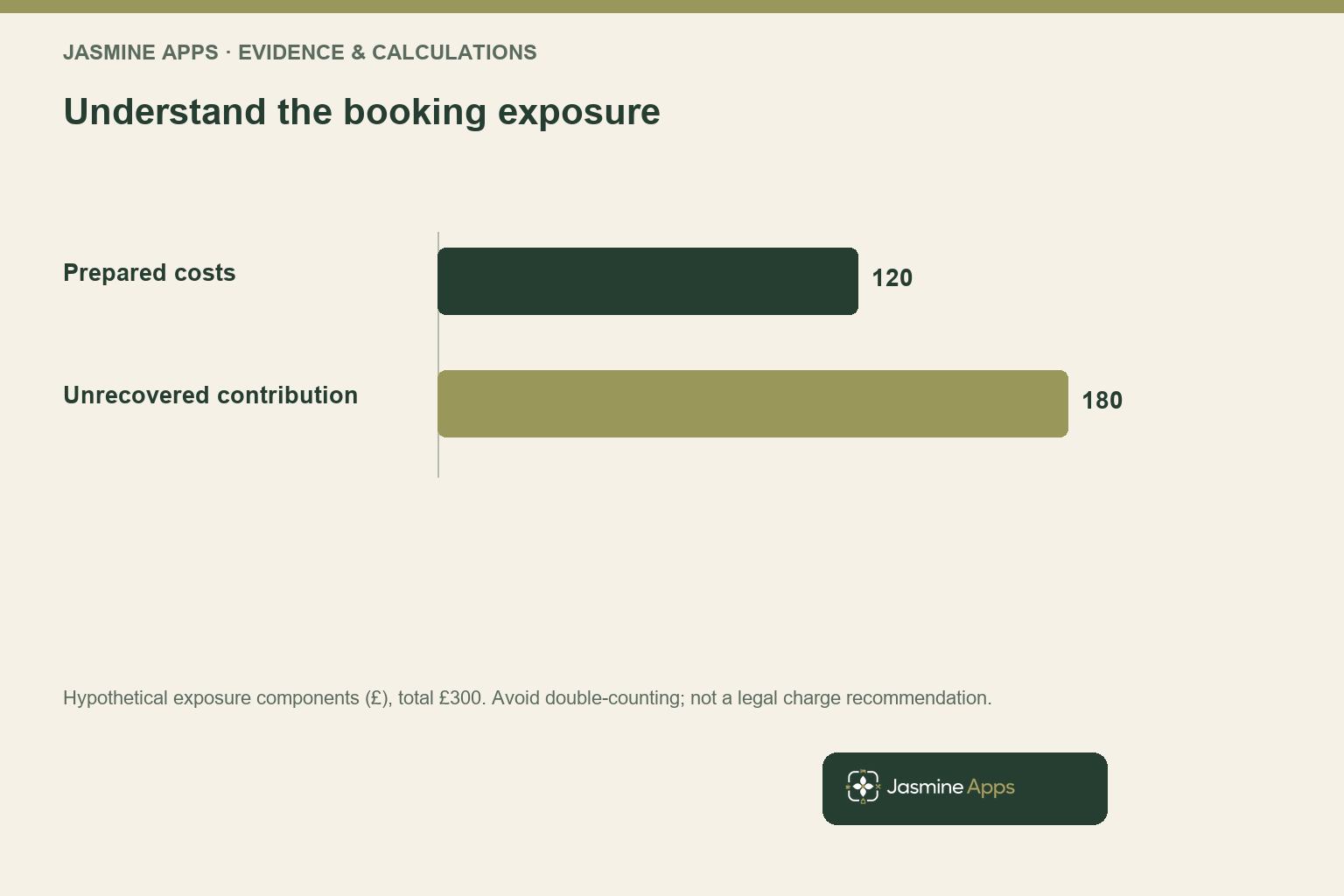
For a hypothetical twelve-person menu, assume £120 of preparation costs become unavoidable before arrival and a late cancellation leaves £180 of expected contribution unrecovered after reasonable replacement efforts. That creates a £300 exposure to examine, with care not to count the same cost or loss twice. It does not automatically establish a lawful charge or deposit amount.
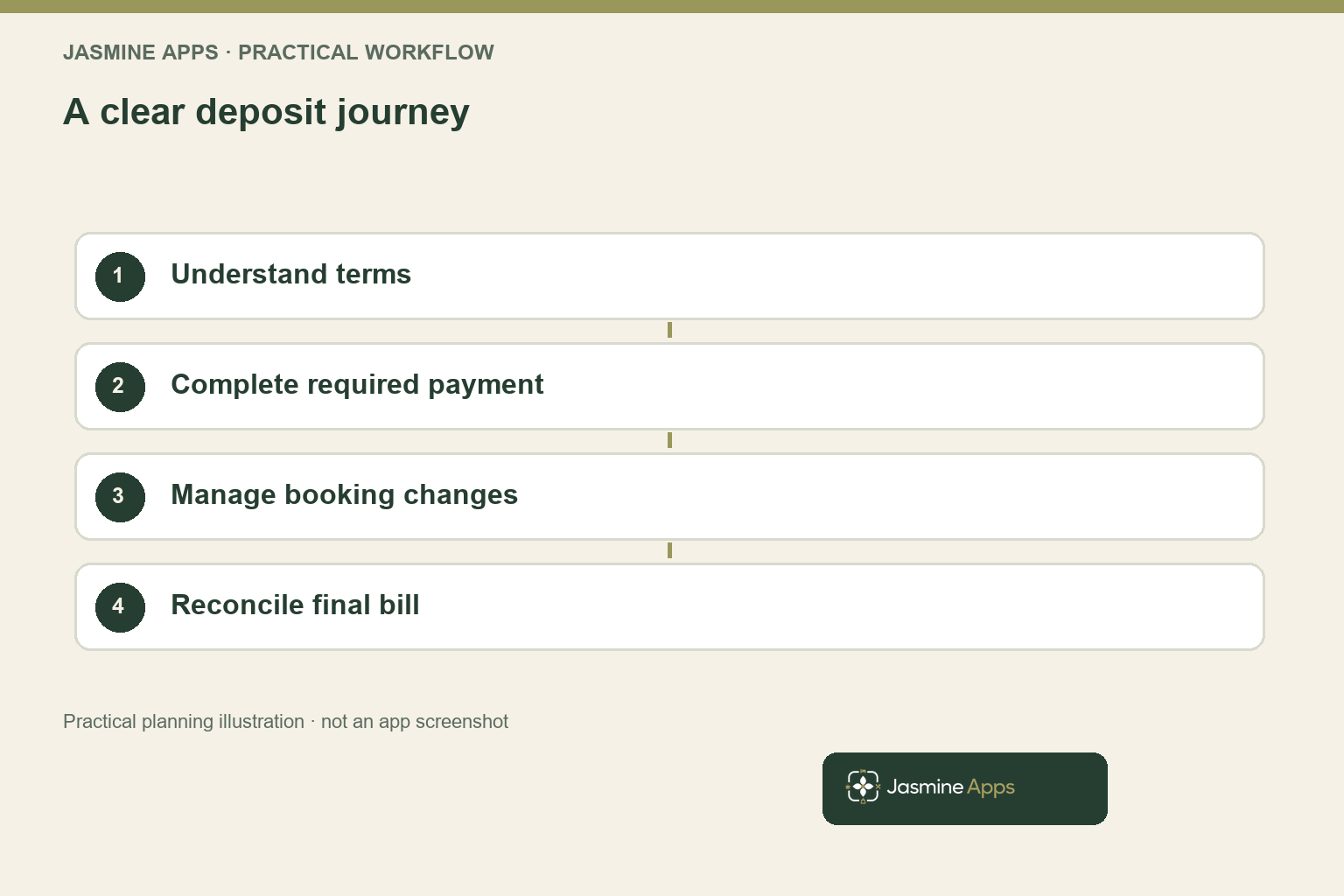
Your policy should explain what the deposit is for and when it is due. Guests need to understand whether it is credited against the bill, how changes in party size work and which cancellation deadlines apply. Write those details before introducing the payment route so your team can answer the same question consistently.
Use your restaurant missed booking cost guide to distinguish expected sales, avoidable costs and recovered contribution. That calculation helps you choose the bookings worth examining for deposits. Your policy then has an operational reason and a transparent guest explanation, rather than an arbitrary charge added to every reservation.
Write a restaurant booking deposit policy guests can understand
Your terms belong in the booking decision, before the guest commits. Present the amount, payment timing, credit against the final bill, change process and cancellation conditions clearly. Avoid burying an important condition in a long document that the guest only receives after paying, because the surprise can undermine confidence even when the wording seems precise.
The CMA’s fair-contract guidance says retained deposits and cancellation fees must reflect relevant losses and steps to reduce them. Your policy needs appropriate review for its circumstances. A signed agreement or a label saying non-refundable does not remove the need for fair, transparent terms.
Separate the original deposit from the amount you may retain after a cancellation. You may have avoided preparation costs or resold the space, changing the loss you actually face. Keep the recovery record and calculation available to the colleague handling the cancellation, so they can explain the outcome rather than rely on a blanket response.
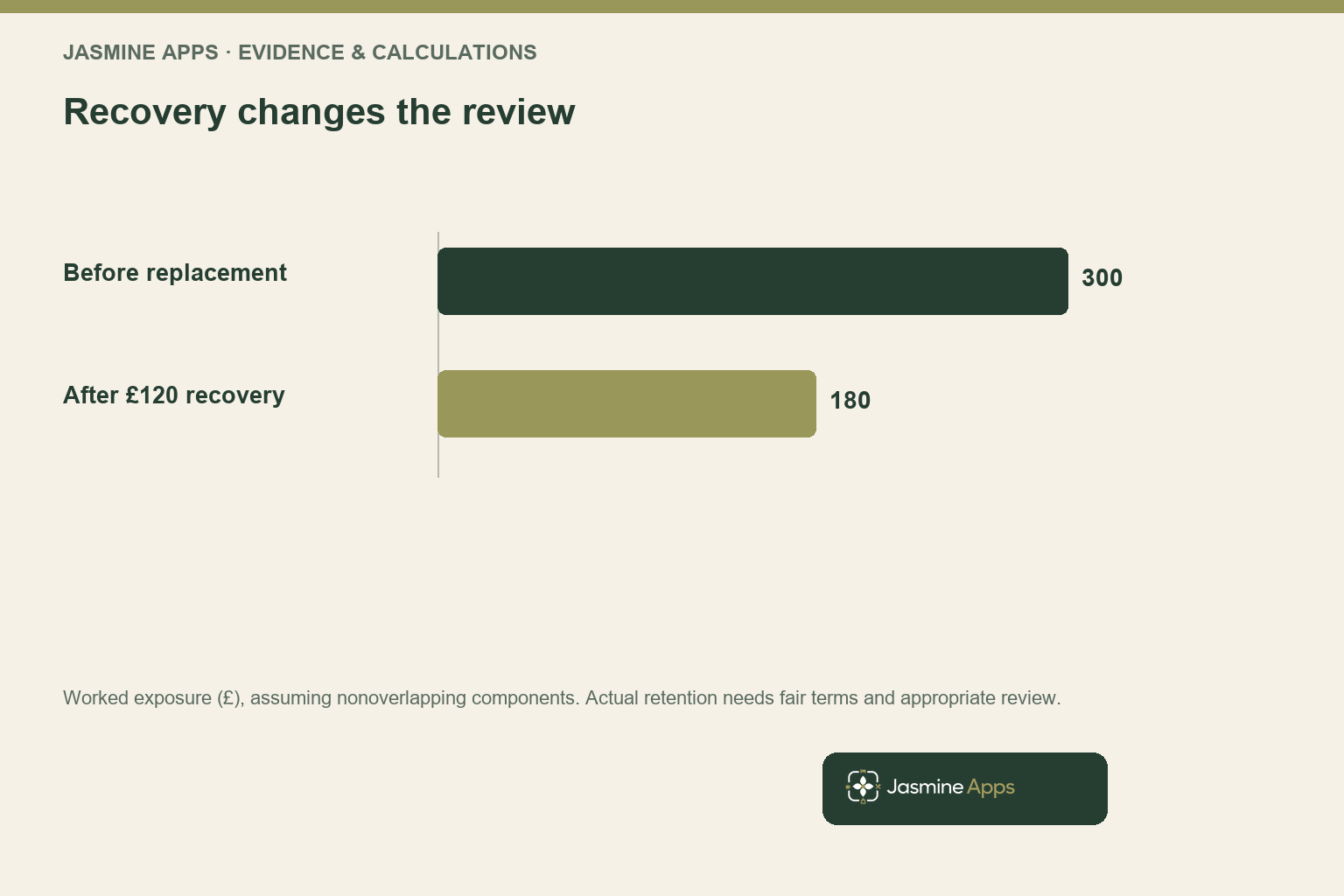
In a worked scenario, your £300 exposure might fall to £180 when a replacement booking recovers £120 of contribution, assuming the components do not overlap. The example shows why recovery belongs in the review. Your actual retention decision should follow the applicable terms and advice, using the facts of the booking rather than the graph alone.
Train your team with a normal cancellation and an exception. Ask them to explain the deadline, the possible refund route and when they need manager approval. Your event agreement objections guide can help you answer guest questions before the paperwork is sent, keeping the commercial conversation clear and practical.
Demonstrate your restaurant booking deposit policy in the app
Bring a fictional booking and the proposed terms to your Table Jasmine demonstration. Follow the guest-facing payment request, the booking record and the staff review route. Ask how the deposit is credited, what information the guest receives and what happens when the booking changes before or after your cancellation deadline.
Jasmine Apps describes the card-deposit extension as card-on-file, charges and a log of deposits on a booking. It is listed at £9 per venue monthly, alongside Table Jasmine’s £69 monthly base subscription. Confirm the delivered scope, payment-provider charges, taxes and supported refund or cancellation behaviour in the complete quotation.
Do not assume the payment feature writes your policy for you. Your venue still needs to decide eligibility, deadlines, exceptions and the person who can approve a charge or refund. The system should help your team follow those rules consistently, with the relevant record available when a guest asks about an amount.
Test the information handover to the service team. Your host should know the booking status, while the colleague closing the bill needs the agreed credit treatment. Where the workflow uses another system or a manual step, demonstrate that route explicitly so a deposit does not become a disputed extra payment at the end of the visit.
Include a failed or incomplete payment scenario in the demonstration. Agree whether the booking remains provisional, how the guest is contacted and when the reserved capacity can be released. A useful deposit process gives your staff a dependable next action when the payment does not follow the ideal path, with clear communication protecting the guest’s understanding.
Review deposits as part of the whole booking experience
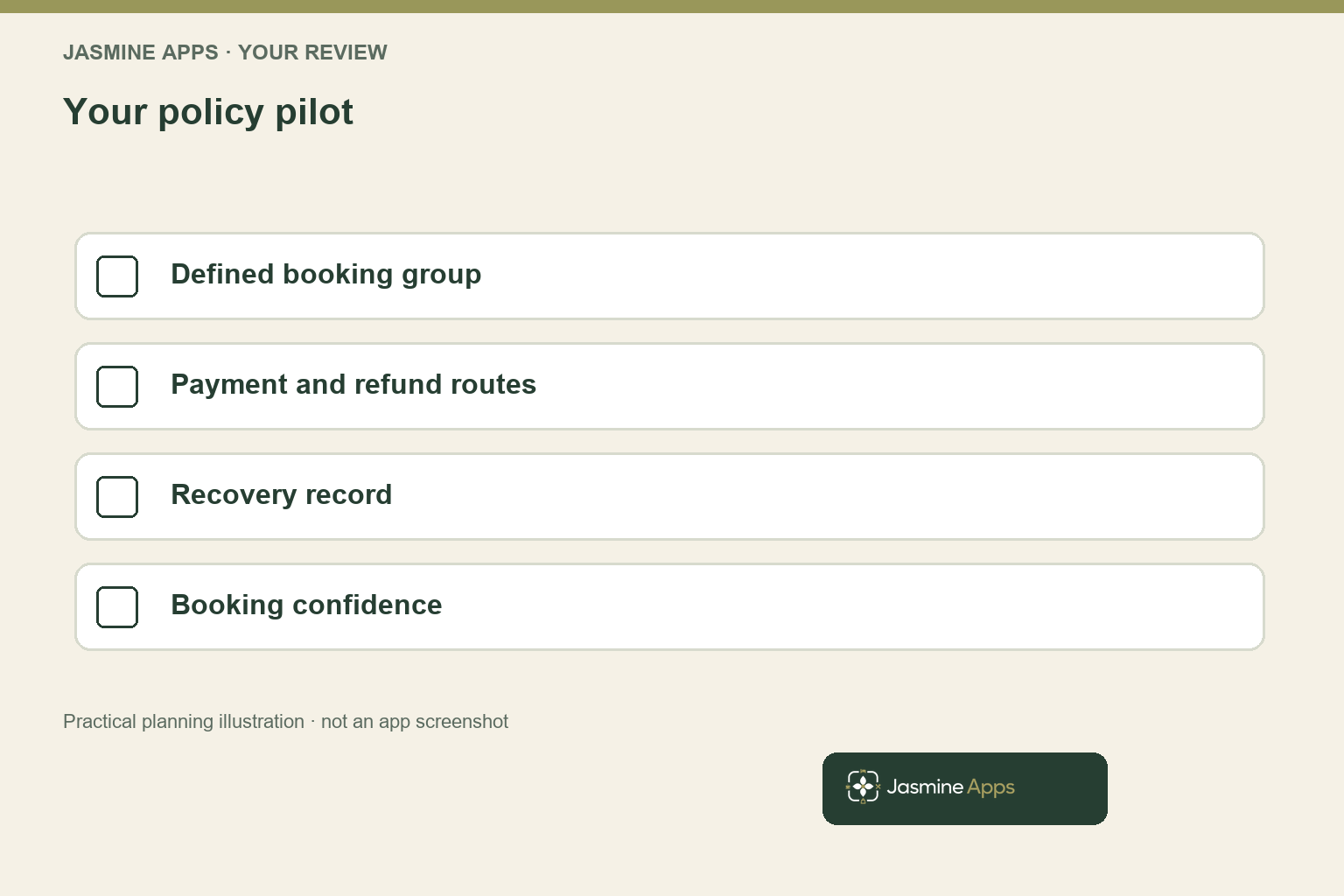
Pilot the policy on a defined booking group, such as prepared group menus or a particular private-dining service. Record enquiries, completed bookings, cancellations, replacements and disputes alongside the deposit administration. Your goal is to protect relevant exposure while keeping suitable guests confident enough to complete the reservation.
Watch where people stop in the booking journey. A guest may need a clearer explanation of the menu, payment deadline or cancellation conditions before proceeding. That is different from a guest who rejects the policy altogether, so categorise the question and use it to improve the information rather than immediately changing the amount.
Compare the protected contribution with the full cost of operating the process. Include extension fees, transaction charges, staff time and any additional reconciliation work. A deposit received is not extra revenue on top of the meal if it is credited against the bill; keep the accounting and commercial measures consistent with your agreed treatment.
Review exceptions with the manager responsible for policy. Repeated party-size changes may suggest a confirmation deadline that needs adjusting, while refund questions may reveal terms that are too difficult to explain. You can simplify the process without abandoning protection, provided the revised wording and configured workflow agree and existing bookings are handled appropriately.
Your strongest deposit policy is one your team can explain before payment, apply during a change and reconcile after the visit. Revisit it when menus, preparation or demand patterns change. You then have a booking process built around your real exposure, supported by a tool that keeps the relevant payment and reservation information connected.
Pro Tips
Map irreversible preparation. Identify when ingredients, staffing or exclusive-space commitments become difficult to recover. That timeline helps you discuss a sensible confirmation deadline and the bookings that need closer attention.
Demonstrate the final bill. Follow the deposit credit through the completed service as well as the booking stage. Your guest should see the agreed treatment without having to explain the earlier payment to a different colleague.
Keep a recovery record. Document replacement activity and avoided costs using the relevant booking reference. The colleague reviewing a cancellation needs those facts to explain the outcome clearly.
Common Mistakes
Treating the deposit as extra meal revenue. You overstate sales if a credited deposit is counted again on the final bill. Use the agreed accounting treatment and reconcile the booking and payment records.
Using one amount for every booking. You can overlook different preparation and recovery patterns. Group bookings by exposure before choosing the policy.
Relying on a non-refundable label. You risk a policy that is unclear or unfair in practice. Have the terms appropriately reviewed and consider the actual loss and recovery when handling cancellation.
Frequently Asked Questions
When should you take a restaurant booking deposit?
You can consider deposits where the booking requires advance preparation, exclusive capacity or another commitment that is difficult to recover after cancellation. Party size is one factor, alongside menu, date and recovery time. Explain the amount, deadline and treatment before the guest books, with appropriate review of your terms. Your payment workflow should then support the policy clearly, including changes, cancellation and the credit against the completed visit.
Can you keep a restaurant deposit after cancellation?
Your answer depends on fair terms, the circumstances and the relevant loss, including steps taken to reduce it. A label saying non-refundable is not enough on its own. Keep the preparation, avoided-cost and replacement information available to the colleague reviewing the booking, and obtain suitable advice for your policy. Your guest should receive a clear explanation of the outcome based on the applicable terms and facts of their cancellation.
Should large restaurant parties always pay a deposit?
You should consider the preparation and recovery exposure rather than applying party size as the only rule. A large standard-menu booking may be easier to replace than a smaller bespoke event. Group your bookings by commitments, demand and cancellation timing, then choose a policy your team can explain consistently. Test its effect on suitable enquiries and completed bookings alongside the protection it provides for your actual service costs and contribution.
What should your restaurant deposit terms include?
You should clearly describe the amount, payment deadline, credit against the final bill, party-size changes, cancellation conditions and the contact route for questions. Present the important information before commitment, with appropriate review for fairness and your circumstances. Train staff on normal changes and exceptions. Your terms and payment workflow need to agree so guests receive a consistent answer when booking, changing the reservation or settling the bill after the visit.
How much is Table Jasmine’s card-deposit extension?
Jasmine Apps currently lists the card-deposit extension at £9 per venue monthly or £90 annually, in addition to the required Table Jasmine scope. The base Table subscription is listed at £69 monthly or £690 annually. Your quotation should confirm payment-provider charges, taxes, supported collection, refund and cancellation behaviour. Demonstrate those routes with fictional records before rollout so the complete setup supports the deposit policy your team intends to operate.
Restaurant booking deposit policy: your next step
Your restaurant booking deposit policy should protect the preparation behind the reservation and keep the guest’s decision clear. Request a Table Jasmine deposit-workflow demonstration with one group-menu example and your proposed terms. Ask to follow payment, a booking change and final reconciliation, so you can choose a practical process with its full costs and responsibilities understood.