

Restaurant Average Spend: Better Recommendations Without Pressure
· Yiannis Yiasemis

Your restaurant average spend can rise while your contribution falls. If your team sells more heavily discounted extras, replaces a profitable choice with a costly upgrade or slows the busiest part of service, a higher bill does not necessarily leave you better off. Your starting question should be which recommendation improves the guest's meal and your commercial result together.
With Till Jasmine, your product and reporting setup gives you a practical starting point for reviewing what you sell. Combine that information with service observation and current product costs. You can then build a recommendation process around useful choices, measure its effect and give your team confidence without turning every conversation into a sales pitch.
Key Takeaways
- Measure contribution as well as spend per guest.
- Separate genuine add-ons from substitutions.
- Offer one relevant choice at a useful moment.
- Test the service impact before widening the approach.
- Keep prices, availability and product information clear.
Calculate restaurant average spend using a consistent denominator
Decide what your spend measure represents before comparing services. Sales divided by guests is spend per head; sales divided by bills is average transaction value. A larger party can raise the second measure without changing the first, while split bills can lower transaction value even when every guest spends exactly the same amount.
Use a consistent revenue basis, including how you treat VAT, tips, discretionary service and refunds. For your internal contribution review, compare sales and variable costs on a compatible tax basis. Your accountant can help establish that basis; the important operational step is applying the same rule to your baseline and your test.
Start with comparable services and separate major menu or price changes. If your Saturday guests spend more than your weekday lunch guests, that difference may reflect occasion, menu and party composition. Your manager needs to know whether the recommendation changed behaviour within a useful comparison, rather than simply coinciding with a busier or more expensive service.
Track eligible opportunities alongside completed sales. If only guests ordering a main course can sensibly add a particular side, use those opportunities when calculating the attachment rate. Counting every cover, including children on a different menu or guests ordering only drinks, can make a good recommendation look weak or send your training towards the wrong conversation.
Keep the opening report small: eligible orders, add-on units, net revenue, variable cost and any relevant refunds. Add service context such as item availability and waiting time. These definitions make your later calculation repeatable, so a higher spend figure becomes evidence you can discuss instead of a headline that changes meaning every week.
Choose restaurant average spend opportunities by incremental contribution
Your most useful recommendation is not automatically your most expensive item. Look for a choice that complements the order, is straightforward to explain and can be delivered without disrupting the kitchen or bar. Your team should understand why the guest might value it before learning how much it could add to the bill.
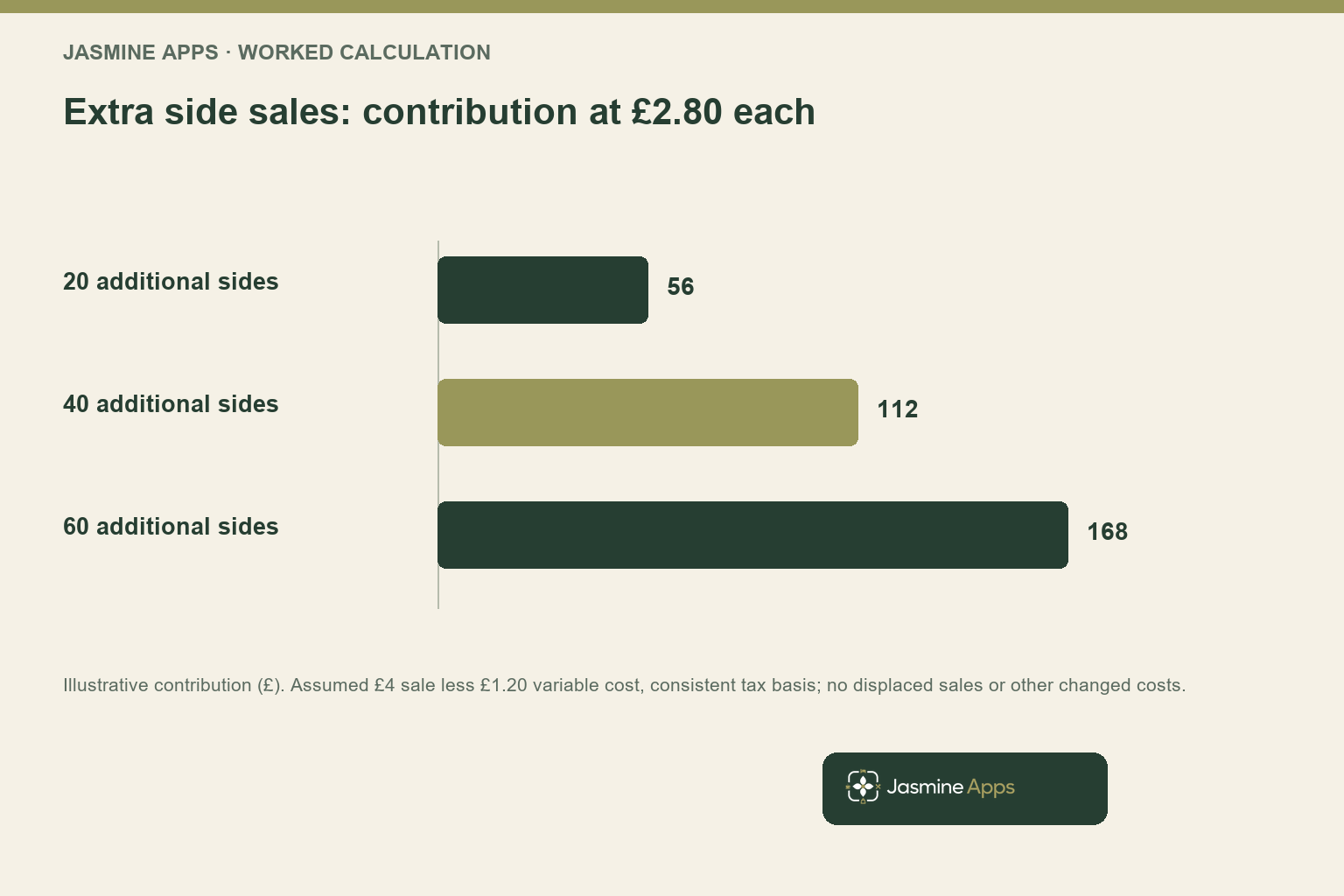
For an illustrative calculation, assume an extra side sells for £4 on your chosen consistent tax basis and has £1.20 of genuinely incremental variable cost. Each additional sale contributes £2.80 before fixed costs. Twenty additional sides therefore contribute £56; forty contribute £112; sixty contribute £168, assuming no displaced sales or extra staffing costs.
Now compare a substitution. If a guest replaces a £6 starter costing £1.80 with an £8 starter costing £4, sales rise by £2 but contribution falls from £4.20 to £4. Your bill is larger, yet the choice contributes twenty pence less. That does not make the guest's preference wrong; it changes how you assess the commercial claim.
Check discounts, waste, payment charges and preparation requirements where they change with the sale. A garnish that already exists in usable surplus has a different operational effect from a new product requiring another supplier and a dedicated preparation batch. Avoid treating food cost alone as a complete profit calculation, especially when labour or capacity becomes constrained.
Use your restaurant profitability review for the wider cost context. Here, keep the decision at recommendation level: what does the extra sale add, what might it replace and what work does it create? Your shortlist should contain choices you can explain commercially and serve reliably, rather than a ranking by menu price.
Improve restaurant average spend through useful service conversations
Choose the moment when the suggestion answers a real question. A side recommendation belongs with a main-course choice that benefits from it; a second drink can be offered when the first is nearly finished and the guest is still dining. Interrupting a conversation simply because a script says to ask can damage the experience you want guests to repeat.
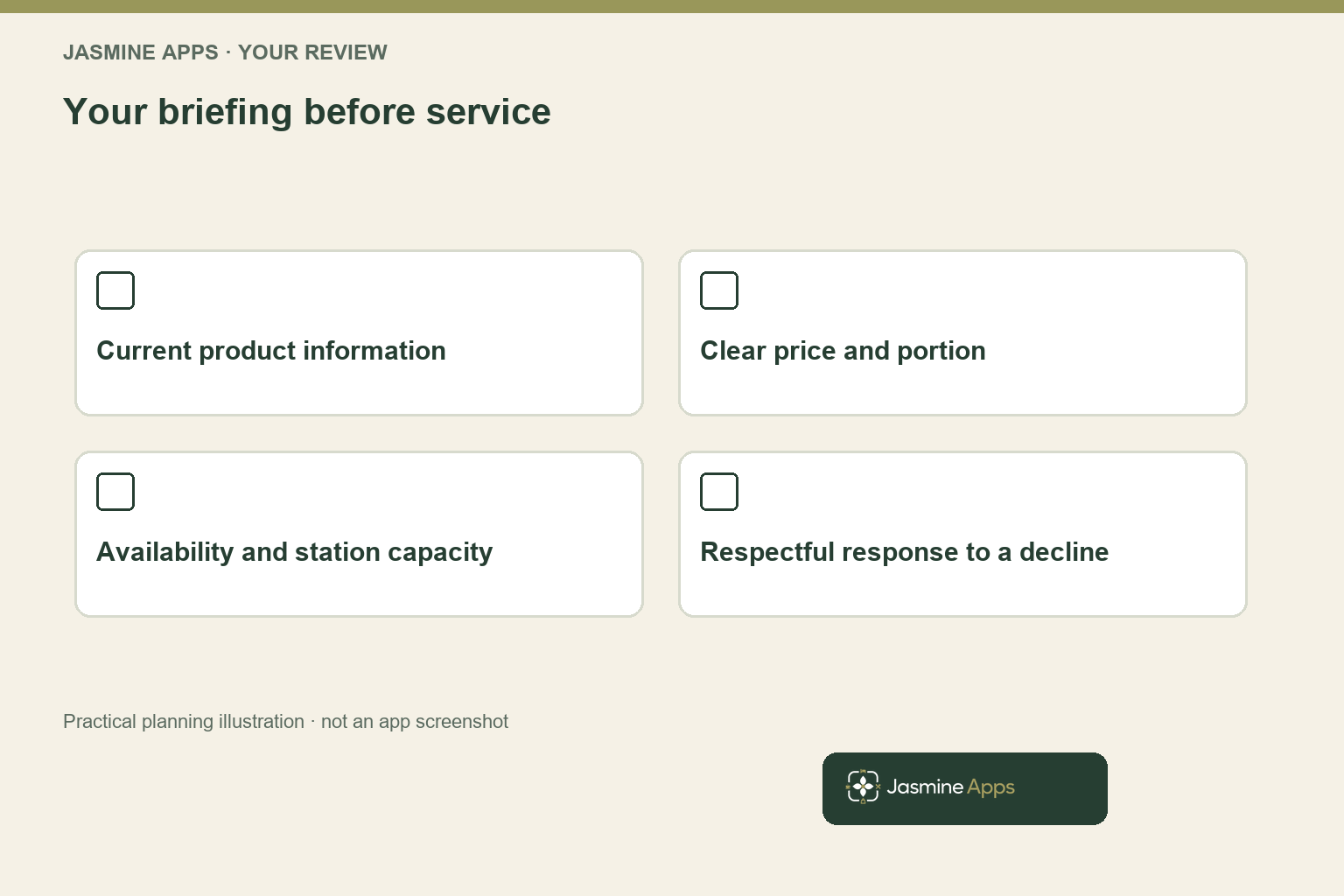
Give your team a short explanation rather than a compulsory phrase. You might describe a side's portion size and what it complements, then leave the decision with the guest. Follow the CMA's consumer price-transparency guidance when presenting prices and charges, and accept a refusal immediately. Your recommendation should help the guest choose, including when their original order is enough.
Keep dietary and allergen questions within your approved food-information process. The Food Standards Agency's allergen guidance supports accurate information and appropriate communication; your staff should consult current records and the responsible colleague when necessary. A sales target must never encourage guessing that a suggested dish is suitable.
Check what the team can actually deliver at that moment. If the kitchen has paused a product or a preparation station is overloaded, adapt the recommendation to the available menu. A manager should communicate those changes before service and provide a simple way for staff to ask when uncertain, rather than leaving every server to discover the problem through an unhappy order.
Observe a few real conversations with the team's knowledge and follow your workplace policies. Look for whether the suggestion was relevant, the price understood and the response respected. You can improve training from those observations without recording private guest details or turning a single declined add-on into evidence that a colleague is performing badly.
Prepare your till and reporting before testing recommendations
Your product setup should make the recommended item easy to identify and charge correctly. Till Jasmine includes product price, cost, tax, category, course, kitchen and on-till fields. Review the fields relevant to your setup with your manager, using the actual item your team intends to recommend rather than a generic demonstration product.
Agree how the sale will appear in reporting. A separately charged side is easier to count when it has a consistent product record; a bundle, substitution or modifier may need a different reporting treatment. Demonstrate the exact route you intend to use, including any price difference, so your analysis can distinguish the recommendation from ordinary purchases of a similarly named item.
Review the till layout with someone who works the busiest service. Your operator should be able to find the item without leaving the order in an uncertain state. Check a completed fictional transaction and its reporting treatment, then confirm the correction route for a mistaken selection. Do this in an approved demonstration environment without affecting live accounts or stock.
Your current listed subscription for Till Jasmine starts at £59 per venue monthly or £590 annually, with a quotation required for the relevant scope. Confirm hardware, payment arrangements, installation, tax and any additional service before treating the subscription as the complete cost. You are assessing a working service process, which includes the people and equipment needed to run it.
Link your test to the existing till reporting guide where the relevant public instructions apply. Your manager still needs to confirm the available report dimensions for add-ons, covers and product costs. A shared platform helps only when the records represent the commercial question you are asking and your team can maintain them accurately.
Run a controlled service test and account for displaced sales
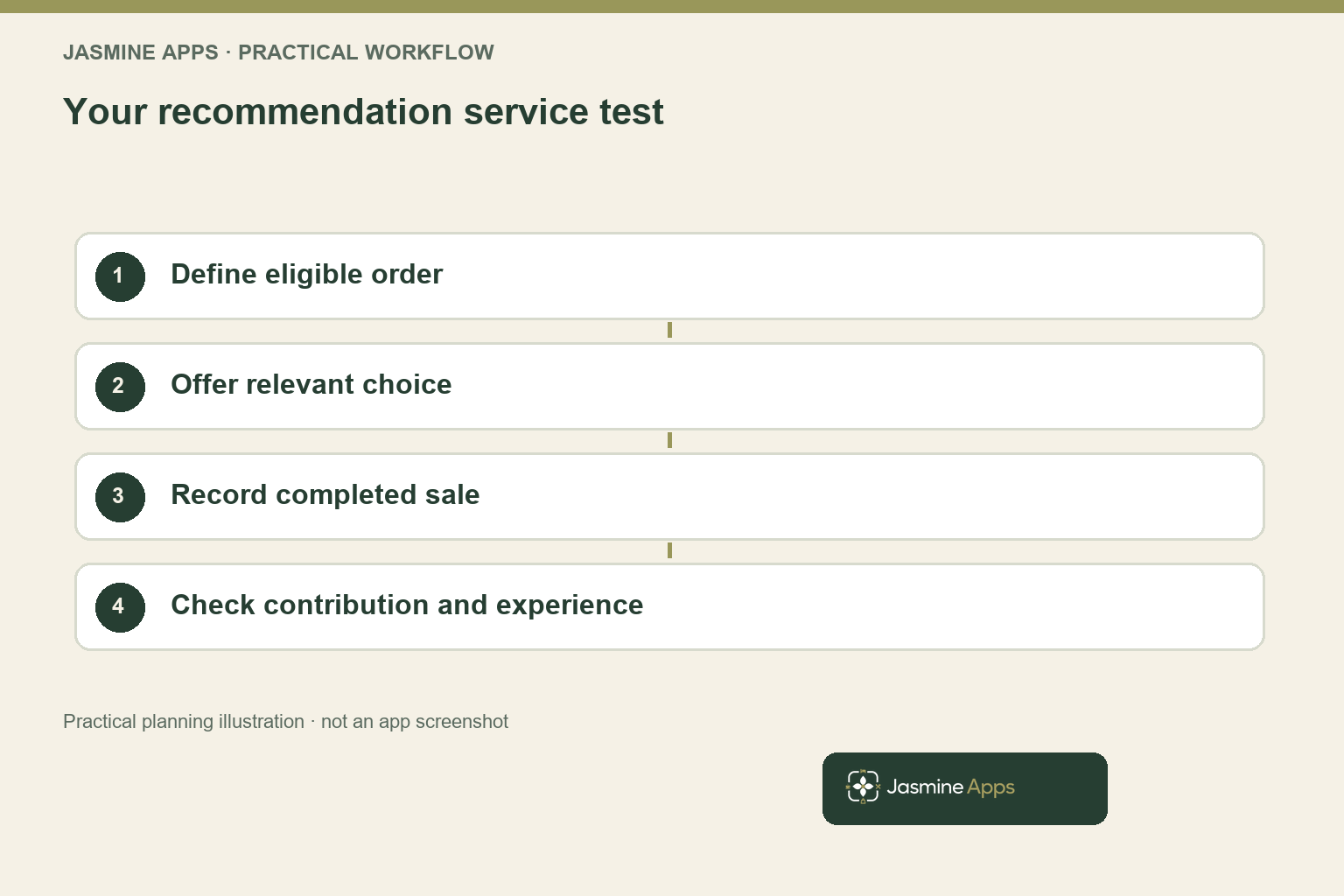
Select one recommendation, one clearly defined guest opportunity and a manageable set of comparable services. Write down your baseline before changing the briefing. Your manager should know the original attachment rate, current contribution per eligible order and any operational constraint, because an improvement is meaningful only against a consistent starting point.
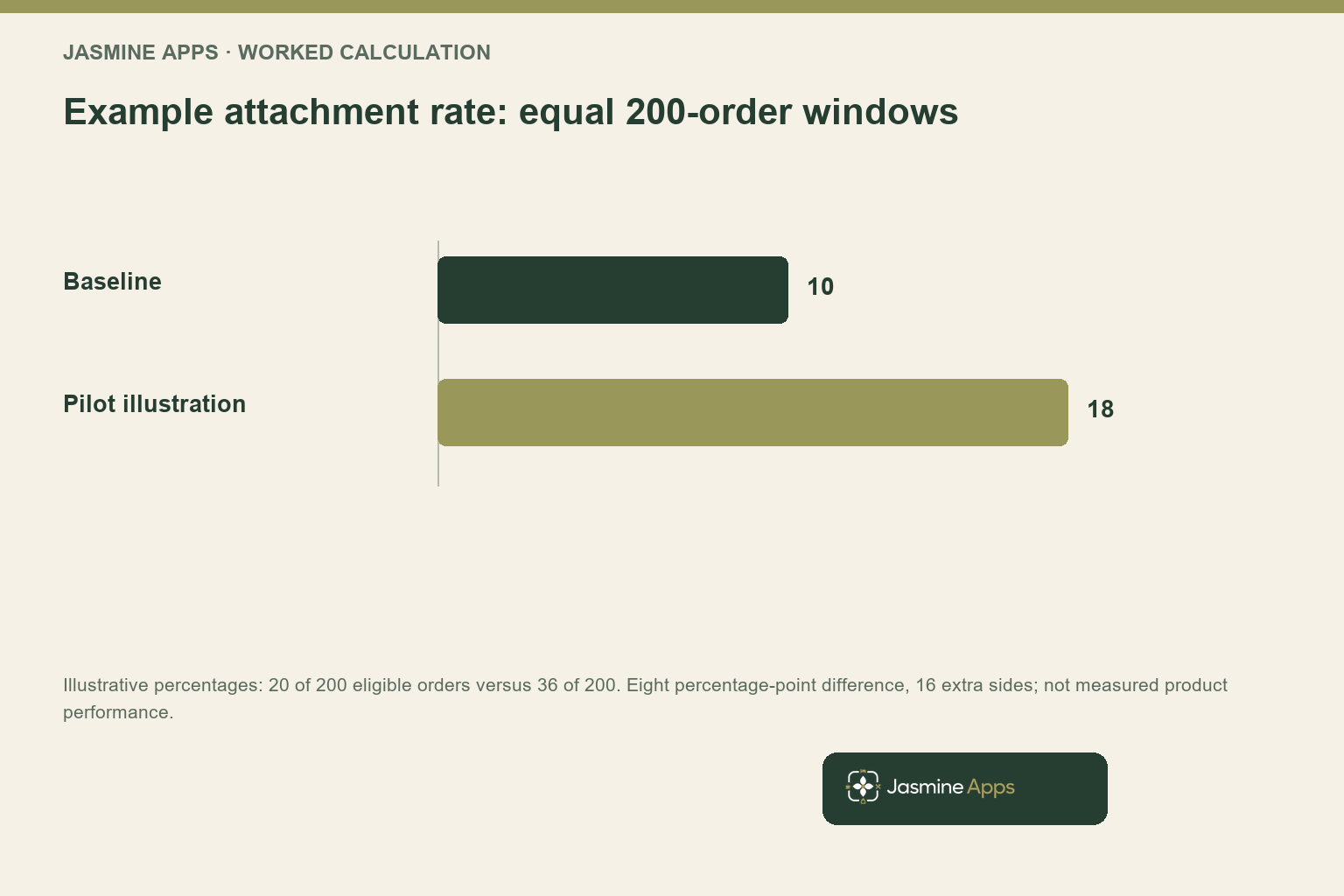
In a hypothetical baseline of two hundred eligible orders, twenty sides represent a ten per cent attachment rate. If a later comparable period records thirty-six sides from two hundred eligible orders, the rate is eighteen per cent. That is an eight percentage-point difference and sixteen additional sides, rather than an eighteen per cent increase in total restaurant sales.
Using the earlier £2.80 contribution assumption, sixteen additional sides produce £44.80 before other changed costs. Check whether guests bought fewer starters, whether the side created more waste and whether you added paid hours. If those effects reduce the gain, include them rather than crediting the recommendation with every pound of associated sales.
Record availability and service quality throughout the test. An unavailable item suppresses the measured opportunity; an unexpectedly large party changes the workload. Keep those observations with your results and repeat the comparison where necessary. One small service test can reveal useful operational lessons without proving a dependable percentage uplift for every future week.
Share the result with the team in practical terms. Explain which conversation helped guests choose, which product created delays and whether the extra contribution justified the effort. Your next step might be better availability or a clearer till button rather than a more forceful script, giving your staff a recommendation they can use confidently.
Build a recommendation programme your team can sustain
Keep the programme narrow enough for staff to remember during service. One useful main-course accompaniment and one relevant dessert option can be easier to deliver consistently than a long list of targets. Refresh the briefing when the menu, availability or guest occasion changes, rather than repeating the same suggestion regardless of what the guest has ordered.
Give the kitchen and bar a voice in the selection. Ask how the extra item changes preparation, equipment use and dispatch at the busiest fifteen minutes of service. A commercially attractive addition on paper can become less useful if it competes for the exact station already holding up the meal, so include capacity in the decision before expanding the test.
Review the guest experience alongside the contribution report. Look at comments, avoidable corrections, refunds and whether guests understood the portion or price. Your objective is to make the meal better while earning a worthwhile return; a recommendation that produces a larger bill and a disappointed guest can undermine the repeat business that supports your venue over time.
Separate learning from individual pressure. Staff can ask a relevant question and still receive a polite refusal, especially when guests have different budgets or preferences. Use coaching to improve product knowledge and timing, and investigate patterns over comparable opportunities. A raw ranking by total add-on units can reward the busiest section rather than the best service judgement.
At your monthly review, retain the recommendations that work across contribution, delivery and guest response. Recheck product costs when purchasing changes and remove an item that no longer fits the service. Your restaurant average spend then becomes one part of a dependable commercial routine, supported by accurate records and a team that understands why a particular suggestion is worthwhile.
Pro Tips
Measure the denominator. Choose eligible orders before you calculate an attachment rate. Keep guests, bills and opportunities separate so a change in party size does not masquerade as better selling.
Test substitutions separately. Ask whether the new choice replaces an existing purchase. Compare contribution before and after the change instead of crediting the complete selling price as additional value.
Rehearse the refusal. Include a straightforward decline in your team practice. Your colleague should accept it and continue normal service, preserving the comfortable experience that makes useful recommendations possible.
Common Mistakes
Rewarding only the biggest bill. You can encourage costly substitutions or unsuitable extras. Include incremental contribution and guest response in the review.
Changing several offers at once. You lose the ability to identify which recommendation helped. Test one clear opportunity before widening the briefing.
Ignoring station capacity. You can add sales that slow the entire meal. Review the busiest kitchen and bar stages before increasing demand for another item.
Frequently Asked Questions
How do you increase restaurant spend per head without being pushy?
You make one relevant recommendation that helps the guest choose, state the price clearly and accept the answer without pressure. Train your team on portion size, suitability and timing rather than a compulsory script. Measure contribution and guest response alongside spend per head, because more sales are useful only when you can deliver them well. Start with a small service test and keep the suggestions that improve the meal as well as the result.
What is the difference between average spend and average transaction value?
Your average spend per head divides relevant sales by guests, while average transaction value divides sales by completed bills or transactions. They answer different questions. A larger party may raise transaction value without changing each guest's spend, and split bills may lower it without reducing revenue. Define your tax, refund and service-charge treatment consistently, then compare similar services so your report measures the change you actually intend to investigate.
Which restaurant items should staff recommend?
You should choose items that complement the order, offer understandable value and can be served reliably at the relevant moment. Check incremental contribution, product availability and pressure on the kitchen or bar before selecting them. A high menu price is not enough: an expensive substitution may contribute less than the original choice. Give your team current product and allergen information, with a clear route for questions that require the responsible colleague's advice.
How do you calculate an add-on attachment rate?
You divide completed add-on units or qualifying orders by the eligible opportunities, using the unit you defined before testing. For example, twenty qualifying orders from two hundred eligible main-course orders represent a ten per cent attachment rate. Keep party size, unavailable items and menu changes visible. Your comparison should use the same definition in both periods and separate a percentage-point change in attachment from a percentage increase in total restaurant sales.
Can Till Jasmine help measure an upselling test?
You can use the product setup and available sales reporting as a starting point, then demonstrate how your chosen add-on, bundle or substitution is recorded in your specific configuration. Confirm the report fields and cover information you need instead of assuming every measure is automatic. Combine those records with current variable costs and service observations. Your buying demonstration should follow one fictional order through charging, correction and reporting before you rely on the result.
Restaurant average spend: your next step
Your restaurant average spend is most useful when it grows through choices your guests appreciate and your team can deliver profitably. Book a Till Jasmine demonstration with one proposed add-on, your current cost and a sample order. You can test the charging and reporting route, then leave with a focused service experiment that measures worthwhile contribution.