

Hospitality Social Media ROI: A Sold-Out Post Is Not a Proven Sales Result
· Jasmine Apps
Your post can receive enthusiastic comments while the promoted service fills through entirely different channels. A full restaurant and a successful social post happening together do not establish that one caused the other. Your hospitality social media ROI review should connect the exposure, guest action and commercial outcome you can actually verify.
You need a clear campaign purpose and a measurement route before publishing, not a retrospective explanation built around the best-looking platform number. This guide helps you use Jasmine Marketing Hub’s planning workflow while keeping attribution and financial analysis tied to their real sources.
Key Takeaways
- Choose a guest action before selecting performance metrics.
- Separate platform engagement from enquiries and confirmed bookings.
- Use consistent campaign links where your setup supports them.
- Include content, administration and paid-media costs.
- State what you can attribute and what remains uncertain.
Define hospitality social media ROI around a useful outcome
Choose the action your campaign should encourage. You might want a suitable group enquiry, a restaurant reservation or a guest to find practical event information. Those purposes call for different measures. A post answering a parking question should not be judged solely by direct sales, while a paid offer campaign needs a clearer commercial outcome than a count of reactions.
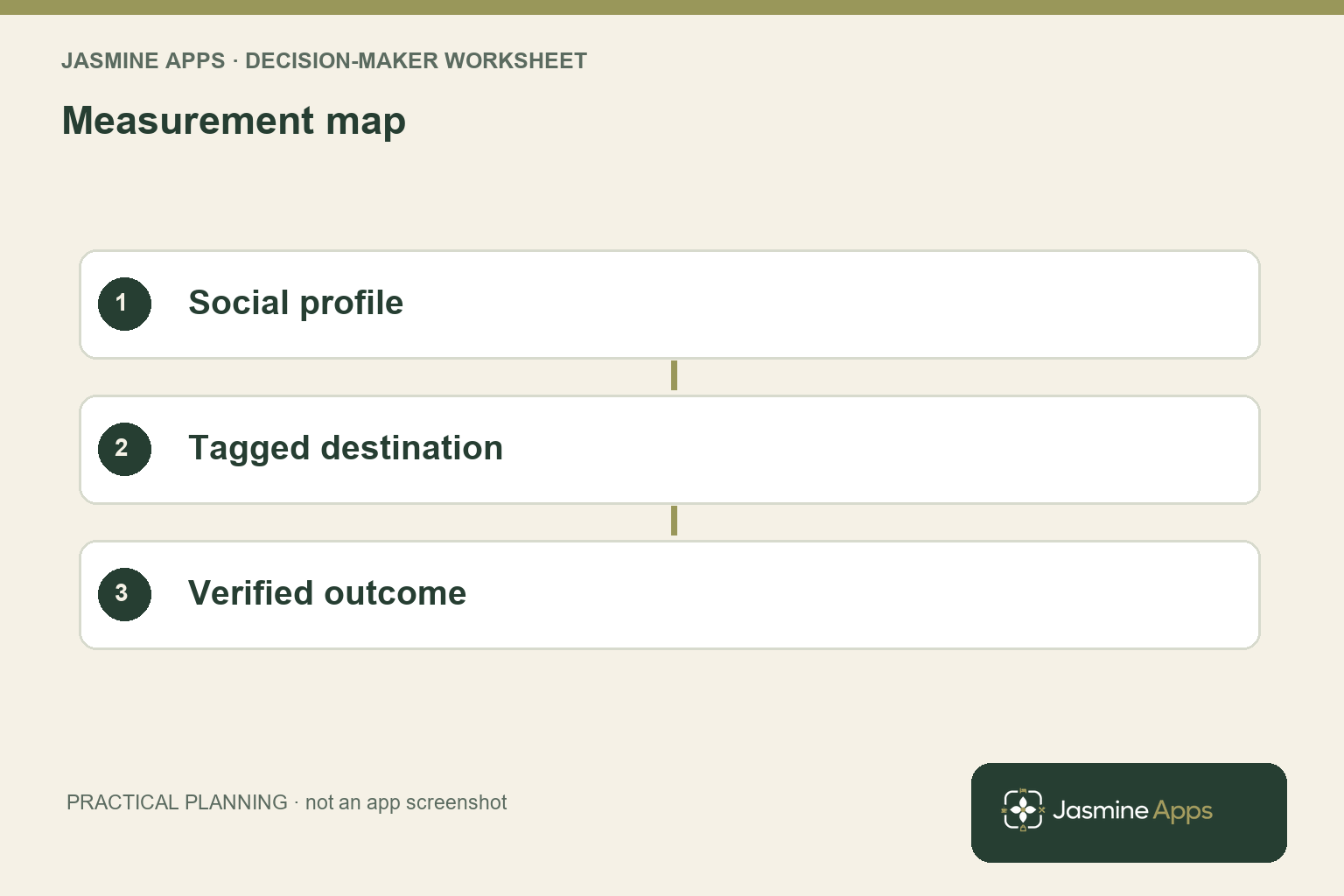
Write the journey from the post to that action. Identify the profile, content, destination page and operational team receiving the enquiry or booking. Check the offer’s dates, availability and included service before creating the caption; the Table Jasmine offer guide can support the operational setup when you use that app. Your measurement cannot rescue a campaign that sends guests to an unclear page or promises a service the venue is no longer offering.
Google’s campaign URL documentation explains how tagged links can identify referring campaigns in a supported Analytics setup. Agree a consistent source, medium and campaign naming convention with your website specialist. Those tags can support traffic analysis, but they do not automatically prove a completed booking or capture every guest who saw the post and later used another route.
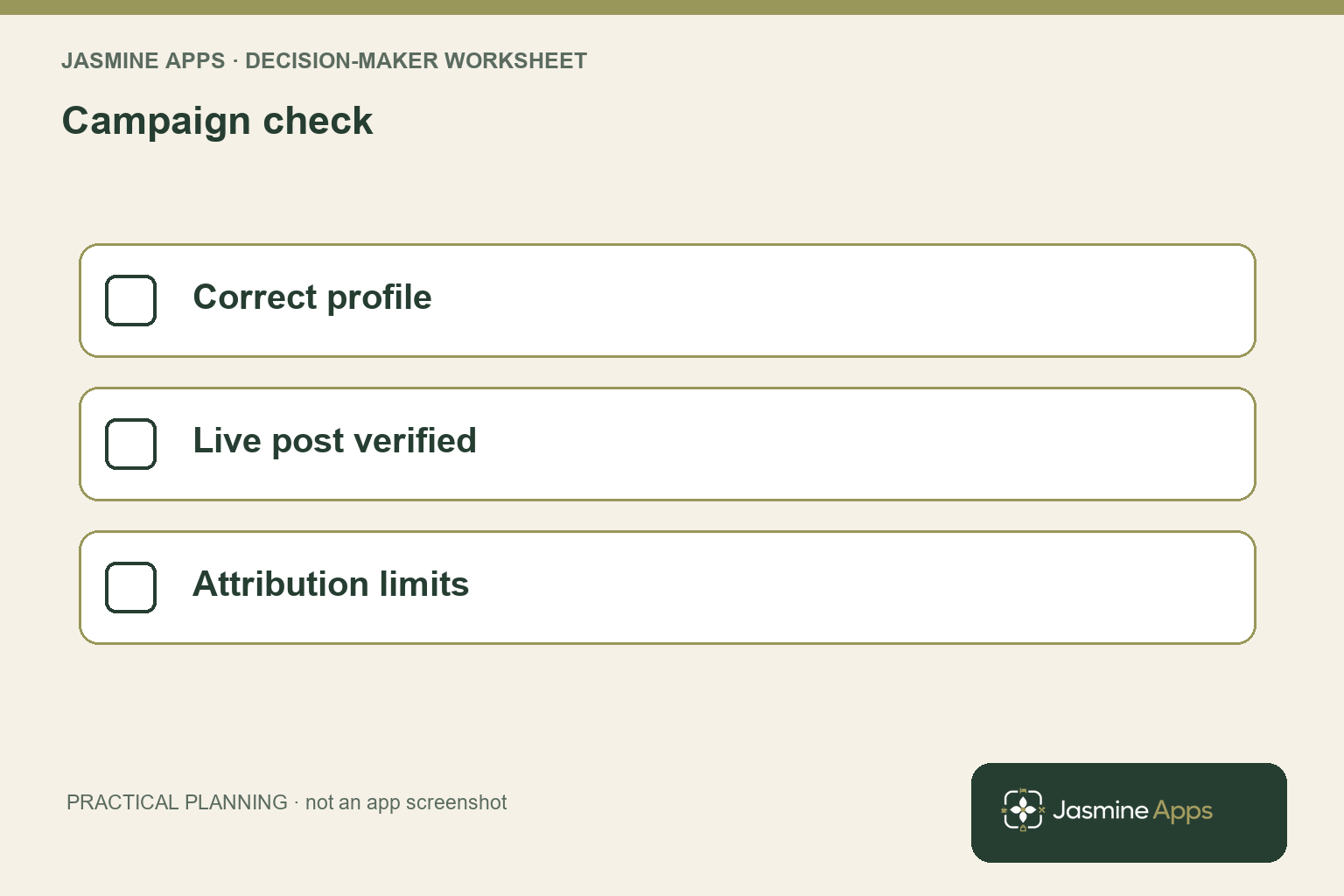
Define the reporting boundary before launch. Your platform may show reach and engagement, your website analytics may show visits and key events, and your operational records may show accepted enquiries or reservations. Keep the source for each figure visible. Your decision maker should be able to distinguish an observed result from a forecast and an attributed journey from an unconnected coincidence in the same trading period.
Measure hospitality social media ROI across the real workflow
In the actual Jasmine Marketing Hub calendar, Plan a post separates the scheduled time, copy, media, campaign grouping and connected profiles. The form distinguishes Save draft from Publish, and the displayed schedule uses Europe/London. Use that context to check the intended venue profile and time before treating a planned post as delivered. Your campaign grouping helps organisation; it is not itself evidence of booking attribution.
Check the published outcome on the intended social profile. Your team should know who verifies it and who investigates a failed or unclear action before another submission is attempted. Keep the caption, asset and destination together in the campaign record. If the offer changes after scheduling, review the queued content through your approved workflow rather than assume the software rewrites it from live availability.
Use your platform records for their actual metrics and your website setup for supported downstream actions. Google’s key-event documentation describes identifying business-important events in Analytics. Your specialist still needs to verify the event’s meaning and integration with the booking journey. A click on the booking button can be useful, but it is not a confirmed reservation unless your measurement establishes that endpoint.
Inspect the enquiries your team receives. Record whether the guest asks about the promoted service, whether the request is suitable and what outcome follows under your approved process. You should avoid collecting unnecessary personal details merely to improve a marketing spreadsheet. Keep untraceable bookings separate from those with a supported campaign link, and retain the attribution limitations when presenting the result to your finance or operations lead.
Calculate hospitality social media ROI with the right costs
Choose a common campaign period and a clear commercial definition. If you calculate a simple return, use attributable contribution after relevant variable costs rather than all booked revenue. Then compare that benefit with the campaign’s relevant costs, including content creation, administration, software allocation and paid media where appropriate. Your finance lead should approve how shared costs and uncertain attribution are treated.
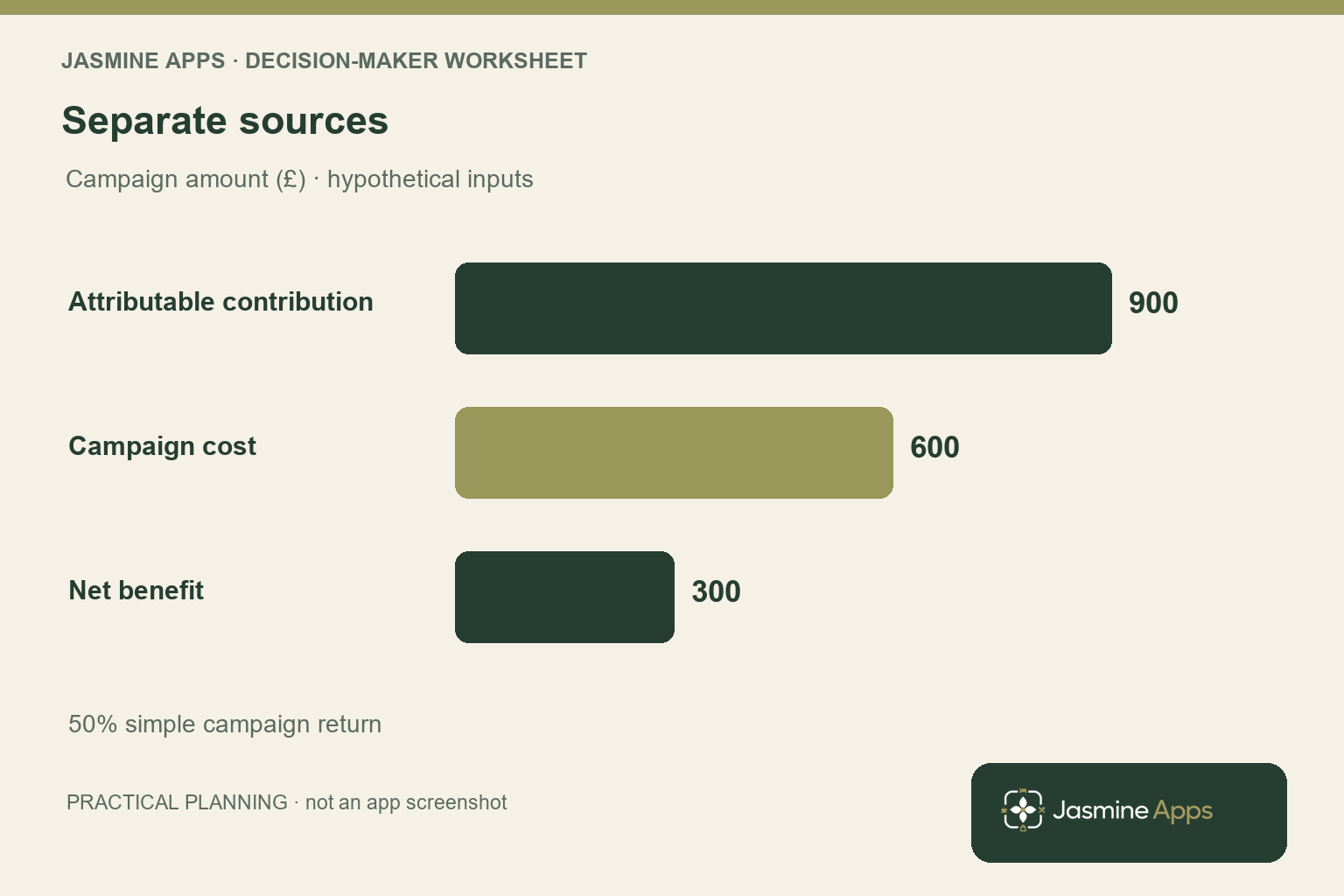
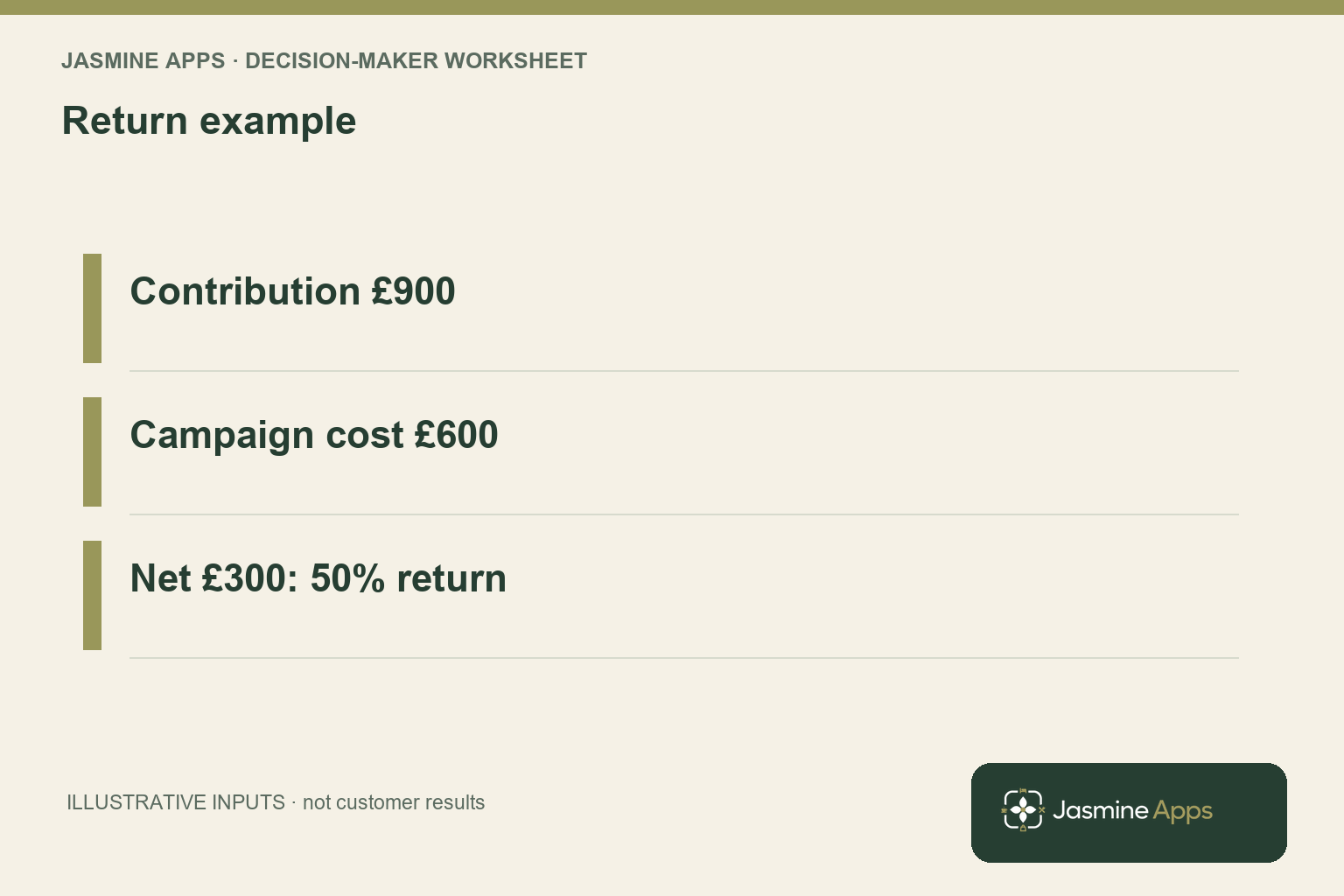
Consider a hypothetical example where attributable contribution is £900 and the campaign costs £600. The net benefit is £300, producing a simple return of 50% when net benefit is divided by campaign cost. Those inputs illustrate arithmetic only. They are not Jasmine Marketing Hub pricing, a customer result or a promised return from your own promotion.
Keep non-sales value separate rather than forcing it into the calculation. Clear practical information can reduce repeated guest questions, while useful content can support awareness without producing an immediately attributable reservation. You can report those outcomes on their own terms, with evidence and limitations. Do not attach an invented cash value to every impression or saved minute just to make a campaign look profitable.
Use the Jasmine Marketing Hub feature page to discuss the supported planning and publishing scope. Its subscriber records and social publishing workflow should not be treated as a fully verified email-sending or booking-attribution system. Before the next campaign, review the actual failing stage and change one meaningful part. Your strongest recommendation explains which guest journey improved and which commercial claim the evidence can support.
Have your finance lead identify which variable costs belong to the attributable service before the campaign calculation treats contribution as an agreed benefit.
Pro Tips and Common Mistakes
Pro Tips
Build a measurement map before content. Put the profile, link, destination, event and operational outcome on one page. Your team can then identify a missing measurement stage before the campaign creates traffic you cannot interpret.
Keep campaign names stable. A consistent naming convention makes related links easier to analyse. Record the original name and the exact destination rather than letting each colleague invent a different label for the same offer.
Review the booking outcome, not just the enquiry. A suitable confirmed service has a different value from an unanswered or unsuitable request. Your analysis should retain the operational stage that matters to the campaign objective.
Common Mistakes
Calling reach revenue fails because exposure does not establish a transaction. Use platform metrics for exposure and supported records for downstream outcomes.
Claiming every booking during the campaign fails because guests can arrive through other routes. Identify attributed records and keep the remaining uncertainty visible.
Ignoring staff and content costs fails because paid-media expenditure is only part of the effort. Include the relevant work and review the commercial calculation with your finance lead.
Your campaign review should lead to a better next decision. Keep a useful awareness result separate from a sales claim, and choose the next test around the stage you can improve rather than the metric that is easiest to celebrate.
Keep a campaign evidence sheet separating observed platform activity, verified website actions, supported booking outcomes and any unresolved attribution gaps that remain in the analysis. Your manager can then choose the next test from a visible weak stage instead of treating an attractive reach total as the answer to a commercial question.
Frequently asked questions
How do you measure hospitality social media ROI?
Define the campaign objective, supported attribution route and common cost period before launch. Review the attributable commercial benefit after relevant variable costs, then compare it with the campaign’s relevant costs. Keep platform engagement and non-sales outcomes separate. Your result should identify the source and limitations of each figure.
You should not count every booking during the campaign as social revenue, because timing alone does not establish that the post caused the guest to make that reservation.
Are likes and reach useful social media metrics?
They can help you understand exposure and engagement on the platform, but they do not establish a booking or profit outcome. Use them according to the campaign purpose and the platform’s actual definition. Your practical-information post may have value beyond immediate sales, while your promotional campaign needs downstream evidence. Keep the different outcomes separate in your report so your manager can judge whether the content achieved its intended purpose without treating every reaction as a commercial result.
Can campaign links prove a restaurant booking came from a post?
Tagged links can support a traceable website journey where your analytics and booking integration expose the required stages. You still need to verify the completed endpoint and understand cross-domain, device and repeated-visit limitations. A guest may see a post and later book through another route that your setup cannot connect. Keep supported attributed results separate from inference.
Your link convention improves measurement, but it does not automatically make every reservation fully attributable to the campaign.
What costs should you include in a social campaign?
Review paid media, content production, staff administration, relevant software allocation and any other work needed for the campaign. Use the same period as the benefit calculation and make shared-cost assumptions visible. Your finance lead should approve the treatment of additional contribution and uncertain attribution. Do not compare total booked revenue with advertising spend alone and call the difference profit.
Your decision needs the relevant costs of creating the outcome, not merely the easiest invoice to locate.
Does Jasmine Marketing Hub calculate complete campaign ROI?
Only rely on measurement features demonstrated in your current installation. The actual calendar supports planning context such as copy, media, campaign grouping and connected social profiles, with draft and publish actions distinguishable. That does not by itself establish a complete link between platform exposure, website activity and confirmed reservations. Ask to see the supported reporting scope and use your platform, analytics and operational records for their actual evidence.
Keep any additional calculation and its assumptions clearly identified.
Make hospitality social media ROI a clearer decision
Your hospitality social media ROI review should connect a useful guest action with evidence your managers can trust. Bring your offer, connected profiles and current enquiry or booking route to Contact Us. Request a Jasmine Marketing Hub planning demonstration around that journey, so you can organise the campaign and agree the measurement questions before the next post goes live.