

Hospitality Rota Software ROI: Is £1 Per Employee Worth It?
· Jasmine Apps

A £1-per-employee price does not mean your ten-person team pays £10. Clock Jasmine has a £25 monthly minimum, so your hospitality rota software ROI starts with the actual bill. Even then, a modest reduction in repetitive administration can cover the software if your team uses the released time productively.
You need more than a digital version of your spreadsheet. This guide connects Clock Jasmine to clearer scheduling, reviewed time records and a realistic calculation of what your managers can gain.
Key Takeaways
- The listed monthly cost is £1 per employee, subject to a £25 minimum.
- At an illustrative £18 hourly staff cost, £25 equals about 84 minutes.
- Published scheduling research supports better working practices, not a guaranteed software uplift.
- Your rota, clock records and payroll approval are different stages.
- Measure usable time released and cash savings separately.
Hospitality rota software ROI begins with a better scheduling routine
Your rota influences whether the right people are present when your guests need them. It also determines how much uncertainty your team must manage around transport, family commitments and other work. A system that makes the schedule visible can help, but its value depends on when and how you publish it.
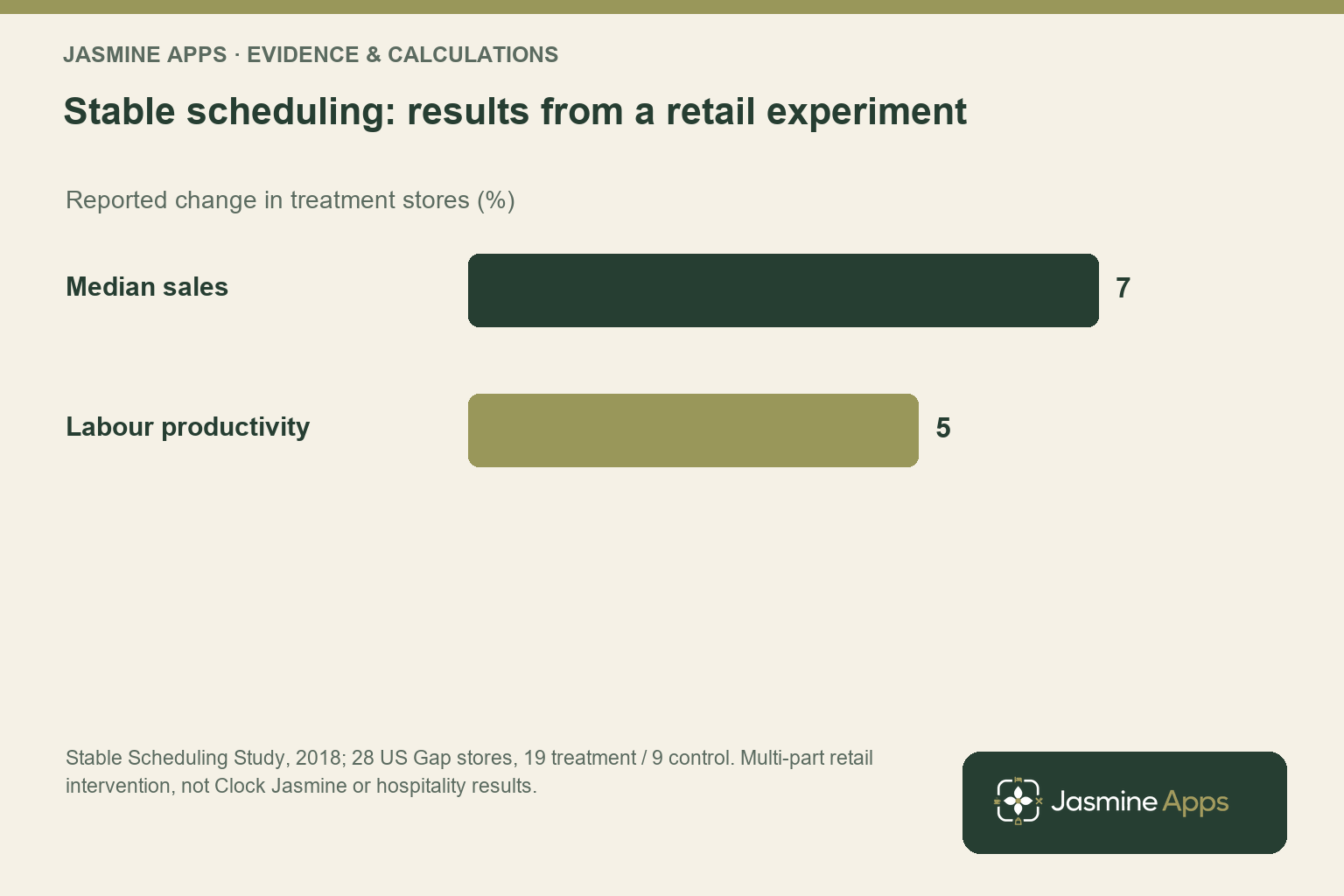
The Stable Scheduling Study, reported in 2018, offers unusually strong evidence that scheduling practice can have commercial consequences. Its randomised pilot involved 28 US Gap stores, with 19 treatment stores and nine controls, between November 2015 and August 2016. Treatment stores recorded 7% higher median sales and 5% higher labour productivity during a multi-part intervention.
Your hotel or restaurant should not use those percentages as a Clock Jasmine forecast. The trial concerned retail stores and combined several changes, including more consistent shifts, worker input and targeted staffing. Its useful lesson is that you can evaluate scheduling as an operating practice with measurable outcomes rather than treating it as clerical work alone.
Start by naming your own scheduling problem. You might spend too long collecting availability, repeatedly republish changes or struggle to compare worked time with the intended shift. Ask your managers which part creates avoidable effort and ask your staff where unclear arrangements affect their ability to turn up ready for work.
You can then give your trial a purpose. A more predictable publication routine, fewer clarification calls or faster review of completed shifts is a narrower and more credible target than a headline sales increase. Your software should support that routine; it cannot compensate for a manager who changes the plan constantly without communicating the change.
Calculate hospitality rota software ROI using the real minimum
The listed monthly price for Clock Jasmine is £1 per employee with a £25 minimum. On that basis, ten or 25 employees cost £25, 40 cost £40 and 75 cost £75 before any other agreed charges. The listed annual rate is £10 per employee, but you should confirm how the minimum applies annually rather than inventing an annual minimum from the monthly wording.
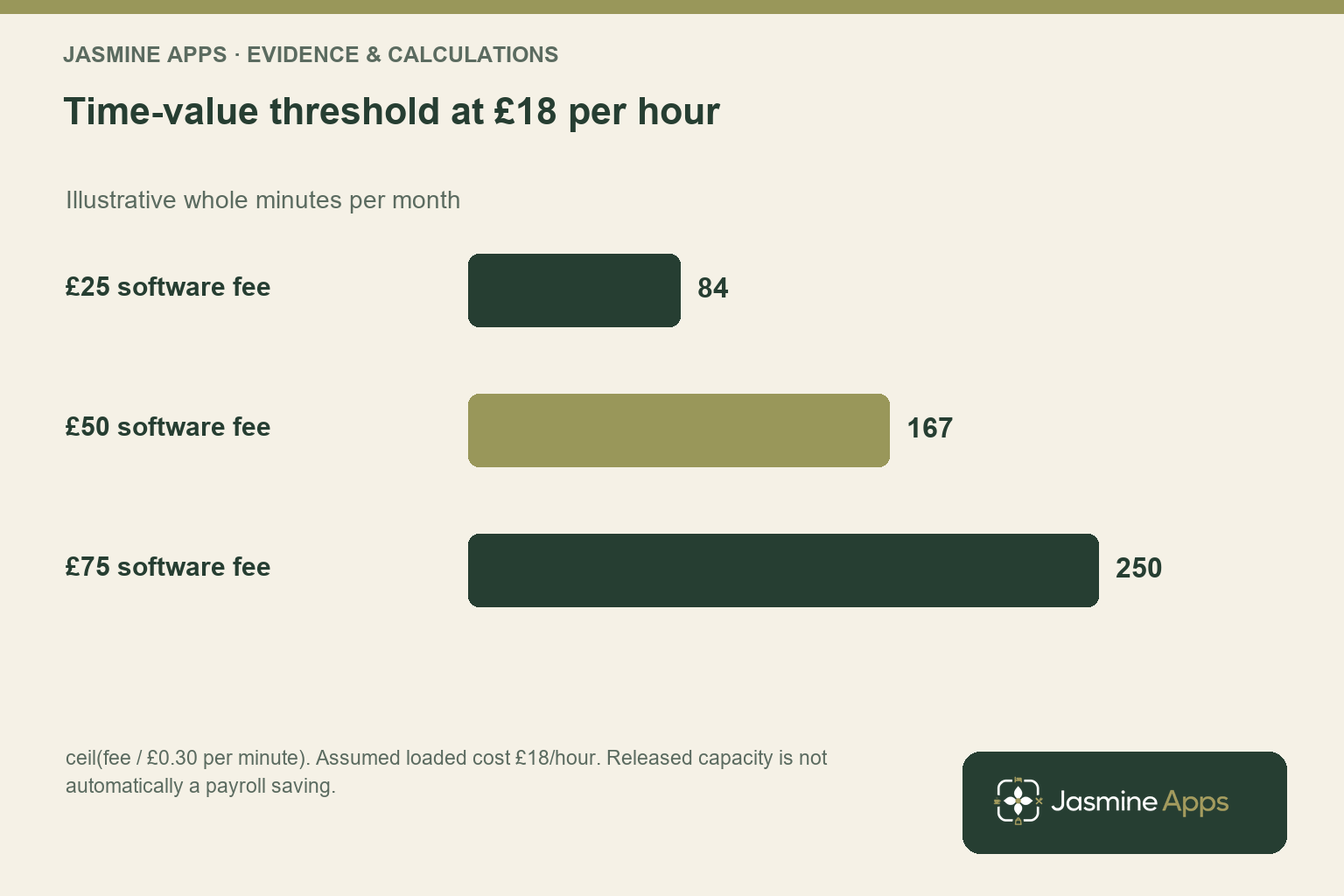
For a transparent time model, assume a loaded manager cost of £18 an hour. That is an illustrative input, not a published hospitality wage rate. Each minute is worth 30p at that rate, so £25 corresponds to 83.3 minutes; you would need at least 84 whole minutes of monthly value to exceed the software fee.
With 50 employees, the £50 monthly fee corresponds to 166.7 minutes, or at least 167 whole minutes. Your own threshold changes with the actual cost of the work and whether you genuinely avoid paid hours. Replace the assumed rate with a finance-approved figure that includes the relevant employment costs.
Released capacity is still worth discussing when payroll stays unchanged. If a manager spends less time chasing shift information and more time preparing a profitable service, you gain operational capacity; you have not automatically reduced wages. Keep that benefit separate from cash savings so your finance team can understand what the figure represents.
Your complete assessment should include setup, training and any extra device or extension you need. Clock Jasmine Kiosk is listed separately at £5 per venue per month. The public terms leave fees and taxes to your order, so confirm the quoted scope, tax basis and employee-count rules before treating a software-only model as your purchasing budget.
Test hospitality rota software ROI from published rota to reviewed hours
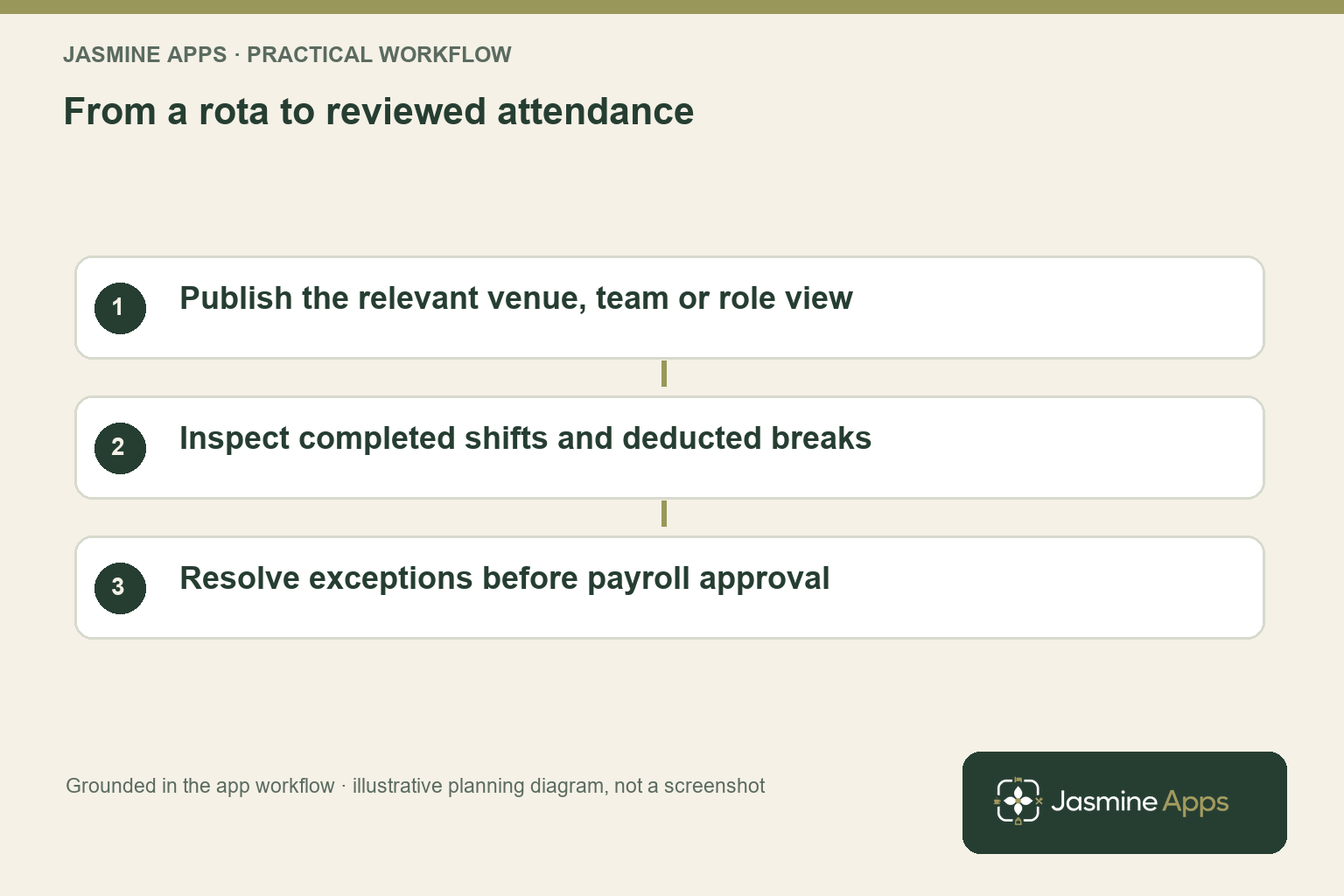
In the actual app, your rota can be viewed at venue, team or role level. That is a useful starting point for a demonstration because your reception team and kitchen may need different views of the same operation. Ask a supervisor to find the published schedule relevant to their staff without relying on a supplier’s explanation.
Next, separate your planned hours from your recorded hours. A rota describes the intention; clock-in and clock-out records describe activity that still needs review. A missed clock-out, a changed shift or an incorrectly recorded break should not disappear into an automatic approval assumption.
Clock history shows closed-shift totals with breaks deducted. Your trial should check an ordinary shift, a shift with a break and an exception that requires manager attention. Record what the manager needs to resolve the discrepancy and how the corrected information will reach whoever approves payroll.
The reporting area currently offers a recent clock-punch CSV. You should confirm its coverage and suitability for your payroll process; a recent-punch export is not evidence of an unlimited historical payroll report or a complete wage calculation. Give the supplier your payroll requirements and ask to see the relevant end-to-end workflow.
You can also discuss onboarding and employment-document requirements, but treat your documents and policies as your organisation’s responsibility. The software stores the records you create; it does not decide the appropriate employment terms for your team. Your best demonstration finishes with a supervisor able to publish the right view, inspect time records and describe the review process before those records influence pay.
Measure the management work your team actually avoids
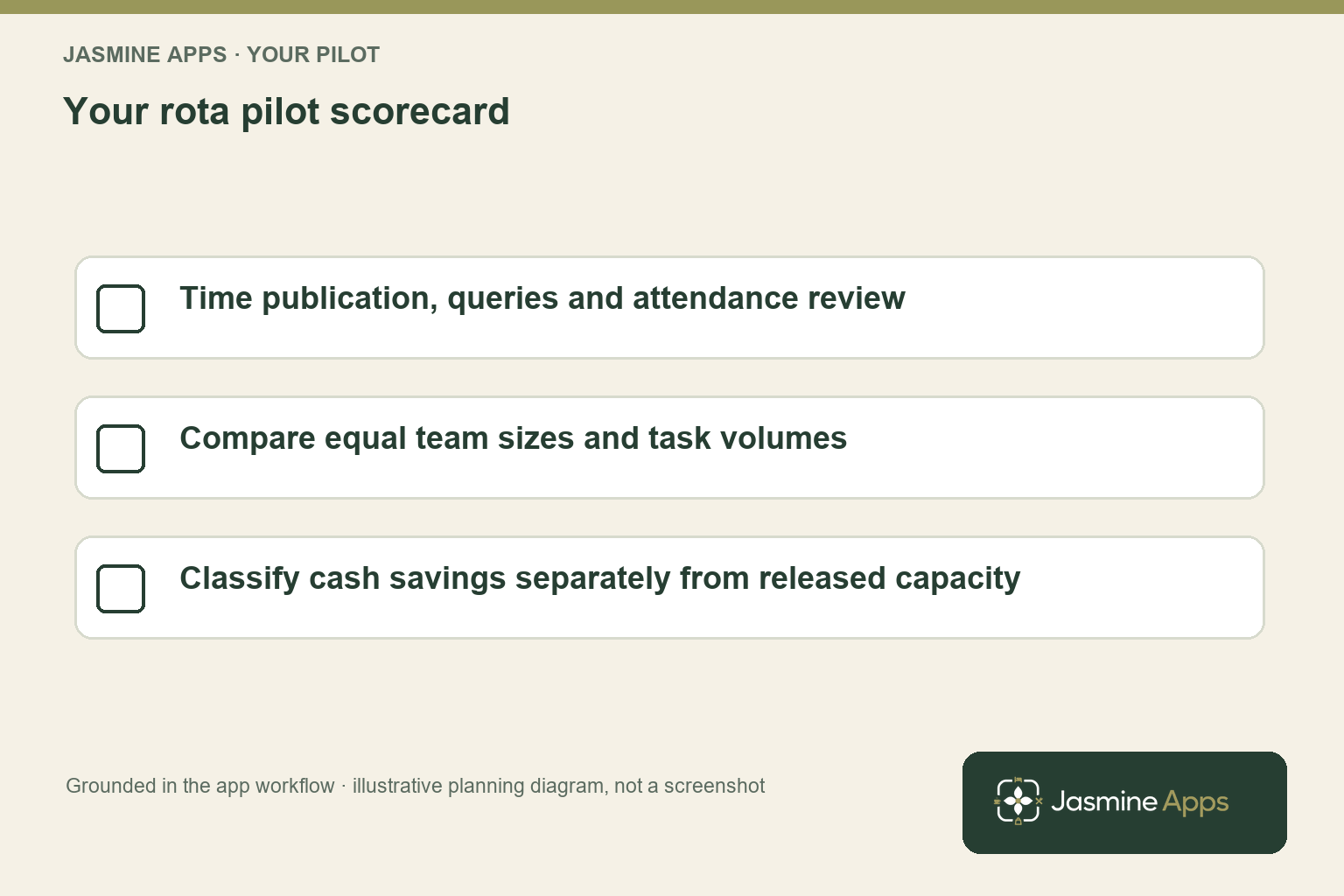
Build your baseline around recurring tasks, not an estimate made after the trial. Time a rota publication, a batch of attendance queries and the review of a representative set of completed shifts. Note how many staff and exceptions were involved so you can compare like with like later.
During the pilot, use one team and a clear publication deadline. Explain where staff should check the schedule and how they should report a change. Your aim is to establish one dependable routine instead of maintaining the spreadsheet and app indefinitely while wondering why administration has increased.
Keep an exception log for missed punches, break corrections and changed shifts. You can then distinguish initial learning problems from a workflow that remains cumbersome. If a supervisor repeatedly needs help finding the same information, adjust training or configuration before claiming that the system has failed to save time.
At review, calculate the minutes avoided per comparable task and multiply by the actual number of those tasks in a normal month. Avoid annualising an unusually busy payroll week without checking its frequency. Classify whether the benefit is reduced paid administration, time reassigned to service or fewer errors requiring correction.
You can compare standalone software with an appropriate package if you also need other apps. Essentials is listed at £129 per venue monthly and includes Clock up to 50 staff alongside other named products; its booking limits and other scope differ from standalone plans. Ask for an equivalent-scope comparison rather than buying a package purely because its component list sounds longer.
For the related operating detail, read your guide to kitchen rota software comparison before the demonstration.
Pro Tips
Measure the exception workload. Time the corrections and questions around your rota, not just the initial schedule entry. That is often where your repeatable administrative problem becomes visible.
Publish to a reliable rhythm. Choose a realistic deadline and communicate changes consistently. Your team benefits from predictability as well as the ability to see a digital rota.
Keep approval explicit. Give one person responsibility for reviewing time records before payroll. Your recorded activity needs context when staff work differently from the original plan.
Common Mistakes
Ignoring the £25 minimum. Your ten-person team does not pay £10 monthly under the listed rule. Calculate the actual minimum before comparing suppliers.
Calling every saved minute a wage saving. You only save cash when expenditure changes. Otherwise you release capacity that needs a productive use.
Treating an export as complete payroll. Check period coverage, corrections and your payroll requirements. A recent-punch file does not prove every calculation or historical record you need is included.
Frequently Asked Questions
How much does hospitality rota software cost?
Your Clock Jasmine monthly software price is listed at £1 per employee with a £25 minimum. That means a ten-person team starts at £25 rather than £10, while 50 employees would mean £50 before other agreed charges. The listed annual rate is £10 per employee; confirm annual minimum treatment, setup, tax basis and any required extensions in your quotation. Compare suppliers using the same employee count and operating requirements.
Can rota software increase restaurant sales?
You can improve staffing decisions and service consistency through a better scheduling process, but software alone does not guarantee extra sales. Identify the mechanism you expect to change, such as having the right skills present during a peak period or reducing disruptive last-minute changes. Compare similar services and record other influences on demand. Your strongest evidence is an operational improvement that your team can repeat, with additional contribution measured separately from total takings.
How do you calculate rota software ROI?
You compare the complete cost with verified administrative savings, reduced correction work and any attributable financial improvement. Time the same tasks before and after a pilot, using comparable team sizes and exception volumes. Multiply the difference by normal task frequency and a finance-approved hourly cost. Keep capacity released separate from cash savings when payroll remains unchanged, and include setup and training before approving a rollout based on a subscription-only threshold.
Does clock-in software replace payroll?
You should treat recorded attendance and payroll approval as different steps unless your exact workflow has been demonstrated. Check the coverage of exports, treatment of breaks, corrections and the requirements of your payroll provider. In the current app, the recent-punch CSV needs a suitability check for your use case. Your manager still needs a clear review process so a missed clock-out or changed shift does not become an unexplained pay discrepancy.
Is Clock Jasmine Kiosk included with Clock Jasmine?
The CRM lists Clock Jasmine Kiosk as a separate £5-per-venue monthly extension for a shared workplace tablet. Your base Clock subscription remains part of the cost, with its £25 monthly minimum. You should also include a suitable device, mounting and any agreed setup work if required. Ask for the combined installation scope and a demonstration of PIN clock-in, clock-out and breaks before deciding whether the shared-device approach suits your team.
Hospitality rota software ROI: your next decision
Your hospitality rota software ROI should reflect a routine your managers can sustain. Request a Clock Jasmine demonstration using your staff count, one rota and your payroll-review requirements. You can leave with the actual monthly cost and a pilot designed to reduce the administration that distracts your supervisors from service.