

Hospitality Rota Administration Cost: What Happens Before the Shift?
· Yiannis Yiasemis

Your rota has a cost before the first employee clocks in. Every availability message, draft revision and unresolved shift creates work for someone, even when that work never appears on the staffing budget. Your hospitality rota administration cost is the time needed to turn a plan into a schedule your team can actually follow.
Clock Jasmine brings rotas, attendance and timesheet review into your workforce setup. The commercial opportunity begins with a clearer planning process: fewer repeated questions, better handovers and a manager who can see which decisions remain open. You can calculate that opportunity from the weekly work your venue already performs.
Key Takeaways
- Count planning work separately from the wages on the rota.
- Measure availability checks, revisions and publication together.
- Choose one clear deadline for information and approval.
- Review actual attendance after the planned shift.
- Treat time released as capacity until an expense falls.
Measure hospitality rota administration cost across the week
Start with the manager who prepares your next schedule. Ask them to record the time spent collecting availability, reviewing demand, building the draft, obtaining approval and answering questions after publication. Include work done through messages and conversations, because those small interruptions can disappear when you only time the final spreadsheet session.
Your baseline should describe the process as well as its duration. Note which decisions need another colleague, where information arrives late and how many versions your team sees. A long planning session may be necessary for a complex event, while repeated revisions caused by scattered availability are a different kind of work.
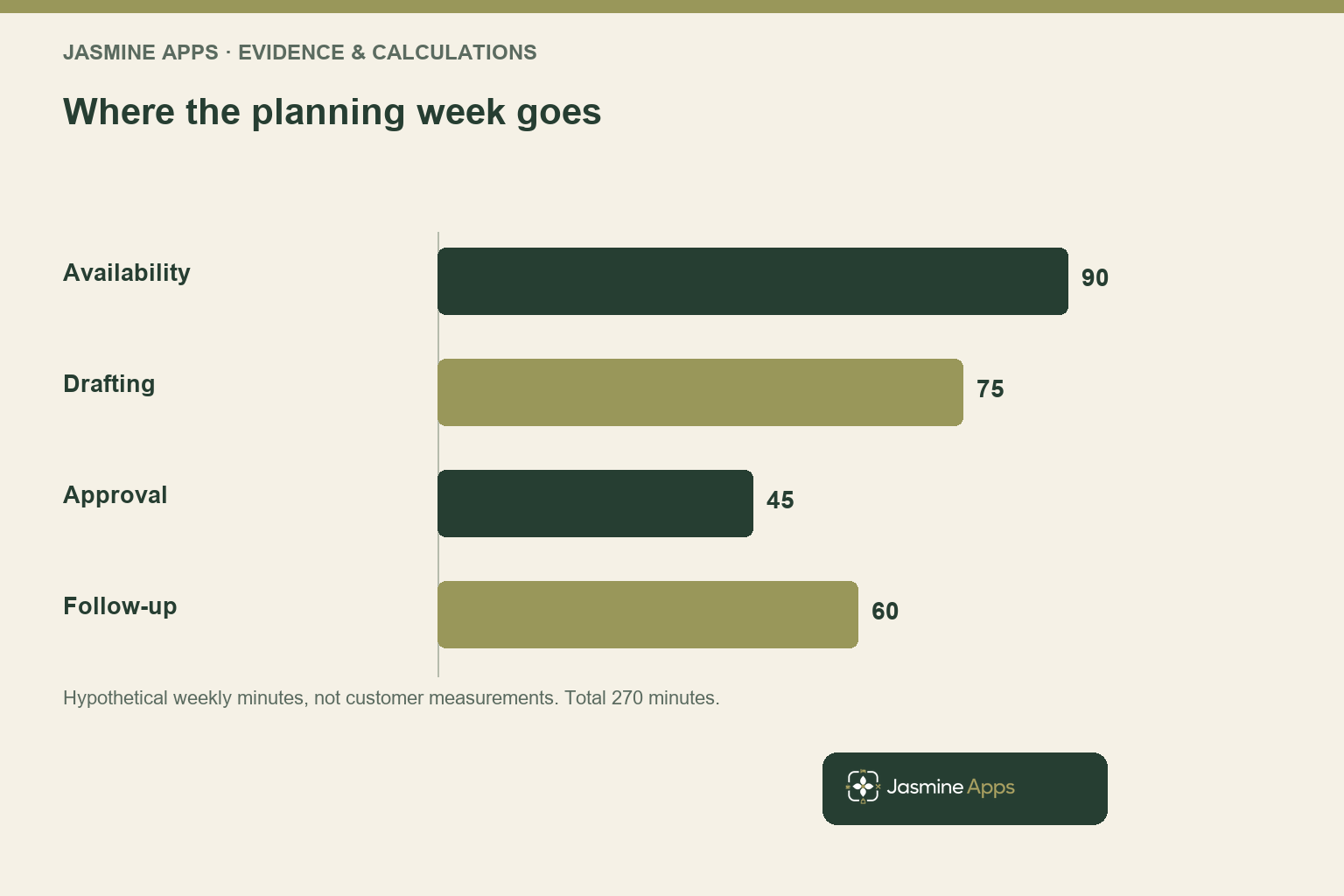
For a hypothetical week, assume ninety minutes collecting availability, seventy-five minutes drafting, forty-five minutes chasing approval and sixty minutes answering or correcting the published plan. That totals 270 minutes, or four and a half hours. Your own result may be very different, so use the categories as a starting point for measurement.
Value those hours using a clearly stated planning rate if you need a commercial comparison. At an assumed £20 per hour, the example represents £90 of weekly managerial capacity. It becomes a cash saving only if your change reduces paid expenditure; otherwise, it is time your manager can use for service, coaching or other work.
Review at least a normal week and a busier planning week. That helps you distinguish everyday administration from seasonal complexity before buying around a best-case demonstration. Your hospitality rota changes guide tackles late changes; this baseline shows how much work the whole planning cycle creates before those exceptions even begin.
Reduce hospitality rota administration cost through better inputs
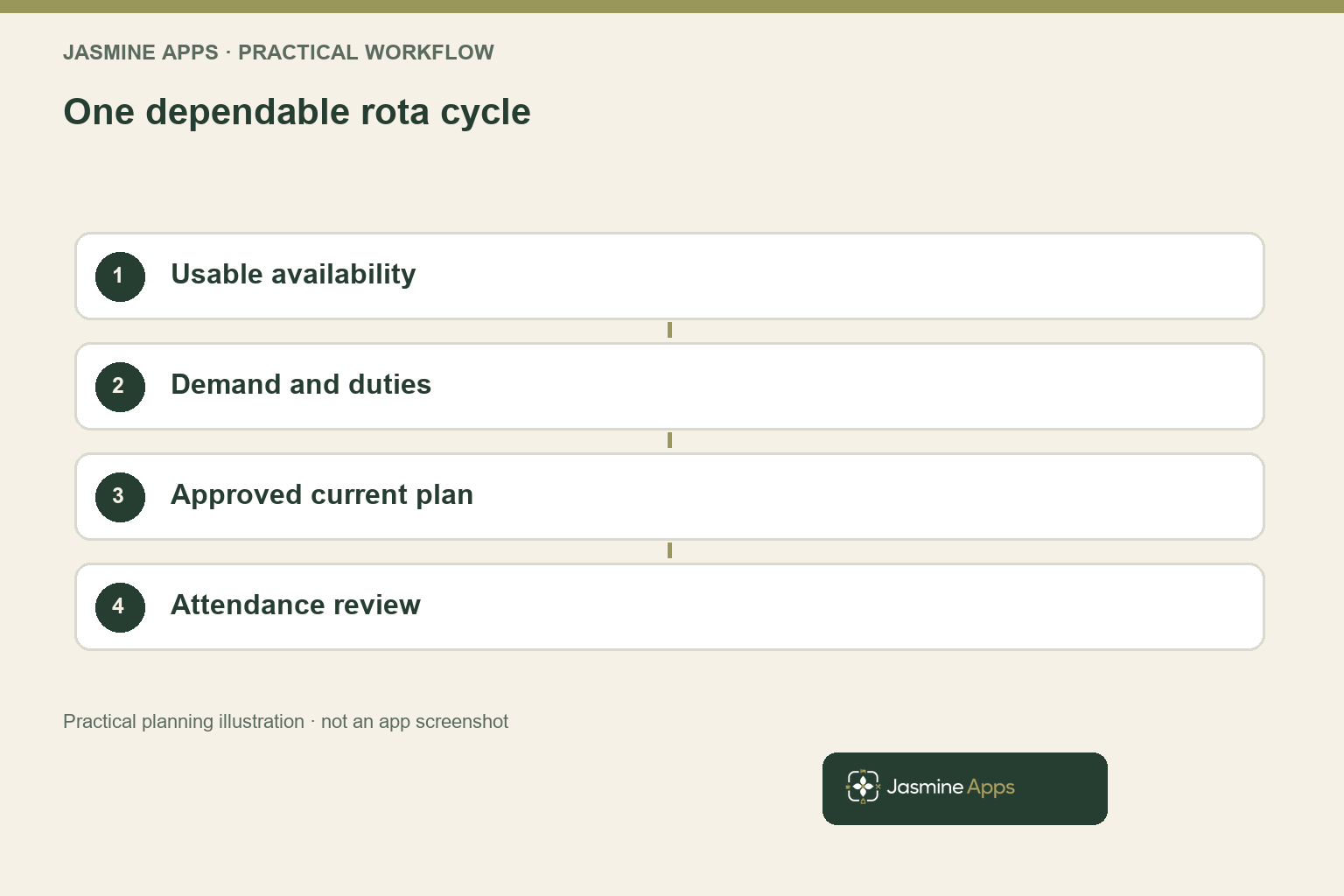
Your planning tool works best when the information entering it is usable. Give staff a clear availability deadline and explain where they should submit changes. Your manager should know which request is confirmed, which needs discussion and which arrived after the planning window, so they are not reconciling competing messages while drafting.
Build the demand view around the work you expect to deliver. Reservations, events, setup and closing duties all affect the schedule. A sales forecast alone may miss preparation or supervision, and a previous rota may contain habits that no longer match your service. Use the relevant records to identify the coverage you actually need.
Agree who approves the draft and what they check. If two managers independently edit different copies, the last version can lose a decision made earlier. A clear approval route reduces that uncertainty and gives your staff one schedule to follow, with an understandable process for corrections after publication.
Working patterns deserve their own review. HSE’s fatigue guidance links shift design and work patterns with fatigue risk. Use appropriate working-time and staffing checks for your circumstances, rather than treating the shortest planning session as the best rota. Your process needs to protect both useful coverage and the people delivering it.
In your Clock Jasmine demonstration, follow a fictional week from availability context to a published rota and an approved change. Ask which inputs the system records, which decisions remain with your manager and how colleagues see the current plan. That gives you a practical basis for choosing the setup and the rules that make it useful.
Test hospitality rota administration cost after publication
The planning cycle does not end when you publish. Your staff need to understand the shift, location and any relevant duties, while the manager needs a reliable route for questions. Track how many follow-up contacts simply clarify the schedule and how many represent a genuine change in availability or demand.
Clock Jasmine includes published rota blocks alongside attendance, approvals and shift-swap areas. Use those routes to demonstrate the sequence your venue intends to run. Check the permissions and approval behaviour with fictional records so you know which colleague can request, decide or review each action without exposing real staff details.
Compare the approved schedule with actual attendance after service. A repeated late finish might point to closing duties missing from the plan, while early arrivals may reflect an unclear start-time expectation. Your planning review becomes stronger when it uses those outcomes to improve the next rota instead of repeating the same correction each week.
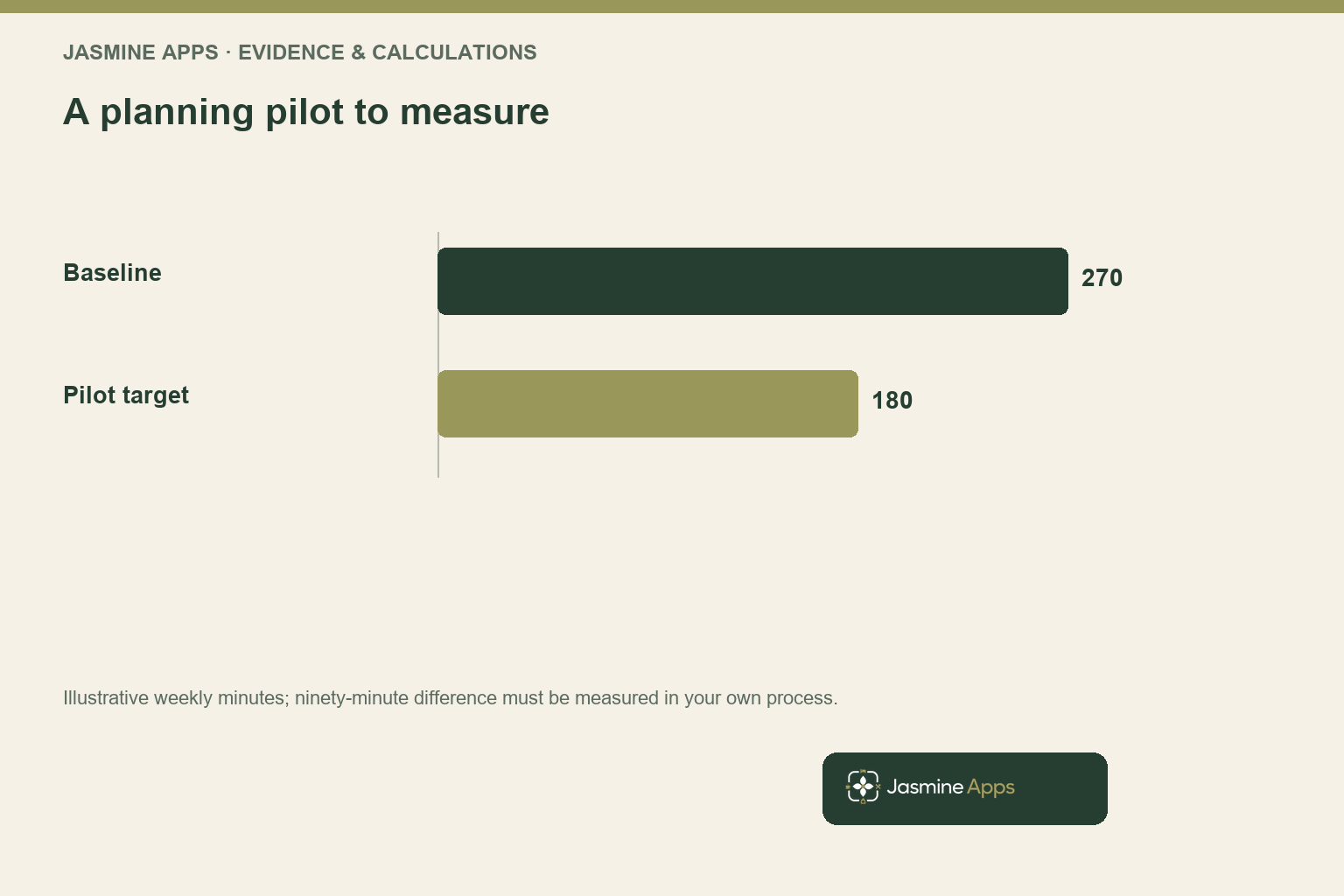
Suppose a pilot changes the hypothetical 270-minute cycle to 180 minutes after your team has settled into the process. That releases ninety minutes a week, or six hours over four weeks. Record any new administration required by the tool and include it in the comparison; moving work to another manager is not a reduction.
Your payroll preparation guide covers the later attendance-to-payroll handover. Keep that work visible when evaluating the complete cycle. The most useful planning improvement is one that gives your team a clear schedule and creates better records for the reviews that follow it.
Build a buying case around a repeatable planning cycle
Your buying case should name the problem and the intended outcome. You might want one current rota, fewer availability-chasing messages or a clearer approval route. Choose a measure tied to that goal, with a small set of supporting checks for staffing coverage, questions and corrections after publication.
Jasmine Apps currently lists Clock Jasmine at £1 per employee per month with a £25 monthly minimum, and £10 per employee annually. Confirm the annual minimum treatment, employee count, setup, devices and tax basis in your quotation. Your planning cost comparison should use the full scope your manager needs rather than an assumed per-user total.
Allow time for your staff to learn the process. The first week may include setup, training and duplicate checks while you establish confidence in the new schedule. Record those one-off tasks separately from recurring administration so you can assess both the cost of adoption and the work the system will create each week.
Review the pilot with the manager and a small group of staff. Ask whether the current rota is easy to find, whether approval is clear and whether changes create avoidable confusion. You can improve the workflow by adjusting deadlines or responsibilities as well as the software, because the tool and the operating rules need to agree.
Your decision becomes straightforward when the planning cycle works consistently. Compare recurring administration, subscription costs and the quality of the resulting schedule, then expand only the parts that help. A clearer rota process gives your manager a better starting point for the week and your staff a more dependable plan for the work ahead.
Pro Tips
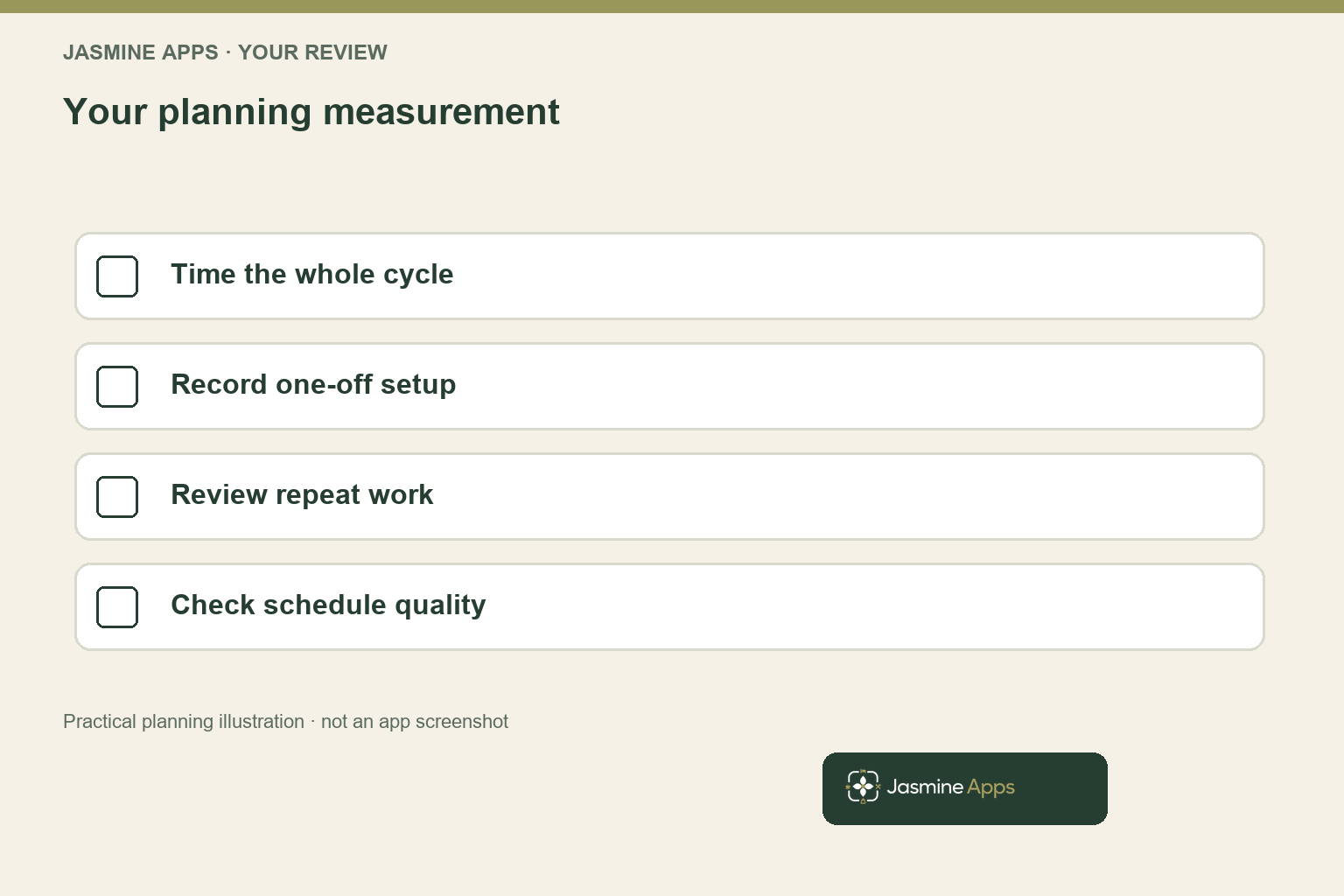
Count interruptions. Include short availability and clarification conversations in the baseline. A diary with simple task categories often reveals work that a single timed planning session misses.
Separate setup from recurring work. Record initial configuration and learning independently from the normal weekly cycle. You can then evaluate the adoption effort and the ongoing benefit without blending them together.
Check the next handover. Follow the published rota through attendance review and payroll preparation. Your planning improvement should produce records the next colleague can use, rather than create a faster draft with unresolved questions.
Common Mistakes
Timing only rota entry. You miss the availability, approval and clarification work around the draft. Measure the whole planning cycle before estimating the benefit.
Using the old rota without demand review. You preserve unnecessary coverage or miss new preparation work. Check reservations, events and actual shift outcomes before copying the pattern.
Treating managerial capacity as cash saved. You can overstate the financial result when paid hours remain unchanged. Describe the time released and identify a real expense reduction separately.
Frequently Asked Questions
How much time should you spend writing a staff rota?
Your useful benchmark is a planning cycle that produces clear, workable coverage with appropriate checks. The required time depends on staff numbers, availability, events and the complexity of your venue. Measure collection, drafting, approval and follow-up together before comparing tools. You can then focus on repeated chasing or corrections while preserving the decisions needed to create a safe, practical schedule your staff can reliably follow each week.
What belongs in your rota administration cost?
You should include collecting availability, reviewing demand, drafting the plan, obtaining approval, publishing it and answering relevant follow-up questions. Record recurring corrections and the time another colleague spends resolving unclear information. Keep wages for the scheduled shifts separate from planning administration. If you value the planning hours financially, state your assumed rate and distinguish managerial capacity from a cash expense you can actually reduce through the change.
Can rota software remove every staff scheduling task?
Your manager still needs to judge demand, coverage, skills and exceptions. A useful system can make the records and approval route easier to manage, but the operating responsibilities need to be clear. Demonstrate the full week with fictional records, including a late availability change, so you understand which steps the tool supports and which decisions remain with your team before you commit to a rollout at your venue.
How do you measure whether a new rota process works?
You can compare a defined baseline with a pilot after the team has learned the process. Count recurring administration, post-publication questions, corrections and the quality of coverage, using similar planning weeks where practical. Include any new work the setup creates. Your improvement should make the current plan easier to follow and the later attendance review more useful, rather than simply shorten the time spent entering the draft into a screen.
How much does Clock Jasmine cost for rota management?
Jasmine Apps lists Clock Jasmine at £1 per employee per month, subject to a £25 monthly minimum, and £10 per employee annually. Your quotation should confirm annual minimum treatment, employee counting, required devices, setup and taxes. Include the full recurring cost when comparing your planning process. Demonstrate the rota, approval and attendance routes you intend to use so the subscription supports a complete, practical workflow for your venue.
Hospitality rota administration cost: your next step
Your hospitality rota administration cost gives you a concrete starting point for a better planning process. Request a Clock Jasmine demonstration with your availability deadline, approval route and a representative week. Ask to follow the schedule through publication and attendance review, so your manager can spend less time reconciling information and more time preparing the team for service.