

Hospitality New Starter Shift Plan: Make the First Seven Shifts Count
· Yiannis Yiasemis

Your new colleague can finish induction and still be unready for the next guest's ordinary question. Knowing where the handbook is does not prove they can find the current shift, request help or recover from a mistaken order. Your hospitality new starter shift plan should build dependable actions across real working occasions, rather than putting every topic into one crowded first morning.
Clock Jasmine brings rota, attendance, team and learning workflows into the same operational setting. Your opportunity is to use those records alongside supervised practice, with a named colleague checking the tasks that matter. A seven-shift framework gives you a manageable structure to adapt; competence, role and risk should determine progress, not an automatic promise that everyone is ready after the same number of days.
Key Takeaways
- Spread learning across supported working occasions.
- Separate course completion from practical competence.
- Give each new starter a named source of help.
- Test access before the shift depends on it.
- Value supervision as planned work, not invisible spare time.
Design your hospitality new starter shift plan around real tasks
Begin with the job your colleague will actually perform on their earliest shifts. A receptionist, restaurant server and kitchen porter need different first actions, even when they share a venue handbook. Identify the normal tasks, the situations that require help and any activity they must not perform without appropriate training or supervision, then agree those boundaries with the responsible manager.
Acas recommends planning induction before the worker starts and tailoring it to the person and workplace. Its induction planning guidance also cautions against overwhelming a new worker on day one. Use that as a foundation for sequencing your own material, rather than treating a completed welcome presentation as proof that every operational question has been covered.
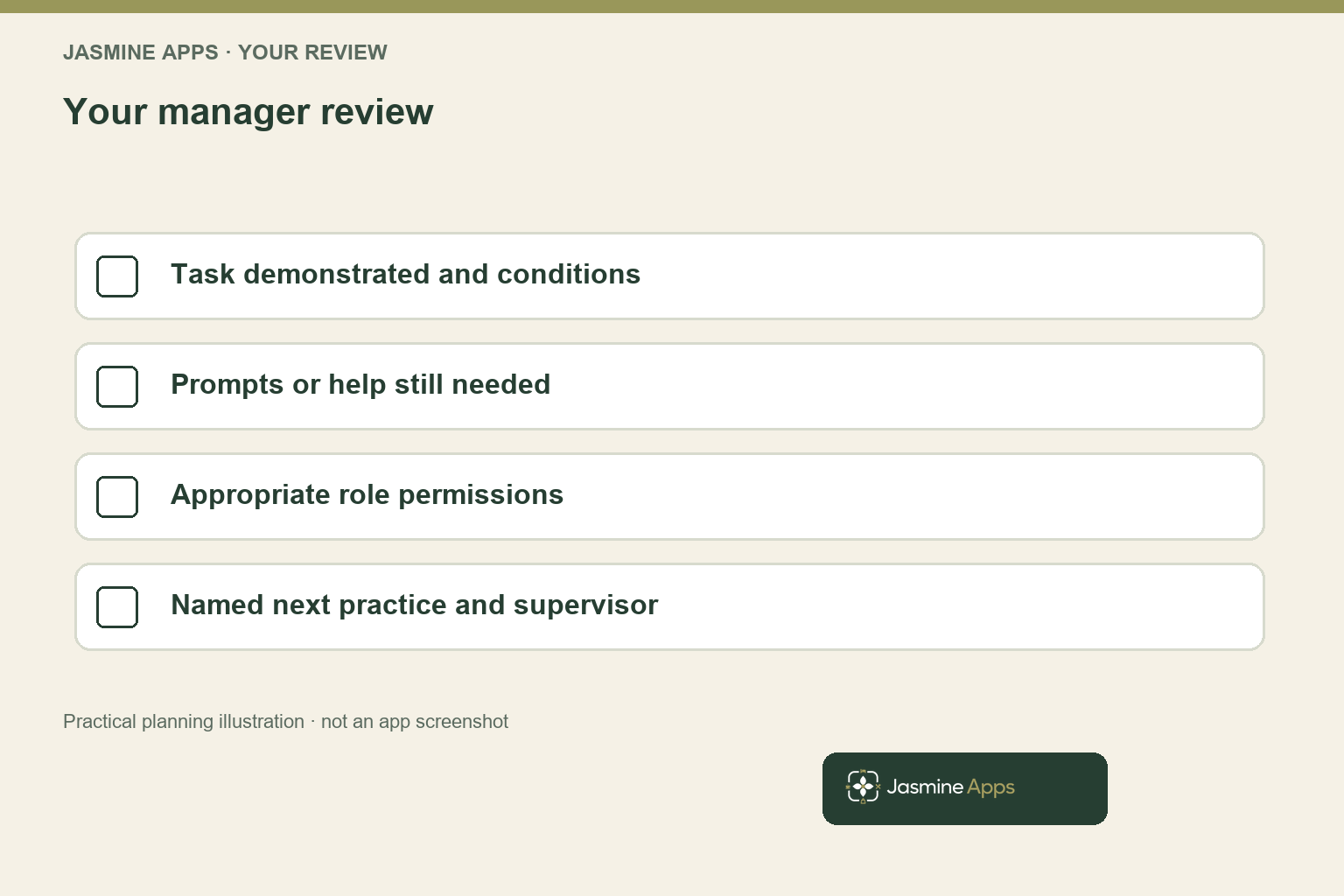
Write the first-shift outcomes in observable terms. Your colleague might need to locate the rota, find the responsible supervisor, follow emergency instructions and perform one ordinary task with support. Avoid outcomes such as understands the system unless you can describe what they should be able to do and how the supervisor will check it in practice.
Ask about relevant experience and reasonable adjustments through your appropriate employment process. An experienced colleague may need less explanation of general service but more help with your venue-specific rules. A first job may require a slower introduction to ordinary workplace expectations. Your plan should support the person in front of you while preserving the same essential standards for the role.
Connect this framework with your pre-start onboarding checklist. That earlier checklist covers preparation before work; this plan follows the learning through supported shifts. You can then avoid repeating paperwork while giving the manager a practical route from access and introductions to safe, reliable participation in the service team.
Use the first two shifts in your hospitality new starter shift plan
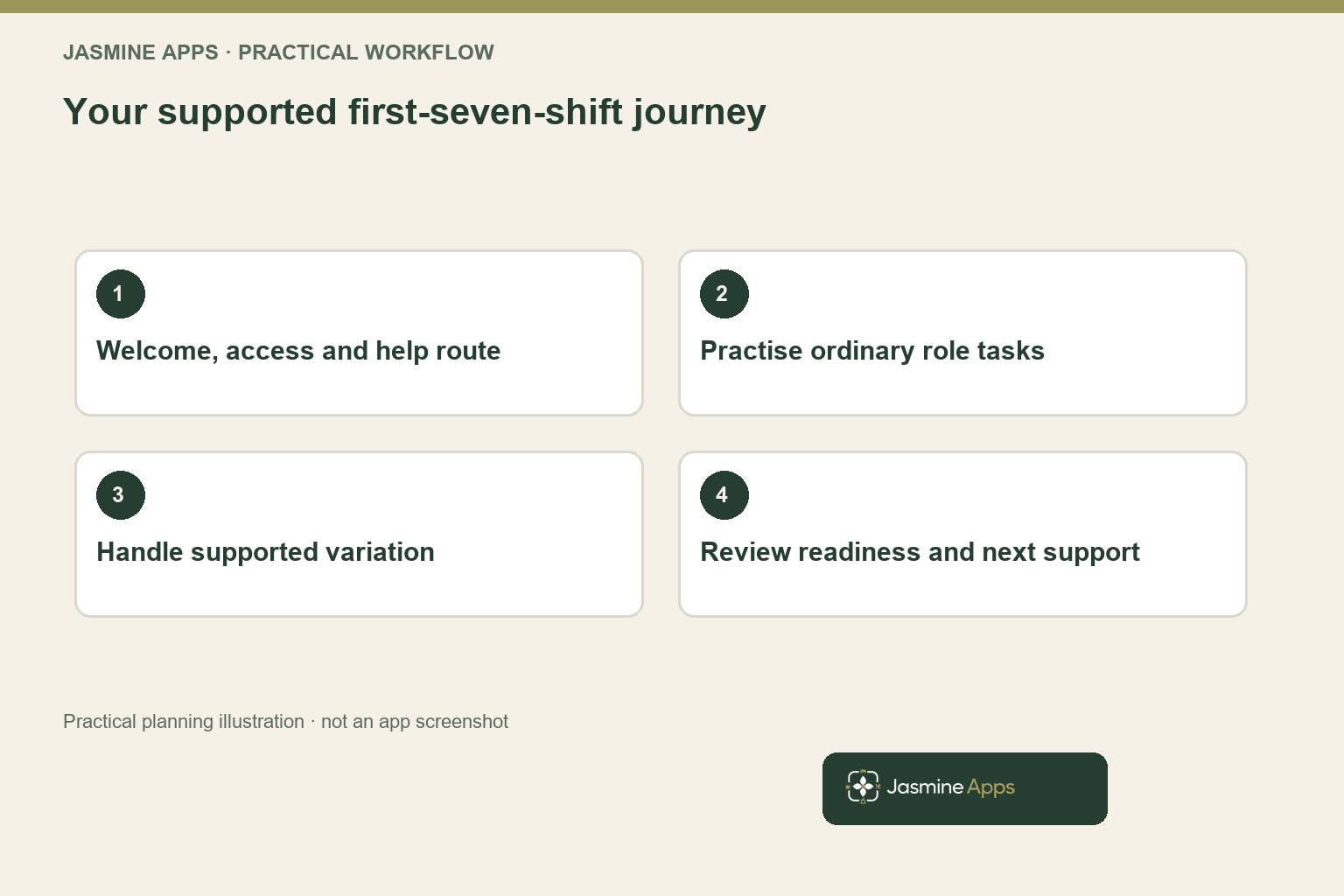
On the first shift, make welcome and essential safety information usable before adding detailed product knowledge. Introduce the supervisor and buddy, explain how to ask for help and walk through the relevant workplace arrangements. Your colleague should know what to do when uncertain, because a hesitant new starter can otherwise hide a question while trying to appear capable.
Check their own access to the tools the shift requires. In Clock Jasmine, your team can work with rota and attendance workflows; demonstrate how the new colleague finds the relevant information in the role and venue they are authorised to use. Do not give unnecessary manager permissions merely to make a demonstration easier, and avoid sharing another person's credentials as a shortcut.
Let the new starter practise a small set of ordinary actions with the buddy present. Depending on role, that could mean finding the shift, following the approved attendance process and completing one straightforward guest or back-of-house task. The buddy should explain the action, observe an attempt and give specific feedback, while keeping live service and private information appropriately protected.
On the second supported shift, revisit those actions before adding another task. Ask your colleague to show the route rather than simply answer whether they remember it. A repeated question can reveal unclear wording, missing permissions or a different device experience, so investigate the cause before assuming the person did not listen during the introduction.
Finish with a short check-in that identifies one success, one uncertainty and the next practice opportunity. Record only the appropriate operational learning note under your workplace process. Your manager then has a concrete basis for the next shift, while the new colleague leaves knowing who will help and which action they are expected to practise again.
Develop your hospitality new starter shift plan through shifts three to five
Use the middle shifts to add realistic variation once the basic task is dependable. Your colleague might handle a normal request, then practise what happens when the requested option is unavailable or a guest changes their mind. Keep the responsible supervisor involved where the situation affects food safety, payment authority or another role-specific boundary requiring competent judgement.
Introduce the appropriate course material before or alongside the task, not as a substitute for observing it. Clock Jasmine includes a course catalogue and publication states; confirm the learning workflow you intend to use in your demonstration. A completed item can document an activity, while the supervisor still needs a practical check that the colleague can perform the relevant work under suitable conditions.
Choose a small number of scenarios that your venue actually encounters. For a server, that could include asking the responsible colleague about an allergen question rather than guessing. For reception, it might involve escalating a room-readiness uncertainty. The point is to practise recognising the limit of authority and finding the correct help, not to encourage a new starter to improvise beyond their role.
Give feedback on the action and the information available. If the colleague used the wrong menu version, review how current information is identified before adding another reminder to be careful. Your training becomes more effective when it removes a confusing process as well as explaining the expected behaviour, helping the next new starter avoid the same obstacle.
Use your seasonal training article for the broader skills-check approach. Here, connect the scenarios to actual supported shifts and the next planned practice. Your colleague should see a manageable progression, while the manager can distinguish a topic introduced, a task attempted and a task demonstrated reliably enough for the agreed next responsibility.
Check supported independence on shifts six and seven
As the new starter becomes more confident, reduce prompts for tasks they have demonstrated while keeping the help route clear. Supported independence means the colleague can complete the agreed work and recognise when to escalate. It does not mean removing supervision from activities that still require training, authorisation or another competent person's involvement.
Choose an ordinary work period where the supervisor can observe without creating unnecessary pressure. Ask the colleague to complete a relevant sequence with fewer instructions, then review what happened. A quiet practice and a busy service may reveal different needs, so record the conditions rather than treating one successful attempt as universal readiness for every possible shift.
Test a recoverable exception as well as the normal route. Your colleague should know how to stop, ask and correct through the approved process if a detail is wrong. Use fictional information or an authorised demonstration where needed, especially for payment, employment or guest records. The learning check should not create a real error merely to see whether the person can resolve it.
At the seventh-shift review, agree the tasks ready for less support, the tasks needing further practice and the responsibilities that remain restricted. Your framework is a review point rather than a deadline for competence. If the colleague needs longer, plan the support explicitly instead of hiding the gap behind a completed induction status or an assumption that the rota now requires independence.
Share the relevant outcome with the next supervisor through your appropriate workplace record. A new manager taking over the shift should know where support is still required without receiving unnecessary private information. Your team then maintains continuity across changes of rota, giving the colleague a consistent learning experience rather than a different set of expectations every time they arrive.
Budget supervision and system access as part of the plan
Your buddy's time is a real resource even when no additional wage line appears. Schedule the observation and feedback within the service plan so the experienced colleague is not expected to carry a full independent workload while supervising every action. Ask the manager which tasks can be combined safely and which need a protected practice period.
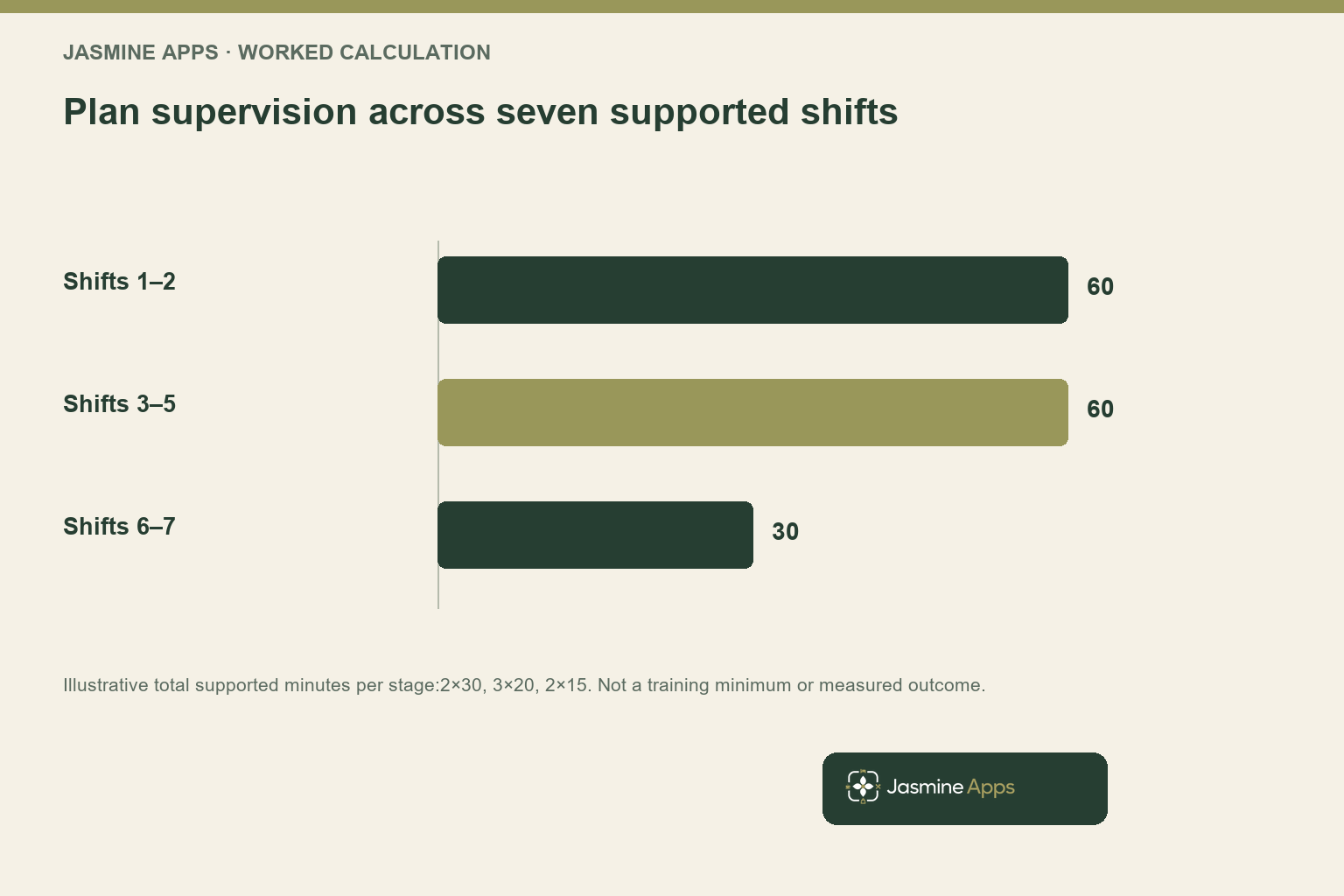
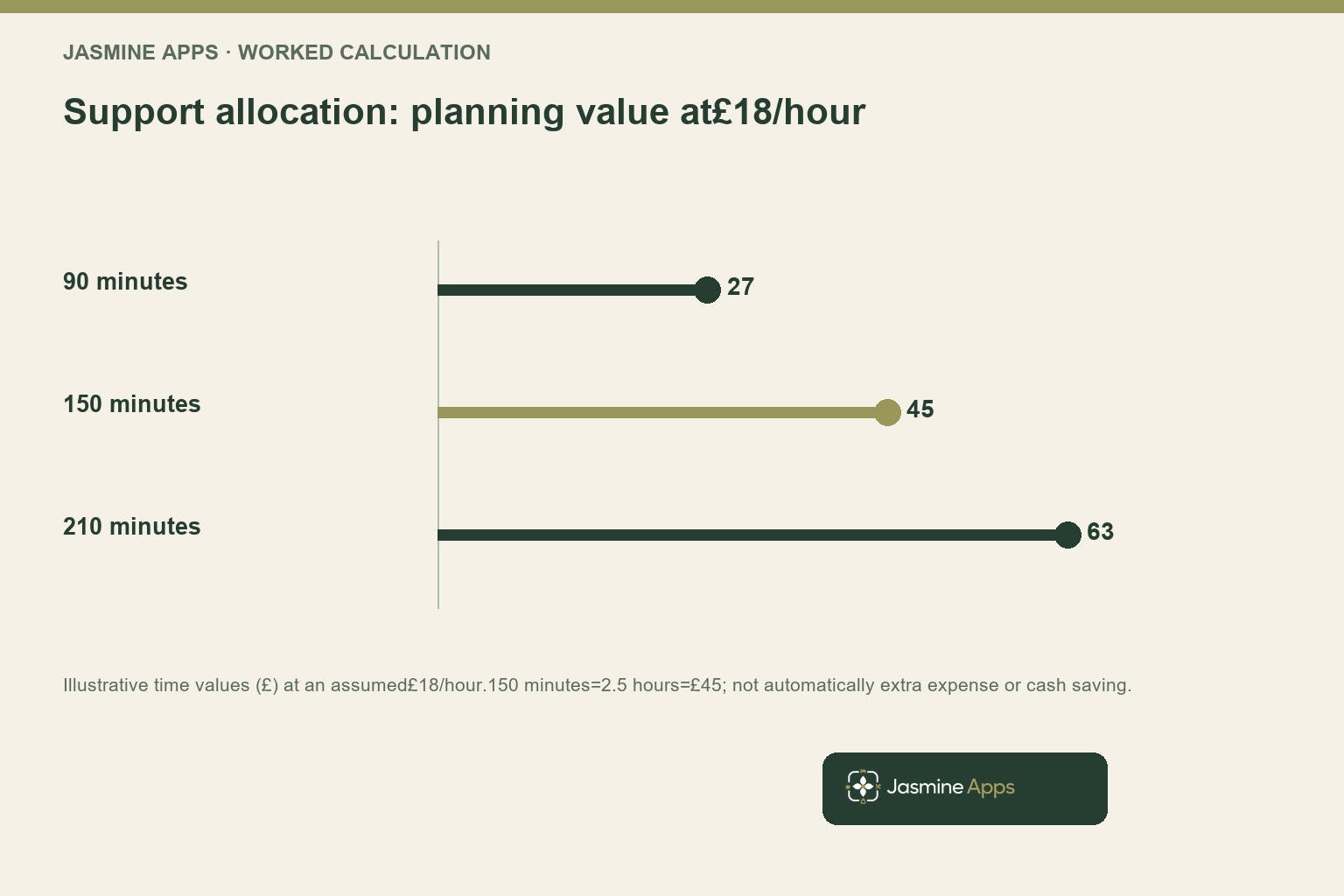
For an illustrative seven-shift framework, assume thirty supported minutes on each of the first two shifts, twenty on each of shifts three to five and fifteen on each of the final two. That totals one hundred and fifty minutes, or two and a half hours. The allocation is a planning example, not an evidence-based training minimum for any role.
If your internal planning rate for that time is £18 per hour, the illustration values supervision at £45. This is not automatically an extra cash cost or a saving from using software. Your actual expense depends on paid scheduling, while the time value helps you decide how to protect the buddy's capacity and compare different learning arrangements realistically.
Clock Jasmine is currently listed at £1 per employee monthly with a £25 monthly minimum, and £10 per employee annually. Confirm the annual terms, role access, learning scope, implementation and tax basis in your quotation. The listed rate should support a buying discussion about the workflow you need, rather than a claim that a subscription replaces a supervisor's judgement.
Use the NCSC identity and access guidance to support your access review. Give your colleague the permissions appropriate to the job and update them when responsibilities change. A successful first week should leave the right person able to do the right work, with an understood help route and no unnecessary shared credentials.
Keep the learning record useful after the first seven shifts
Your final review should produce the next action rather than a closed folder. Identify the task needing another supported attempt, the person providing it and the shift where it can happen. A short actionable note is more useful to the next supervisor than a long list of topics marked covered without explaining what the colleague can now do.
Look for patterns across new starters without ranking people from incomparable situations. If several colleagues struggle to find the current rota or ask the same product question, investigate the information route. Your venue may need a clearer instruction, better access setup or a different briefing sequence, rather than repeatedly attributing the difficulty to individual memory or motivation.
Keep learning records appropriate, accurate and accessible only to those who need them. Your general training examples should avoid exposing private guest information or sensitive employment details. Explain the purpose of observations to the colleague and follow your employment and data policies, keeping developmental support distinct from a formal performance process that may have different requirements.
Revisit the plan when the role, menu, equipment or workflow changes. A colleague who was competent with one setup may need another supported practice after a system change, particularly when the correction or escalation route differs. Your learning routine should follow the work the person now performs rather than relying indefinitely on the induction completed when they first joined.
Your strongest new-starter experience combines a manageable sequence, a reliable buddy and evidence of practical progress. Keep what helped, remove repeated information that did not and protect the time needed for the next person. You can then grow a team that asks useful questions early and handles ordinary service more confidently, with clearer records supporting the manager's decisions about further responsibility.
Pro Tips
Ask for a demonstration. Have your colleague show the action in the supported environment. A practical attempt reveals access and wording problems that a yes-or-no confidence question can miss.
Protect buddy capacity. Plan supervision in the rota rather than assuming it fits between a full independent workload. The quality of observation depends on having enough attention available.
Record conditions. Note whether a task was performed quietly, with prompts or during service. Your next supervisor can then choose an appropriate level of support.
Common Mistakes
Treating seven shifts as a competence guarantee. You ignore different roles and learning needs. Use the framework as a review structure and extend support where required.
Equating a course tick with practical readiness. You can miss a gap in the real workflow. Pair learning records with an appropriate observed action.
Granting broad access to avoid setup work. You create unnecessary permissions and confusing responsibilities. Test the role-specific access the colleague actually needs.
Frequently Asked Questions
What should a new restaurant employee learn in the first week?
You should prioritise essential safety arrangements, the source of help, role-specific boundaries and a manageable set of ordinary tasks. Confirm access to the rota and relevant tools, then combine explanation with supported practice. Add realistic variations as the colleague demonstrates the basics. Your first-week framework should adapt to experience and reasonable adjustments, with a clear review of what needs further support rather than a promise that everyone becomes independent after the same number of shifts.
How do you check whether hospitality induction has worked?
You should ask the colleague to demonstrate relevant actions under suitable supervision, including how they recognise a situation that needs help. Record the conditions and any prompts required, then agree the next practice opportunity. A completed course or handbook acknowledgement records an activity but does not establish every practical skill. Your manager needs evidence of usable progress in the actual role, with further support planned for tasks that are not yet dependable.
How much buddy time should you plan for a hospitality new starter?
You should estimate the support required by the role, task risk, experience and working conditions rather than applying one universal allowance. Protect observation and feedback within the rota so the buddy can give useful attention. A worked time budget can help your planning, but it is not a legal or professional training minimum. Review the allocation after the first shifts and extend support when the colleague has not yet demonstrated the relevant work reliably.
Can Clock Jasmine replace practical staff supervision?
You can use Clock Jasmine's rota, attendance and learning workflows to organise relevant information, subject to the scope you demonstrate. Those records support the manager but do not replace the competent person's responsibility to assess practical work and provide appropriate supervision. Your buying test should connect a course or instruction with an observed task, a review note and the next planned shift, so the system helps the team act on the learning rather than simply store completion ticks.
What should happen after a new starter finishes seven shifts?
You should review the tasks ready for reduced prompting, the tasks needing another supported attempt and any responsibilities that remain restricted. Agree an owner and a realistic shift for the next learning step. Seven shifts provide a useful framework for discussion, not a universal competence deadline. Continue checking progress when the role or system changes, and improve the plan where repeated questions suggest the venue's information or access process could be clearer.
Hospitality new starter shift plan: your next step
Your hospitality new starter shift plan should turn a welcome into dependable, supported work. Arrange a Clock Jasmine demonstration with one role, its first-shift tasks and your buddy arrangement. You can test how rota, access and learning records support the next practical action, giving your new colleague and supervisor a clearer start.