

Restaurant Stock Variance: Why a Missing Bottle Is Not Proof of Theft
· Jasmine Apps
Your stock count can show a shortage even when every recorded sale is genuine and every delivery arrived. A portion measured in one unit, a purchase recorded in another and a count taken before the final delivery can create restaurant stock variance without explaining its cause. Your first job is to make the comparison trustworthy before you decide what happened.
You need a method that connects purchases, recipes, sales and physical stock over the same period. That gives you a useful investigation, instead of an alarming number and a search for someone to blame.
Key Takeaways
- Match your count, purchases and sales to the same period.
- Separate purchased packs from the portions you sell.
- Record transfers, waste and other relevant movements.
- Treat variance as an investigation signal rather than a verdict.
- Start with a small group of ingredients whose records you can verify.
Make restaurant stock variance a fair comparison
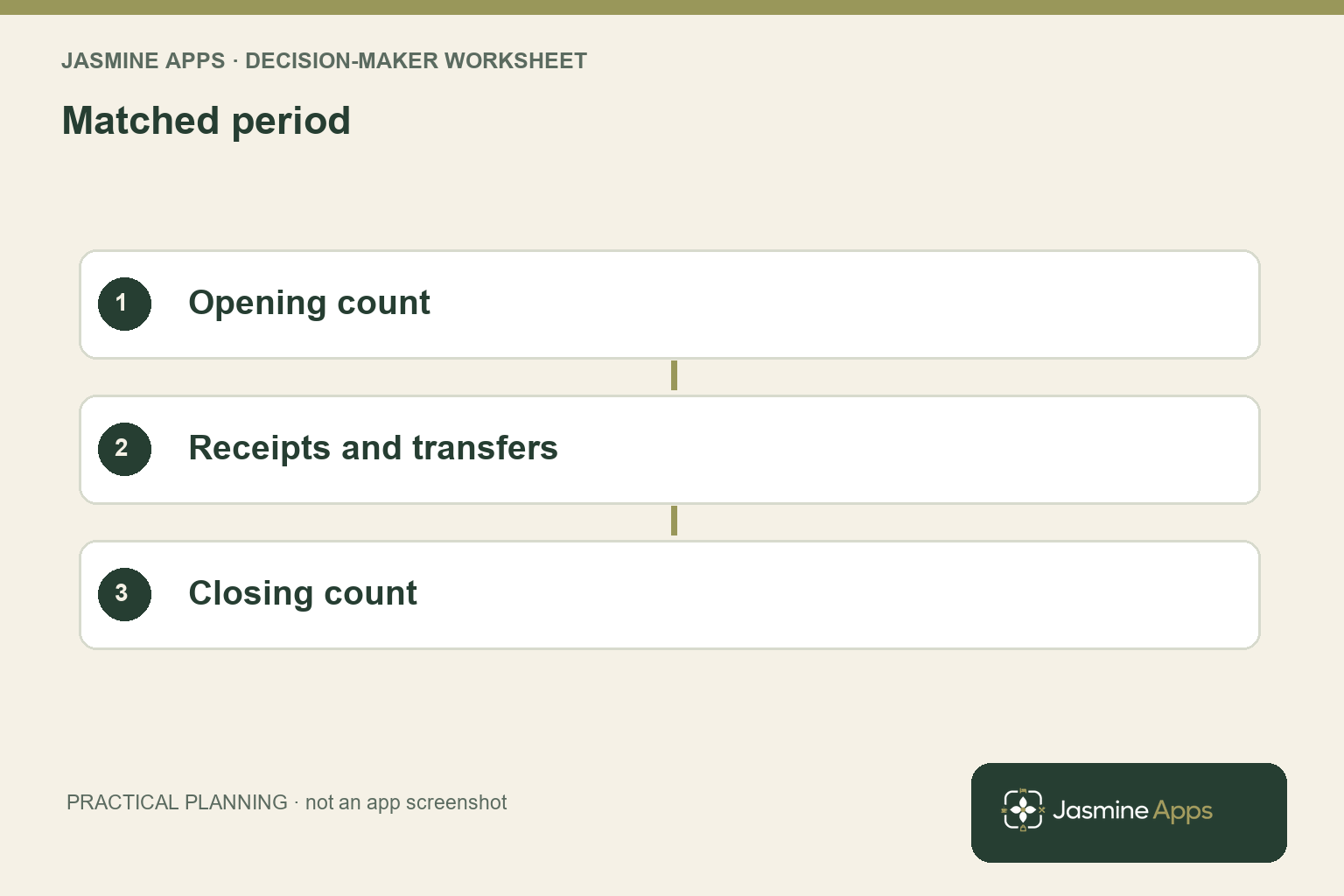
Choose your opening and closing count points before collecting the figures. Your physical stock, received deliveries and recorded sales must refer to that same interval. If a delivery belongs between the counts, include it even when its invoice arrives later. Identify transfers into or out of the area and keep them attached to the relevant item rather than burying them in a general adjustment.
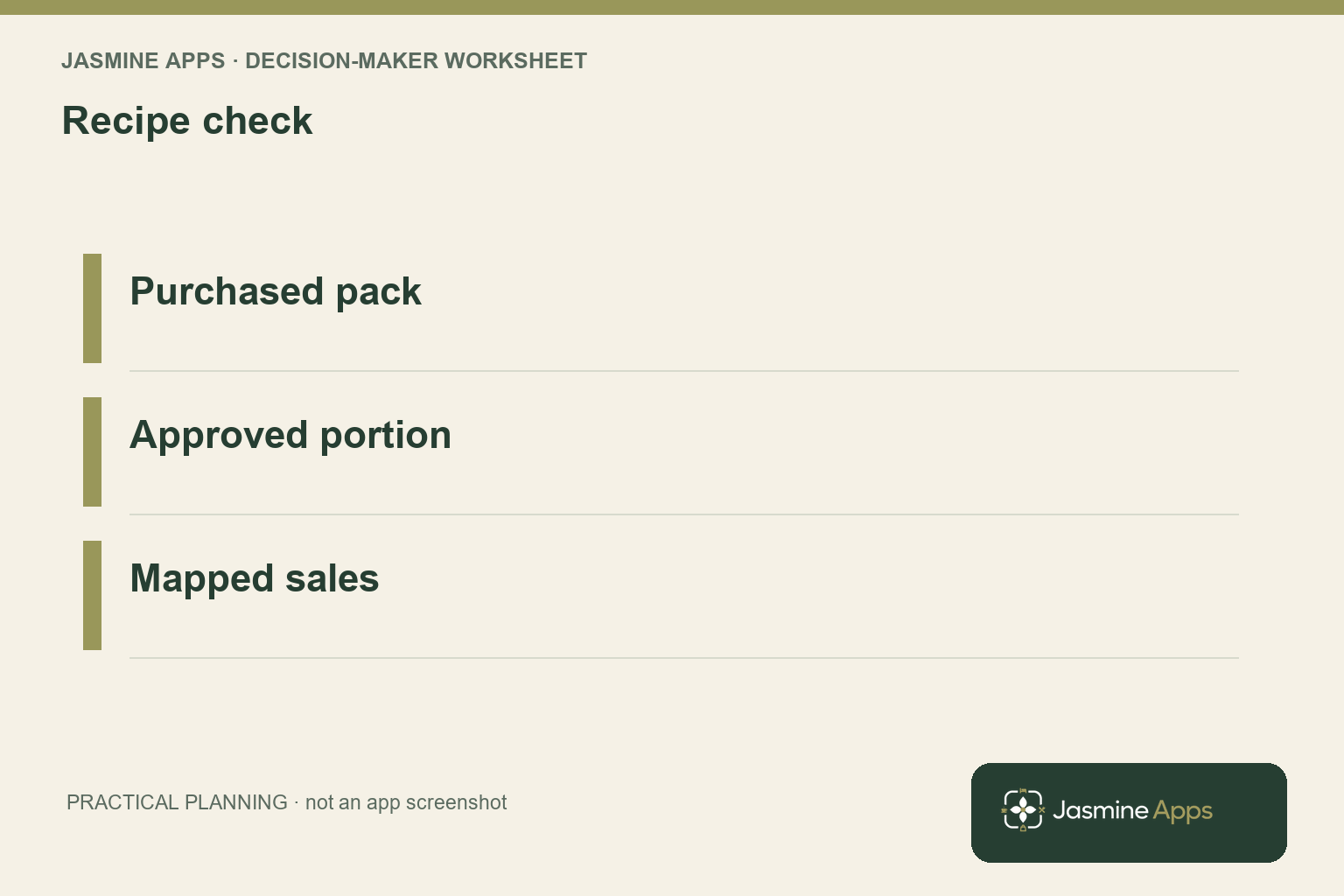
Use consistent units. Your purchase might be a keg, bottle or case, while your sale consumes millilitres or individual portions. Write the conversion explicitly and check it against the actual product you receive. A nominal pack size should not become a claim that every millilitre can be sold; your preparation and approved yield assumptions need their own treatment.
Separate actual usage from theoretical usage. Your actual usage begins with opening stock plus receipts, adjusted for relevant movements, minus closing stock. Your theoretical usage describes what the recorded sales should consume under your approved recipes. Comparing those figures can reveal an unexplained gap, but you still need to check counting, receiving, recipes and recorded exceptions before assigning a cause.
Use the WRAP hospitality measurement guidance when establishing your food-waste records. Measurement should support a specific action, such as changing preparation quantities or reviewing an ingredient’s yield. Your count process and waste process need to complement each other. Neither a stock shortage nor a waste total alone tells you the complete story of your kitchen or bar.
Mark estimated part-container quantities so your next count can reproduce the same method instead of introducing a different measurement convention.
Investigate restaurant stock variance through packs and recipes
The actual Till Jasmine Stock page distinguishes finished products from ingredients used through recipes. Its navigation includes Products, Ingredients, Suppliers, Low stock, Movements and Invoices. Products can have an Add recipe or Edit recipe action. Those controls give you a practical place to check whether a sale deducts a finished item or portions from an ingredient.
Review the ingredient’s unit and pack definition before checking the recipe. The current stock-management guide explains packs, portions and yields separately. A pack is what you buy; a portion is what a sale consumes. If you change how a portion is cut, inspect the conversion and the resulting cost rather than assuming an old recipe remains valid after the change.
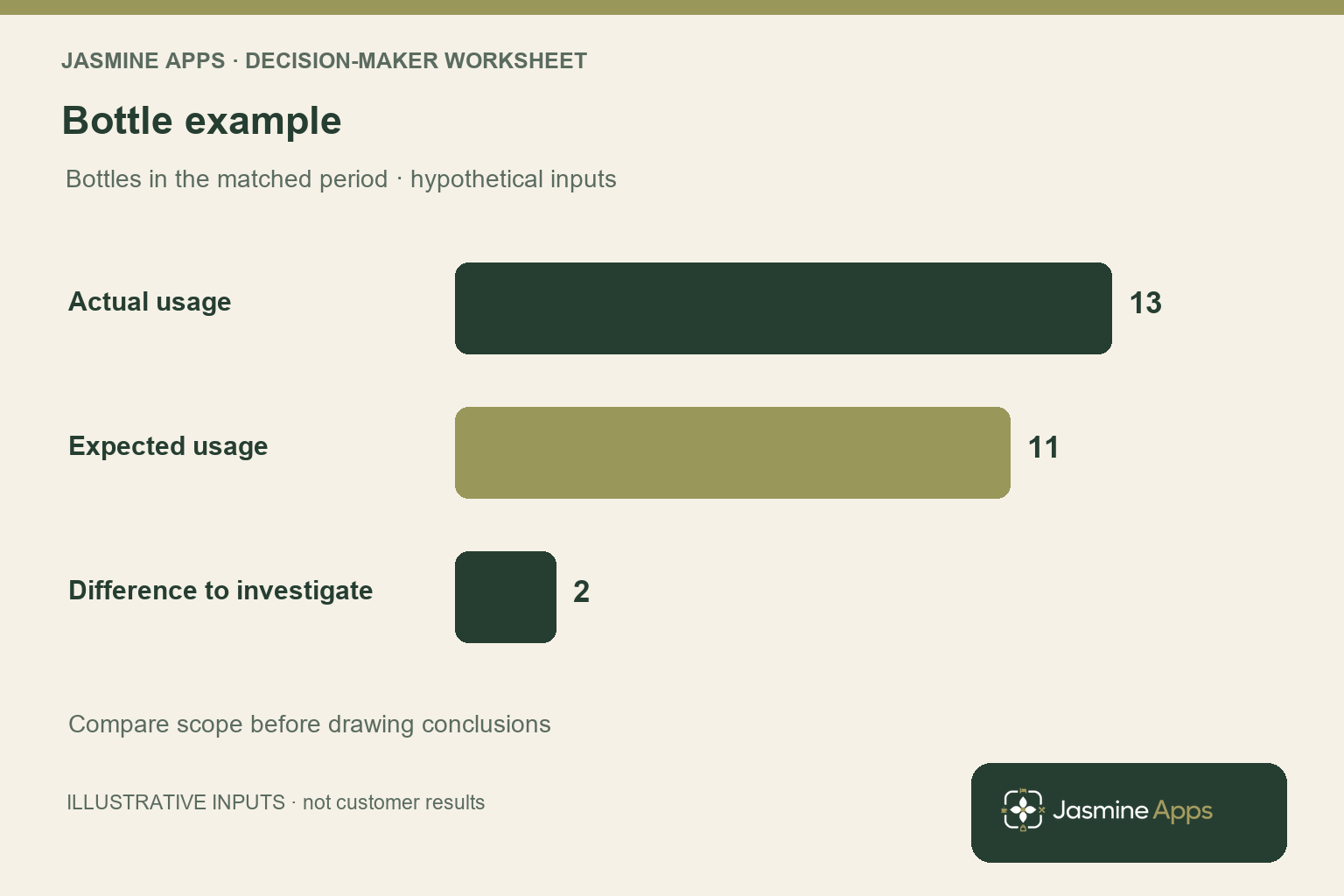
Consider an illustrative bottle example. You open with 12 bottles, receive 8 and finish with 7, with no transfers recorded: actual usage is 13 bottles. Your verified sales and approved serving conversion predict 11 bottles of usage, leaving a 2-bottle difference to investigate. These are hypothetical inputs, not a reported venue loss or a Till Jasmine performance result.
Work through the evidence in order. Check whether all receipts belong in the period, whether the closing count includes opened containers consistently and whether staff drinks or waste follow your approved recording process. Inspect the recipe quantity and any product sold without a recipe. Your conclusion should name the evidence found; if the cause remains unknown, keep it unknown while you improve the next count rather than disguising it with a balancing entry.
Keep the purchased pack label beside the conversion worksheet so your reviewer can identify a changed supplier size before altering the recipe.
Turn restaurant stock variance into a repeatable review
Start with a manageable group of ingredients that matter to your operation. Choose items whose pack sizes, recipes and sales mappings you can verify, then repeat the review over comparable periods. Keep the reviewer and count method consistent where practical. You will learn more from a reliable small sample than from a large report containing uncounted products and ambiguous conversions.
Use a worksheet with the item, unit, opening count, receipts, transfers, closing count, expected usage and unexplained difference. Add the evidence used to resolve each question. If the ingredient is a shared input across several menu items, include every relevant recipe in theoretical usage. Otherwise, ordinary sales from an unmapped product can appear as unexplained consumption.
In the actual Stock screen, a product can be Not counted and a recipe-linked item can derive availability from ingredients. Your low-stock warning is therefore not a replacement for a physical count or a complete variance analysis. Review what the status means before interpreting an empty quantity as missing inventory. Check your saved configuration using the stock setup guide.
Give each investigation a specific next action and owner. You might need a repeated count, a corrected conversion or a review of receiving practice. After the change, use another matched period to see whether the unexplained gap becomes clearer. You should also record confirmed waste through your operational process, so your team can distinguish preventable disposal from record quality problems and focus on the improvement supported by evidence.
Use a separate unresolved column rather than forcing every gap into waste when your records do not yet identify its cause.
Pro Tips and Common Mistakes
Pro Tips
Keep the original count. Preserve your initial worksheet before correcting an error. You can then explain why the reported variance changed and avoid turning a legitimate correction into an unexplained edit.
Review recipe coverage before percentages. A convincing cost percentage can conceal products without ingredient mappings. Check which sales contribute to theoretical usage before comparing that usage with the entire counted stock pool.
Separate quantity and price effects. Your ingredient may cost more without your team consuming more. Investigate physical usage first, then valuation changes, so your action addresses the right cause rather than confusing purchasing inflation with waste.
Common Mistakes
Counting around inconsistent delivery times fails because a purchase can appear in one part of the calculation and not another. Define the cutoff and attach each receipt to it.
Mixing packs and portions fails because your arithmetic compares different quantities. Show the unit conversion and verify the recipe’s consumption before calculating the difference.
Accusing staff from one variance fails because the number does not establish a cause. Check records, counts and documented movements first, and follow your established management procedure for any concerns that remain.
Your weekly review should finish with a clearer record and a practical action. Avoid making a target percentage the goal when your underlying counts and mappings still change meaning from one week to the next.
Choose one ingredient for a second-person count and compare the two methods before changing the recorded balance or accusing the recipe of being wrong. If the methods differ, agree the counting convention and repeat the check; that gives your next period a firmer basis than an unexplained adjustment today.
Frequently asked questions
How do you calculate restaurant stock variance?
Calculate actual usage from opening stock, received purchases, relevant movements and closing stock over a defined period. Calculate expected usage from the same period’s recorded sales and approved recipe quantities. Compare the figures using the same unit and scope. Your difference is a signal to investigate, not an automatic explanation.
Verify the count, receiving cutoff, recipe coverage and exceptions before deciding whether the gap reflects waste, portioning, an omitted movement or a data error.
What causes stock variance in a restaurant?
Your variance can arise from inconsistent counts, incorrect units, missing receipts, unrecorded transfers, recipe changes, preparation losses or other consumption outside the recorded sales. A single number does not tell you which explanation applies. Review the evidence item by item and preserve the original figures while correcting errors. You should identify confirmed causes separately from unresolved differences, so your next action improves the relevant process instead of simply forcing the report to match a target.
What is the difference between actual and theoretical usage?
Actual usage describes what your stock records and physical counts show was consumed during the period. Theoretical usage describes what your recorded sales should consume under the recipes and yield assumptions you have approved. You need both on the same basis to make a useful comparison. If some sold items lack recipe mappings, or your portion definitions have changed, theoretical usage can be incomplete even when the arithmetic appears correct and the report looks professionally presented.
Does a low-stock warning replace a stock count?
No. A warning reports the configured quantity or recipe-derived availability reaching its threshold; it does not establish that the physical stock matches the recorded balance. You still need a consistent count and a review of receipts, movements and recipe assumptions. In Till Jasmine, check whether an item is counted directly or derives availability from ingredients.
Your manager should understand that distinction before using low-stock status as evidence in a variance investigation.
How often should you review stock variance?
Choose a frequency that fits your trading pattern, delivery cycle and ability to count reliably. A regular review can reveal recurring gaps, but an unreliable daily count may be less useful than a carefully controlled weekly one. Start with important ingredients and repeat the same method before expanding. Your review period should include enough activity to investigate meaningful differences while keeping the records manageable.
Adjust the routine when the evidence shows that delivery timing or product changes require closer attention.
Use restaurant stock variance to ask better questions
Your restaurant stock variance review should connect the count to a conversion, recipe and movement you can inspect. Bring one purchased pack, one serving example and your current count process to Contact Us. Ask for a Till Jasmine stock demonstration around those items, so your team can understand the recorded quantities before you expand ingredient tracking across the venue.