

Restaurant Portion Yield Costing: Why Your Bestseller Costs More Than You Think
· Yiannis Yiasemis
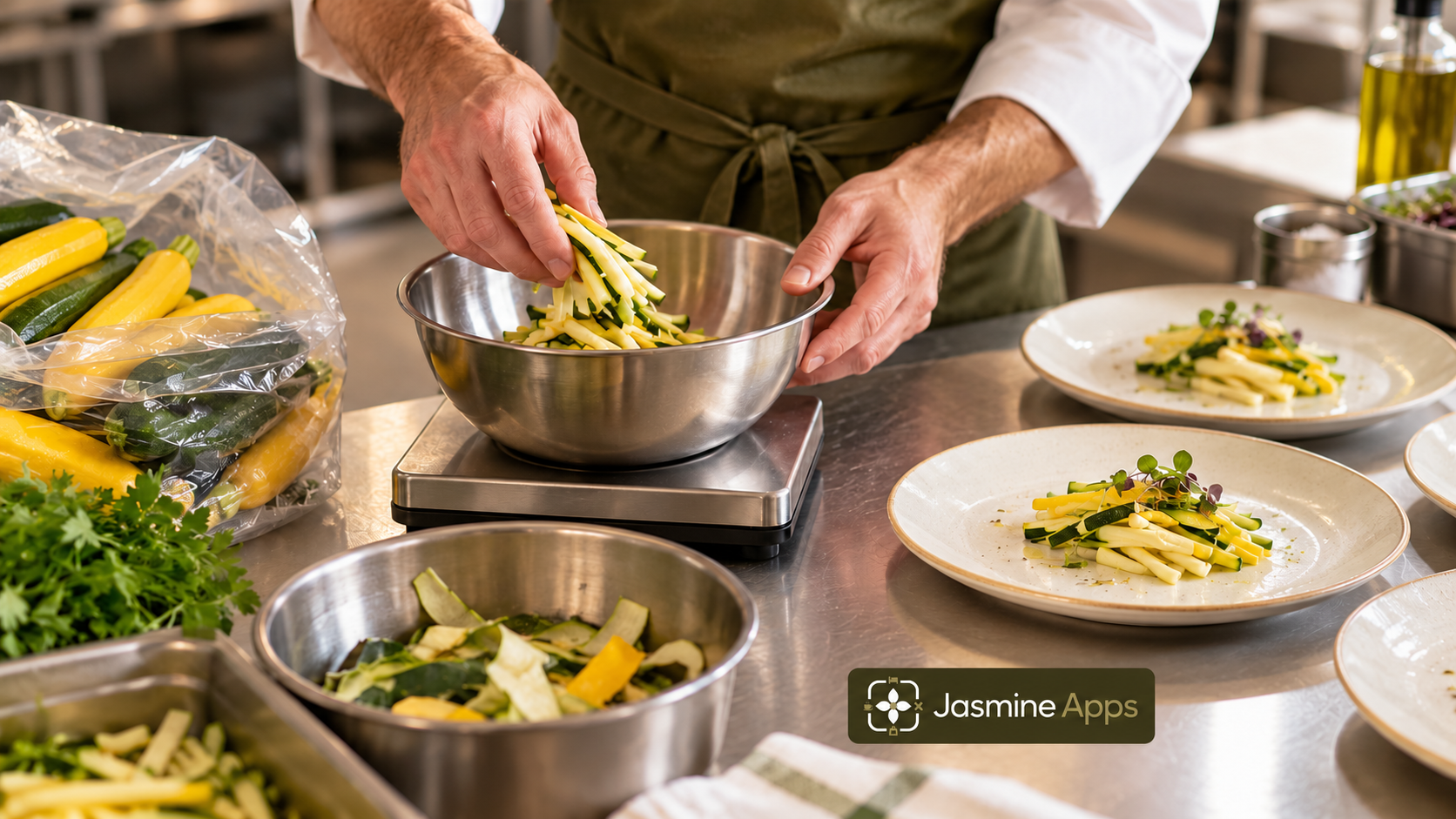
A £30 ingredient pack does not give you thirty £1 portions if trimming and preparation leave you with only twenty-four usable servings. Your actual ingredient cost becomes £1.25 per portion before you add the rest of the recipe. That simple gap is why your restaurant portion yield costing deserves attention before you blame the menu price.
Your bestseller can amplify a small error because you produce it so often. Till Jasmine's product cost and sales records provide a useful starting point, but your kitchen must first establish what a usable portion really costs. Follow one high-volume dish from supplier pack to completed plate, then connect that evidence with the sales volume that makes the difference commercially important.
Key Takeaways
- Cost the usable yield, not just the purchased weight.
- Keep preparation losses separate from later waste.
- Include every component in a repeatable recipe.
- Measure portion variation before changing prices.
- Compare sales volume with current contribution per portion.
Start restaurant portion yield costing with the purchased unit
Choose one ingredient and record the unit you actually buy. Your supplier may invoice a case, pack, kilogram or variable-weight item, while your recipe uses grams or individual portions. Bring those units onto the same basis before calculating a cost. An accurate invoice price still produces a misleading recipe if your conversion assumes the wrong pack size.
Record the purchase cost consistently with your accounting treatment of recoverable tax and other relevant charges. A cost field in your till should follow an agreed definition, rather than sometimes including delivery or tax and sometimes excluding them. Use your cost price and VAT guide for the existing explanation, then agree the basis with your accountant.
Next, distinguish purchased quantity from usable quantity after preparation. If a hypothetical five-kilogram pack costs £30 and yields four kilograms suitable for the intended recipe, the usable cost is £7.50 per kilogram. Dividing by the purchased five kilograms gives £6, which understates the cost of the food available for the plate.
Use a representative preparation batch and record the method. Different specifications, suppliers and preparation techniques can change yield. Your kitchen lead should decide whether the sample reflects ordinary production and repeat it where the result is unstable, rather than treating one unusually good batch as a dependable standard for the whole menu.
Keep the evidence accessible: supplier unit, received quantity, preparation method, usable output and date. You do not need a complicated model to begin, but you do need a calculation another colleague can reproduce. Your first useful result is a shared definition of the ingredient being costed and the quantity that genuinely reaches the recipe.
Calculate restaurant portion yield costing after preparation losses
Your usable yield percentage is usable quantity divided by purchased quantity, multiplied by one hundred. In the five-kilogram example, four usable kilograms give an eighty per cent yield. That calculation describes this assumed preparation process; it is not a universal target for the ingredient or evidence that a particular kitchen is wasting twenty per cent unnecessarily.
Separate expected preparation loss from avoidable waste. Bones, peel or trim may be inherent in the specification you chose, while spoilage or an incorrect batch may require another response. Some trim can be used in another recipe where food safety and your operating process permit it, but you should value that recovery consistently rather than crediting it twice.
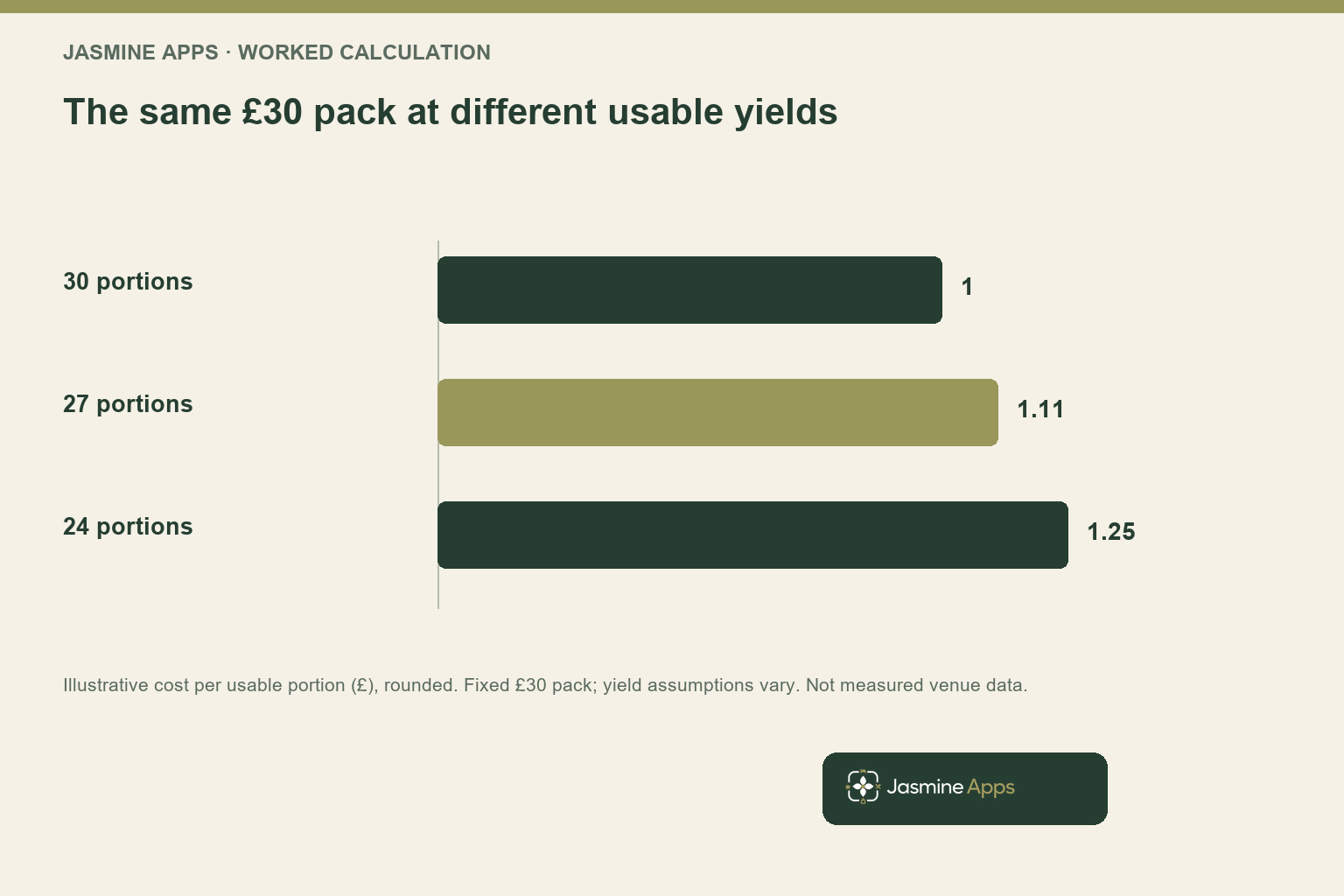
For a second illustration, a £30 pack that produces thirty usable portions costs £1 per portion; twenty-seven portions cost about £1.11; twenty-four cost £1.25. The changing yield affects your ingredient cost even though the supplier price is unchanged. Your graph should make the denominator visible so the purchasing and kitchen teams can discuss the same calculation.
Record the losses at the stage where they occur. If you already reduced usable yield for preparation trim, do not add the same trim again as a separate waste charge on every portion. Later spoilage, production errors and unsold prepared portions may belong in your wider review, but each needs a defined treatment that avoids counting one loss more than once.
WRAP's hospitality food-waste measurement guidance supports better measurement and management of discarded food. Use that principle to create your own stage record rather than relying on an old sector-wide headline. You can then identify whether a purchasing specification, preparation method or demand decision is responsible for the cost you can actually change.
Build restaurant portion yield costing into the complete recipe
An accurate main-ingredient yield is only the beginning of the dish cost. Include the sauce, garnish, cooking ingredients, accompaniment and other components your standard serving requires. Small items can become material across a high-volume bestseller, particularly when staff use an unmeasured amount or add a component that never reached the written recipe.
Write the recipe in units your team can measure reliably. A spoonful, handful or generous portion may vary between colleagues and during busy service. Your kitchen lead can specify an appropriate portion tool or weighed preparation method, while preserving the intended quality and presentation. The objective is repeatability, not reducing the serving below what the guest reasonably expects.
In an illustrative dish, assume the main ingredient costs £1.25, sauce £0.45, garnish £0.20 and accompaniment £0.80. Your recipe ingredient cost is £2.70 per standard portion. If the main ingredient has been entered at £1 using purchased rather than usable yield, the recorded recipe cost becomes £2.45, understating it by twenty-five pence every time.
Check supplier substitutions before using the old recipe cost. A different pack specification may alter both yield and allergen information, even when the product name appears similar. Follow your approved food-information process and consult the FSA allergen guidance when ingredients or preparation change; a costing update should not bypass the food-safety review.
Keep a version date and an owner for the recipe. When purchasing, preparation or portion size changes, update the relevant cost and tell the people who maintain product records. Your recipe then becomes a dependable bridge between the kitchen and your sales review, rather than a spreadsheet that describes a dish nobody now prepares in that form.
Measure portion variation without weakening the guest experience
Observe ordinary production before deciding that the portion standard is wrong. Your team may have a sound recipe but inconsistent serving tools, unclear training or a presentation that makes the specified portion look incomplete. Ask the kitchen lead to review the cause with the people preparing the dish rather than simply instructing everyone to use less food.
Use a small, representative sample under an appropriate kitchen procedure. Record actual portion quantities and compare them with the approved standard, keeping individual staff blame out of the general review. Your purpose is to understand the process across batches, stations and service conditions, not to draw a sweeping conclusion from one plate produced during an unusual rush.
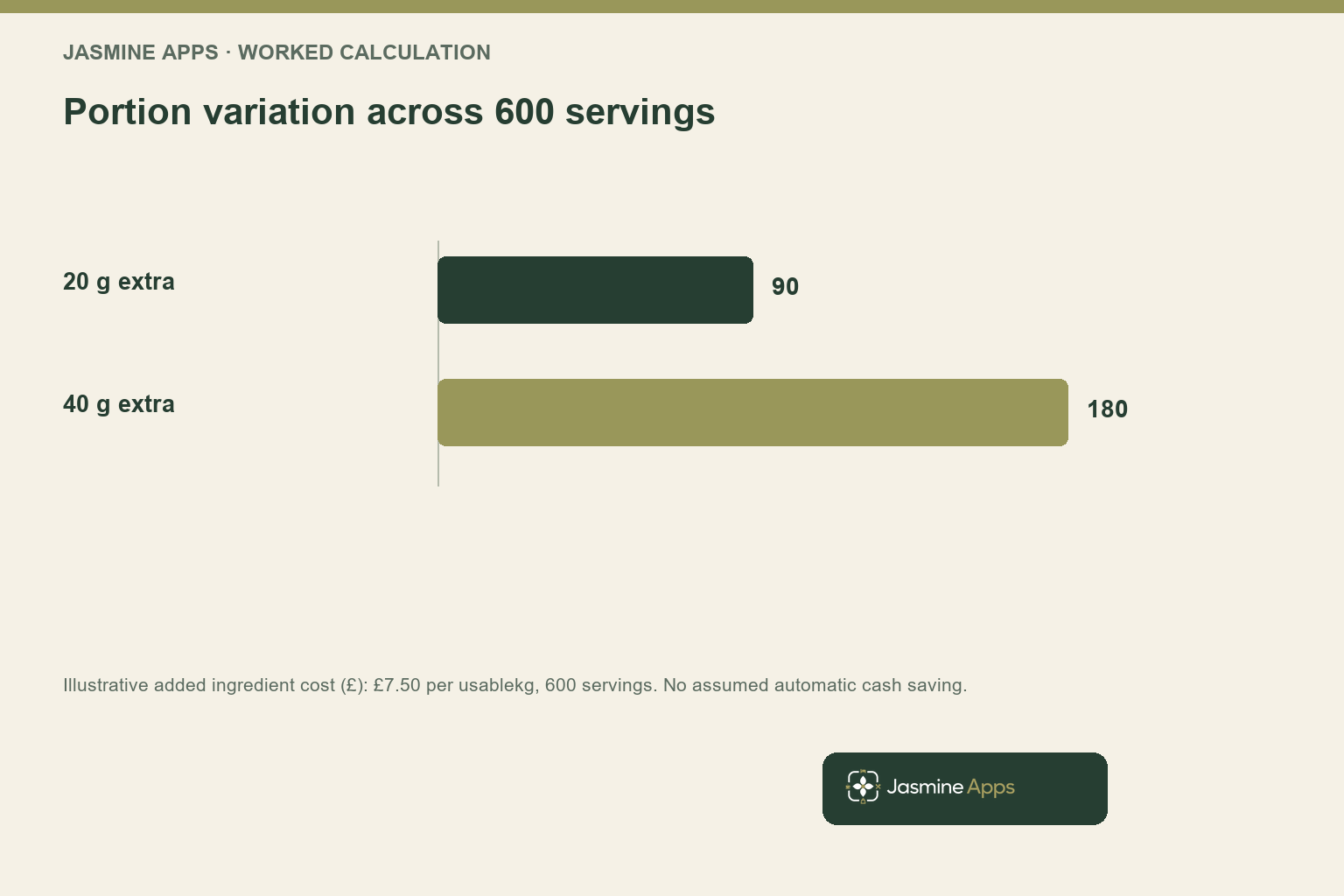
For a hypothetical ingredient costing £7.50 per usable kilogram, an extra twenty grams adds fifteen pence per portion. Across six hundred servings, that is £90 of ingredient cost. If the variation is forty grams, the same volume adds £180. These assumptions show the sensitivity; your own weighed sample and supplier costs establish the actual opportunity.
Compare the result with plate returns and guest feedback. A smaller portion that creates dissatisfaction or leads guests to order something they expected to be included may damage the meal's value. Your decision might instead improve the portion tool, change the plate presentation or revise the recipe so the standard and the advertised dish make sense together.
Repeat the check after making one change. Confirm that the team can maintain the standard and that quality remains acceptable during the busiest period. You can then describe a controlled process improvement, with the measured cost difference and any implementation expense, rather than claiming that every gram removed becomes pure profit or a dependable reduction in purchasing next week.
Connect the kitchen calculation with your till sales records
Once you have a current recipe cost, connect it with a consistent product record and relevant sales period. Till Jasmine includes a product cost field alongside price and tax. Confirm how your reporting uses that field, including whether cost changes affect historical or future calculations, instead of assuming that editing the current record reconstructs the economics of every past sale.
Select the correct item and distinguish variants, bundles and portion sizes. If two different dishes share a vague name, your volume comparison may combine costs that do not belong together. Your manager and kitchen lead should agree which record represents the standard recipe, how extras are charged and how complimentary or wasted items enter the wider review.
For an illustrative monthly bestseller selling six hundred portions, a twenty-five-pence understatement hides £150 of ingredient cost. That number does not mean your till lost money or that you can recover £150 automatically. It means your purchasing and menu decisions have been using a contribution estimate that is too optimistic under those assumptions.
Use the existing restaurant menu profitability article for the broader comparison of popularity and contribution. Your new yield calculation strengthens that analysis by improving the cost input. Keep labour, overhead, demand and capacity in view before deciding whether to reprice, change specification, redesign the recipe or leave a strategically useful dish on the menu.
Your current listed Till Jasmine subscription starts at £59 per venue monthly or £590 annually, with quotation scope confirmed separately. Bring the sample recipe and its product record to a demonstration. Ask how the relevant sales and cost information can be reviewed in your configuration, so your software purchase supports a calculation the kitchen has already made credible.
Maintain the costing when suppliers, menus and demand change
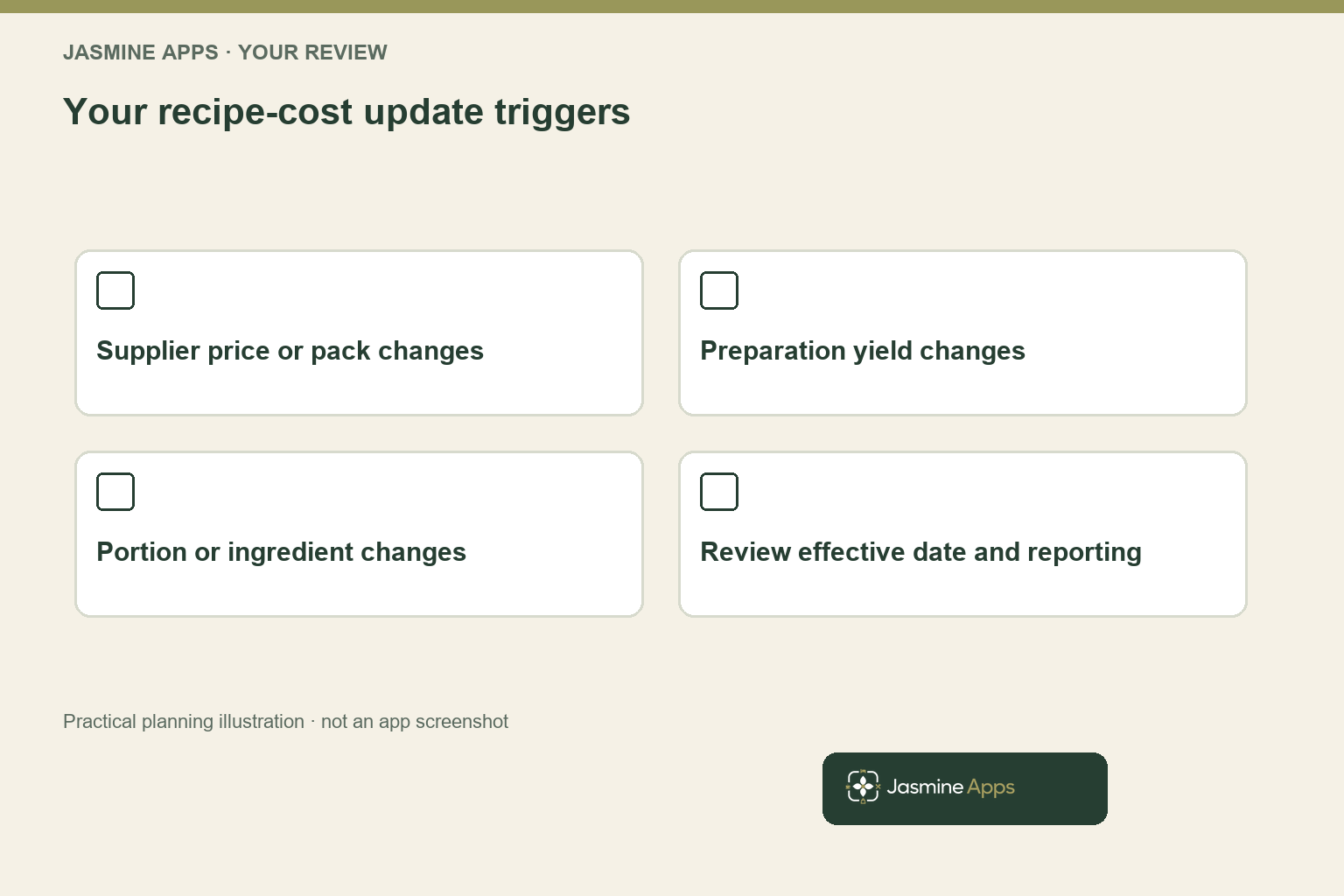
Create a review trigger instead of relying only on an annual menu exercise. A supplier price increase, altered pack size, changed specification or revised portion can all affect the cost. Your purchasing colleague should know which changes require the kitchen lead to confirm yield and which can be updated through the agreed existing conversion.
Prioritise the dishes where errors have the largest potential effect. A high-volume item with a variable yield deserves attention before a rarely sold component with a stable cost. You can estimate exposure by multiplying the possible unit-cost difference by realistic sales volume, then use that ranking to decide where a new preparation sample is worth the effort.
Keep a simple change record with the old assumption, new evidence and effective date. Explain whether the difference came from price, yield, serving size or waste after preparation. That separation makes your next management discussion more useful, because a supplier negotiation cannot solve an inconsistent portion and a new serving tool cannot reverse a higher invoice price.
Review the complete commercial result after any intervention. Record implementation cost, staff time, purchasing changes and guest response. A lower theoretical recipe cost becomes a cash saving only when it changes an expense you incur; it may otherwise represent better use of stock or capacity. Keep that distinction visible when reporting the success of the project.
Your strongest costing routine is one your team can continue during normal operations. Use a small set of agreed units, named owners and practical review triggers, then expand as the process becomes reliable. You will make menu and purchasing decisions from the food you actually serve, giving your bestseller a contribution figure that deserves the confidence you place in it.
Pro Tips
Keep an explicit unit chain. Write purchased unit, usable unit and serving unit together. A clear conversion makes a changed pack size visible before it distorts the recipe.
Value recovered trim once. If another recipe uses safe, suitable trim, agree the allocation with your costing owner. Avoid reducing the first dish cost and treating the second ingredient as free without a consistent method.
Prioritise by exposure. Multiply plausible unit-cost error by actual relevant volume. Your largest opportunity may be a small difference on a bestseller rather than a dramatic percentage on a rarely ordered dish.
Common Mistakes
Dividing by purchased portions. You understate cost when preparation produces fewer usable servings. Calculate the actual yield before costing the recipe.
Counting trim twice. You overstate cost when the same preparation loss appears in both yield and a separate waste charge. Assign each loss to one defined stage.
Changing portions without testing value. You can damage presentation and guest satisfaction. Verify a repeatable standard that still delivers the dish you advertise.
Frequently Asked Questions
How do you calculate restaurant ingredient yield?
You divide the usable quantity after the defined preparation process by the purchased quantity, then multiply by one hundred for a percentage. Keep both quantities in compatible units and record the specification and method. Your result describes that process and sample, so repeat the check where variation matters. Use the purchased cost divided by usable output to calculate the ingredient cost available to the recipe rather than assuming the full pack reaches the plate.
What is the difference between recipe cost and food-cost percentage?
Your recipe cost is the cost of the components in a defined portion, using appropriate usable yields and units. Your food-cost percentage compares an agreed food cost with the relevant sales value. Both depend on consistent tax and cost definitions, but they answer different questions. A percentage can look attractive while the actual contribution per dish remains modest, so review the cash contribution, sales volume and operational requirements alongside the ratio.
Should you include trimming losses in restaurant portion cost?
You should account for the usable output after the preparation process, which normally captures the effect of trim on the ingredient available for the recipe. Do not then add the same loss a second time as separate waste. Distinguish unavoidable preparation loss, safe useful recovery and later avoidable waste. Your kitchen and costing owners should agree the treatment so a colleague can reproduce the calculation and understand where an improvement would change the result.
How often should you update restaurant recipe costs?
You should update them when a relevant price, pack size, specification, yield or portion standard changes, with a practical routine for checking important high-volume dishes. A fixed review date can help, but it should not delay an update after a material supplier change. Record the effective date and cause of the difference. Your manager can then distinguish a purchasing increase from a preparation or serving issue before deciding how to respond commercially.
Can your EPOS system calculate the true cost of a recipe automatically?
You need to demonstrate the exact costing functions and data definitions available in your proposed setup. A product cost field does not by itself measure preparation yield, portion variation or every recipe component. Establish those inputs through a reliable kitchen process, then confirm how your system records and reports the relevant costs and sales. Your demonstration should include a cost change and its reporting effect rather than assuming that all historical contribution figures are automatically rebuilt.
Restaurant portion yield costing: your next step
Your restaurant portion yield costing should describe the usable food your team actually serves. Request a Till Jasmine demonstration with one high-volume recipe, its supplier unit and your measured yield. You can connect a credible kitchen cost with the relevant product and sales records, making your next menu decision more informed.