

Restaurant Loyalty Software ROI: What Your £29 Rewards Need to Earn
· Jasmine Apps

Your busiest regulars can make a loyalty scheme look successful even if it changes none of their behaviour. They already visit, so rewarding those purchases may increase cost before it increases sales. Your restaurant loyalty software ROI should begin with incremental visits and the cost of delivering the reward.
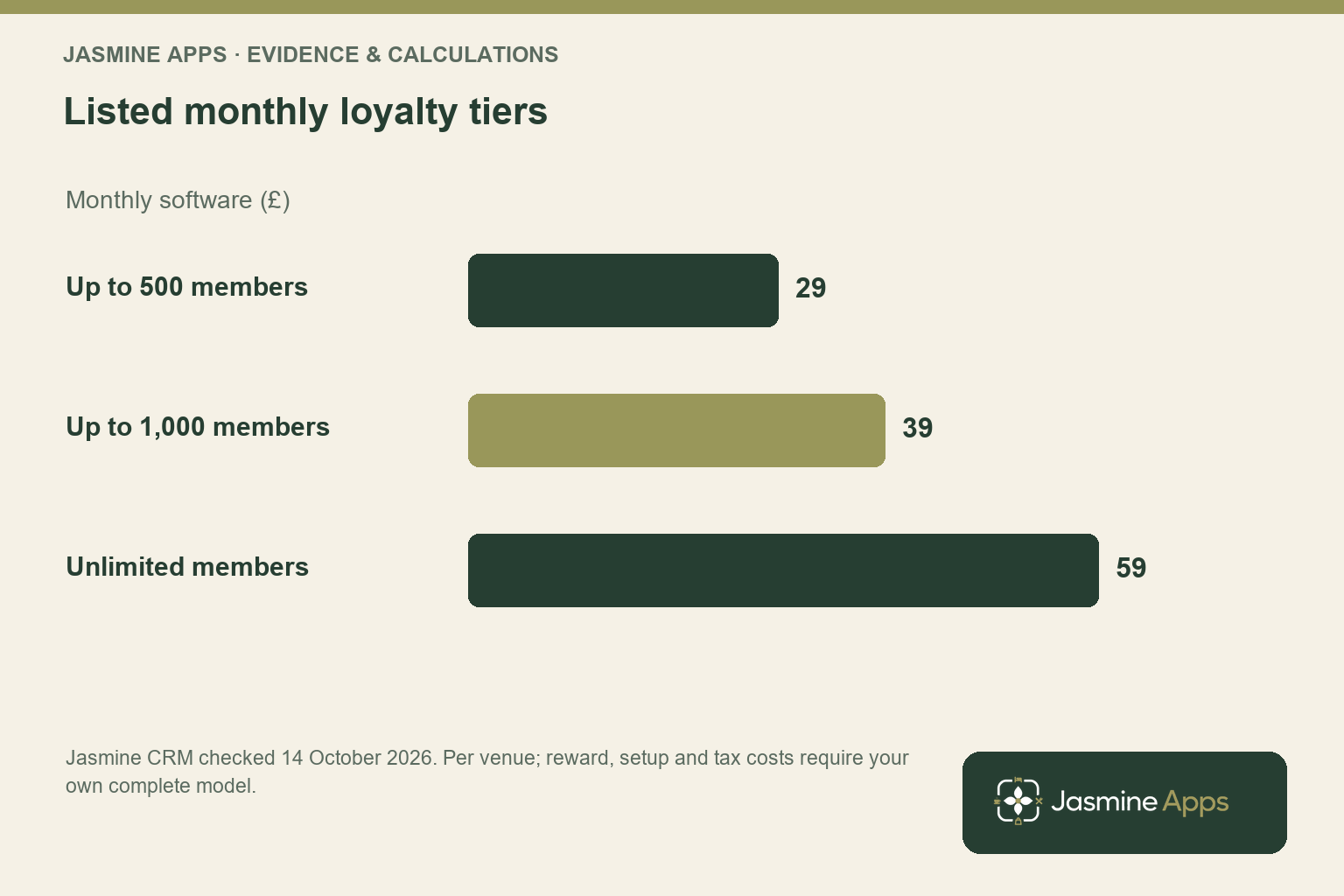
Jasmine Loyalty starts at a listed £29 per venue per month for up to 500 members. You can use it to make rewards clearer and repeat visits easier to encourage, provided your scheme has a commercial purpose beyond collecting sign-ups.
Key Takeaways
- The listed tiers are £29 for 500 members, £39 for 1,000 and £59 for unlimited.
- Measure visits or contribution that would not otherwise have happened.
- Reward fulfilment and discounts belong in your cost model.
- Your participating venues and reward rules need deliberate configuration.
- A small pilot can protect margin before you promote the scheme widely.
Restaurant loyalty software ROI starts with the visit you change
Your loyalty programme should ask a specific customer to do something useful. You might encourage a second visit after an initial meal, a quieter weekday purchase or a return to a venue the guest already enjoyed. A reward without that purpose can become an extra discount attached to behaviour you would have received anyway.
Academic evidence explains why progress can matter. In the 2006 Endowed Progress Effect research, Joseph Nunes and Xavier Drèze found that reframing an eight-step task as ten steps with two already completed increased persistence and completion. This is behavioural evidence about goal progress, not a forecast of restaurant revenue or a Jasmine Loyalty trial.
You can apply the principle carefully by making the next meaningful reward easy to understand. Your member should know what counts, how close they are and why the benefit is worth returning for. Avoid promising an arbitrary growth percentage simply because a published experiment found a behavioural effect in another setting.
For your commercial baseline, group customers by when they joined and compare their subsequent behaviour with an appropriate reference. Existing frequent visitors should be separate from genuinely new or occasional guests. Otherwise your highest-spending regulars dominate the result and hide whether the scheme changes the customer journey you intended to improve.
Your main outcome should be retained contribution after reward costs. Sign-ups, points issued and app openings are useful operational signals, but they do not pay your bills on their own. A successful pilot gives you evidence that your chosen incentive encourages a valuable extra visit without making an already profitable customer relationship unnecessarily expensive.
Calculate restaurant loyalty software ROI after reward fulfilment
Jasmine Loyalty’s current listed monthly tiers are £29 per venue for up to 500 members, £39 for up to 1,000 and £59 for unlimited members. The annual amounts are £290, £390 and £590 respectively. Confirm which member-count definition and venue scope apply to your quotation, particularly if you operate more than one participating site.
Your software fee is only one part of your scheme cost. You also need the incremental cost of rewards, discounts, staff administration and any required setup. A free coffee costs you its ingredients and delivery effort; a percentage discount reduces the contribution on the transaction where it is used. Model the reward you intend to offer instead of using its menu price indiscriminately.
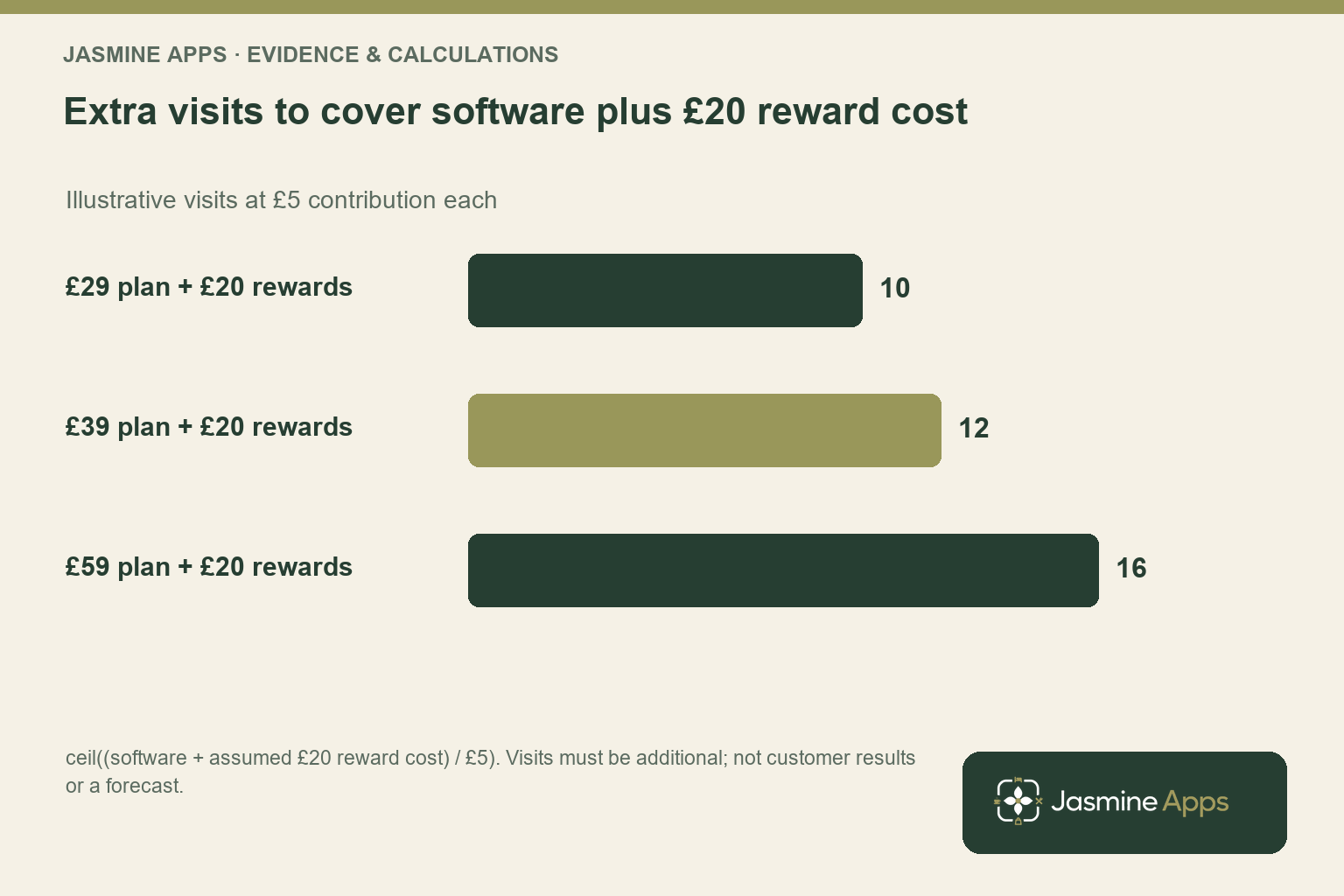
Suppose your £29 plan has £20 of incremental reward cost in a month. If a genuinely additional visit contributes £5 before that reward cost, your £49 combined model needs ten extra visits to exceed the cost. Nine visits contribute £45 and fall short; ten contribute £50 and leave £1 before your other scheme costs.
At the same £20 reward-cost assumption, the £39 tier needs twelve such visits and the £59 tier needs sixteen. These are illustrative thresholds, not predicted outcomes or member-growth targets. Your real result depends on whether those visits are additional and whether the reward cost changes as participation grows.
You should also test a downside case. If most redemptions come from people who would visit anyway, your cost rises without enough new contribution. Set a review point and a reward budget before launch, and use the complete quotation and agreed tax basis to replace the software-only portion of your initial model.
Protect restaurant loyalty software ROI through your actual scheme rules
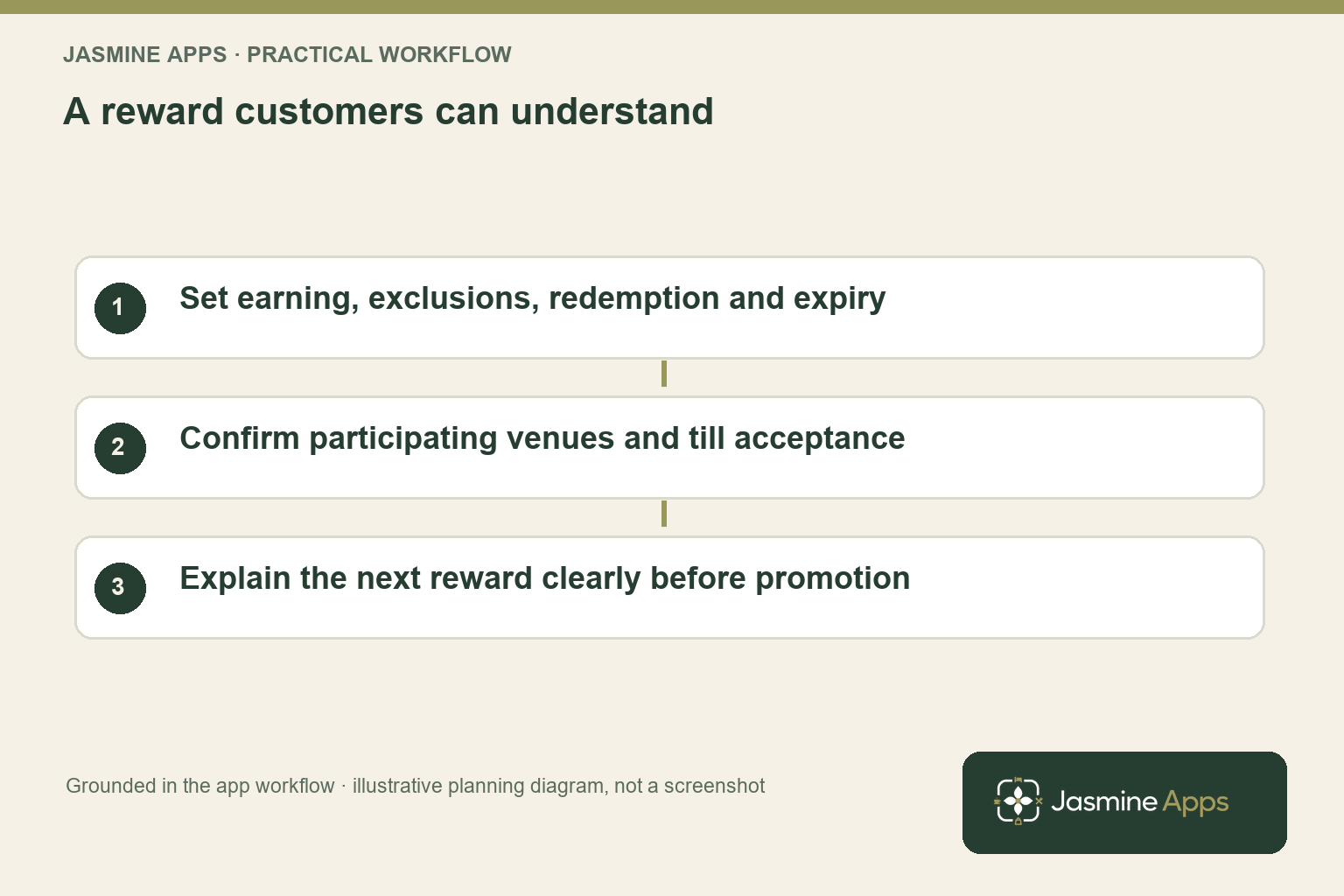
In the actual administration controls, you can configure points earned per pound, visit bonuses, redemption settings, minimums, exclusions and expiry. You should treat those as financial rules rather than cosmetic preferences. An attractive reward page cannot compensate for a scheme that earns points on transactions you intended to exclude.
Your configuration also determines whether earning happens after discounts and whether service charge is excluded. Test a full-price sale, a discounted sale and a redemption in an agreed demonstration environment. Ask your team to explain the result in plain language so customers receive a consistent answer when they question their balance.
If you connect the scheme with Till Jasmine, confirm the product and venue arrangement you will actually use. The loyalty package settings include participating venues, and an unselected venue can prevent a member barcode from being accepted at its till. Your commercial offer must match where staff can honour it.
A multi-venue scheme needs clear ownership of both the promise and the cost. Decide whether a reward earned in one venue can be redeemed in another and how you will review the resulting contribution. You should not let a shared brand create an implied promise that your configuration or staff training cannot deliver.
Before promotion, write a one-page explanation covering earning, redemption, exclusions and expiry. Have a member-facing colleague read it and test the questions a guest is likely to ask. Your software creates the framework, but your venue remains responsible for the scheme; a clear offer reduces misunderstandings and gives your sales message a more credible foundation.
Pilot repeat visits instead of chasing a large member total
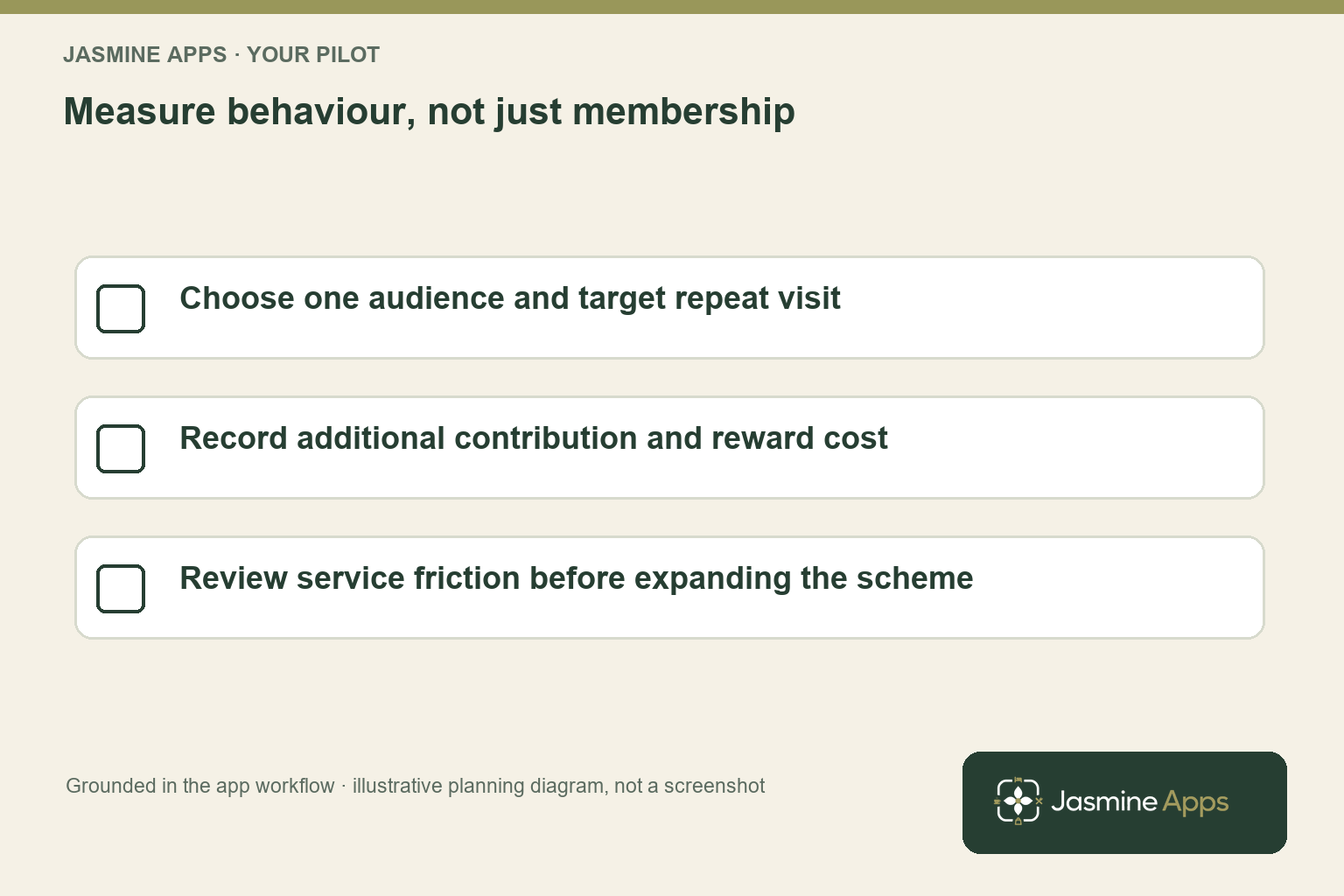
Choose one audience and one commercial outcome for your first pilot. For example, you might focus on guests who have visited once and invite them back for an appropriate reward. That is easier to evaluate than launching a broad scheme across every customer type and hoping the total sales line improves.
Record the joining date, relevant purchases, reward redemptions and the cost of delivering those rewards. Use the data your setup actually provides, and agree any additional reporting you need before rollout. Do not claim customer-level attribution or automated revenue measurement unless the exact reporting workflow has been demonstrated.
Compare members with care. People who choose to join a scheme can be more engaged from the start, so a simple members-versus-non-members sales comparison can exaggerate its effect. A defined invitation pilot, comparable periods and a clear explanation of selection limits give you a more honest view of what changed.
Ask your front-line team whether the programme is easy to explain and honour. A benefit that creates repeated arguments at the till can consume the contribution you hoped to gain. Review unsuccessful scans, unclear exclusions and slow redemptions alongside visits so the customer experience remains part of the buying decision.
At the review point, retain the incentive only if its benefit and cost make sense together. You can refine the reward, the invitation timing or the participating venues without abandoning the whole idea. Your aim is a sustainable reason for customers to return, supported by measured behaviour, rather than a large member list you cannot connect to commercial value.
For the related operating detail, read your guide to loyalty programme pilot before the demonstration.
Pro Tips
Target the second visit. Your first repeat visit gives a new guest a clear next step. Separate that objective from rewarding regulars who already buy frequently.
Model fulfilment at redemption. Use the actual incremental cost of the reward and the discount applied. Your menu price alone does not describe what the scheme costs you.
Audit venue participation. Check earning and redemption at every venue included in your public offer. A shared brand promise needs matching configuration and staff understanding.
Common Mistakes
Calling all member spend incremental. Members may already be your best customers. Their total spend does not prove the programme created it.
Leaving reward costs out. Your subscription can be smaller than the cost of the incentives. Omitting fulfilment makes a weak scheme look profitable.
Promising rewards everywhere. If a venue is excluded from the package, a guest may be unable to use the barcode there. Align your message with the actual participating venues.
Frequently Asked Questions
How much does restaurant loyalty software cost?
Your Jasmine Loyalty listed price is £29 per venue per month for up to 500 members, £39 for up to 1,000 and £59 for unlimited members. Annual amounts are £290, £390 and £590. You should also budget for reward fulfilment, discounts and any agreed setup or operating work. Confirm member-count rules, venue participation and the tax basis before comparing the cost with additional contribution from your planned customer behaviour.
Do restaurant loyalty programmes increase sales?
You can encourage repeat visits with a clear, relevant reward, but you need to establish whether the purchases are additional. Your regular customers may join and redeem rewards without changing how often they visit. Define a target behaviour, track reward costs and compare a focused pilot with an appropriate baseline. Your useful commercial measure is contribution retained after the scheme cost, rather than all spending by people who happen to become members.
How do you calculate loyalty programme ROI?
You compare additional contribution and verified savings with software, reward and operating costs over the same period. Include redeemed discounts and incremental fulfilment costs, and explain how you decided a visit was additional. Keep membership growth and points issued as supporting signals rather than financial returns. Your calculation should also account for the selection effect when already enthusiastic customers are more likely to join, otherwise the programme can receive credit for existing loyalty.
Should your loyalty reward be points or a free item?
You should choose the reward around the behaviour and margin you want to protect. Points can provide flexibility, while a defined item may be easier for guests to understand. Test how your configuration handles discounted purchases, exclusions and redemption before promotion. Compare actual fulfilment cost and staff handling effort, then ask whether the benefit is strong enough to encourage an extra visit without subsidising purchases you would have received anyway.
Can one loyalty scheme work across several venues?
You can discuss a shared scheme, but participating venues and redemption rules need to match your offer. In the actual package settings, an unselected venue can prevent acceptance at its till. Confirm how earning and redemption work at each location, who owns the scheme and how costs are reviewed. Your customers should receive the same clear explanation from every participating team, with any excluded venue made explicit before they try to redeem.
Restaurant loyalty software ROI: your next decision
Your restaurant loyalty software ROI should come from a reason to return that your guests understand and your margin can support. Request a Jasmine Loyalty demonstration with your proposed reward, member estimate and participating venues. You can leave with a costed pilot that measures extra visits rather than simply celebrating sign-ups.