

Restaurant EPOS ROI: What Must a £59 Till System Earn?
· Jasmine Apps
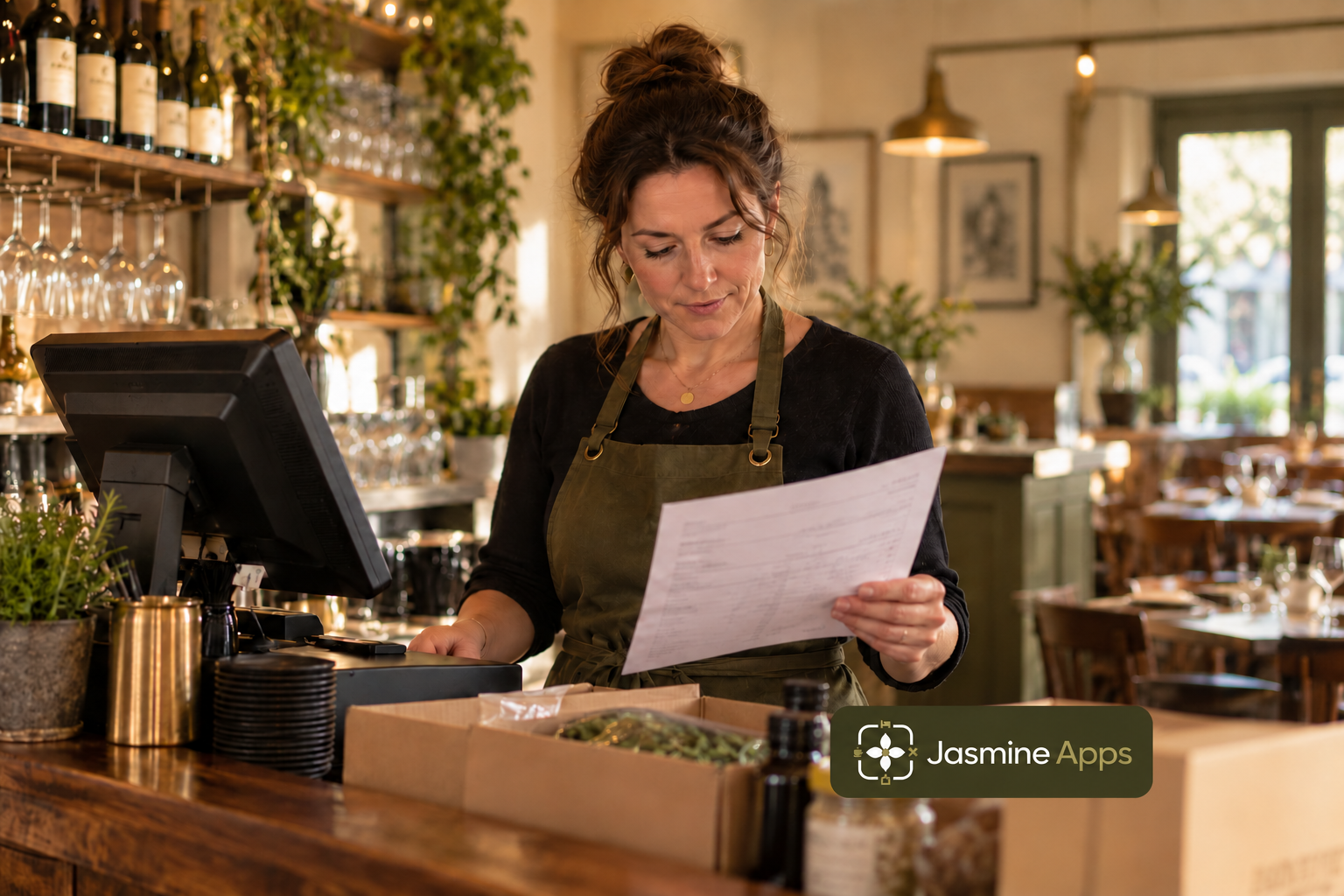
Six extra orders can cover a £59 software fee if each leaves you £10 after the costs of serving it. That small threshold makes restaurant EPOS ROI look attractive, but it is only the beginning of your purchasing decision. If you forget installation, equipment or staff time, your spreadsheet can approve a system that your operation never benefits from.
Here is how you can assess Till Jasmine against your own menu, stock losses and service bottlenecks, with a clear distinction between published industry evidence and an illustrative break-even calculation.
Key Takeaways
- The listed standalone software price is £59 per venue per month; your installation needs a quote.
- Use contribution after variable costs, rather than total sales, to measure returns.
- Stock visibility becomes valuable when you change ordering or portioning.
- Test ordinary sales, awkward corrections and your closing routine.
- Separate proven savings from estimates and capacity released.
Restaurant EPOS ROI starts with the money you keep
A busy till is not necessarily a profitable till. If your team sells more of a dish with expensive ingredients, generous portions and a heavy discount, your takings can rise while the cash left to pay your bills shrinks. Your first buying question should be which decision a new system will help you make more accurately.
Your useful starting point is a small menu sample: a best-selling main, a popular drink, a low-margin offer and a product you frequently waste. Record selling prices, ingredient costs and relevant transaction costs using a consistent tax basis. You can then identify the contribution from one additional sale, rather than mistaking its menu price for profit.
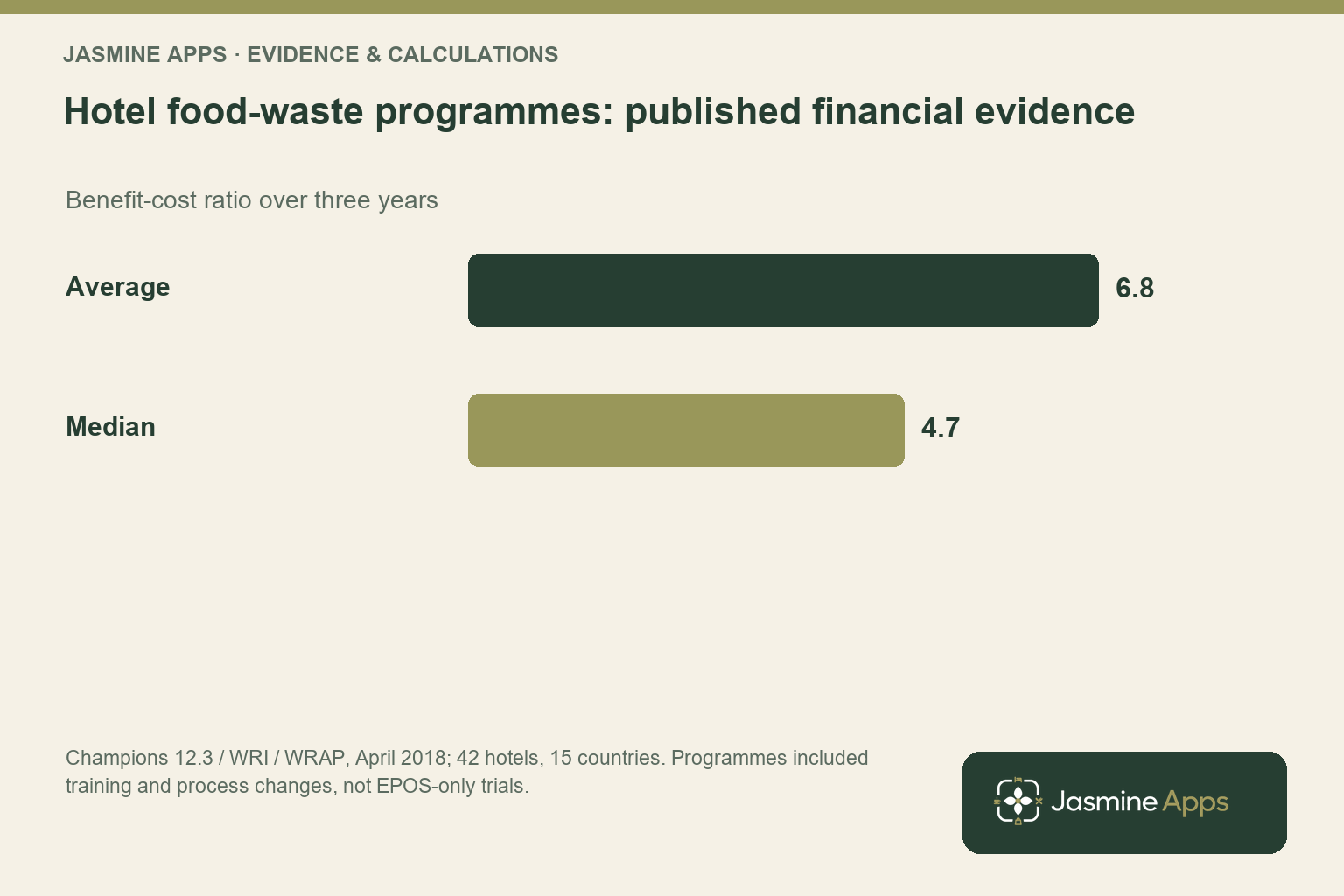
Published evidence supports taking waste seriously. A Champions 12.3 hotel study, published in April 2018, analysed 42 sites across 15 countries: the three-year benefit-cost ratio averaged 6.8:1, with a 4.7:1 median. Those programmes combined measurement, training and operational changes; they were not trials of an EPOS product.
You should therefore borrow the discipline of measuring and acting, rather than transferring that return to your own software purchase. Your venue may have much less avoidable waste, different staffing or an already effective stock process. A counterexample matters: if your main problem is an inaccurate recipe, a more detailed report still describes inaccurate inputs.
Choose one financial outcome before your demo. You might reduce purchases of an overstocked ingredient, stop a recurring undercharge or serve additional orders during a genuine queue. Give that outcome an owner and a baseline; otherwise your system can become another screen your managers check without making a different decision.
Calculate restaurant EPOS ROI at the £59 software price
The current listed standalone subscription for Till Jasmine is £59 per venue per month, or £590 annually. A quotation is required for your installation. The annual amount is £118 below twelve monthly payments, before any differences in agreed terms; you should compare equivalent scope and commitment before choosing it.
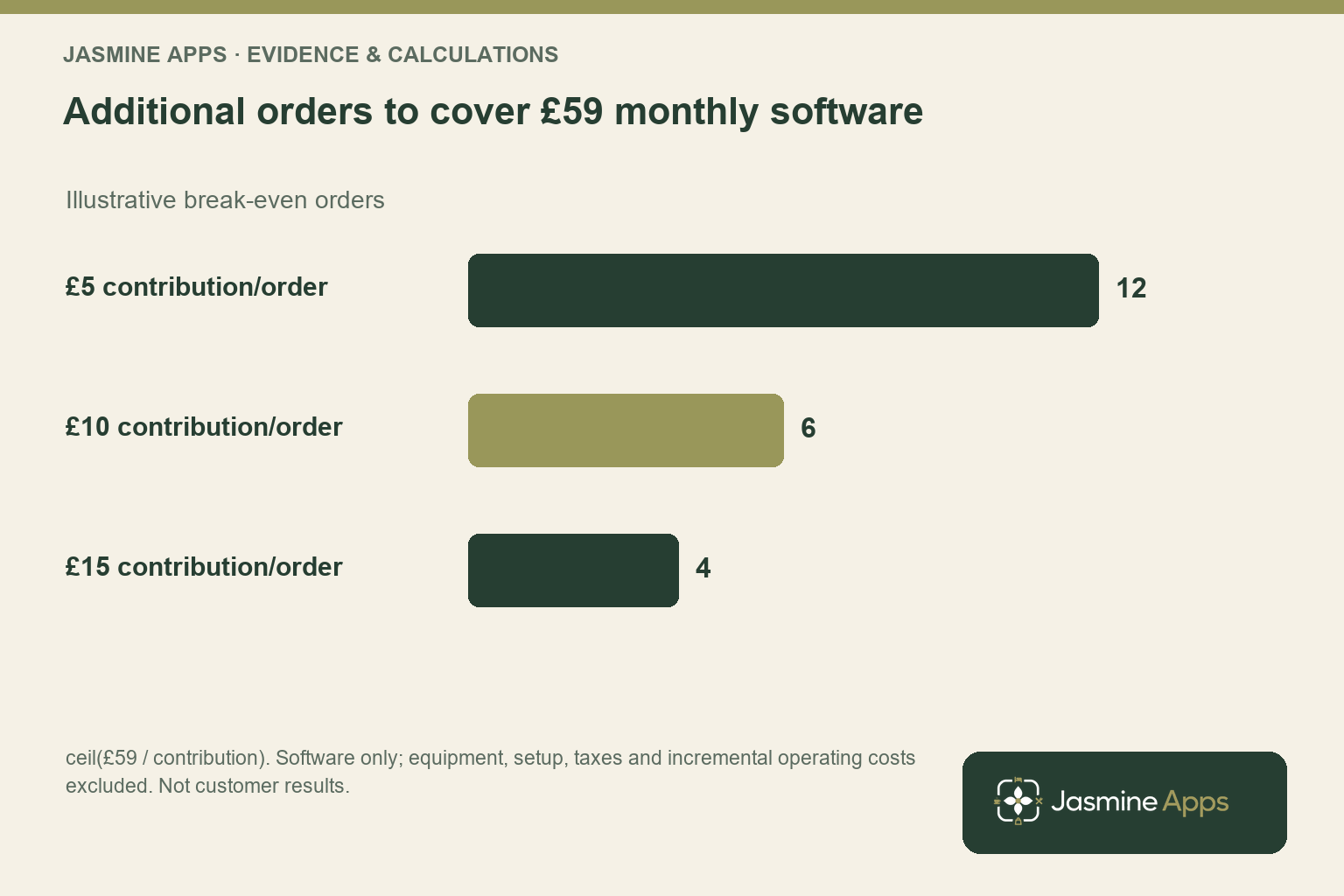
For a simple monthly software-only model, suppose an additional order contributes £10 after its variable costs. Five orders produce £50 and do not cover the £59 subscription; six produce £60 and cover it by £1. At £5 contribution you need twelve orders, while £15 contribution requires four: these are rounded break-even thresholds, not sales forecasts.
You can also test a savings route. If accurate stock records lead you to avoid £35 of unnecessary purchases and resolve £30 of verified undercharging each month, your combined benefit is £65. Count each saving once, check that the avoided purchase was not merely delayed, and subtract any new operating effort required to achieve it.
Your complete monthly comparison should add equipment spread over its useful comparison period, quoted setup or training spread over the chosen period, recurring extras and any incremental payment cost. The public terms leave fees and taxes to your order form or checkout; you should obtain the tax basis and actual amounts before approving a budget.
The optional Menu scan extension is listed at £10 per venue per month, or £100 annually. It can read dishes and prices from supported menu files, but your team still needs to review what was imported. At £69 combined monthly software, six £10-contribution orders are insufficient; seven would cover those subscriptions before your other costs.
Turn restaurant EPOS ROI into a practical stock and service test
In the actual administration dashboard, you can inspect hourly sales, product mix, category sales and payment methods. That gives you several useful questions to ask during a demonstration: which products sold, at what point in service, and how were those sales settled? Request a sample matched to your trading day, particularly if your bar closes after midnight.
Your catalogue controls include product categories, tax and sale settings, and whether an item appears on a till. Test a changed price and check the resulting receipt rather than stopping at a successful edit. Ask a colleague to find a commonly sold item without help, then test a correction so you can see how usable the layout is under pressure.
The stock area separates products, ingredients, suppliers, movements, invoices and low-stock information. For a drink sold by a measured portion, you should check pack size, measurement unit and the recipe quantity that connects a sale to expected consumption. A mismatch between bottles and millilitres can create convincing-looking variance that has little commercial meaning.
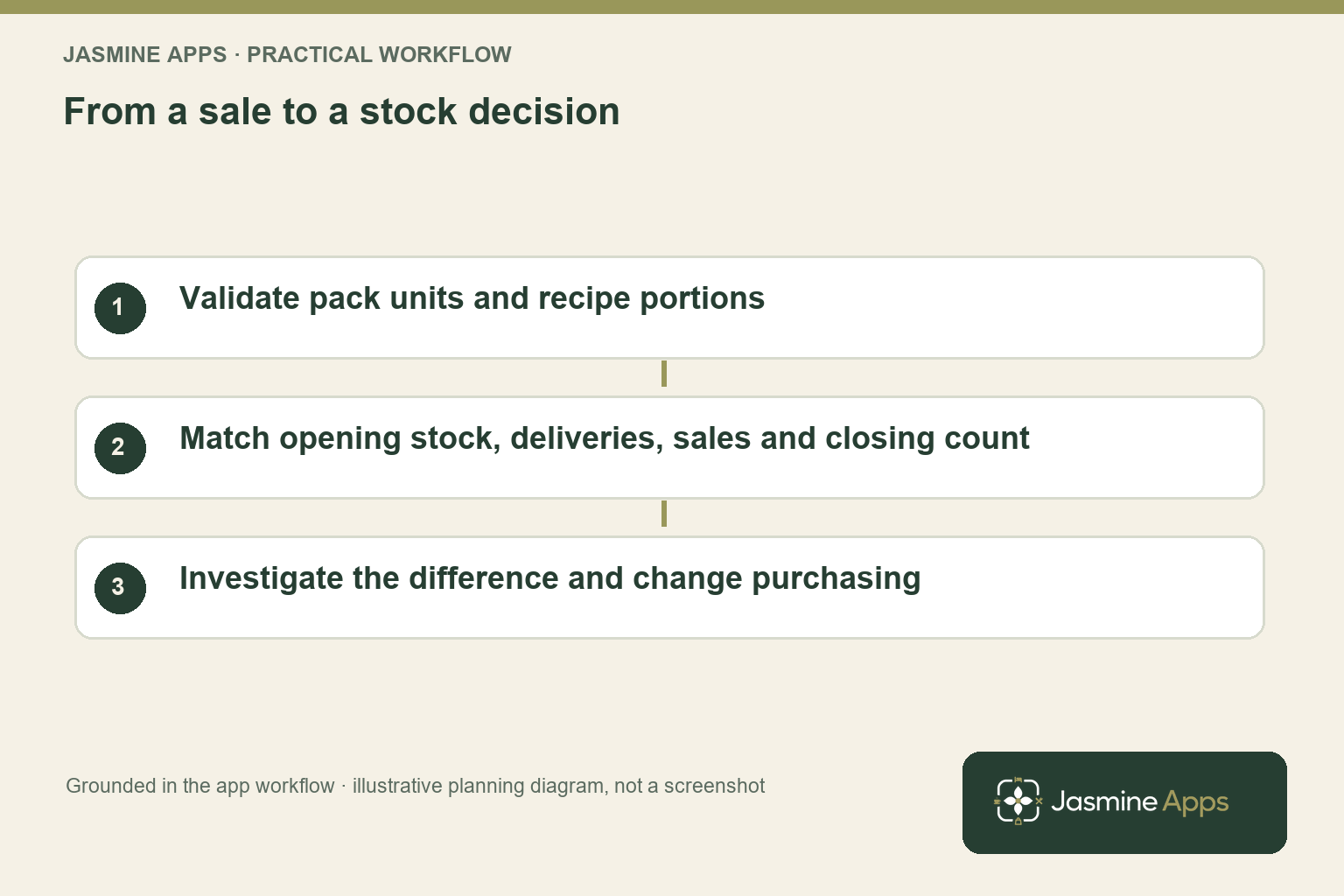
You also need to distinguish an uncounted item from a confirmed shortage. Choose a complete matched period with opening stock, deliveries, sales and closing stock, then investigate the difference. Your purchasing decision improves when the report points to a fixable process, such as over-pouring or a delivery entry made in the wrong unit.
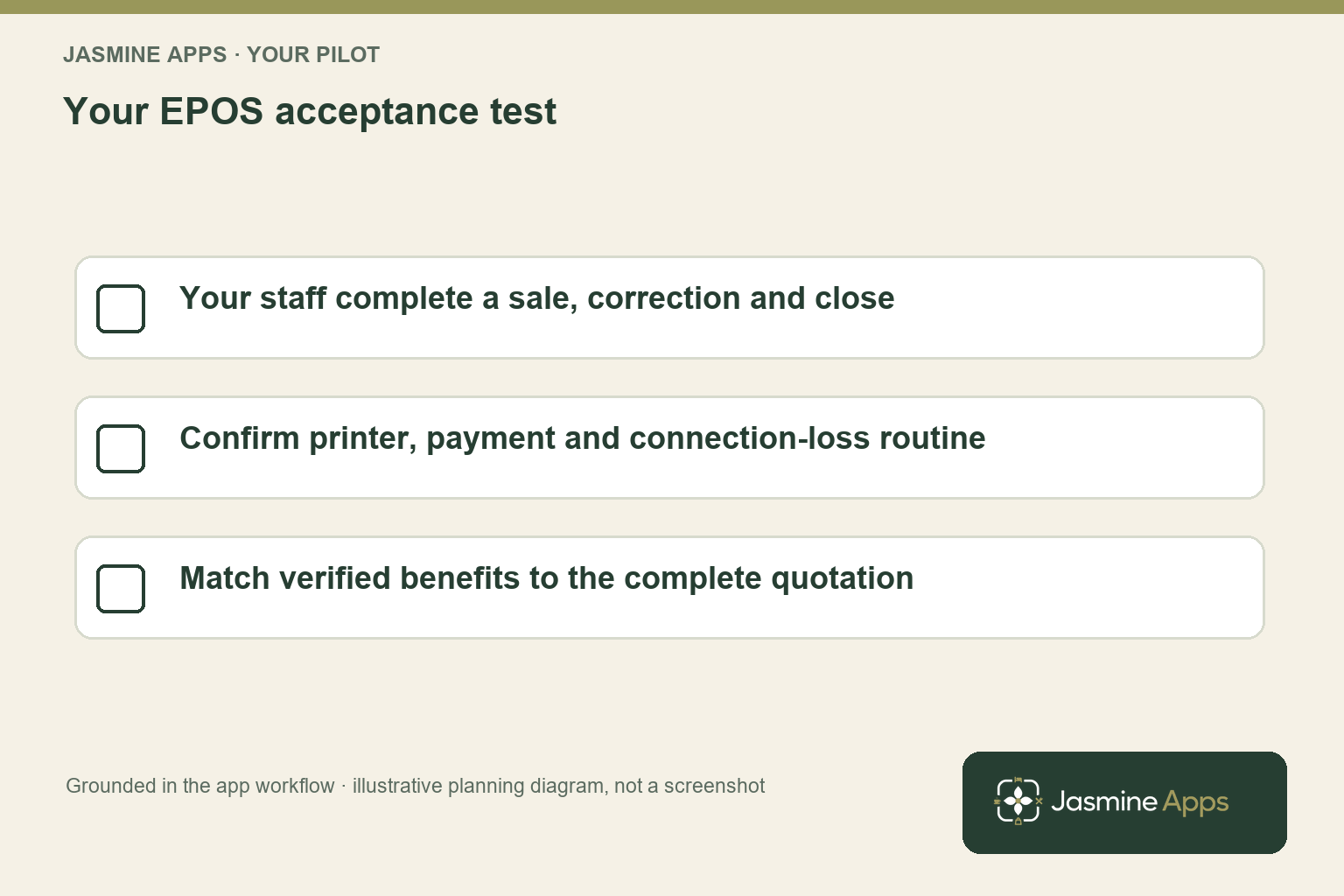
Payment controls include familiar methods and adjustments, but your terminal arrangement and room-charge requirements still need installation-specific confirmation. The public terms describe sales retained on a device during a connection loss and uploading after reconnection; that does not establish that your card terminal can authorise payments offline. Test the supported outage and recovery routine separately.
Run a pilot that makes the purchase decision defensible
Start your pilot with one outlet and a named service lead. Pick a representative service window that includes a busy period, an ordinary close and a correction. You need evidence that your team can operate the workflow, not simply that a supplier can demonstrate it while explaining every button.
Before the pilot, write down your current time spent finding discrepancies and the value of the specific stock or charging problem you intend to tackle. Keep receipts, count records and invoice evidence that can substantiate a change. You can use your EPOS buying resources to prepare questions, then bring the actual menu and equipment list to the demo.
If you are measuring faster service, record completed orders and queue conditions for comparable trading periods. More orders during a festival weekend do not prove the till created the increase. Look for the narrower mechanism: less time correcting prices, fewer abandoned purchases during a queue or a specific bottleneck removed.
For stock savings, compare purchasing and usable closing stock as well as waste entries. A lower invoice total caused by running out of a popular item is not a successful reduction. Ask your chef whether the new routine changed preparation quantities, portion consistency or the timing of replenishment, and keep those actions beside the figures.
At the end, classify your results as verified cash savings, additional contribution or capacity released. A manager spending less time on reports may be a valuable benefit without reducing payroll. Approve rollout when your operational evidence and complete quotation support it, and keep any unproven integration or equipment requirement visible as a condition to resolve.
For the related operating detail, read your guide to EPOS demo checklist before the demonstration.
Pro Tips
Use a recipe audit before a stock audit. Validate units and yields for your highest-value ingredients first. You will learn more from one correctly measured product than from a whole catalogue with inconsistent pack sizes.
Track exceptions by cause. Separate discounts, waste and complimentary items when you review a service. You can then change the policy or training behind a loss instead of treating every adjustment as a generic till problem.
Ask for a staff-led demo. Have your own shift leader perform a sale, correction and close. Their hesitation reveals training and layout work you should include in the installation scope.
Common Mistakes
Treating revenue as return. A £20 sale may leave far less than £20 after ingredients and transaction costs. Using the full price understates the number of additional orders you need.
Buying a report without an owner. Stock visibility does not change purchasing by itself. Without someone reviewing differences and changing orders, your subscription buys information rather than savings.
Budgeting only the subscription. A terminal replacement, printer issue or required setup changes your investment. Approve the complete quoted system rather than assuming your existing equipment will work.
Frequently Asked Questions
How much does a restaurant till system cost?
Your cost depends on software, equipment, installation and payment arrangements. The listed standalone price for Till Jasmine is £59 per venue per month, or £590 annually, with a quote required. You should ask for the complete scope, including compatible hardware, setup, training, optional extensions and the applicable tax basis. A low subscription is useful only when the system fits the workflow you actually need to operate.
Can EPOS stock control reduce food waste?
You can use stock and sales records to identify a waste problem, but reducing it requires a change in preparation, purchasing or portioning. Check recipes, measurement units and count completeness before trusting variance figures. Track the value of avoided waste alongside usable stock and availability. Your strongest evidence is a documented action followed by a sustained improvement, rather than an assumption that installing stock software automatically cuts your food bill.
How do you calculate return on investment for a POS system?
You subtract the complete investment cost from attributable financial benefits, then divide the result by that cost over a consistent period. Benefits can include verified cash savings and additional contribution after variable costs. Keep released staff capacity separate unless it creates an actual financial change. Include installation and equipment in your chosen comparison period, and avoid counting the same benefit through both stock savings and increased sales margin.
Can you use existing hardware with a new EPOS system?
You need a compatibility check against your exact PC, printer, scanner, drawer and payment terminal models. Ask who supplies drivers and who resolves faults across the proposed setup. Test a printed receipt, a normal payment and the supported connection-loss routine before rollout. Reusing equipment can lower your initial cost, but you should not treat it as a saving until the hardware supports your required service workflow reliably.
Is a restaurant EPOS system worth it for a small venue?
You should compare your real operational problem with the complete cost of fixing it. A small venue can benefit from accurate pricing, clearer stock records and simpler closing, but your return depends on using those capabilities. Model conservative additional contribution or verified savings, then test the mechanism in a pilot. If your current process already works well and you cannot identify a measurable improvement, request a focused demonstration before committing.
Restaurant EPOS ROI: your next decision
Your restaurant EPOS ROI becomes credible when you can name the loss, demonstrate the fix and price the whole installation. Request a venue-specific demonstration of Till Jasmine, bringing your menu, hardware models and one costly service problem. You can leave with a quotation and an acceptance test built around the cash your venue actually keeps.