

Restaurant Discounts Versus Loyalty: Which Protects Your Margin?
· Yiannis Yiasemis

A reward with a generous menu value can cost you less than a small discount applied to every bill. The reverse can also be true if you give rewards to customers who would have returned anyway. Your restaurant discounts versus loyalty decision depends on the behaviour you want to change and the cost you incur when it changes.
You can make that decision with a simple comparison of contribution, eligibility and repeat visits. Jasmine Loyalty gives you configurable points, bonus visits, redemption thresholds, exclusions and expiry rules to explore. Your aim is an offer guests understand and your operation can fulfil at a cost the additional business supports.
Key Takeaways
- Compare fulfilment cost rather than advertised reward value.
- Distinguish additional visits from existing guest behaviour.
- Calculate the cost of discounts on all eligible sales.
- Make earning, redemption and exclusions understandable.
- Measure contribution after reward and operating costs.
Frame restaurant discounts versus loyalty around one behaviour
Begin with the action you want more guests to take. A first visit, a second visit and a larger order are different goals, so one offer is unlikely to suit all three. Choose the audience and time window before comparing incentives, and explain what a successful change would look like in completed purchases.
A discount lowers the price of an eligible transaction immediately. That can be useful when price is the obstacle, but it also reduces contribution from guests who would have paid the usual price. Your analysis needs both the additional transactions and the discount given to existing demand, rather than counting every discounted sale as acquired business.
A loyalty reward can defer the cost until a guest qualifies or redeems. That structure may support a return journey, provided the reward is attainable and worth understanding. You still need to account for guests who were already frequent visitors, reward fulfilment, administration and any effect on their ordinary purchases.
For example, your goal might be a second completed visit within a practical period after a guest’s first purchase. Record first-time eligible guests, earning activity and the next completed visit using appropriate permissions. Compare the outcome with a comparable group or baseline, keeping seasonal demand and other campaigns visible in your review.
Your restaurant second-visit strategy provides the guest-journey context. This comparison adds the commercial question: what did the incentive cost, and what additional contribution followed? Once those two measures are clear, you can choose an offer because it suits the behaviour and the economics, rather than because one format sounds more modern.
Calculate restaurant discounts versus loyalty at fulfilment cost
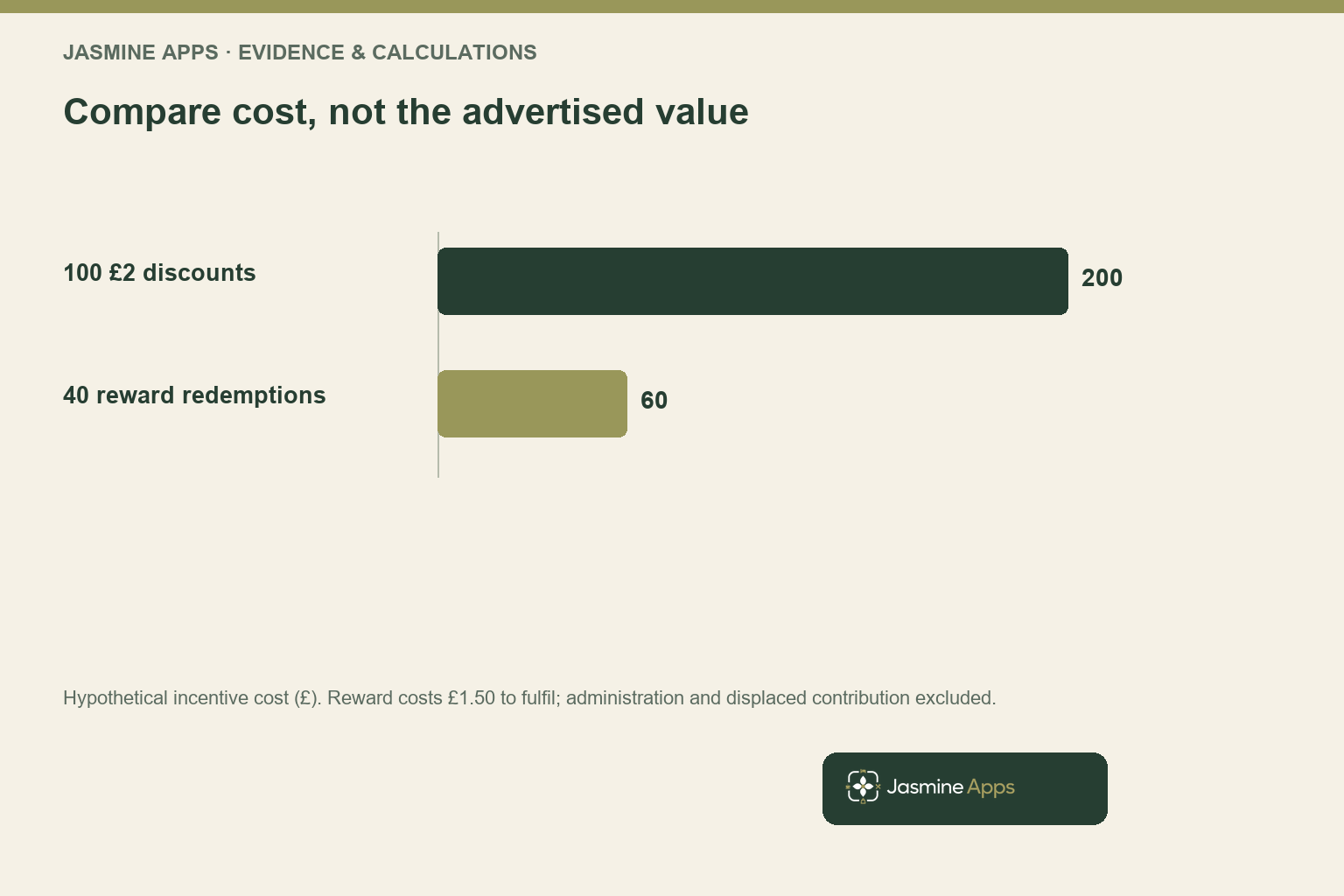
Suppose your normal purchase produces £10 of contribution before an incentive. A £2 discount reduces that to £8 if your relevant costs stay unchanged. Across 100 eligible purchases, you have given away £200 of contribution, including the discount received by guests who would have purchased at the usual price.
Now consider a hypothetical reward earned after qualifying visits. The reward has a £5 menu value but costs £1.50 to fulfil, and 40 guests redeem during your review period. The fulfilment cost is £60, before administration, displaced purchases or additional service costs; the menu value is not the same as your cash expense.
That lower apparent cost does not prove that the reward performs better. If guests redeem instead of buying an item they would normally purchase, the lost contribution also matters. If the reward creates extra peak-time work, include that impact. Your comparison should show total incremental cost against additional contribution from the behaviour you intended to encourage.
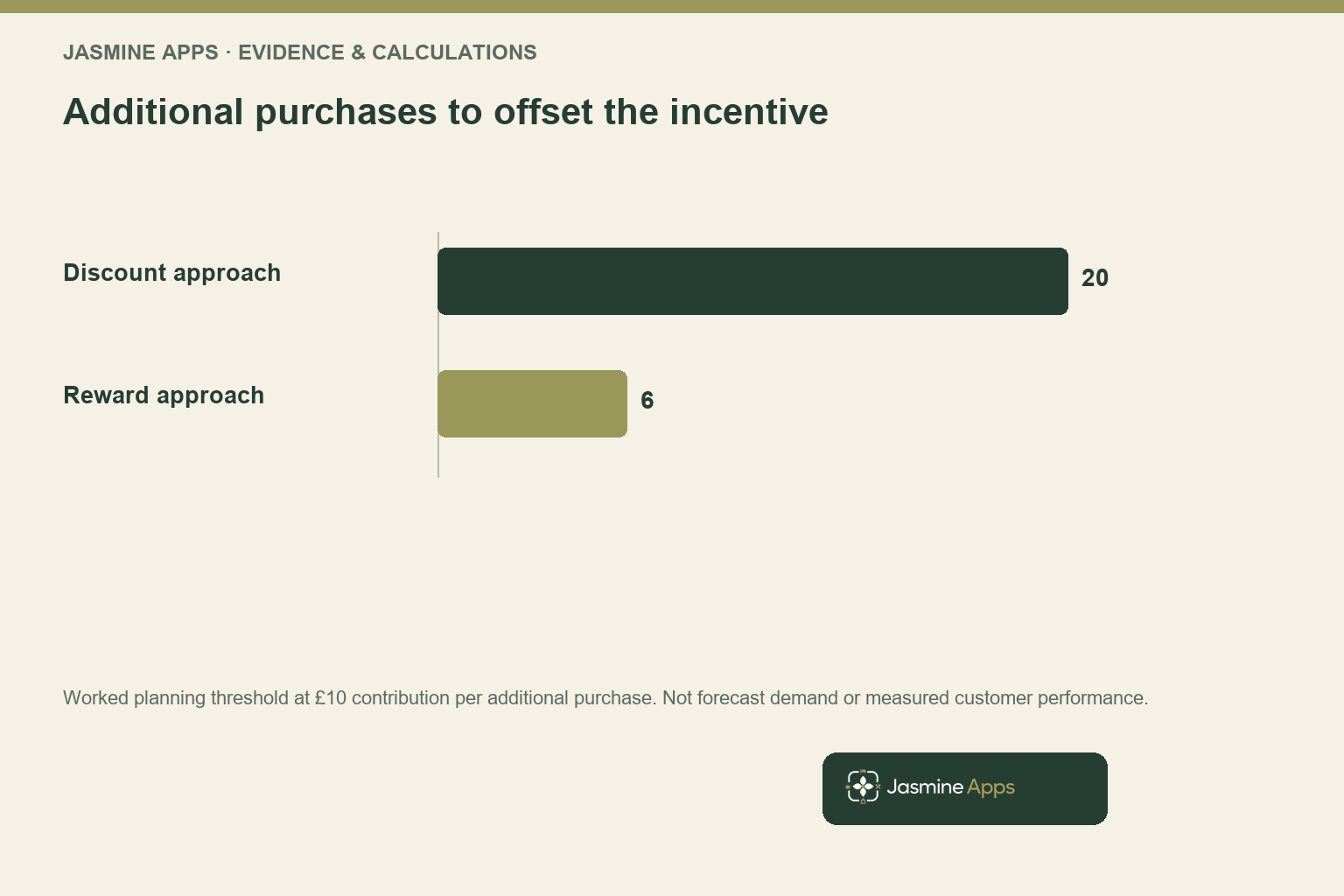
At £10 contribution per genuinely additional purchase, the £200 discount cost requires twenty additional equivalent purchases to offset it. The £60 reward fulfilment cost requires six, under these simplified assumptions. Those are planning thresholds, not predictions of conversion or claims about how Jasmine customers behave.
Use your loyalty reward pricing guide to refine the cost definition for your venue. You can then test a reward that feels worthwhile to guests while remaining deliverable for your kitchen or bar. Keep the calculation visible to the manager who approves the offer and the colleague who updates its rules.
Design restaurant discounts versus loyalty for a clear guest journey
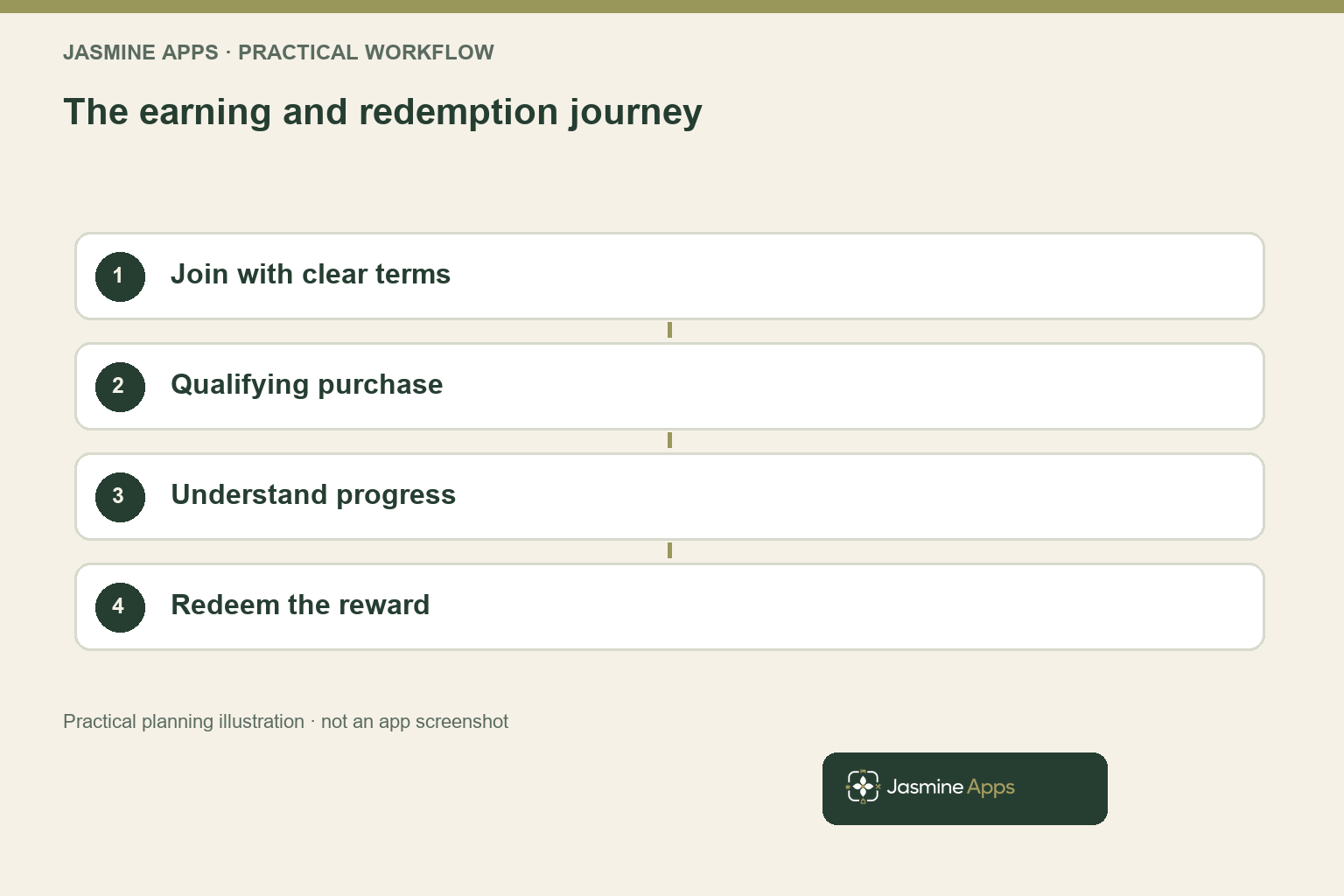
Your guest should understand what counts, how progress is recorded and when the reward becomes available. A scheme that needs a long explanation at the till creates a barrier before anyone earns a benefit. Write the rule in ordinary language, then ask a colleague unfamiliar with the scheme to explain it back.
Jasmine Loyalty’s configuration includes points, bonus visits, thresholds, exclusions and expiry. Your participating venue setup matters when you demonstrate earning or redemption through Till Jasmine. Follow a fictional guest from joining to a qualifying purchase and reward use, including an excluded item or another exception relevant to your policy.
Keep the reward aligned with what your team can fulfil. A popular low-cost extra may fit your operation better than a high-value item that becomes unavailable during busy service. Explain substitutions and exclusions before the guest relies on the offer, and make sure the staff member handling redemption knows the same rule.
Behavioural research can help you frame the test. The goal-gradient study recorded by Columbia Business School examined how progress towards a reward affects purchase behaviour. It provides a reason to make progress understandable; your venue still needs to measure the outcome of its own reward structure.
Jasmine Apps currently lists Jasmine Loyalty at £29 monthly for up to 500 members, £39 for up to 1,000 and £59 for unlimited members, per venue. Confirm the full deployment scope, earning route and tax basis in your quote. A subscription belongs in the total economics alongside fulfilment and the time your team spends maintaining the programme.
Measure the offer before expanding it to every guest
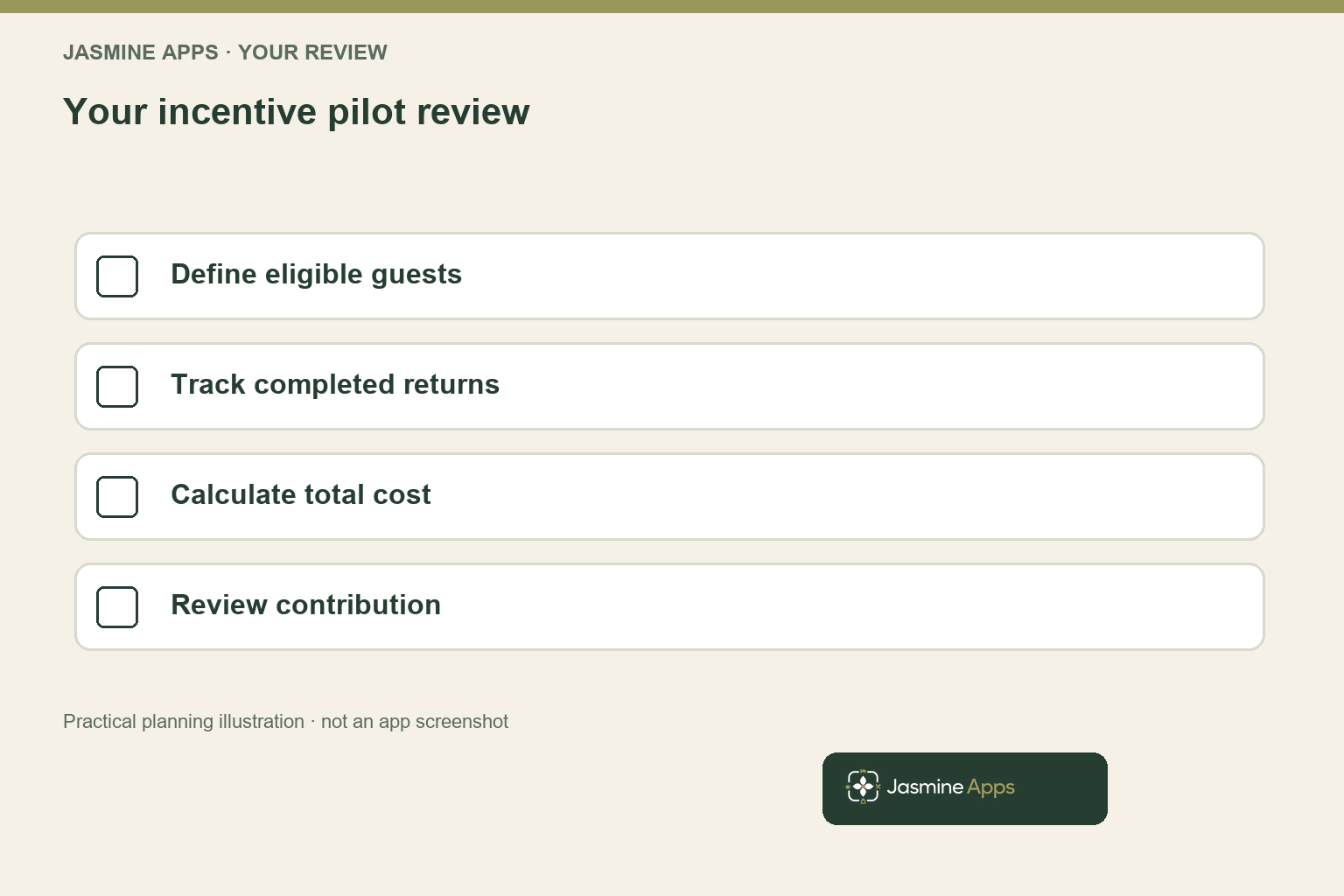
Choose a pilot with a clear audience and enough time for the intended behaviour to occur. A return-visit programme cannot be judged only by how many guests join on its first day. Track eligibility, joining, qualifying purchases, redemption and the completed visit you want to encourage as separate stages.
Keep the financial measure close to those stages. Add contribution from genuinely additional purchases, subtract reward fulfilment and other incremental costs, and explain how you estimated the additional portion. A before-and-after comparison can be useful, but record changes in weather, trading hours, menu prices and other promotions that may affect the result.
Watch for guest confusion as well as commercial performance. Repeated questions about expiry or excluded items often indicate a rule that needs a clearer explanation. You can improve the wording or simplify the reward without abandoning the whole programme, provided you handle existing guest expectations consistently and update the team together.
Your manager should review the result with the kitchen, bar and front-of-house colleagues who fulfil the offer. Ask whether redemption is practical at the busiest time, whether the chosen reward remains available and whether the programme causes avoidable waiting. An offer that looks inexpensive in a spreadsheet can still be costly to operate.
When you expand, keep the eligibility and cost model that made the pilot understandable. Review the programme periodically as prices, membership and guest behaviour change. Your strongest incentive is one you can explain, fulfil and measure reliably, with enough additional contribution to support the benefit guests receive and the tools your team uses.
Pro Tips
Price the redemption route. Estimate fulfilment, displaced purchases and additional service work together. Your advertised reward value helps communicate the offer, while the operating cost tells you whether the programme can support it.
Define the return window. Choose a period that fits the audience’s normal visit pattern. A local lunch guest and an occasional hotel visitor need different expectations, so your measurement should follow the behaviour you can realistically influence.
Use an exception in the demo. Test an excluded item, an expired reward or a nonparticipating venue with fictional data. Your staff need a clear next step when the guest’s transaction falls outside the simplest earning rule.
Common Mistakes
Comparing face value with cash cost. You can misprice a reward by treating its menu value as fulfilment cost. Calculate the relevant costs and any contribution displaced by redemption.
Counting every member visit as additional. You overstate performance when established regulars would have returned anyway. Compare a defined baseline and explain your method for estimating additional activity.
Making the reward difficult to understand. You create questions and frustration at the point of purchase. Use one clear earning rule, accessible terms and a redemption route your team can demonstrate.
Frequently Asked Questions
Are loyalty rewards better than restaurant discounts?
Your answer depends on the behaviour, audience and total cost. Discounts reduce the price of every eligible transaction, including purchases that might have happened anyway. Rewards may cost less to fulfil but can also displace ordinary purchases or reward existing regulars. Compare additional contribution after incentive and operating costs, then use a pilot to see which offer your guests understand and your team can deliver consistently.
How do you calculate the cost of a loyalty reward?
You start with the ingredients, goods and other variable costs required to fulfil it. Add extra administration or service work and consider whether redemption replaces a purchase the guest would otherwise make. The advertised menu value is useful to the guest, but it is not automatically your expense. Keep subscription costs and the review period visible so you can compare the reward with your actual additional contribution.
Should you discount every customer’s bill to encourage repeat visits?
You should first identify the audience and obstacle you want to address. A blanket discount can reduce contribution from guests who were already willing to pay your usual price. A targeted return offer or understandable reward may suit the goal better, depending on your costs and eligibility rules. Measure completed repeat visits and contribution after the incentive rather than assuming a widely used offer has created additional demand.
What loyalty rules should you test before launch?
You should demonstrate joining, a qualifying purchase, recorded progress, redemption and at least one exception. Check excluded products, participating venues and expiry against the policy your team intends to explain. Use fictional records and the relevant staff permissions. Your guest-facing wording should agree with the configured scheme, so a colleague can answer a normal question without improvising a different earning rule at the point of payment.
How much does Jasmine Loyalty cost?
Jasmine Apps currently lists £29 per venue monthly for up to 500 members, £39 for up to 1,000 and £59 for unlimited members. Listed annual rates are £290, £390 and £590 respectively. Confirm setup, taxes, supported earning and redemption routes, and any additional tools in your quotation. Include the chosen subscription alongside reward fulfilment and administration when assessing the commercial value of your programme for your venue.
Restaurant discounts versus loyalty: your next step
Your restaurant discounts versus loyalty decision should leave you with an offer guests value and economics you understand. Request a Jasmine Loyalty demonstration with your proposed reward, eligible audience and fulfilment costs. Follow the complete guest journey and build a pilot that shows whether the incentive earns useful additional contribution for your venue.