

Restaurant Booking Software Cost: Can £69 Recover Lost Covers?
· Jasmine Apps
A lost table for two can cost £55.70 in revenue, according to restaurant workers surveyed for OpenTable’s October 2026 report. That is close to a month of software, yet treating the whole £55.70 as profit would give you the wrong buying answer. Your restaurant booking software cost needs to be measured against the contribution you can recover.
You can use Table Jasmine to organise reservations and manage your available capacity. Here is how you decide whether a £69 monthly subscription and selected extras address your own lost covers, rather than simply replacing a paper diary.
Key Takeaways
- Table Jasmine is listed at £69 per venue per month with unlimited bookings.
- Card deposits are a separate £9 monthly extension; payment costs need confirmation.
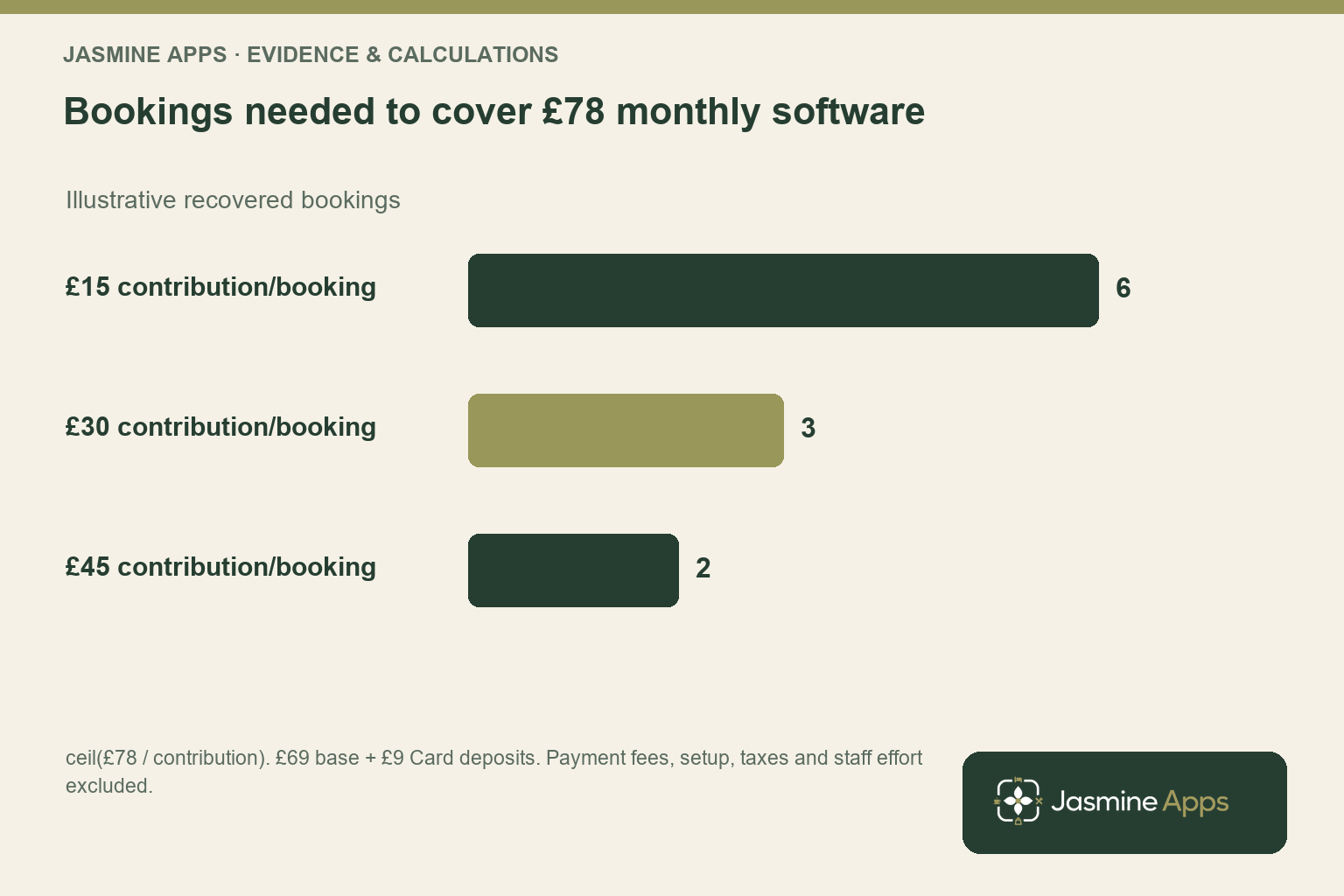
- Three recovered bookings contributing £30 each cover £78 of monthly software.
- Cancellation timing and the ability to resell a table matter as much as no-show counts.
- Test capacity, guest communication and payment policy before rollout.
Understand your restaurant booking software cost through lost capacity
Your empty table has two different costs. One is the sale you expected; the other is the contribution you could have retained after serving it. When you decide whether booking software is worth buying, you need the second figure, together with a realistic assessment of whether you could actually have filled the space.
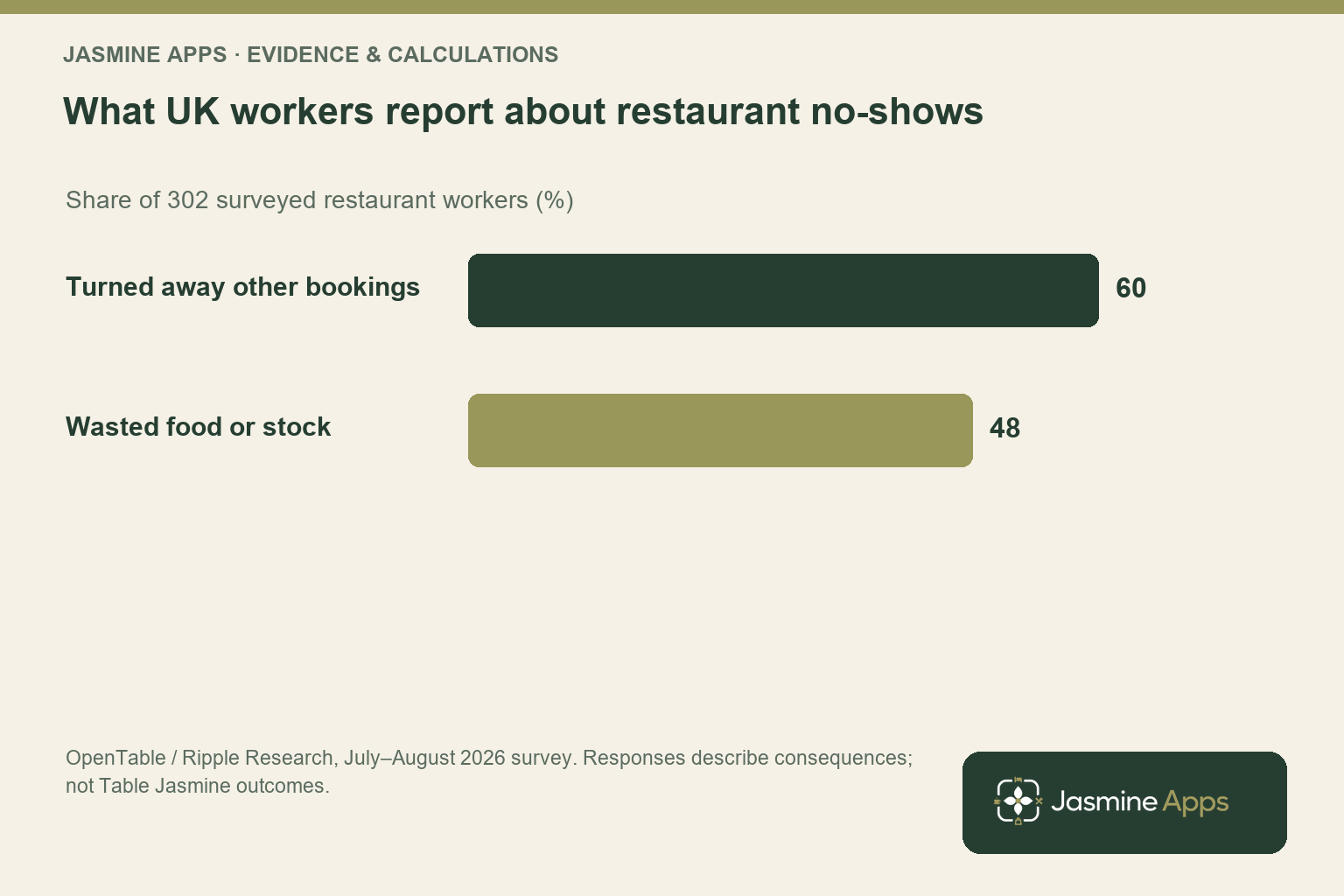
OpenTable’s 2026 Restaurant Impact Report reports a £55.70 average revenue loss for a no-show table for two, based on a survey of 302 UK restaurant workers conducted in July and August 2026. It also reports that 60% said no-shows had caused them to turn away other bookings, and 48% cited wasted food or stock. These are survey responses, not audited profit figures or Table Jasmine results.
Your own loss can be higher or lower. If you have spare tables on a quiet Tuesday, an empty booking does not necessarily displace another diner. On a fully booked Saturday, an early cancellation may give your host enough time to refill a valuable slot. Count when your capacity was genuinely constrained rather than assigning the same loss to every missing guest.
Create a short baseline from completed services: confirmed bookings, cancellations, no-shows, arrival times and replacement bookings. Keep the definitions stable so that a guest moved to a different time is not recorded as both a cancellation and a loss. Your result should explain which reservations disappeared and which tables you successfully resold.
That gives you a purchasing purpose beyond having a nicer diary. You can ask whether a clearer cancellation route, an appropriate deposit policy or more visible availability would recover a specific problem. Your strongest case is a repeatable improvement in usable capacity, supported by contribution figures from your own menu.
Build your restaurant booking software cost from the right extensions
Table Jasmine is listed at £69 per venue per month, or £690 annually, for unlimited bookings. Twelve monthly subscriptions total £828, making the listed annual option £138 lower before any differences in terms. Check that the period and scope suit your venue rather than assuming annual payment is automatically your best decision.
You can add Card deposits for £9 per venue per month, Guest messages for £9, Pre-orders for £9, Google Reserve for £12 and Jasmine Events for £15. The corresponding listed annual amounts are £90, £90, £90, £120 and £150. These are separate extensions: you should choose the workflow you need, not build an indiscriminate bundle into your estimate.
For a deposit-focused comparison, your base subscription plus Card deposits is £78 monthly. Suppose a recovered two-person booking contributes £30 after food, drinks and other variable serving costs. Two bookings provide £60, while three provide £90, covering the software by £12 before payment costs, setup and operating effort.
The same arithmetic becomes less attractive at a lower contribution. At £15 per recovered booking you need six; at £45 you need two. Your threshold is the monthly investment divided by contribution, rounded up, and should include the complete quoted costs when you make the final decision.
A deposit is not automatically additional revenue. If you take £20 and deduct it from the final bill, you have received part of the same sale earlier. Keep deposits, refunds, retained cancellation charges and restaurant sales distinct, and confirm your payment-provider charges. The public terms leave fees and taxes to your order, so request the actual tax basis and setup scope before approval.
Test restaurant booking software cost against your real dining room
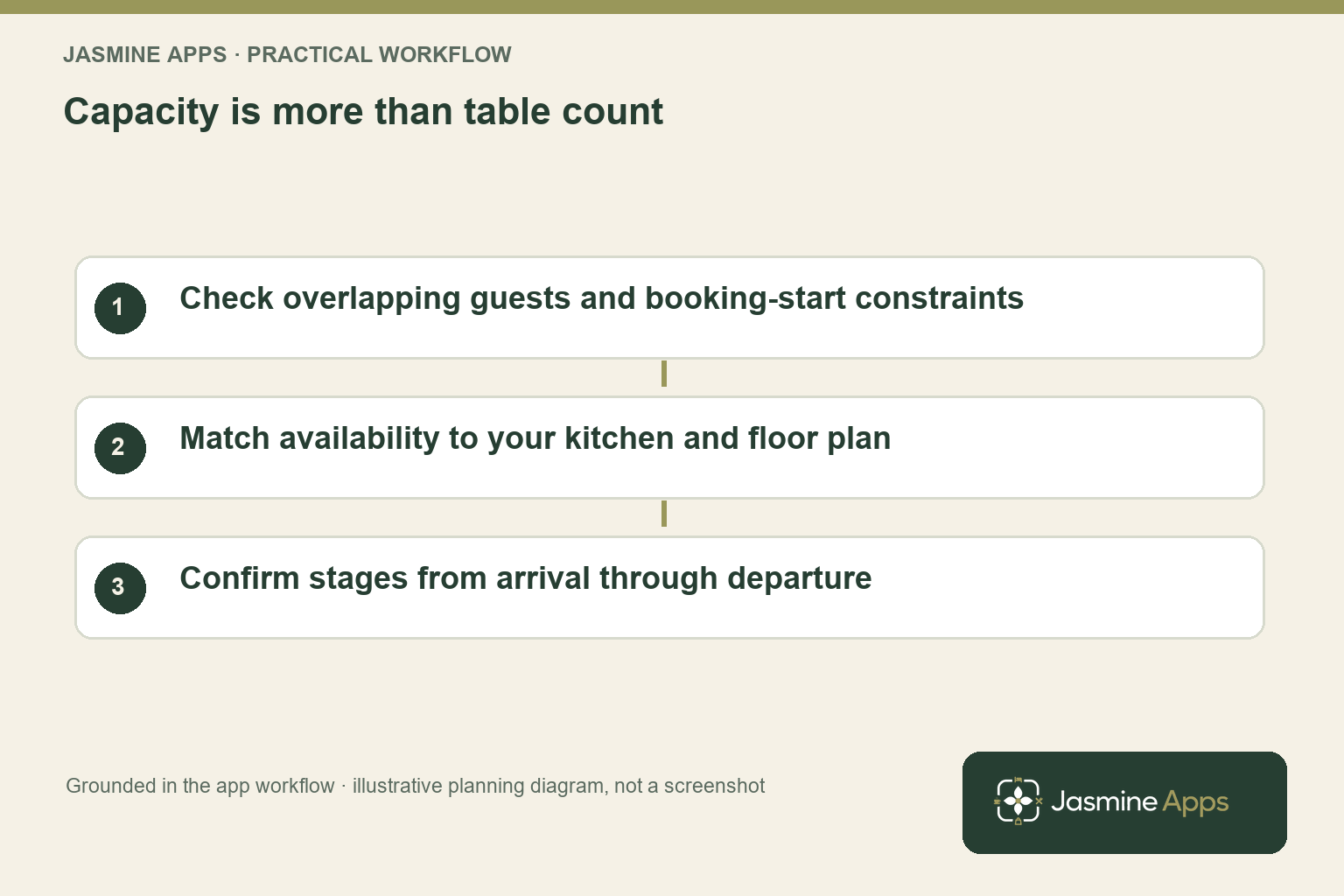
Your booking configuration controls more than how many reservations arrive. In the actual widget settings, maximum guests refers to overlapping guest capacity, while maximum tables controls a different booking-start constraint. Treating those as interchangeable can give you an apparently available service that your kitchen or floor team cannot support.
Bring a simple floor plan and two contrasting services to your demonstration. You might have a lunch with long dwell times and a dinner with tighter sittings. Ask how party size, booking gaps and overlapping reservations affect what guests see online, then test the configuration with your host before you expose it on your website.
The reservation workflow distinguishes Confirmed, Arrived or Waiting, Seated, Has Left, No Show and Cancelled. Those stages help you describe what happened during service, but they only become useful management information when your team updates them consistently. Decide who marks an arrival and who resolves a guest who arrives late rather than assuming the system observes the dining room automatically.
For functions, you can inspect menu style, pre-order and timing arrangements. If your recurring problem is chasing a large party’s choices, the £9 Pre-orders extension may be more relevant than an extra acquisition channel. Ask to see a booking through its full journey, including a change, rather than accepting a feature name as proof that it fits your event process.
Your website booking widget also needs correct venue context and a working secure embed. A live preview can create real reservations, so agree a safe demonstration procedure. Your acceptance test should establish that the intended availability, guest journey and staff handling all work together without creating unwanted bookings or charging anyone during testing.
Measure recovered covers before you judge the subscription
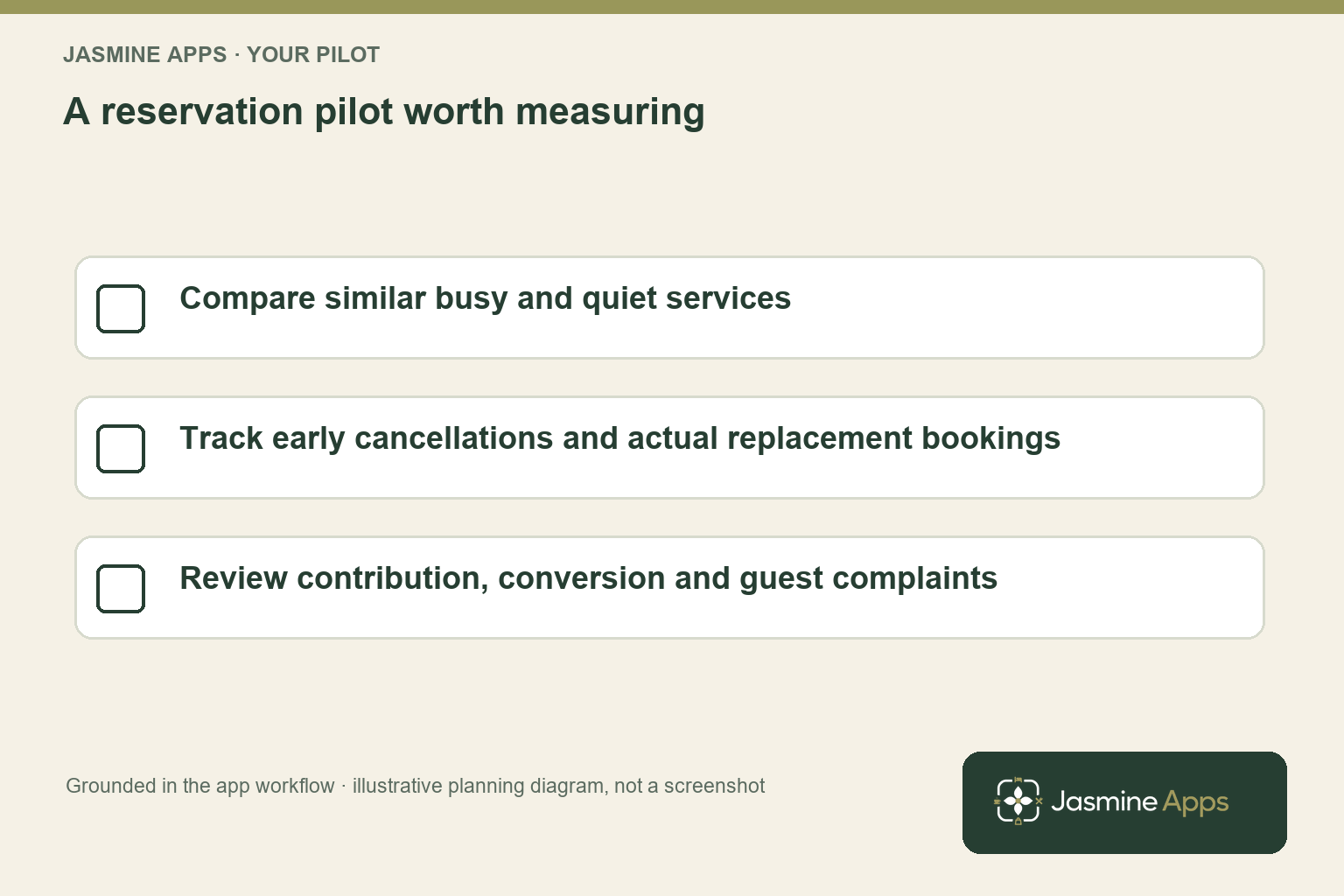
A useful pilot covers comparable services with different demand levels. Include a busy evening, a quiet period and a large-party booking if that is part of your business. You can then see whether the new routine improves the problem you identified instead of attributing every change in total covers to the software.
For each service, record bookings expected, completed covers, no-shows, cancellations received early enough to reuse and tables actually refilled. Note whether your team changed staffing, offers, menu prices or opening hours. Those changes can affect the result and should remain visible when you compare the figures.
If you introduce deposits, review the whole guest journey. A policy that lowers no-shows but discourages valuable bookings may not improve your net contribution. Explain the amount, cancellation window and refund treatment clearly, then compare completion and complaints as well as attendance. You should make the policy understandable before trying to enforce it.
Give your host a practical handover: identify arriving parties, update their service stage and keep guest messages with the booking. If staff duplicate notes across a diary, an inbox and the app, your pilot may reveal a process problem rather than a missing feature. Remove that duplication deliberately and measure the time spent resolving it.
Your final decision should combine financial evidence with service reliability. If you recover profitable capacity and your host can manage exceptions confidently, the subscription has a defensible purpose. If demand is the limiting factor, your next investment may be in clearer offers or marketing, with booking software supporting conversion rather than creating customers by itself.
For the related operating detail, read your guide to restaurant booking lead time before the demonstration.
Pro Tips
Segment by service. Review your Friday dinner and Tuesday lunch separately. A single monthly no-show percentage hides whether lost reservations occurred when you had replacement demand.
Track cancellation lead time. Record how early your team learns that a guest will not attend. Your commercial opportunity is the chance to resell capacity before service.
Pilot one policy. Introduce a deposit rule for a defined booking type first. You can identify its effect on conversion, attendance and staff workload before expanding it.
Common Mistakes
Counting deposits twice. A deposit applied to the final bill is part of that bill. Adding both to revenue exaggerates your return.
Using every empty table as a lost sale. You cannot recover demand that was never there. Separate capacity constraints from quiet services.
Confusing guests and table limits. The configuration controls different constraints. An incorrect setting can accept bookings your operation cannot deliver, undermining your guest experience.
Frequently Asked Questions
How much does restaurant booking software cost?
Your cost depends on the base plan and the workflows you add. Table Jasmine is listed at £69 per venue per month, or £690 annually, with unlimited bookings. Extensions such as Card deposits and Pre-orders have separate prices. You should request a complete quotation covering setup, required channels, payment-provider fees and the applicable tax basis, then compare that cost with contribution from genuinely recovered reservations rather than total expected revenue.
Do restaurant deposits reduce no-shows?
You can use deposits to create a clearer commitment, but your outcome depends on policy, guest mix and how you handle changes. Track completed bookings, cancellations, refunds and booking conversion alongside no-shows. Your aim is higher retained contribution, not simply a lower attendance-failure percentage. Make the rules understandable before booking and confirm how your payment arrangement works, including charges and refunds, before you introduce the policy to customers.
Is unlimited booking software worth it for a small restaurant?
You should judge the workload and capacity problem you face rather than your seat count alone. A small restaurant with valuable peak slots can benefit from organised reservations and clear availability, while a mostly walk-in venue may have a different priority. Use your own lost bookings, staff handling time and contribution figures to calculate the threshold. A short pilot should show whether the system improves a problem your team can actually control.
Which booking extensions should you choose first?
Choose the extension that addresses your most expensive recurring problem. Card deposits may suit attendance issues, Guest messages can keep conversations with reservations, and Pre-orders may help function planning. Google Reserve supports additional booking routes, while Jasmine Events addresses public events and ticket workflows. You should ask for a demonstration of the complete guest and staff journey before adding a feature, and include each required extension in your cost comparison.
How do you measure booking software ROI?
You compare the complete cost with additional contribution from recovered bookings and verified operating savings. Keep ordinary deposits separate from new revenue, and only count tables you actually resold or bookings you genuinely retained. Compare similar services and record price, marketing and staffing changes that could explain differences. Your review should also include guest conversion and complaints, because a strict policy can improve attendance statistics while reducing the value of your overall bookings.
Restaurant booking software cost: your next decision
Your restaurant booking software cost earns its place when you recover useful capacity and make service easier to run. Request a Table Jasmine demonstration with your floor plan, peak-service problem and deposit requirements. You can leave with the right extension mix, a complete quotation and a measurable plan to protect profitable covers.