

Loyalty Reward Exclusions: Make the Rules Clear Before the Guest Pays
· Jasmine Apps
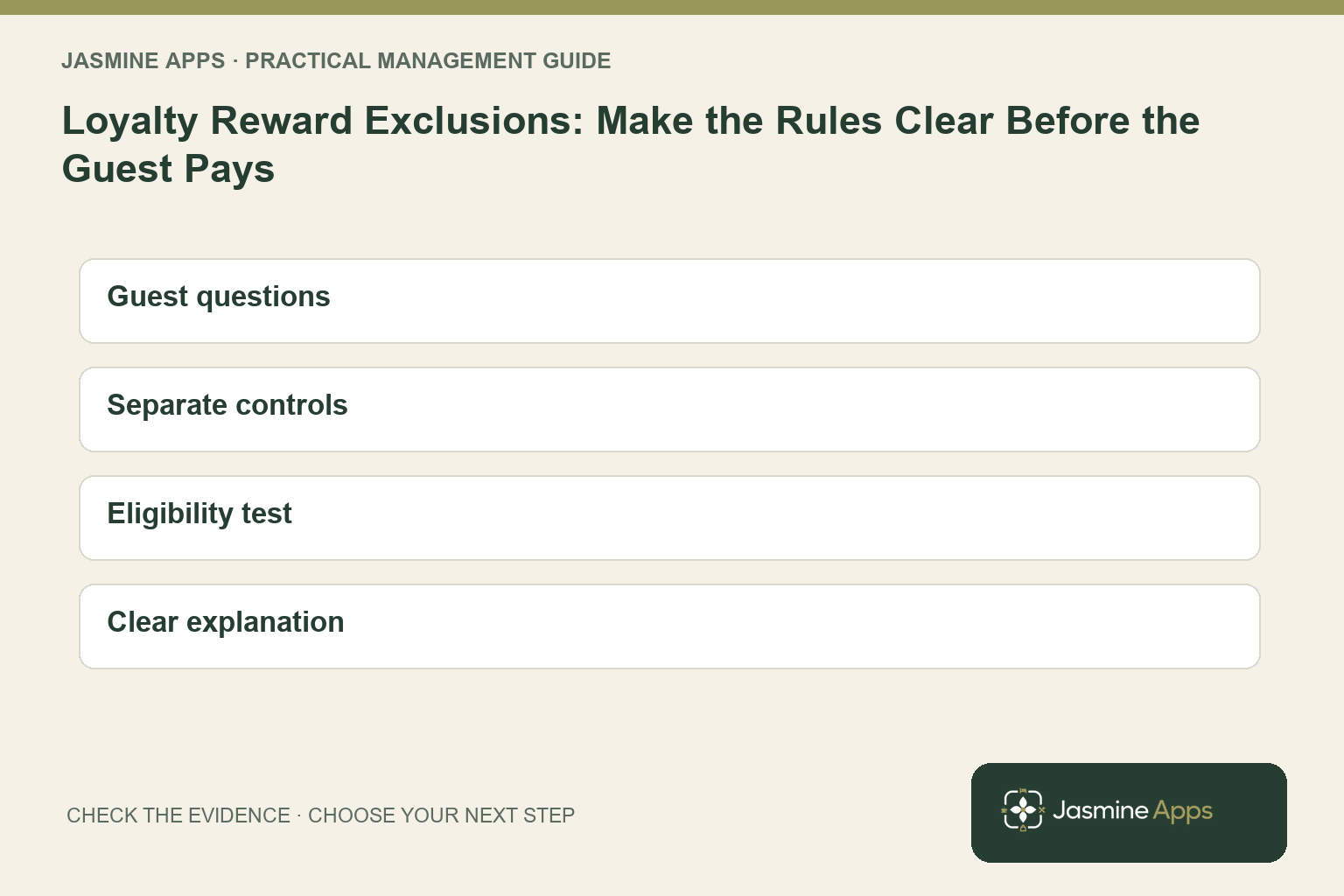
Your guest can hold enough points and still be unable to use the reward they expected. The issue may be the participating venue, the package’s own points requirement or a purchase excluded from earning. Your loyalty reward exclusions need to be understandable before that guest reaches the till, rather than explained for the first time during a disagreement.
You should connect the promise in your offer with the rules in your actual scheme. This guide helps you make earning, redemption and venue eligibility clear without burying your staff and customers in wording that nobody can apply during service.
Key Takeaways
- Explain earning and redemption as separate parts of the offer.
- Distinguish cash-value settings from named reward packages.
- Confirm the venues that can accept each package.
- Test discounted purchases and other relevant exclusions.
- Give staff a consistent explanation and an exception route.
Define loyalty reward exclusions around the guest’s question
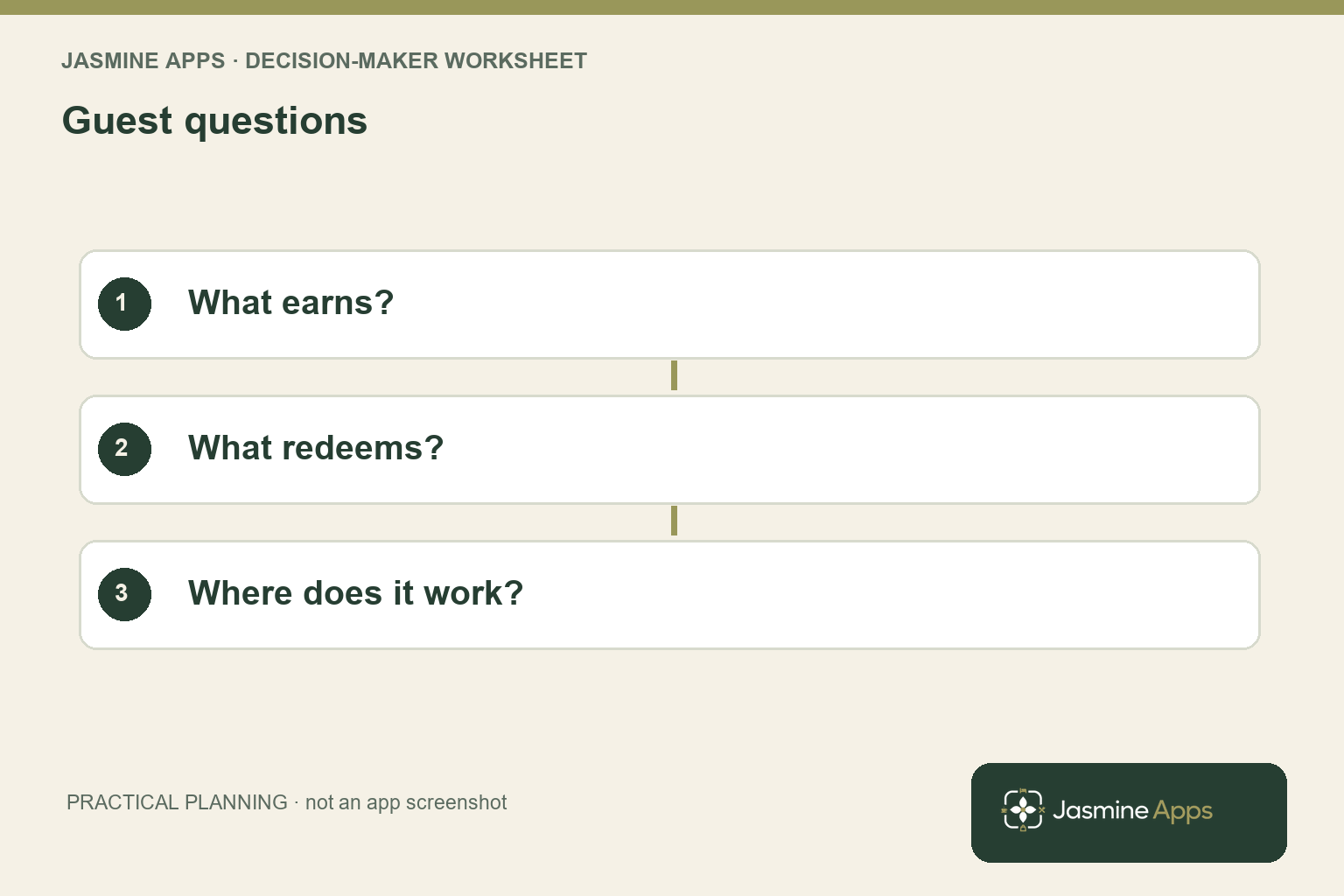
Start with the questions your customer asks: what earns points, what the points can buy and where the reward works. Your internal configuration may use several fields to answer each one, but your guest needs a short explanation of the outcome. Write the offer in that order before adding detail. If the headline suggests universal use while the conditions describe one participating venue, your explanation needs revision.
Separate qualifying purchases from redemption eligibility. Your scheme may exclude a charge from earning points while a package has its own venue and points rules. Keep those distinctions visible in the staff guide so your employee does not diagnose every unsuccessful reward as insufficient balance. Identify the record to check for each question, with the person authorised to review an unusual outcome.
Avoid using broad words such as “everything” or “anywhere” until the actual setup supports them. Your advertised promise should reflect the participating products, venues and conditions you have approved. The CMA guidance on urgency and price-reduction claims is a useful external reminder to keep promotional claims grounded in the real offer. It is not a substitute for reviewing your particular scheme’s terms and customer communication.
Keep a version and effective date for the approved rules. Your team needs to know which explanation applies when an offer changes. Retain earlier wording where your operational or recordkeeping process requires it, and decide how existing earned rewards will be handled through the appropriate management review. Do not casually rewrite the promise after guests have planned purchases around it or leave different shifts describing different versions.
Check loyalty reward exclusions against the real settings
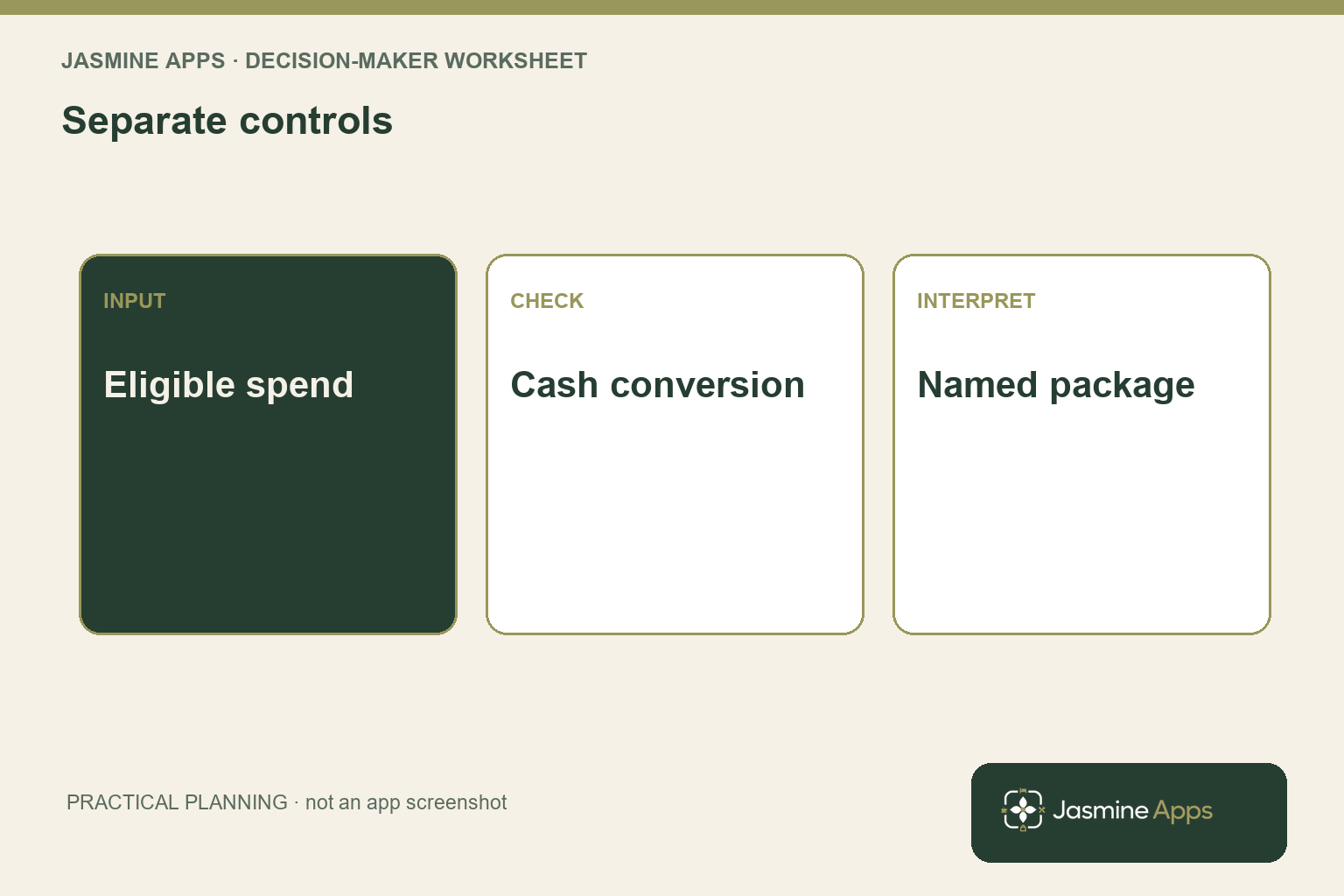
The actual Jasmine Loyalty scheme settings distinguish points per pound, bonus visits, cash redemption, minimum redemption and redemption blocks. They also include earning after discount and excluding service charge. Those are separate configuration decisions. Your staff explanation should match the selected settings rather than repeat an example earning rate from a tutorial as if it were the current rule for every venue.
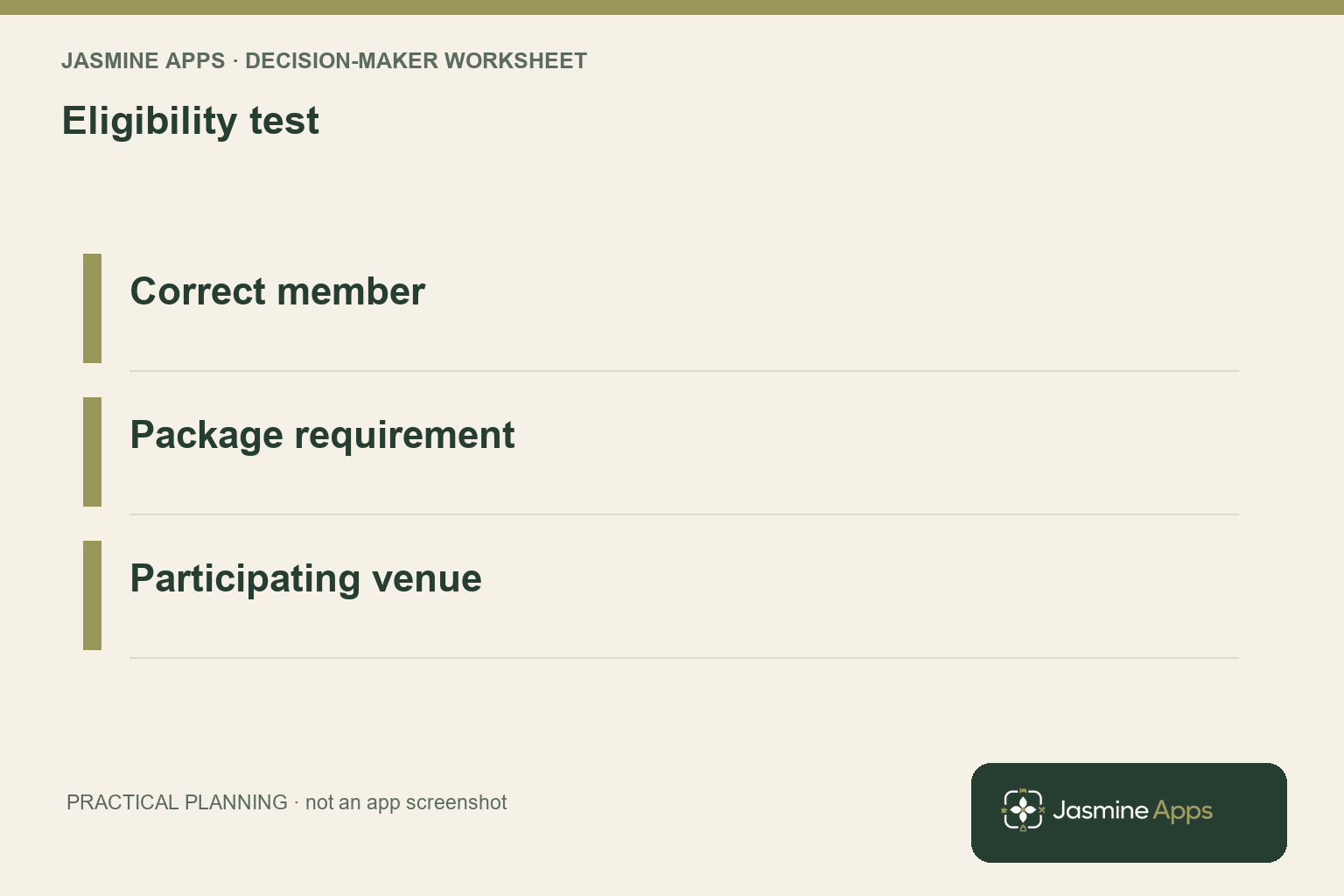
Named packages require their own review. The actual package settings contain the points needed and the venues where that package is valid. The dashboard warns that a venue not selected will not accept its barcode on the till. A member’s general balance does not remove that restriction.
Use the scheme setup guide to establish the overall scope, then confirm the specific package in your installed configuration.
Rehearse a purchase containing a discount and a service charge if those cases are relevant to your venue. Your manager should explain what the eligible earning amount is under the approved rules and verify the supported result. Do not adjust a balance simply to make it agree with an assumed headline rate. Investigate whether the difference comes from the scheme, the package or the recorded transaction first.
If your journey includes Till Jasmine, test member identification and the intended earning or redemption route on the actual installation. Confirm the correct member before payment and check the package’s venue eligibility. Keep guest details discreet and use an authorised example. Your training should show both a successful ordinary case and an expected exclusion, so staff can recognise the difference between the rules working correctly and a genuine fault.
Communicate loyalty reward exclusions without making service awkward
Give staff a brief explanation suitable for the point of decision. Your employee might say that the package works at the selected venue or that the configured points are earned on the eligible amount after discount. Keep the explanation accurate to your scheme and avoid inventing exceptions to satisfy a guest. Where an unusual case needs review, identify the manager and the information they need.
Place the material conditions where the guest can find them before relying on the offer. Your promotion, joining information and reward description should agree about participating venues and the important exclusions. The current Jasmine Loyalty feature page can introduce the supported product, while your venue’s approved rules explain its actual offer. Shared software branding does not establish identical reward terms at every participating business.
Keep an enquiry log focused on the question rather than unnecessary personal details. Repeated uncertainty about the same exclusion suggests your wording or staff briefing needs attention. Compare the guest-facing promise with the configuration before adding another explanatory sentence to a long policy. Your clearest improvement may be to remove an ambiguous headline, not expand the fine print until it becomes impossible to understand.
Review changes through one owner. Your scheme administrator, promotion owner and service manager should approve the same version before it reaches guests. Check an ordinary transaction and an excluded case after configuration changes. You should also keep an escalation route for a correct setup producing an unexpected outcome, so the team can report the relevant transaction context without sharing passwords, active codes or unrelated customer records.
Pro Tips and Common Mistakes
Pro Tips
Test an exclusion before launch. A successful redemption shows only one side of the rule. Rehearse a non-participating venue or relevant excluded purchase and verify that staff can explain the expected outcome clearly.
Use a guest-language rule sheet. Write the answer to what earns, what redeems and where it works before adding internal field names. Keep the configuration reference alongside it for the manager who investigates exceptions.
Review package and scheme changes separately. A cash-value change does not necessarily change a named package’s requirement. Check both records so your communication describes the intended offer rather than blending two different controls.
Common Mistakes
Assuming every point has the same redemption route fails when named packages and cash conversion have different rules. Identify which reward the guest is trying to use.
Advertising group-wide use before selecting venues fails because the actual package can be refused at an unselected site. Verify the participation record and test the intended till.
Correcting balances before diagnosing eligibility fails because an adjustment can conceal a correctly applied exclusion. Preserve the transaction context and check the approved rules first.
Your offer should be easier to understand after the review, not simply longer. Keep the critical conditions visible and give staff an honest way to resolve a question when the guest’s expectation and the configured result differ.
Keep a short question log showing the rule guests expected and the configured result, without collecting personal details unnecessary to the review. If several questions concern the same venue or earning condition, revise the explanation at the point of decision and retest it with a colleague before adding more fine print.
Frequently asked questions
What are loyalty reward exclusions?
They are the conditions that limit which purchases earn points or which rewards can be used in a particular situation. Your scheme may distinguish eligible spend, discounts, service charges, package requirements and participating venues. Explain earning and redemption separately so your guest can understand the outcome before payment. Your actual configuration and approved offer wording should agree.
A points balance alone does not prove that every package or venue is available to the member.
Can discounted purchases earn loyalty points?
Check your venue’s configured scheme rather than assume a universal rule. The actual Jasmine Loyalty settings include earning after discount, so your manager should verify the selected behaviour and the eligible amount. Demonstrate the supported result with an authorised example before training staff. Your guest explanation should describe that approved setup clearly.
If a transaction differs from expectation, review the recorded purchase and rules before making a balance adjustment that could conceal the underlying issue.
Can service charges be excluded from earning points?
The actual Jasmine Loyalty scheme includes a service-charge exclusion setting. Your administrator should check the current selection and verify the supported result for the venue before announcing the earning rule. Keep your guest-facing explanation consistent with the configured eligible amount. Do not copy another venue’s terms or an illustrative tutorial rate into your promotion.
Your employee should know which record to check and who reviews an unexpected outcome, with the relevant transaction context retained.
Why can a guest with enough points not redeem a package?
Start by identifying the exact package and its requirements, then check whether the current venue participates. Your member’s general balance and configured cash value are separate from a named package’s points and venue rules. The actual package settings warn that an unselected venue will not accept its barcode on the till. If the eligibility checks pass but the journey still fails, preserve the relevant record and escalate through your approved route rather than improvising another reward or adjusting points blindly.
How should you explain reward restrictions to guests?
Use clear wording at the point where the guest decides to join, earn or redeem. State the important eligible purchases, participating venues and package requirements, then provide the approved full rules through your normal information route. Train staff with a successful example and a relevant exclusion. Your explanation should match the actual setup and remain consistent across shifts.
Review repeated questions as evidence of unclear wording, rather than assuming the guest should have discovered the condition in fine print.
Make loyalty reward exclusions clear before launch
Your loyalty reward exclusions should protect a promise your team can explain and your setup can deliver. Bring your intended reward, earning rule and participating venues to Contact Us. Request a Jasmine Loyalty demonstration including an ordinary purchase and an excluded case, so you can publish clear conditions and give your staff a dependable route for guest questions.