

Hospitality Clock-in Exception Policy: Review Missing Punches Fairly
· Yiannis Yiasemis

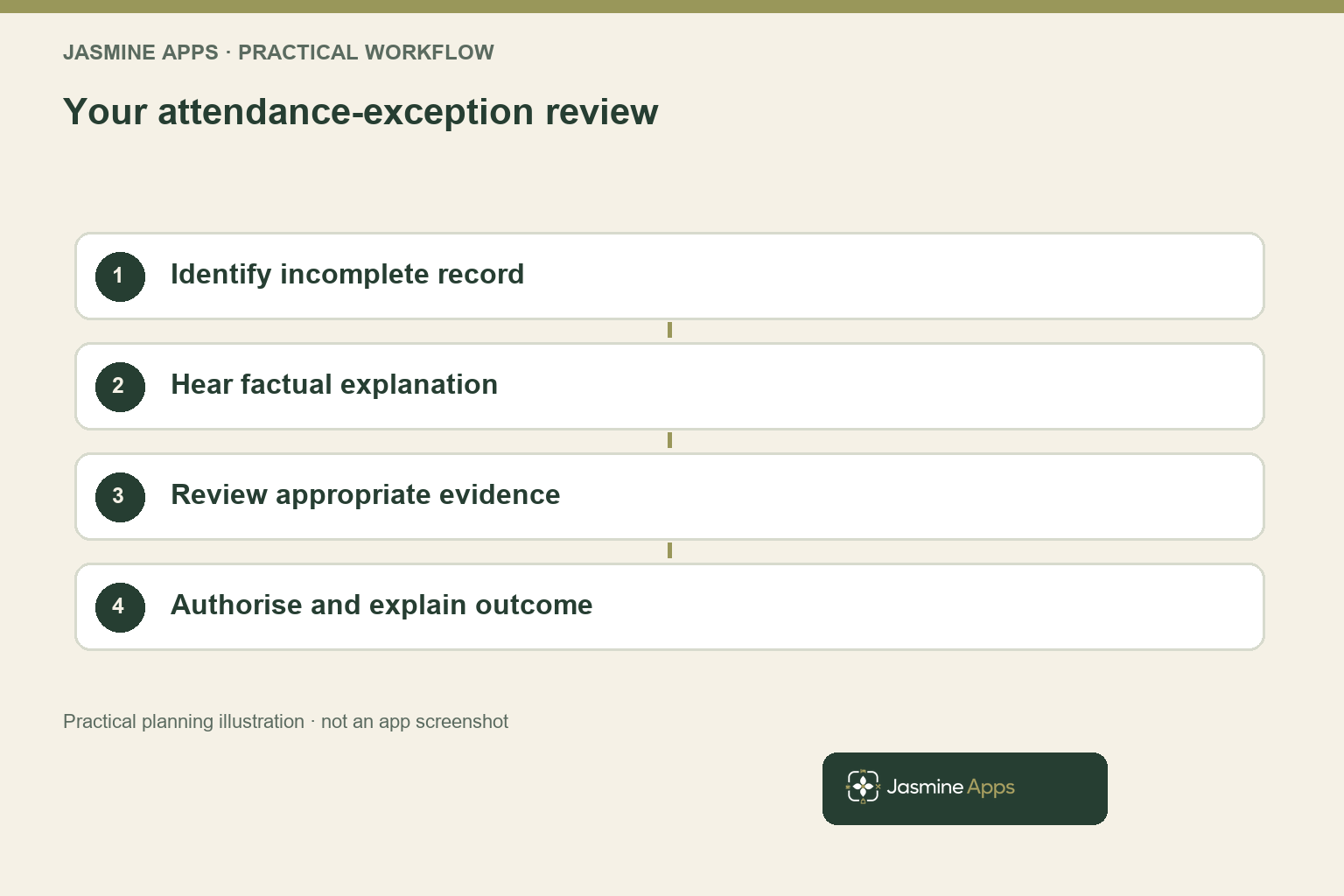
A missing clock punch does not prove a missing hour of work. Your colleague may have started the shift, used the wrong action or encountered an access problem, and those possibilities require different responses. Your hospitality clock-in exception policy should establish what happened before a timesheet or payment decision treats the record as complete.
Clock Jasmine Kiosk provides a shared personal-PIN route for clock-in, clock-out and breaks, alongside the wider Clock Jasmine attendance and approval workflow. A clear policy connects that record with a timely explanation, appropriate evidence and an authorised review. You can reduce avoidable payroll chasing while giving staff a process they understand and a fair opportunity to correct an incomplete account of their work.
Key Takeaways
- Treat an exception as a question requiring review.
- Distinguish late attendance from a late recorded punch.
- Keep the original record and correction explanation clear.
- Apply contract, pay and employment rules appropriately.
- Review recurring device or process problems separately from individuals.
Define your hospitality clock-in exception policy before payroll day
List the situations your review needs to handle: no arrival punch, no departure punch, overlapping records, an unexpected break or a punch that conflicts with the agreed shift. These are record conditions, not conclusions about conduct. Give each one a clear reporting route so staff know what to do without waiting for the payroll deadline to reveal the problem.
Distinguish the planned shift, the recorded events and the work actually performed. Your rota describes an expectation; your clock record describes captured actions; your authorised review determines the appropriate timesheet from the available evidence. None should automatically replace the others when a discrepancy appears, particularly if a device issue or an approved shift change is involved.
Set an operational reporting timeframe that fits your payroll cycle and gives the reviewer time to respond. Explain how a colleague reports an exception, what factual information is useful and who can approve a correction. Avoid demanding unnecessary sensitive detail in a general attendance note; employment or health information should follow the appropriate confidential process.
Your manager should also define the escalation route when the initial reviewer cannot resolve the issue. A disputed period, repeated problem or pay question may need payroll, HR or appropriate professional advice. A short clear route is better than an informal chain of messages that leaves the colleague unsure whether anyone has accepted responsibility for the decision.
Use the timesheet preparation guide for the wider payroll handover. This policy focuses on the evidence and authorisation before that handover. Your goal is a dependable record of the relevant work, with an explanation of corrections, rather than a perfect-looking export produced by silently replacing every anomaly with the planned rota.
Separate lateness from recording errors in your hospitality clock-in exception policy
When an arrival punch is later than the planned start, ask what event it represents. Your colleague may have arrived late, begun work before reaching the kiosk or used the wrong action. Check the factual explanation and relevant authorised records before deciding which issue needs attention. The same timestamp can reflect different operating circumstances and should not carry more meaning than the evidence supports.
Use relevant information proportionately. An approved shift change, supervisor confirmation or other appropriate work record may help establish the period, while a speculative assumption does not. Keep the review within your employment and privacy policies, and avoid expanding routine attendance correction into intrusive monitoring simply because another source of information is technically available.
Acas's guidance on pay during unauthorised absence or lateness explains the importance of policy, fairness and the rules affecting deductions. Use the current guidance and appropriate advice for your circumstances before changing pay. A missing or late punch alone should not become a software-driven penalty without establishing the work and the applicable terms.
Give the colleague an understandable explanation of the outcome and a route to raise an unresolved concern. Your record should identify the reviewed period, relevant facts, agreed correction or remaining disagreement and the authorised decision-maker. Keep factual attendance notes distinct from any formal conduct process, which may require a different procedure and safeguards.
Review patterns at the right level. If several people record late punches at the same busy arrival window, investigate device access, location and the briefing process. If a genuine individual attendance issue remains after the record is clarified, address it through your established employment process. The correction workflow should help you distinguish those questions rather than blend them into one unexplained lateness count.
Use your hospitality clock-in exception policy for missing departures and breaks
A missing clock-out creates uncertainty about the end of work, but filling it automatically with the rota finish can conceal an overrun or an early departure. Ask the colleague to report the actual event and the supervisor to review relevant evidence. Your final timesheet should represent the authorised work record under the applicable rules, with the correction explained rather than hidden.
Treat break questions with the same care. A forgotten break action and a break that was not taken are different circumstances, and your staff may need help understanding which action records which event. Your review should establish the relevant facts and apply the appropriate working-time, contract and pay arrangements, with professional advice where the situation is disputed or unclear.
Clock Jasmine Kiosk's personal-PIN workflow supports arrival, departure and break actions. Demonstrate how your colleague recognises the current state and completes the intended action on the shared device. Confirm the approved review route in Clock Jasmine when a record is incomplete, including who can see the request and what the reviewer needs to decide before finalising a timesheet.
Keep the employee-facing correction instructions short enough to follow after a shift. Explain where to report the issue, the shift concerned and the factual time or event that needs review. Staff should not need to share their personal PIN with a manager or another colleague to obtain help, and your process should not encourage one person to create a record on someone else's behalf.
Connect the policy with your missing clock-out support article for the relevant product guidance. The support route explains what to check; your policy explains how the venue reviews and authorises the outcome. Keeping those roles clear helps the team correct the record promptly without confusing a technical question with an employment decision.
Design a correction trail that a second reviewer can understand
Your correction trail should make the original question and the decision understandable to an authorised colleague who was not present. Keep the affected shift, issue category, factual explanation, relevant evidence reference, reviewer and outcome together through the supported process. Do not assume the software records every detail automatically; demonstrate the audit and approval scope you require before relying on it.
Avoid overwriting uncertainty with an unexplained final number. If your reviewer agrees a corrected departure time, record the reason and appropriate authorisation under your workplace process. Where the system needs a supporting record outside the main timesheet, keep it securely and link it through an appropriate reference rather than leaving the decision in a private message that the next payroll reviewer cannot access.
Apply proportionate access and retention. Attendance records relate to identifiable workers, and an exception note can contain information that does not belong in a broad team view. The ICO's employment-record guidance provides a relevant reference for managing worker information. Follow your organisation's policies and obtain appropriate advice for sensitive or disputed cases.
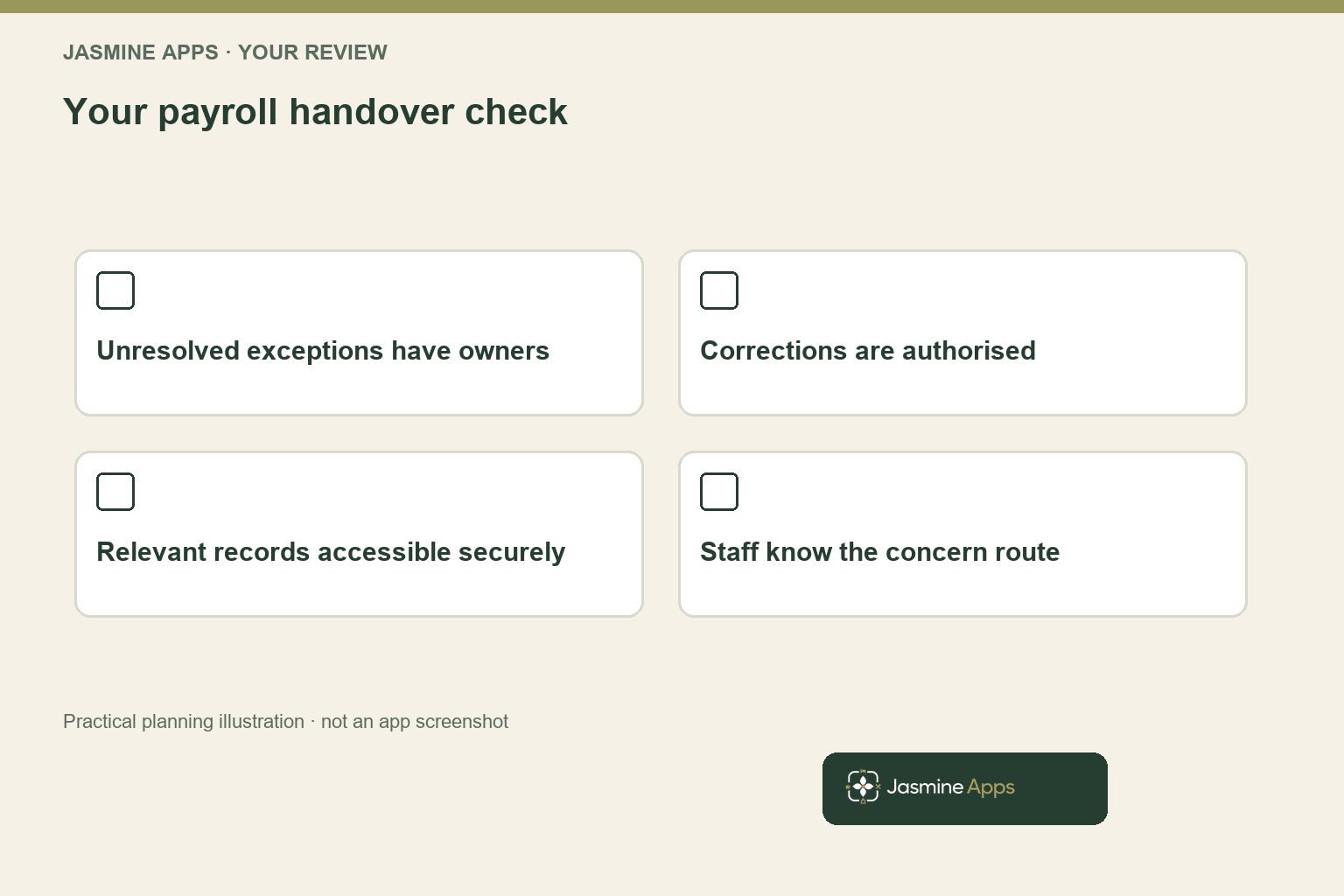
Build a second check around the handover rather than re-investigating every ordinary event. Your payroll reviewer can confirm that outstanding exceptions are identified, authorised corrections are reflected and unresolved cases have an owner. That gives you a practical control without turning a routine weekly export into an unstructured search across the entire team's messages and shift history.
Explain the process to staff in plain language. Your colleague should know what is recorded, why the review exists and how to ask about a decision. A visible correction trail can strengthen confidence in the timesheet process, because the final record becomes the outcome of an understandable review rather than a number that changed without an explanation or a clear person responsible.
Measure administration improvement without assuming payroll savings
Your first useful measure is how many exceptions reach payroll unresolved and how long each type takes to review. Keep record volume, review time and the value of any authorised pay adjustment separate. Faster administration can free attention for managers, but it does not establish that wages should fall or that every corrected record previously represented an overpayment.
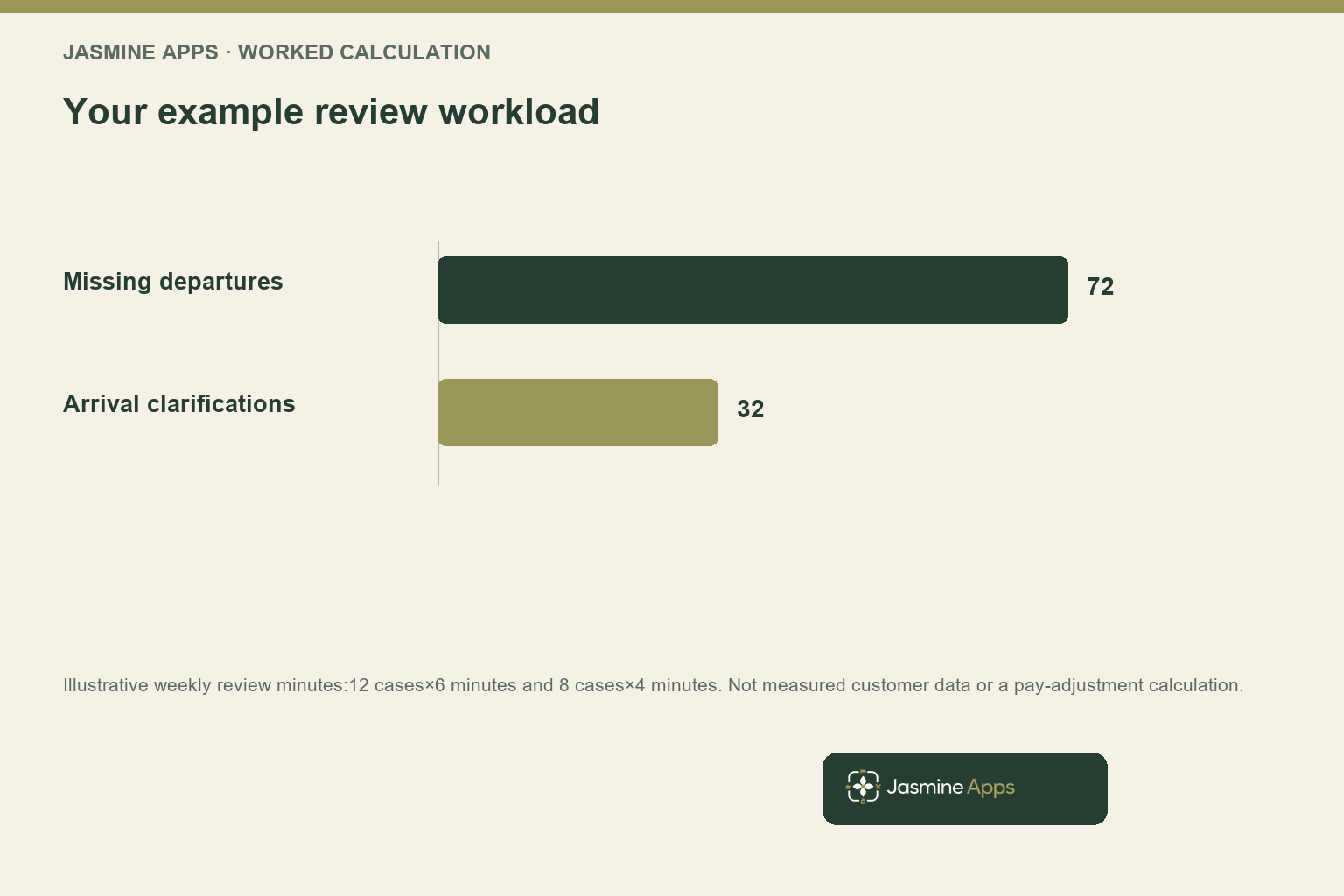
For an illustrative week, assume twelve missing-departure reviews take six minutes each and eight arrival clarifications take four minutes each. That is seventy-two plus thirty-two minutes, or one hundred and four minutes in total. Your own case definitions and observed review times should establish the baseline; these figures simply show how to structure the calculation.
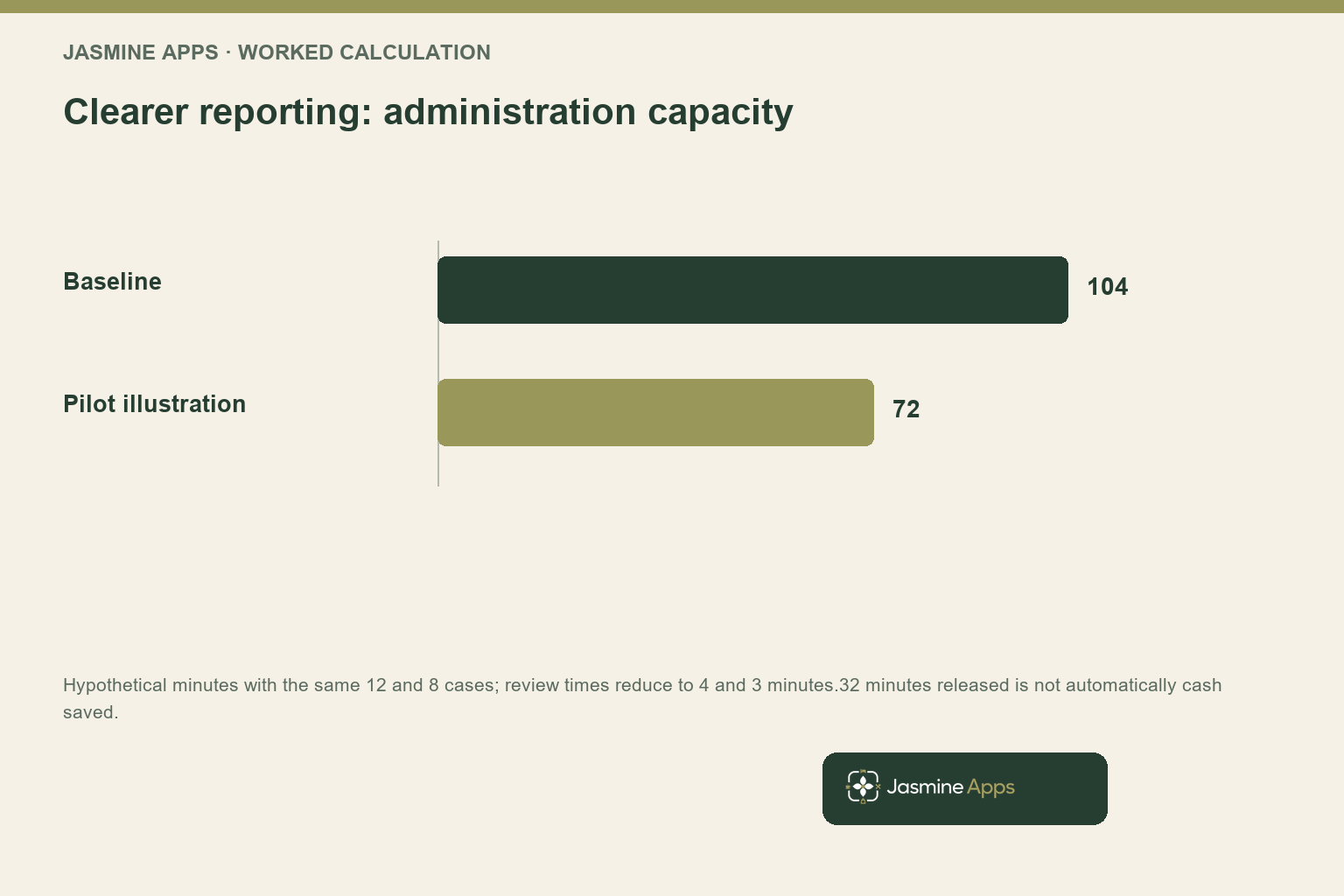
Suppose clearer reporting reduces each missing-departure review to four minutes and each arrival clarification to three, with the same case counts. The modelled total becomes seventy-two minutes, releasing thirty-two minutes of administration. This is a capacity illustration, not a measured Clock Jasmine result or a justification for changing the approved work time on any individual's timesheet.
Your current listed Clock Jasmine rate is £1 per employee monthly with a £25 monthly minimum, while Kiosk is a £5 per venue monthly add-on. Annual entries are £10 per employee and £50 per venue respectively; confirm full terms, device requirements, setup and tax in the quotation. Compare those costs with a demonstrated operating process rather than an assumed payroll reduction.
At review, ask whether the policy improved timeliness, completeness and staff understanding. If review time falls but unresolved disputes increase, you may have moved the work elsewhere. Keep the intervention that makes the record more dependable and the decision easier to explain, with any actual expense change supported separately by the relevant payroll and accounting evidence.
Use recurring exceptions to improve the process before blaming the person
Group exceptions by operational cause as well as type. You might find unclear break instructions, an awkward kiosk position, access problems for new starters or a shift-change handover that does not reach the attendance reviewer. These patterns tell you where one improvement can help several colleagues, without treating every incomplete punch as an individual failure.
Ask staff to explain the confusing step while the experience is recent. A colleague may believe they have clocked out when the device is still on a confirmation screen, or may not know how to report an issue after leaving. Demonstrate the actual sequence in the supported environment and check the visible result, using fictional or authorised test information rather than altering live work records.
Keep the kiosk physically usable and the help route visible. Confirm the device, connection, venue setup and privacy arrangements required for your installation, with an agreed fallback when it is unavailable. Do not assume offline recording or automatic recovery unless that behaviour has been demonstrated for your configuration, and ensure the fallback does not depend on sharing personal PINs.
Revisit the briefing when the device location, app workflow or payroll deadline changes. Your staff should hear one consistent instruction from supervisors, with the policy accessible when they need it. A new starter's practice should include both the ordinary action and the correction route, making it easier to raise an issue promptly rather than conceal a mistake until the export is due.
Your manager can then address genuine attendance questions from a clearer factual position. Keep that employment process separate from the technical correction, apply the appropriate rules and provide the relevant opportunity to respond. A good exception policy improves the quality of the record and the fairness of the conversation, giving your team a reliable basis for payroll and planning.
Pro Tips
Preserve the question. Record the original exception and why the authorised outcome differs. A clean final number is not enough if another reviewer cannot understand the decision.
Measure unresolved cases. Track what reaches payroll without a decision, not just the number of punches captured. That measure shows whether the policy improves the handover that matters.
Test the help route. Ask a new starter to explain how they report a missing action without sharing a PIN. A practical correction route reduces delayed explanations and insecure shortcuts.
Common Mistakes
Equating a missing punch with missed work. You can produce an inaccurate timesheet. Establish the relevant facts before making the authorised correction.
Applying an automatic penalty. You may bypass contract, pay and employment requirements. Follow current guidance and the appropriate professional process.
Hiding decisions in private messages. Your payroll reviewer may not see the reason for a change. Keep the outcome through a secure, accessible authorised record route.
Frequently Asked Questions
What should you do when an employee forgets to clock out?
You should identify the affected shift, ask for a factual explanation and review relevant authorised evidence before finalising the timesheet. Do not assume the planned finish is automatically the time worked. Record the correction and appropriate approval through your supported process, with unresolved questions given an owner before payroll handover. Your technical support instructions and employment policy should work together while keeping a device question separate from any formal attendance decision.
Can you deduct pay because a clock-in record is missing?
You should establish the work performed and apply the relevant contract, minimum-wage and employment rules before changing pay. A missing record alone does not prove that time was not worked. Follow current Acas guidance, your policy and appropriate payroll or legal advice for your circumstances, especially if the facts are disputed. Your correction process should give the colleague an understandable explanation and a route to raise an unresolved concern about the authorised outcome.
How do you distinguish lateness from a late clock punch?
You compare the recorded action with the planned shift, the colleague's explanation and relevant authorised evidence of what occurred. The person may have started work before reaching the device, encountered an access problem or arrived late; those situations need different responses. Keep the record correction factual and proportionate. If an attendance issue remains, address it through your established employment process rather than treating the timestamp as a complete explanation on its own.
What should a clock-in correction request include?
You should ask for the affected shift, the missing or incorrect event and a concise factual explanation of what needs review. Identify the appropriate reviewer and record the authorised outcome with a relevant evidence reference where needed. Avoid unnecessary sensitive detail in a general attendance note, and keep access appropriate to the purpose. Your colleague should know how to submit the request and follow up without sharing personal credentials or relying on an informal private message.
Can a shared clock-in kiosk remove all timesheet exceptions?
You can make recording more consistent with a usable shared device and clear instructions, but exceptions can still arise from missed actions, changes or interruptions. Demonstrate Clock Jasmine Kiosk's personal-PIN and break workflow alongside the approved correction route in Clock Jasmine. Confirm your device, connection and fallback requirements rather than assuming every recovery is automatic. Your buying case should include the complete review process, because dependable payroll requires authorised decisions as well as captured punches.
Hospitality clock-in exception policy: your next step
Your hospitality clock-in exception policy should produce a record your team can trust and your reviewer can explain. Request a Clock Jasmine Kiosk demonstration with one missing departure and one disputed arrival example using fictional details. You can test the recording and review handover before choosing the setup for your workplace.