

How to Reconcile Private Event Deposits and Final Balances
· Jasmine Apps
Scole Inn Hotel advertised a 50% deposit at booking for its 2026 Christmas party menu, which also required guests to pre-order. Once a venue takes advance payments, the events team needs to answer three questions for each group. What did they agree to pay, how much has arrived and what is still due? The booking, payment provider and bank each hold part of that answer. Scole Inn Hotel’s 2026 Christmas menus
Cover image: AI illustration based on a Jasmine product capture.
Give every event a payment reference
When the organiser accepts the quote, give the event one reference and use it wherever the payment method allows. Keep the event date, agreed total, instalments, due dates and the name of the person responsible in the function record. When a payment comes in, log the actual method and reference as well as the amount. "£250 due Friday" and "£250 received Friday by bank transfer" need to be distinguishable at a glance.
Keep the original quote and any agreed changes. If the guest adds £100 of canapés, record the revised total and tell the organiser what changed. The person running the event on the day should be able to read the balance and see how you arrived at it.
Match the booking, transaction and bank
In a worked example, the agreed event costs £1,250. A £250 deposit and a £400 interim payment leave £600 due. If the card processor deducts an illustrative £5 fee from the £250 payment before payout, the guest still paid £250. Their balance stays at £600. The £5 belongs in your reconciliation of the processor payout.
Multiple payments can settle together, so the credit that lands in the bank might bear little resemblance to a single guest payment. Stripe's payout reconciliation report identifies the transactions that make up an automatic payout. Check the equivalent report if you use another provider, particularly for partial invoices, fees and refunds. Stripe payout reconciliation
Give exceptions an owner before the event
Review events with balances due before service. Mark entries you can verify, then list what's left with a named owner. A cash deposit needs the venue's cash record or receipt. A bank transfer needs to match the bank and the booking. If the guest disputes a charge, note who will follow it up and what evidence they have.
Give the organiser the payment schedule and cancellation terms before they commit. The Competition and Markets Authority has specifically asked wedding and event venues to review advance-payment and cancellation terms for fairness. Keep an agreed change or refund alongside the original booking so the office and service team work from the same figures. CMA guidance for event venues
See what the reservation record actually proves
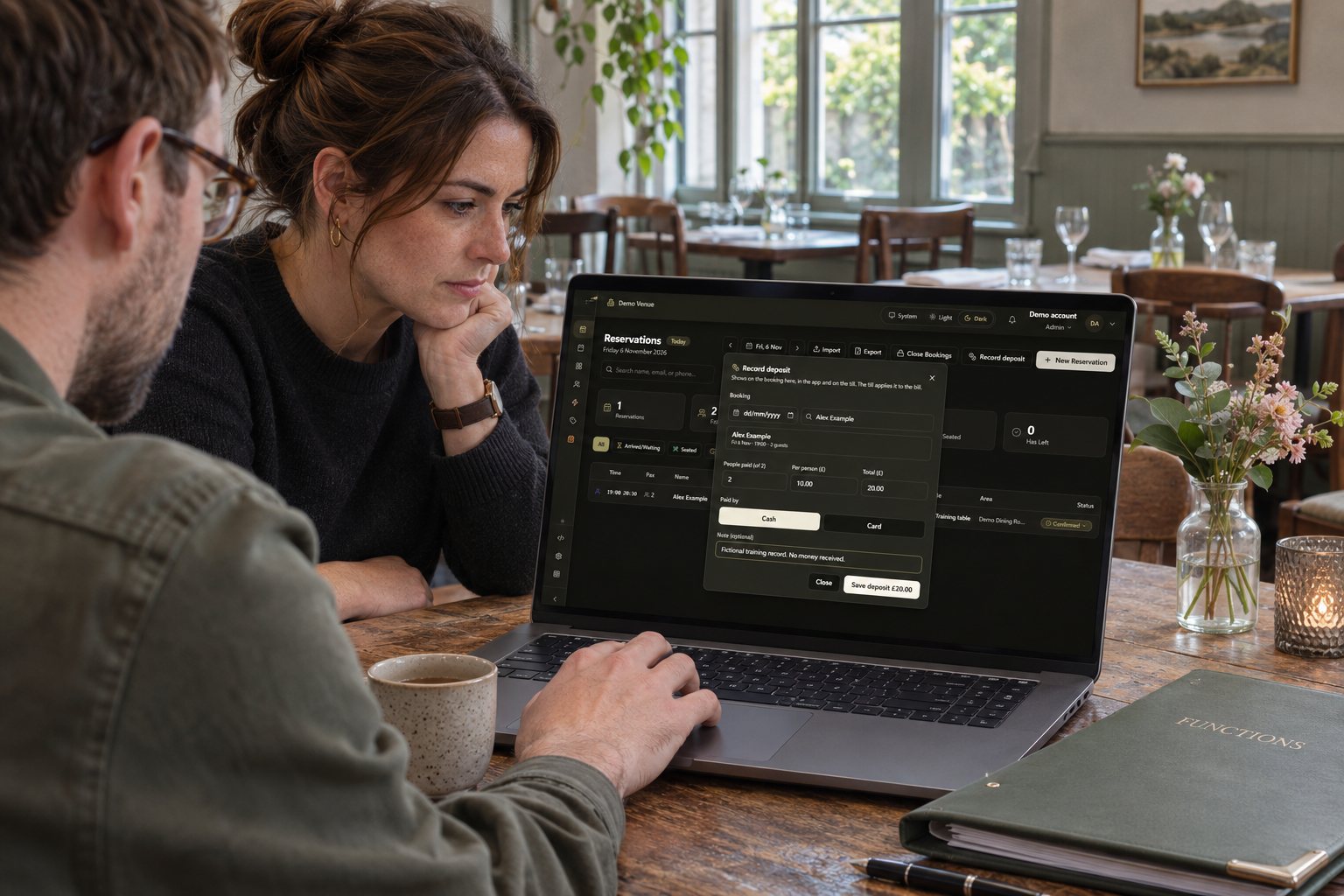
Table Jasmine's deposit walkthrough records an amount and payment method against an existing reservation, then checks that the same entry survives a reload. That proves the booking entry was saved. Check the payment provider or bank for evidence the funds arrived, and verify how separate instalments, refunds and accounting exports work in your setup. Record a deposit in Table Jasmine · Table Jasmine
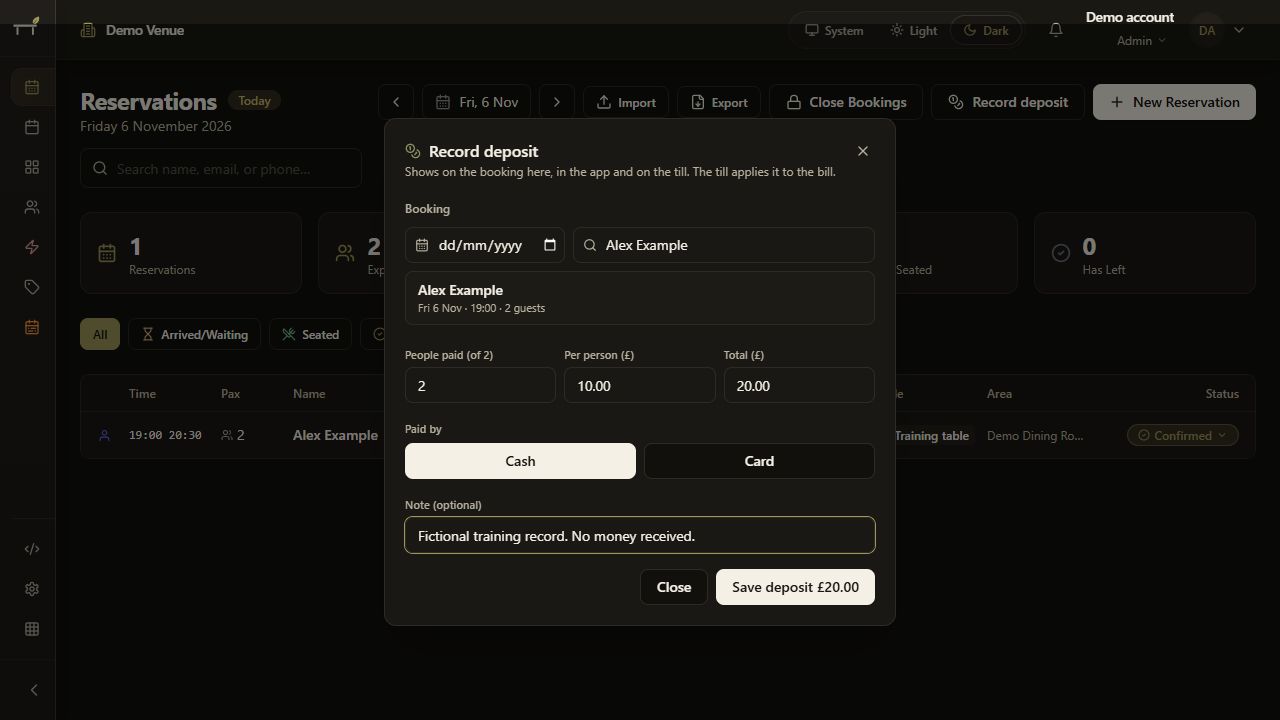
Bring an anonymised function record to a Table Jasmine demo and follow a deposit through the booking and payment records to the final balance.