

What Your Restaurant Till Needs to Record for Tips and Service Charges
· Jasmine Apps
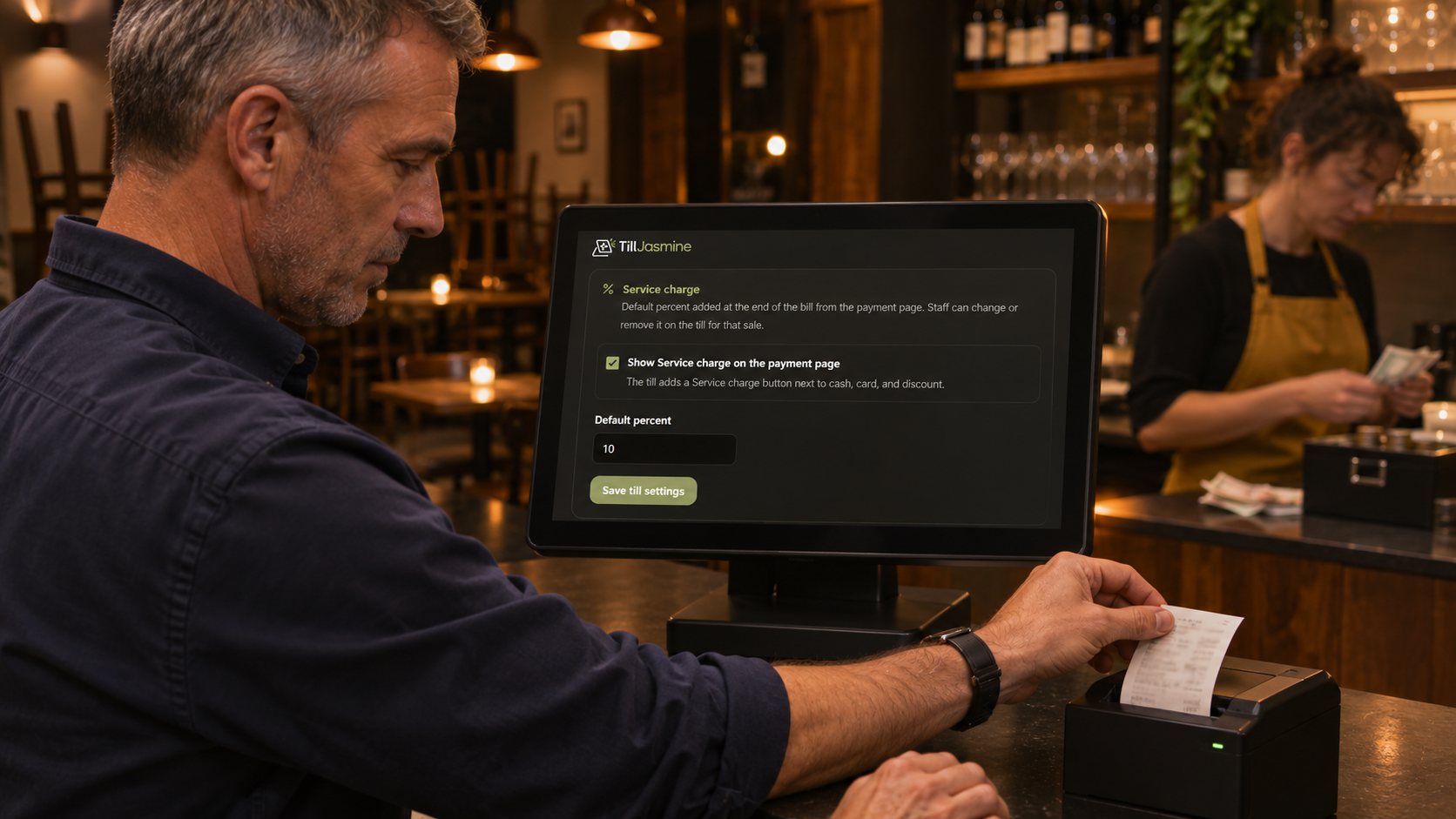
Before sending Friday’s close to payroll, trace the card tips, the cash the venue collects and any service charge removed at a guest’s request. Each leaves a different record. A good reporting test is whether the person responsible for distribution can find those records and explain the figures to a worker a month later.
Cover image: AI illustration based on a Jasmine product capture.
Map the ways money comes in
Write down every route guests use. That could include a tip added on a terminal, a service charge added to the bill, cash placed in a shared jar or a cash tip handed directly to a worker. Note who receives or controls it and where the amount is first recorded.
The statutory tipping code applies in England, Scotland and Wales and came into force on 1 October 2024. Qualifying tips include those the employer receives and worker-received tips where the employer controls or significantly influences their allocation. Distribute them by the end of the month after the customer paid them. Keep a record of qualifying tips and what was allocated to each worker for three years from the date the customer paid. Great Britain statutory tipping code
The government plans to strengthen tipping rules from 1 January 2027, subject to parliamentary approval of the revised code and commencement regulations. The changes would require employers to consult workers before issuing a tipping policy, review the policy at least every three years and share an anonymised summary of consultation feedback with affected workers. UK employment rights implementation timeline · UK government response on the revised tipping code
Follow one service from checkout to payroll
Use an example with an £8 card tip, a £5 venue-collected cash tip and a £12 discretionary service charge removed at a guest's request. Find out where the card tip and cash tip first appear. Check the removal leaves the checkout and close figures clear, and record which amounts each source contributes to the payroll handover.
Give each venue a consistent report date, site name and source. Record any adjustments and who checked them. Ask the person responsible for distribution to confirm which records they need alongside the venue's written allocation policy. HMRC explains the separate treatment of tips and service charges for tax, National Insurance and VAT, including arrangements involving a tronc. HMRC guidance on tips and troncs.
Decide how the duty manager handles late corrections. If a payment is adjusted after the shift sheet has gone to payroll, keep the original figure, the amendment date and a note showing when payroll saw it. Ask the team to find a previous shift's record during the test.
Ask for the exact export you will use
Request a sample from a practice system with the proposed card setup. Compare the till detail with the terminal report and your payroll schedule. Check whether service charges, card tips, cash tips and later corrections each have usable fields, and agree how the venue will record anything its hardware or software leaves elsewhere.
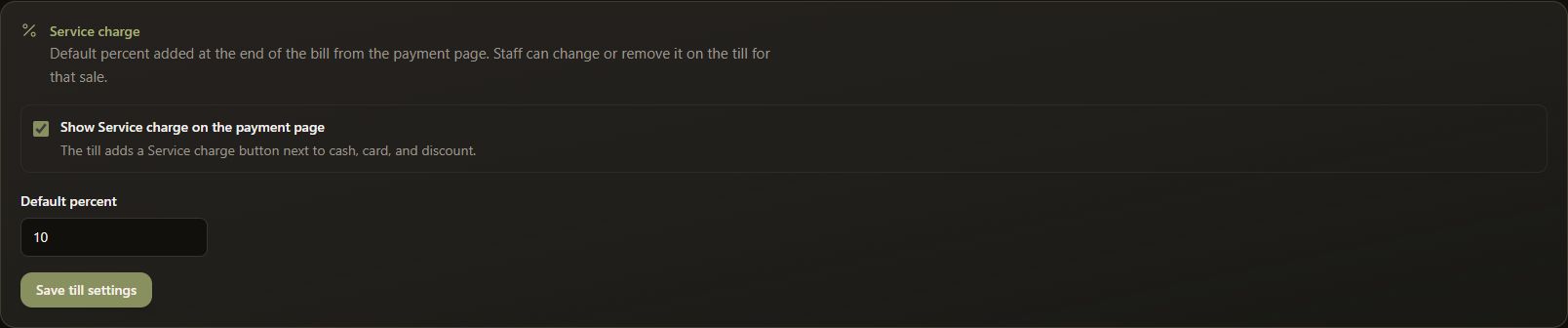
Till Jasmine documents cash and card tender records, a Sales journal CSV and an end-of-day workflow. Ask what tip and service-charge fields your setup can produce. Your finance and payroll teams set the distribution process and confirm the records it needs. Till Jasmine reporting, Till Jasmine end of day
Book a Till Jasmine demo and bring a redacted close sheet so we can compare it with the reporting workflow.